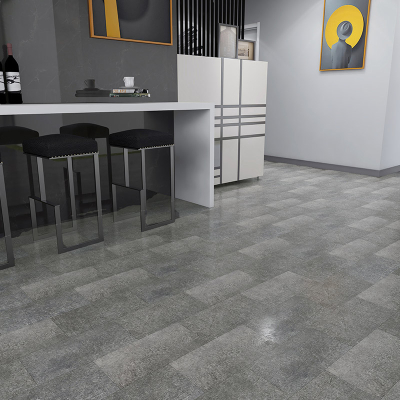
SPC Flooring: 5 Pros & 4 Cons You Must Know Before Buying
Product Definition
SPC flooring, short for Stone Plastic Composite flooring, is a rigid-core vinyl flooring system engineered with a high-density limestone-based core. It is designed for dimensional stability, commercial durability, and moisture resistance, making it suitable for high-traffic residential and commercial environments.
Technical Parameters & Specifications
SPC flooring performance is determined by standardized, measurable parameters used across international projects and procurement documents.
Total thickness: 3.5–7.0 mm
Wear layer thickness: 0.3 / 0.5 / 0.7 mm
Core density: 1900–2100 kg/m³
Locking system: Unilin / Valinge compatible
Slip resistance: R9–R10
Fire rating: Bfl-s1 (EN 13501-1)
Formaldehyde emission: E1 / CARB Phase II compliant
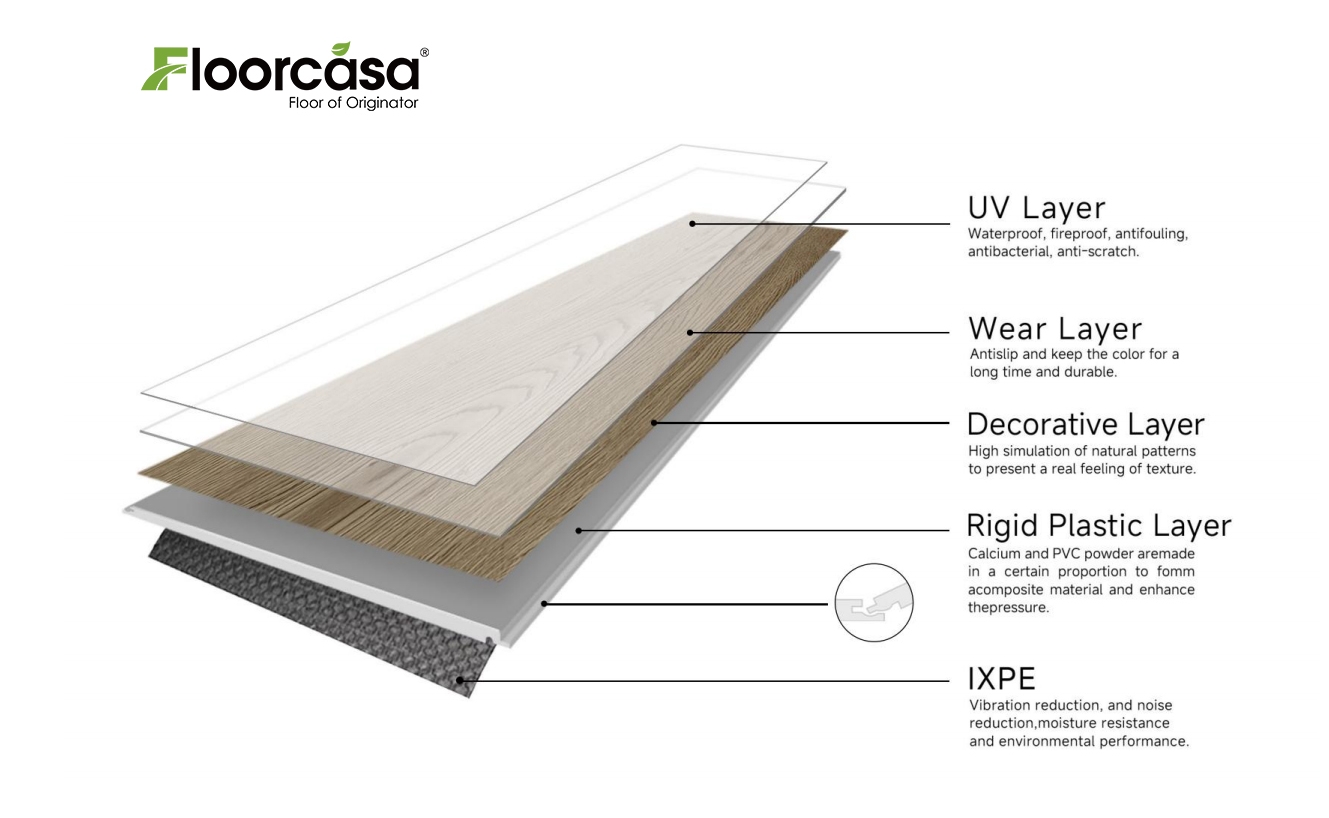
Structure & Material Composition
SPC flooring uses a multi-layer engineered structure optimized for stability and long-term performance.
UV Coating Layer: Scratch resistance and surface protection
Wear Layer: Transparent PVC layer resisting abrasion
Decor Film: High-definition printed wood or stone visuals
SPC Core: Limestone powder + PVC resin composite
Balance Layer: Optional IXPE/EVA acoustic underlayment
Manufacturing Process
Industrial SPC flooring production follows a continuous, tightly controlled process to ensure consistency.
Raw material batching (PVC resin, calcium carbonate, stabilizers)
High-speed hot mixing and cooling system
Extrusion molding via twin-screw extruder
Calendering and thickness calibration
UV coating curing and surface treatment
Precision profiling and locking milling
Final inspection, packaging, and palletization
Industry Comparison
| Flooring Type | Dimensional Stability | Water Resistance | Maintenance | Typical Use |
|---|---|---|---|---|
| SPC Flooring | Excellent | Waterproof | Low | Commercial / Residential |
| Laminate Flooring | Moderate | Limited | Medium | Residential |
| LVT Flooring | Good | Waterproof | Low | Commercial |
| Engineered Wood | Moderate | Poor | High | Premium Residential |
Application Scenarios
SPC flooring is widely adopted across projects requiring stability and predictable lifecycle costs.
Commercial offices and business centers
Hospitality projects and serviced apartments
Retail chains and shopping malls
Education and healthcare facilities
Residential renovation and new builds
Core Pain Points & Solutions
Concern: Floor expansion in varying climates
Solution: Rigid SPC core minimizes thermal movementConcern: Moisture damage
Solution: Waterproof composite structureConcern: Long-term wear in high traffic
Solution: Commercial-grade wear layers (≥0.5 mm)Concern: Installation complexity
Solution: Click-lock floating installation systems
Risk Warnings & Mitigation
While SPC flooring offers robust performance, improper selection or installation can introduce risks.
Avoid ultra-thin products below 3.5 mm for commercial use
Ensure subfloor flatness within ±2 mm per 2 meters
Confirm wear layer thickness meets project traffic load
Verify acoustic requirements before selecting underlayment
Procurement & Selection Guide
Define project application (commercial vs residential)
Confirm required thickness and wear layer class
Request compliance documents and test reports
Evaluate locking system compatibility
Check batch consistency and color tolerance
Review warranty terms and lifecycle cost
Engineering Case Example
In a 12,000 m² mixed-use commercial complex, SPC flooring with a 5.0 mm total thickness and 0.5 mm wear layer was specified. The project required minimal downtime, moisture tolerance, and acoustic control. Post-installation inspections after 24 months showed no visible deformation, joint failure, or surface wear.
FAQ
Is SPC flooring suitable for heavy commercial traffic?
Yes, with ≥0.5 mm wear layer.Does SPC flooring require acclimation?
Short acclimation is recommended.Can SPC be installed over existing tiles?
Yes, if the surface is flat.Is SPC flooring waterproof or water-resistant?
The core is waterproof.What is the expected service life?
15–25 years depending on use.Does SPC flooring emit VOCs?
Certified products meet E1 standards.Is underlayment mandatory?
Optional, project-dependent.Can SPC flooring be repaired?
Damaged planks can be replaced individually.Is it suitable for underfloor heating?
Yes, within temperature limits.What maintenance is required?
Routine cleaning only.
CTA
For detailed technical datasheets, project consultation, or bulk procurement inquiries, submit your specifications to request a formal quotation or engineering sample evaluation.
E-E-A-T Author Credentials
This article is prepared by a technical flooring engineering team with over 15 years of experience in rigid-core flooring manufacturing, international project supply, and material performance evaluation across commercial and residential developments.