What is the Healthiest Flooring Option? Carbon-Infused Technology and the Future of Indoor Wellness
Redefining Healthy Spaces: The Global Imperative for Advanced Flooring
The definition of a "healthy building" has irrevocably expanded. Beyond energy efficiency, the focus has intensely shifted to Indoor Environmental Quality (IEQ), with indoor air quality (IAQ) as its cornerstone. Driven by rigorous green building standards like WELL, LEED, and BREEAM, alongside heightened consumer awareness post-pandemic, the global market for healthy building materials is experiencing unprecedented growth. Within this landscape, a critical question is being asked by architects, project developers, and B2B buyers worldwide: "What is the healthiest flooring option?"
The answer lies not in traditional materials alone but in technological innovation that proactively enhances environmental hygiene. Once praised for basic stability, conventional flooring solutions are now scrutinized for potential VOC emissions, off-gassing, and susceptibility to allergens. The next generation of flooring, led by Carbon-Infused Flooring, addresses these concerns at a fundamental level. This innovation represents a paradigm shift, transforming the floor from a passive surface into an active contributor to a building's health profile, marrying material science with occupant wellness for projects ranging from healthcare facilities and schools to eco-conscious residential developments.
The Anatomy of Health: Deconstructing Carbon-Infused Flooring Technology
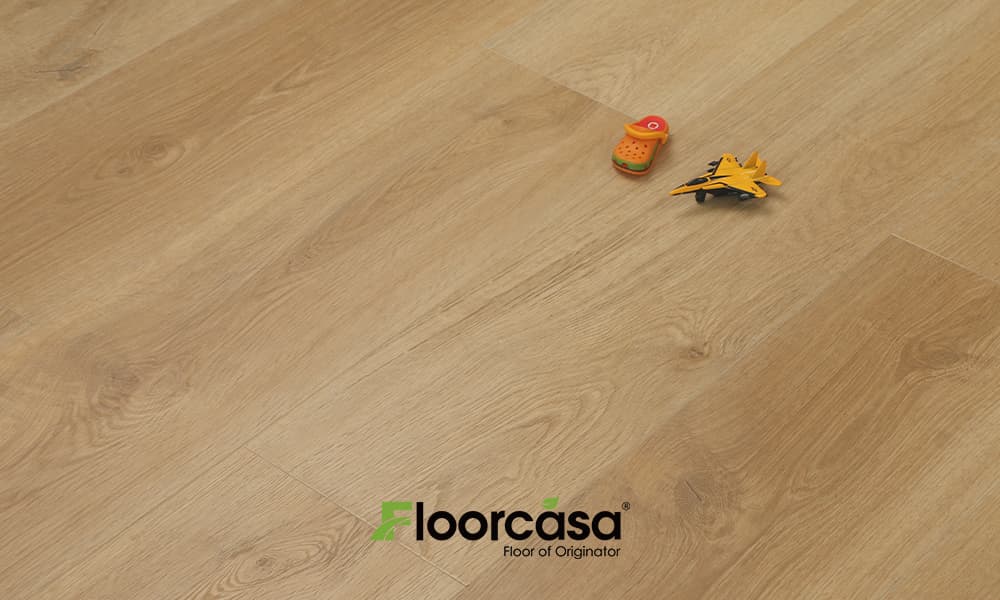
True health in flooring is a multi-faceted achievement, encompassing chemical, physical, and biological aspects. Carbon-Infused Flooring, such as the advanced lines developed by manufacturers like Floorcasa, is engineered to excel across all these dimensions through its sophisticated structure and manufacturing.
The Core of Stability and Purity: Carbon Integration
The revolutionary aspect lies within the core layer. This is not a simple coating but a material integration where refined carbon particles or activated carbon elements are uniformly blended during the extrusion of a high-density Stone Plastic Composite (SPC) base.
Chemical Inertness & Emissions Control: Carbon acts as a stabilizer and purifier. It helps neutralize residual compounds within the material matrix, contributing to ultra-low VOC emissions. Products leveraging this technology routinely achieve the highest indoor air quality certifications, such as GREENGUARD Gold and FloorScore, with total VOC emissions far below standard regulatory limits.
Enhanced Structural Integrity: The carbon infusion significantly increases the core's density and dimensional stability. This reduces the risk of micro-gaps forming between planks over time—gaps that could harbor moisture and microbial growth. A more stable floor is inherently a cleaner, more hygienic floor.
The Multi-Layer Defense for Holistic Health
A comprehensive healthy flooring solution is built like a protective barrier system:
Antimicrobial Wear Layer: The top surface is often treated with a permanent silver-ion or zinc-based antimicrobial coating. This inhibits the growth of bacteria, mold, and mildew on the surface, a critical feature for spaces prioritizing hygiene.
Pure, Non-Porous Surface: A high-quality, tightly sealed wear layer creates a smooth, non-porous flooring surface. This prevents the absorption of liquids, spills, and allergens (like dust mites, pet dander), making the floor exceptionally easy to clean and maintain without harsh chemicals.
Formaldehyde-Free Composition: From the core to the backing, the entire product is engineered to be 100% formaldehyde-free, addressing one of the most common and concerning IAQ pollutants associated with some composite wood products.
Emission-Capturing Underlayment (Optional): Some premium systems pair the flooring with an underlayment that contains an active carbon barrier, providing an additional layer of protection against potential subfloor moisture and off-gassing.
The B2B Buyer's Calculus: Performance Metrics and Market Expectations
For professional buyers, specifying the healthiest flooring material is a risk-mitigation and value-addition strategy. Their evaluation framework extends far beyond price per square meter.
Key Procurement Drivers:
Certifications as Non-Negotiable Proof: Buyers demand independently verified credentials. Certifications like GREENGUARD Gold (for low emissions), CE marking (EU safety), and CARB NAF (formaldehyde compliance) are treated as minimum entry requirements for serious projects in North America and Europe.
Total Cost of Wellness (TCOW): The valuation now includes long-term factors: reduced health-related complaints, lower ventilation demands, easier maintenance, and enhanced property marketability. A floor that contributes to a WELL or LEED plaque adds tangible asset value.
Durability Meets Hygiene: The surface must withstand rigorous, frequent cleaning with hospital-grade disinfectants without degrading, yellowing, or losing its antimicrobial properties. High abrasion resistance class (AC rating AC4-AC6) is essential.
Supply Chain Transparency: Buyers seek partners who provide full Material Safety Data Sheets (MSDS), Health Product Declarations (HPDs), and clear documentation of sustainable sourcing practices for their raw materials.
Prevailing Pain Points in the Market:
Greenwashing vs. Real Performance: Distinguishing between marketing claims and scientifically backed performance is a major challenge. Buyers are wary of vague terms like "eco-friendly" without substantiating data.
Performance Trade-offs: Some products may boast excellent IAQ but lack the durability for commercial traffic, or vice-versa. Finding a solution that balances health, durability, and aesthetics without compromise is difficult.
Inconsistent Regional Standards: Navigating differing regulatory and certification requirements across global markets (EU vs. US vs. Asia-Pacific) adds complexity to international project sourcing.
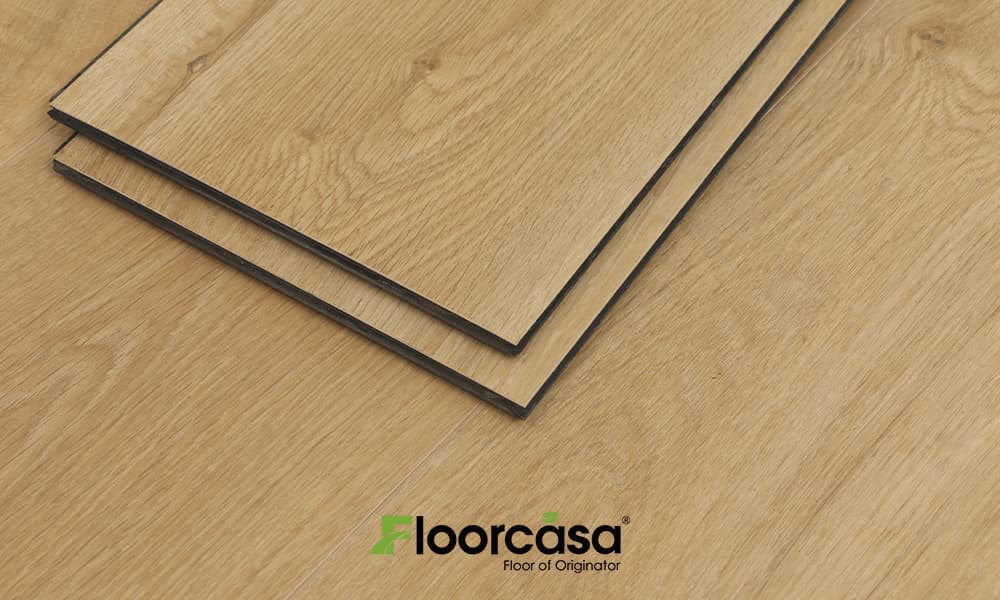
From Raw Material to Healthy Surface: A Glimpse into Advanced Manufacturing
The integrity of a healthy floor is ensured through precision manufacturing. In a state-of-the-art facility, the production of Carbon-Infused Flooring involves critical, controlled stages:
Raw Material Selection & Purification: All primary materials—PVC resins, limestone, plasticizers—are sourced from suppliers who can provide purity certificates. The activated carbon additives are of pharmaceutical or food-grade quality.
Closed-Loop Compounding: The raw materials and carbon additives are mixed in a closed, automated system. This prevents contamination, ensures a perfectly homogeneous blend, and protects worker safety by containing any dust.
High-Temperature, High-Pressure Extrusion: The mixture is extruded under intense heat and pressure. This process not only forms the dense, rigid core but also triggers the volatilization and extraction of any unstable compounds, which are captured by scrubbers before they can be emitted.
Four-Sided Locking with Micro-Seal: The precision-milled locking systems are engineered for a perfect fit. On premium lines, a food-grade polymer sealant is applied to the joint during milling, creating a watertight, allergen-proof seal that prevents moisture and debris penetration.
Post-Production "Curing" and QA: Finished planks are often staged in a ventilated warehouse, allowing for any final off-gassing to occur before packaging. Every batch undergoes random sampling for third-party accredited IAQ testing.
The Future is Proactive: Flooring as a Health-Promoting Asset
The trajectory points towards even more intelligent and integrated solutions. We are moving towards "active" healthy floors that may incorporate photocatalytic coatings to break down air pollutants or phase-change materials for thermal regulation. Furthermore, the demand for circular economy flooring—products designed for disassembly, recycling, or safe biodegradation at end-of-life—is growing from progressive European and North American markets. Manufacturers like Floorcasa are investing in R&D to ensure their Carbon-Infused Flooring platforms are compatible with these future sustainability protocols, offering buyers a future-proof investment.
B2B Sourcing Frequently Asked Questions (FAQ)
Q1: How does Carbon-Infused Flooring compare to natural materials like solid hardwood or ceramic tile for health?
A1: While natural materials have their appeal, they present health trade-offs. Hardwood can harbor allergens in its grain and often requires finishes with VOCs. Tile grout is a porous breeding ground for mold. Carbon-Infused SPC flooring provides a superior, monolithic barrier: it is inherently non-porous, resistant to microbes, and requires no chemical sealants or finishes. It offers the hygiene of tile with the comfort and design versatility of luxury vinyl, all while maintaining proven ultra-low emission levels from production through its lifecycle.
Q2: Are the antimicrobial properties on the surface effective for the lifetime of the floor?
A2: Yes, when it is a built-in, inorganic additive (like silver ions), not a topical coating. The antimicrobial agents are integrated into the wear layer material during manufacturing. They are not consumed in the process and do not wear off with cleaning or foot traffic, providing continuous hygienic surface protection for the product's lifespan, which is typically 20+ years in commercial settings.
Q3: Can this flooring contribute to points in LEED or WELL Building Standard certification?
A3: Absolutely. It directly contributes to multiple credits. Key areas include:
WELL: Air Quality (low-emitting materials), Materials (antimicrobial surfaces), Mind (material transparency via HPDs).
LEED: Indoor Environmental Quality (low-emitting interiors), Building Product Disclosure & Optimization (material ingredients).
We provide specific documentation packs tailored to support these certification submissions.
Q4: For sensitive environments like hospitals or schools, what additional testing is available?
A4: Beyond standard IAQ tests, we can provide evidence of compliance with more stringent protocols. This includes tests against California Department of Public Health (CDPH) Standard Method v1.2 and specific antimicrobial efficacy testing (e.g., ISO 22196 against bacteria like MRSA and E. coli). For full transparency, we encourage project-specific due diligence and can arrange for independent testing of samples by an accredited lab of your choice.
In the pursuit of truly healthy buildings, the floor underfoot is a critical frontier. The healthiest flooring option is no longer defined by what it lacks (like VOCs), but by what it actively provides: a stable, hygienic, and pure foundation that safeguards occupant well-being.
Specify with confidence for your most demanding projects.
Partner with Floorcasa to access cutting-edge Carbon-Infused Flooring technology. Request your comprehensive specification kit today, including third-party certification reports, detailed HPDs, and CAD details. We invite you to evaluate the difference firsthand—contact us for full-size, A-grade samples to perform your own due diligence. Let our technical specialists provide a project-specific quotation and guide you through the selection process for a healthier built environment.