SPC Flooring Cracking Issues
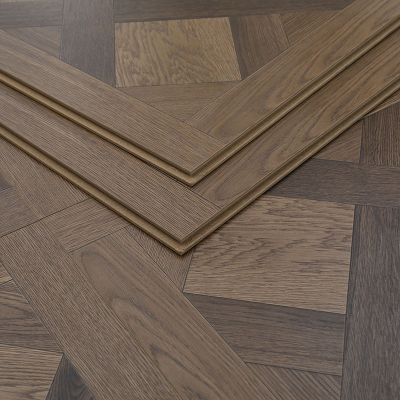
SPC flooring is a rigid core flooring made from stone-plastic composite materials. SPC flooring cracking issues typically refer to structural fractures, surface fissures, or edge splitting caused by material formulation, manufacturing stress, installation conditions, or long-term load and thermal movement.
Technical Parameters and Specifications
Understanding SPC flooring cracking issues starts with measurable technical parameters that directly affect structural stability.
Core density: 1900–2100 kg/m³
Calcium carbonate content: 60%–70%
PVC resin (K-value 65–67): 25%–30%
Board thickness tolerance: ±0.10 mm
Flexural strength: ≥25 MPa
Impact resistance: ≥12 kJ/m²
Linear thermal expansion: ≤0.12%
Locking joint tensile strength: ≥4.5 kN/m
Structure and Material Composition
SPC flooring cracking issues are strongly linked to layer structure and material balance.
UV Wear Layer: 0.3–0.7 mm, protects surface but does not prevent structural cracks
Decor Film: Printed PVC layer; brittle inks may initiate micro-cracks
Rigid SPC Core: CaCO₃ + PVC composite, primary crack-risk zone
Balance Layer: Stabilizes internal stress distribution
IXPE/EVA Underlay (optional): Absorbs impact and subfloor stress
Manufacturing Process and Engineering Controls
Many SPC flooring cracking issues originate during manufacturing rather than installation.
Raw Material Dosing: Excess CaCO₃ increases brittleness
Twin-Screw Extrusion: Barrel temperature 165–185°C for uniform melt
Calendaring & Cooling: Uneven cooling causes internal residual stress
UV Coating: Over-curing may harden surface excessively
Profiling & Lock Cutting: Tool wear leads to micro-cracks at joints
Conditioning: Boards must rest 48–72 hours before packing
Industry Comparison
| Material | Cracking Risk | Thermal Stability | Load Resistance | Repair Difficulty |
|---|---|---|---|---|
| SPC Flooring | Medium (formulation-dependent) | High | High | High |
| WPC Flooring | Low | Medium | Medium | Medium |
| LVT | Low | Low | Low | Low |
| Laminate | High | Low | Medium | High |
Application Scenarios
SPC flooring cracking issues are most frequently reported in the following engineering environments:
Commercial retail chains with long, continuous floor spans
High-rise residential projects with temperature fluctuation
Public buildings using heavy rolling loads
Export projects crossing multiple climate zones
Core Pain Points and Solutions
1. Brittle Core Fracture
Cause: Excess filler ratio. Solution: Optimize CaCO₃ below 70%.
2. Locking System Cracks
Cause: Weak joint geometry. Solution: Reinforced click profile design.
3. Thermal Expansion Stress
Cause: No expansion gaps. Solution: Maintain ≥8 mm perimeter gap.
4. Subfloor-Induced Stress
Cause: Uneven concrete. Solution: Subfloor flatness ≤2 mm / 2 m.
Risk Warnings and Avoidance Recommendations
Avoid SPC flooring without batch mechanical test reports
Do not install below 10°C ambient temperature
Reject boards with visible edge whitening
Limit continuous installation length to ≤15 m
Procurement and Selection Guide
Request formulation disclosure range
Verify extrusion line capability
Inspect locking joint cross-sections
Confirm conditioning time before shipment
Request thermal cycling test data
Specify installation tolerance in contract
Engineering Case Example
A 28,000 m² commercial office project experienced SPC flooring cracking issues within six months. Investigation identified high CaCO₃ content (72%) and zero expansion joints. Replacement with reformulated SPC and revised installation standards eliminated cracking after 18 months of monitoring.
FAQ
Q: Is SPC cracking a material defect?
A: Not always; often process or installation-related.Q: Can cracked SPC be repaired?
A: Typically requires board replacement.Q: Does thickness prevent cracking?
A: Thickness helps but formulation matters more.Q: Are locking cracks covered by warranty?
A: Depends on installation compliance.Q: Is underlay mandatory?
A: Strongly recommended for stress absorption.Q: Does UV layer cause cracking?
A: Indirectly if over-cured.Q: Can climate change increase risk?
A: Yes, especially in large spans.Q: How to detect micro-cracks?
A: Use angled light inspection.Q: Is SPC suitable for underfloor heating?
A: Yes, with temperature control ≤27°C.Q: What test best predicts cracking?
A: Repeated thermal cycling test.
CTA
For detailed technical data, engineering samples, or project-specific crack risk assessment, request formal quotations or technical documentation from qualified SPC flooring manufacturers.
E-E-A-T Author Credentials
This article is written by a flooring materials engineer with over 15 years of experience in SPC extrusion, failure analysis, and international commercial flooring projects, supporting EPC contractors and global distributors.