What is the Best Waterproof Flooring You Can Buy? A B2B Technical and Sourcing Guide
The Global Demand and Technological Evolution: Defining True Performance
The global construction and home renovation market's recovery has sharpened the procurement focus of international buyers toward performance-driven solutions. According to the latest global floor coverings market report, the global waterproof flooring market size is projected to exceed $24.8 billion by 2025, with a CAGR of over 5.7%. Within this growth, one central question dominates the considerations of importers, major retailers, and project contractors worldwide: "What is the best waterproof flooring you can buy?"
The answer is shifting from generic claims to a rational evaluation based on concrete technical parameters and real-world application scenarios. While laminate and standard vinyl flooring were once widespread, they show limitations in long-term water immersion, dimensional stability, and eco-friendliness. Today, a new generation of rigid core flooring, exemplified by Waterproof Carbone Flooring, is redefining the performance standard for "the best." This product represents not a single material breakthrough but a systematic innovation combining Stone Plastic Composite (SPC) technology with carbon element stabilization processes, offering solutions with near-zero water absorption for commercial and residential spaces.
Core Technology Analysis: Why Waterproof Carbone Flooring Tops the Market
Revolutionary Multi-Layer Structure and Material Science
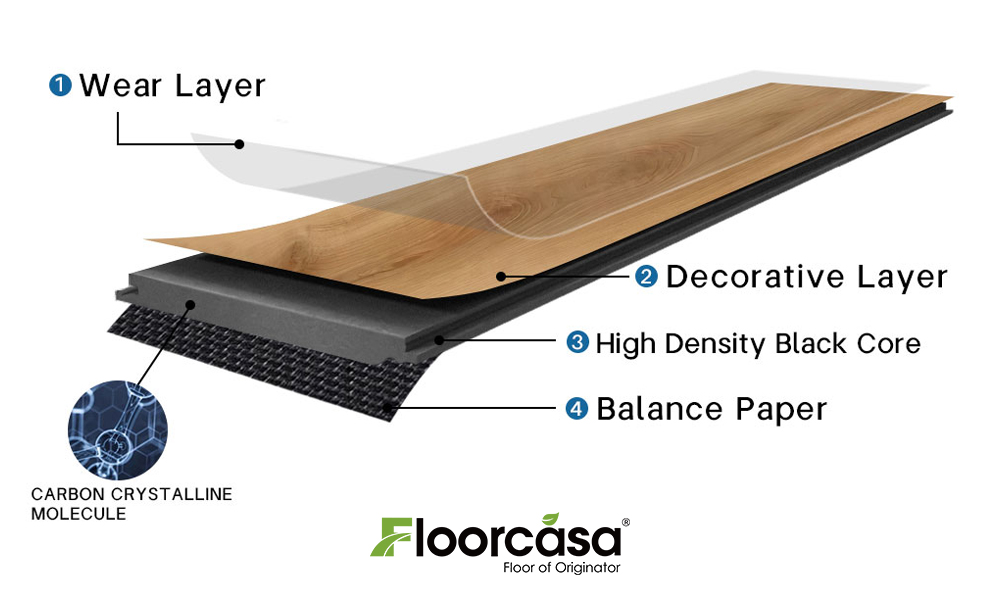
The performance of the best waterproof flooring is rooted in material science and structural design. Leading manufacturers like Floorcasa employ advanced multi-layer co-extrusion composite technology:
Super Wear-Resistant Layer: Typically a coating embedded with nano-aluminum oxide particles, achieving an abrasion class (AC) rating of AC5 (heavy commercial) or higher, ensuring scratch resistance in high-traffic areas.
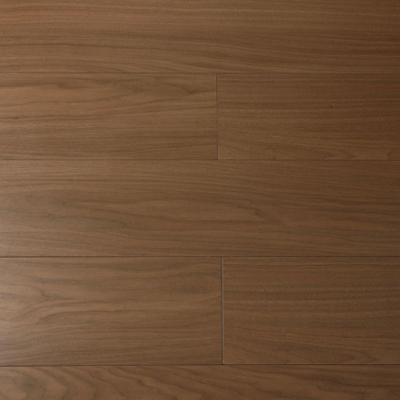
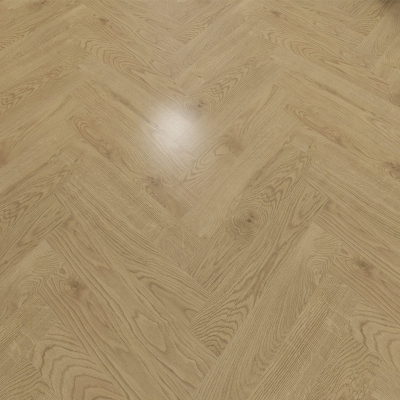
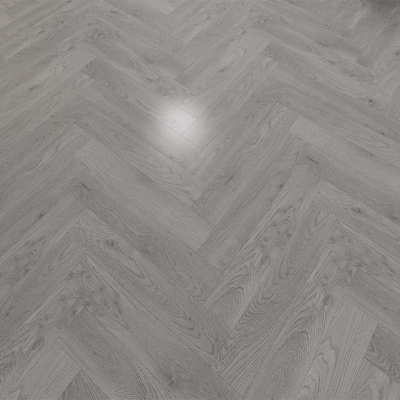
High-Definition Decorative Layer: Created using pressure-sensitive impregnation or digital printing for authentic wood, stone, or abstract designs. This layer is often infused with UV inhibitors to prevent fading, accommodating varying global climatic conditions.
The Rigid Core Layer (The Key Differentiator): This is the heart of Waterproof Carbone Flooring. It goes beyond standard SPC by integrating a refined carbon fiber mesh or carbon nanotube reinforcement into the classic mix of calcium carbonate powder and PVC stabilizers. The addition of carbon significantly enhances the core's dimensional stability coefficient (typical expansion rate <0.05%), making it highly resistant to deformation in environments with significant temperature fluctuations, such as those with underfloor heating. Crucially, this layer contains no organic wood fiber, fundamentally eliminating the risk of water-swelling and achieving full-dimensional waterproofing.
Integrated Underlayment: Most premium products feature an attached cork or IXPE foam pad. This not only improves underfoot comfort but also provides superior flooring sound reduction(impact noise reduction can reach ∆Lw 17 dB or higher), meeting the acoustic requirements for multi-unit dwellings and commercial projects.
Comprehensive Performance Beyond Waterproofing
For B2B buyers, "the best" signifies a balance of performance beyond just water resistance. High-quality Waterproof Carbone Flooring should meet or exceed key international standards:
Waterproof Rating: Passes extended water immersion tests (e.g., 72-hour soak with edge swelling <18%) under standards like EN 13329 or ASTM F1700.
Fire Rating: Achieves classifications such as Euroclass Bfl-s1 or UL Class A, critical for public tenders.
Health & Environment: Possesses FloorScore or GREENGUARD Gold certification, ensuring low VOC emissions and supporting indoor air quality.
Thermal Stability: Suitable for underfloor heating systems, typically with a tolerance range of 15°C to 45°C, offering excellent thermal conductivity.
International B2B Buyer Preferences and Core Challenges
Global procurement decisions are increasingly complex, with price no longer being the sole driver. Below is an analysis of key considerations and common pain points.
Buyer Preferences:
Versatility: Buyers favor flooring that can be specified across diverse settings—from residential bathrooms and kitchens to commercial retail spaces, clinics, and schools—simplifying their supply chain. Multifunctional waterproof flooring is thus highly valued.
Installation Efficiency: Innovative click-lock systems (like Unilin's 5G® or Valinge's mechanical lock) enable glue-free, fast installation, significantly reducing labor costs—a major evaluation criterion.
Compliance & Documentation: Products must come with complete Technical Data Sheets (TDS), Safety Data Sheets (SDS), and certifications compliant with target markets (e.g., EU CE marking, US CARB NAF).
Sustainability: A growing number of European and North American buyers require products with recycled material content and verifiable information on eco-friendly manufacturing processes.
Core Pain Points:
Performance vs. Claim Discrepancy: Some suppliers claim "100% waterproof," but subpar core materials can lead to edge warping or seam leakage after installation.
Supply Chain Volatility: Fluctuations in international shipping and raw material prices create uncertainty in delivery timelines and cost budgets.
Lack of Technical Support: Inability of suppliers to provide in-depth support for large/complex projects, such as solutions for moisture-prone concrete subfloors.
Inconsistency Between Sample & Bulk Order: Quality, color consistency, locking precision, or wear layer uniformity in bulk shipments may not match the approved samples.
Manufacturing Process & Quality Control: Ensuring "The Best" Consistently
Top-tier products are born from precisely controlled manufacturing. Taking Floorcasa's automated production line as an example, the core process includes:
Raw Material Pre-treatment & Mixing: Food-grade calcium carbonate powder, medical-grade PVC resin, stabilizers, and modified carbon materials are precisely weighed and mixed in a closed system, ensuring homogeneity and high density.
Sheet Extrusion & Calendering: The compound is formed into a uniform slab under high temperature and pressure via a twin-screw extruder, then calendered by multiple rollers into a dense sheet with a thickness tolerance under ±0.1mm—key to ensuring perfect flooring flatness.
Lamination: The wear layer, decorative layer, and rigid core are permanently fused under high temperature and pressure in a controlled environment, resulting in extremely high peel strength.
Digital Vision Inspection & Cutting: AI vision systems scan the boards in real time, marking and rejecting sections with pinholes, impurities, or pattern defects. CNC machines then cut the boards into standard planks.
Locking System Milling & Sealing Treatment: Ultra-precise milling tools form the click-lock profiles on all four sides. Some premium lines add a food-grade silicone micro-bead sealant to the lock, creating a dual barrier of physical locking and chemical moisture resistance.
Sorting & Packaging: Automated systems sort planks by color lot to ensure consistency within each carton. Moisture-proof packaging materials are used to protect product integrity during long-distance ocean freight.
Future Trends: Smart Manufacturing and Customization
The global flooring industry is advancing in two key directions. First, smart manufacturing and logistics tracking allow buyers to monitor order status from production to loading in real time. Second, high-level customization is rising. Leading suppliers like Floorcasa not only offer extensive stock designs but also provide ODM services for exclusive color and texture development for large projects, even integrating brand logos into the floor surface—a value-added service increasingly demanded by hotel chains and flagship retail stores.
B2B Sourcing Frequently Asked Questions (FAQ)
Q1: What is the main performance difference between Waterproof Carbone Flooring and traditional WPC flooring?
A1: The core differences are stability and density. Traditional WPC contains a foamed wood-plastic core, which can develop permanent indentation under heavy loads and has a higher thermal expansion coefficient. Waterproof Carbone Flooring (enhanced SPC) features a denser core (typically >2.0 g/cm³). The carbon element integration significantly improves dimensional stability and resistance to permanent deformation, making it more suitable for commercial spaces with heavy loads and environments with underfloor heating.
Q2: For large project orders, what are the typical Minimum Order Quantity (MOQ) and lead time?
A2: This depends on the specific product specifications and packaging. For standard items, one 20-foot container (approximately 300-350 sqm) is often acceptable. The standard lead time is approximately 20-25 days from confirmation of final design details and payment. For custom colors or specifications, the MOQ and lead time will be adjusted accordingly. Professional manufacturers offer flexible options and work with buyers to plan the most economical logistics solution.
Q3: Can the flooring be installed directly over existing tiles or old flooring?
A3: Yes, this is one of its significant installation advantages. The prerequisite is that the existing subfloor must be solid, level (with no more than 3mm deviation over a 2-meter span), clean, and dry. Direct installation can save substantial cost and time on demolition and leveling. We strongly recommend a pre-installation site evaluation or sending subfloor photos to our technical support team for analysis before project commencement.
Q4: How is color consistency guaranteed for large-volume orders?
A4: We ensure this through strict batch control. Each production batch uses decorative paper from the same dye lot, and master color panels are archived. For substantial orders, we recommend a Pre-shipment Inspection (PSI). You or your appointed third-party inspector can verify the product's color, quality, and packaging before loading. We also advise procuring approximately 5% extra material for the project to account for installation waste and future repairs, ensuring a perfect color match.
In a crowded market, the best waterproof flooring is the product that successfully merges cutting-edge material science, precision engineering, and practical solutions to installation challenges. It is not merely a water-resistant plank but a fully engineered system solution.
Upgrade your supply chain with high-performance flooring backed by verifiable technology.
Contact the Floorcasa international sales team today to receive detailed Technical Data Sheets (TDS) and certification documents tailored for your target market. You can also request free, full-size A-grade samples to personally test the locking precision, wear resistance, and authentic texture. Share your project requirements or market strategy with us, and we will prepare a competitive tiered quotation for your consideration.