Is There a Truly Waterproof Laminate Flooring? A Definitive Analysis for Global Buyers
The global demand for flooring that combines aesthetic appeal with exceptional durability and water resistance is rising sharply. Within this trend, one question resonates with architects, contractors, and B2B buyers worldwide: Is there a truly waterproof laminate flooring? The answer lies in advanced material science and manufacturing innovation, moving beyond traditional water-resistant claims to offer products capable of withstanding prolonged moisture exposure—a critical factor for kitchens, bathrooms, and commercial spaces.
This article provides a comprehensive analysis for international buyers, dissecting the technology, market data, and procurement considerations behind high-performance waterproof flooring.
The Rising Global Demand for Waterproof Flooring Solutions
he market for advanced flooring is expanding robustly. The global home decor market, valued at $616.6 billion in 2019, is projected to reach $838.6 billion by 2027, with flooring growing at a compound annual growth rate (CAGR) of 4.0%. A significant driver is the massive renovation sector, valued at over $3.8 trillion in 2020, which continues to grow as homeowners and businesses prioritize durable, low-maintenance materials.
Specifically, the global waterproof flooring segment is gaining immense traction. Key importing regions include the United States, the Philippines, and India, indicating widespread demand across both developed and emerging markets. This demand is fueled by practical needs: consumers seek flooring for moisture-prone areas that also offers the visual warmth and texture of natural wood or stone, without the associated maintenance or cost.
Deconstructing “Waterproof”: Technology and Structure
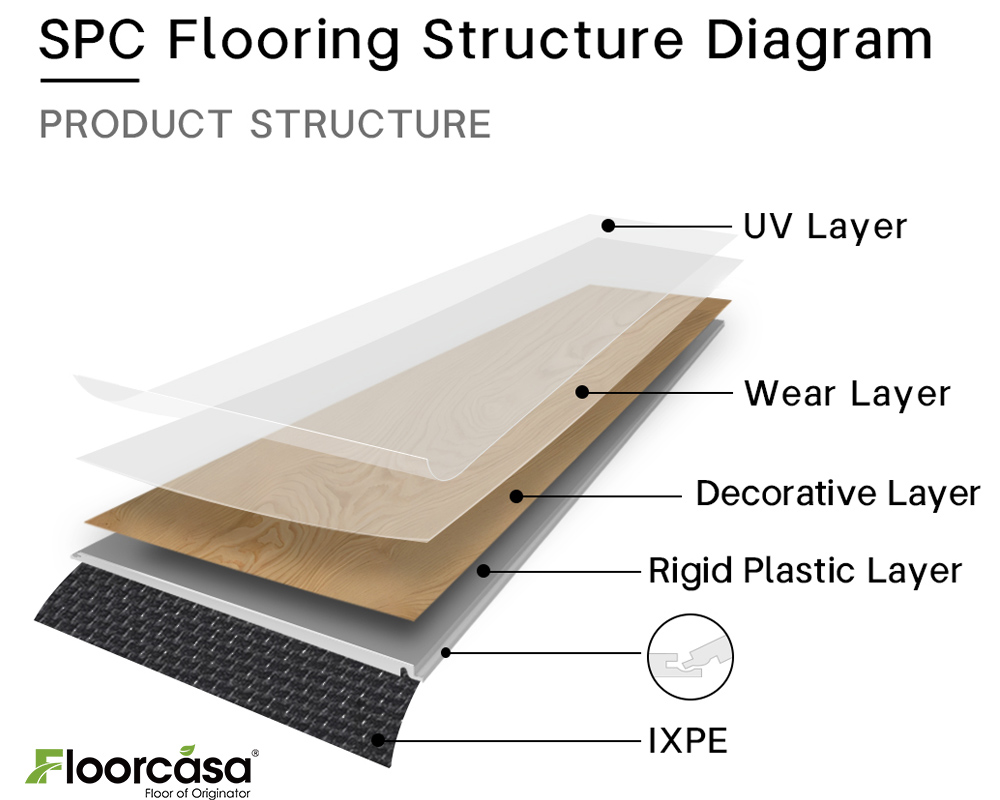
To understand what makes laminate flooring truly waterproof, one must look past the decorative surface to its core construction. Traditional laminate uses a high-density fiberboard (HDF) core, which can swell upon prolonged water contact. The next generation, often called rigid core laminate or SPC (Stone Plastic Composite) flooring, revolutionizes this design.
The Core of the Matter: SPC Technology
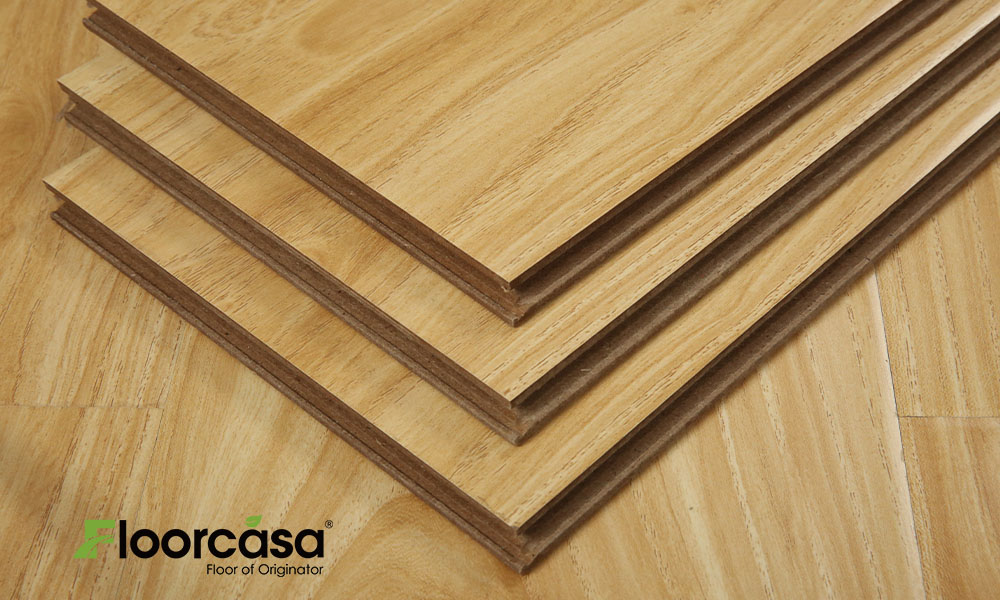
At the heart of high-performance waterproof laminate is the SPC core. This innovation primarily comprises limestone powder (calcium carbonate) and polyvinyl chloride (PVC) stabilizers. The high limestone content creates an extremely dense, stable, and inert core. Unlike wood-based materials, this mineral-rich core does not absorb water, granting it dimensional stability even in humid environments and making it suitable for installations in basements, bathrooms (including shower areas), and kitchens where waterproof flooring for bathroom applications are critical.
Multi-Layer Protective Structure
A truly waterproof laminate is engineered like a fortress, with each layer serving a distinct protective function:
Wear Layer: A transparent, durable coating of aluminum oxide (Al₂O₃). Its thickness determines the flooring abrasion resistance class (AC rating). For commercial use, a layer with higher aluminum oxide content, offering 9000+ revolutions on the Taber test, is standard.
Decorative Layer: A high-resolution printed film that authentically replicates wood, stone, or abstract designs.
Waterproof Core: The SPC rigid core, which is fundamentally impervious to water.
Attached Underlayment (Optional): Many premium products come with a pre-attached foam or cork underlayment. This layer provides flooring sound reduction, underfoot comfort, and an additional vapor barrier for concrete subfloor moisture protection.
Locking System: The most crucial element for waterproof integrity. Advanced click-lock mechanisms are not just for easy installation; they are engineered to fit tightly. Some manufacturers enhance this with wax or polymer seals applied to the joints during production, creating a watertight lock that prevents moisture from seeping between planks.
What International Buyers Prioritize: Key Considerations and Pain Points
When sourcing waterproof laminate, professional B2B buyers evaluate beyond price. Understanding these priorities is key to successful trade.
Performance Certifications and Data: Buyers demand objective proof. They look for product-specific test data for water immersion (e.g., 24-72 hour soak tests), dimensional stability (EN 434), and flooring slip resistance (R ratings). International flooring standards like ISO 23999 for dimensional stability and ASTM F925 for chemical resistance are increasingly important benchmarks.
Commercial-Grade Durability: For projects in retail, offices, or healthcare, commercial waterproof flooring must have high AC ratings (AC4-AC6), superior scratch resistance, and long-term warranties covering both residential and commercial use.
Supply Chain Reliability and Compliance: Current trade dynamics, such as tariff policies, significantly impact sourcing decisions. Buyers value suppliers with transparent logistics, consistent quality control—often aided by AI visual inspection systems in modern factories—and the ability to provide compliant documentation for materials like low-VOC or phthalate-free flooring products.
Total Cost of Ownership: Savvy buyers calculate long-term value. A truly waterproof laminate reduces risks of callbacks due to water damage, lowers maintenance costs, and extends the floor's lifecycle, offering a better return on investment despite a potentially higher initial cost.
Installation and Maintenance: Ensuring Long-Term Performance
Even the most waterproof product can fail if installed incorrectly. Proper installation is paramount for warranty validity and performance
Subfloor Preparation: The subfloor must be clean, dry, and level. For concrete subfloors, a moisture test is essential. While SPC cores are waterproof, excess subfloor moisture can lead to other issues; using a 6mm polyethylene vapor barrier is often recommended as a preventive measure.
Installation Method: Most waterproof laminate uses a floating floor installation with a click-lock system. It is critical to maintain the recommended expansion gap (usually 3/8 to 1/2 inch) around the room's perimeter to allow for natural thermal expansion.
Cutting and Fitting: For clean cuts, a fine-toothed saw blade or a specialized laminate cutter is ideal. For complex cuts around doorways or pipes, a jigsaw with a down-cutting blade helps prevent chipping on the decorative surface.
Maintenance: Routine care is simple. Sweeping or vacuuming, coupled with damp mopping using a manufacturer-approved cleaner, is sufficient. Avoiding steam mops and excessive water is standard advice to preserve the integrity of the joints and surface.
Navigating the International Trade Landscape
The global SPC flooring market, a key segment of waterproof laminate, is projected to reach $8.32 billion by 2025, with a strong CAGR of nearly 13%. Europe and North America remain the largest markets, driven by renovation and stringent performance standards. However, growth is also robust in Asia-Pacific regions due to rapid urbanization.
Buyers must navigate challenges such as tariff impacts on flooring imports, particularly noting policies affecting goods from certain regions. Furthermore, a growing emphasis on sustainable flooring materials is pushing innovation, with leading manufacturers developing products using recycled PVC content and more eco-friendly production processes. Partnering with suppliers who actively adapt to these regulatory and environmental trends is a strategic advantage.
Frequently Asked Questions (FAQ) for B2B Buyers
Q1: Is this product completely waterproof, or just water-resistant?
True waterproof laminate flooring, built with an SPC rigid core, is designed to withstand full exposure to water on its surface without damage to the core structure. It is suitable for full bathroom installations and wet areas, unlike traditional water-resistant laminate which only protects against minor spills for a limited time.
Q2: What commercial applications is this flooring suitable for?
Due to its high durability and waterproof properties, it is ideal for high-traffic commercial environments such as retail stores, boutique offices, cafes, clinics, and school corridors. Ensure the product has the appropriate commercial wear layer rating (AC4/AC5/AC6) for your specific project's foot traffic levels.
Q3: What international certifications should I look for?
Key certifications include FloorScore (for indoor air quality), CE marking (for the European market), and compliance with CARB ATCM Phase 2 or EPA TSCA Title VI for formaldehyde emissions. Specific waterproof claims should be backed by test reports from recognized labs.
Q4: Are there specific installation requirements for below-grade or concrete subfloors?
Yes. While the flooring itself is waterproof, installation over concrete slabs—especially below-grade—requires thorough moisture testing. We strongly recommend using a high-performance underlayment with an integrated vapor barrier to prevent any potential moisture vapor emission from affecting the indoor environment and installation.
The search for truly waterproof laminate flooring ends with products engineered at the molecular level for impermeability. For global B2B buyers, success lies in selecting partners that offer not only advanced, certified products but also reliable supply chains and deep technical expertise.
Are you ready to specify or stock flooring that meets the highest standards of performance and reliability? Contact us today to request comprehensive technical data sheets, third-party certification reports, and full-size samples for evaluation. Let our product specialists provide you with a detailed quotation tailored to your project volume and regional requirements.