
SPC Click Floor Customizable Herringbone Wood Flooring
Manufacturing Process
Production of SPC herringbone flooring requires precise control to ensure geometric accuracy.
Raw material batching of PVC resin, calcium carbonate, and stabilizers.
High-temperature extrusion to form SPC core sheets.
Calendering and thickness calibration.
Lamination of decor film and wear layer under controlled pressure.
UV surface curing and hardness testing.
CNC profiling of herringbone-specific click-lock edges.
Dimensional inspection, flatness control, and packaging.
Product Definition
SPC Click Floor Customizable Herringbone Wood Flooring is a rigid core vinyl flooring system manufactured with a stone-plastic composite core and precision click-lock installation, engineered to deliver dimensional stability, moisture resistance, and customizable herringbone patterns for commercial and residential construction projects.
What Is SPC Click Herringbone Flooring?
SPC click flooring combines a rigid SPC (Stone Plastic Composite) core with precision-machined locking edges for floating installation without adhesive. When produced in herringbone or fishbone formats, the accuracy of plank dimensions, left/right locking profiles, pattern matching, and surface design becomes especially important.
This product is different from standard SPC plank flooring in several ways:
Herringbone geometry. The planks are produced in left/right pairs that connect at 90° to form the herringbone pattern.
Left/right plank matching. Herringbone and fishbone layouts require matched left/right planks. The locking profiles on the left and right planks are different, and they must be correctly paired during installation.
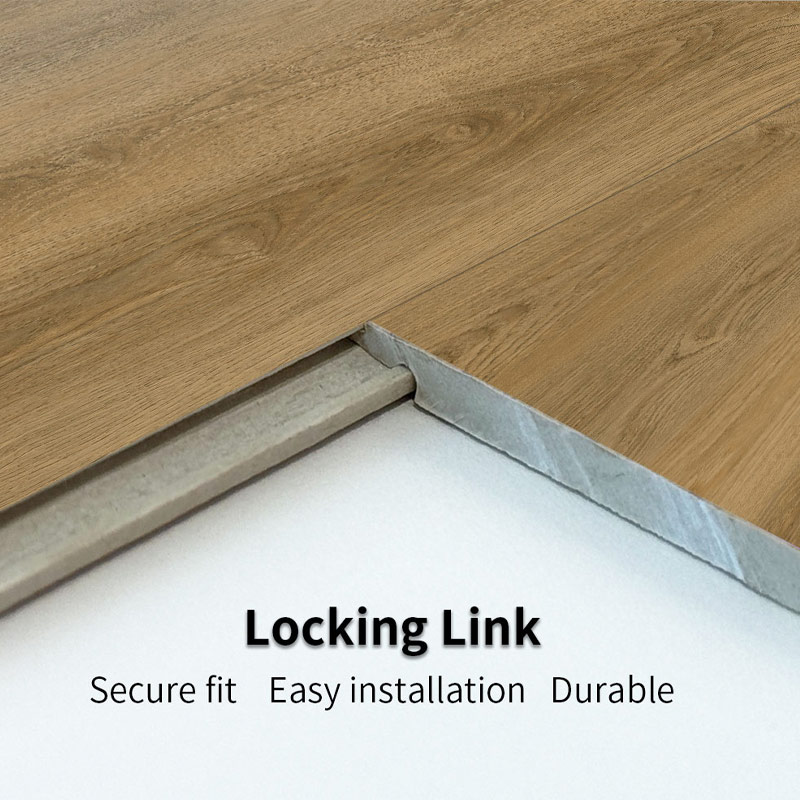
Click profile precision. The click-lock profile must be machined with high precision to ensure correct joint engagement at the herringbone angle.
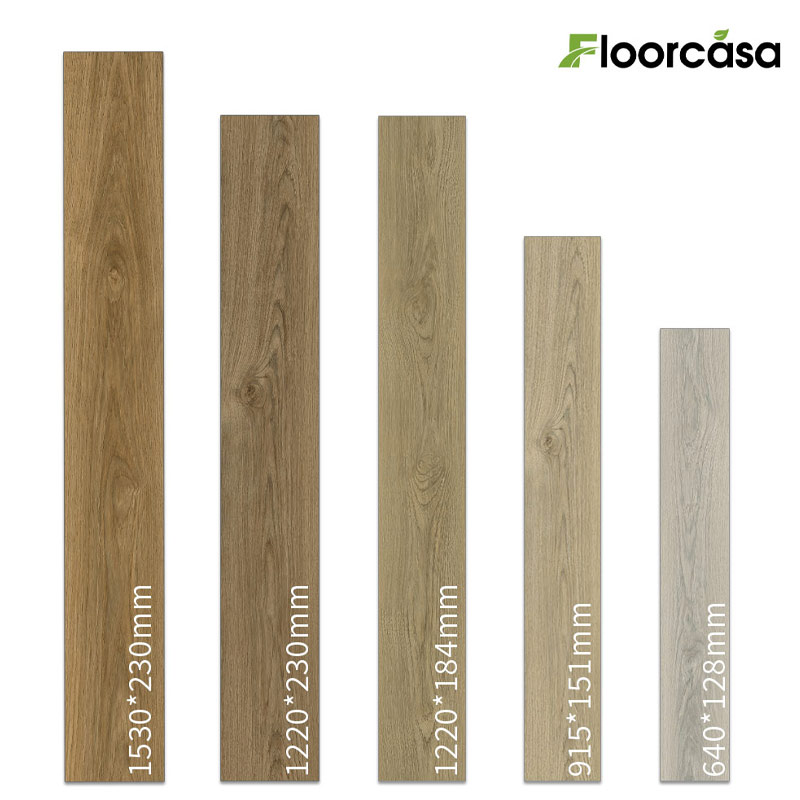
Plank size. Herringbone planks are typically shorter and narrower than standard planks. The plank size determines the scale of the pattern.
Pattern continuity. The décor must align across the herringbone pattern. The printed grain and the embossing must be consistent across the left/right planks.
Custom décor. Custom wood-grain designs, colours, and plank dimensions are available for project-specific requirements.
Installation layout. Herringbone installation requires a planned layout and a defined starting point. The installation layout affects the pattern alignment and the cutting waste.
Project quantity. Herringbone installations typically generate more cutting waste than standard plank layouts. The project quantity should account for waste and future repairs.
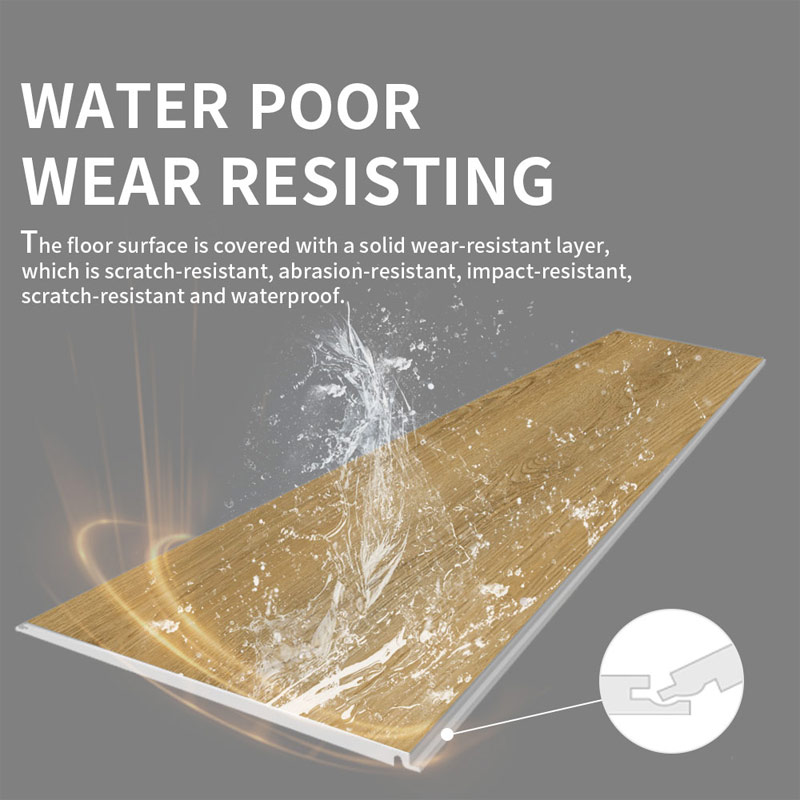
The product is suitable for commercial and residential projects where a herringbone appearance and click-lock installation are required. It is water-resistant at the core—verify the specific product's test data for the intended application.
For general SPC product information, see the What Is SPC Flooring page.
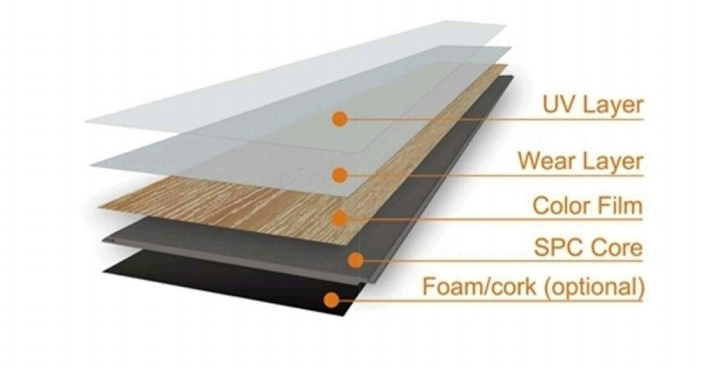
Rigid SPC Core
The SPC core is a composite of calcium carbonate and PVC. It provides structural stability, load-bearing strength, and the material into which the locking profile is machined.
Click-Lock Installation
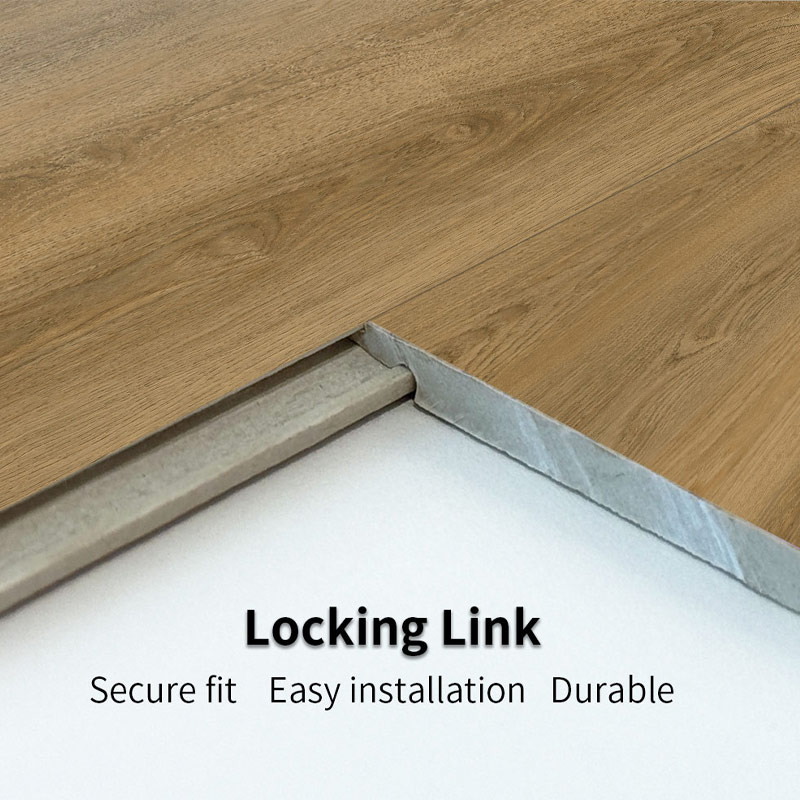
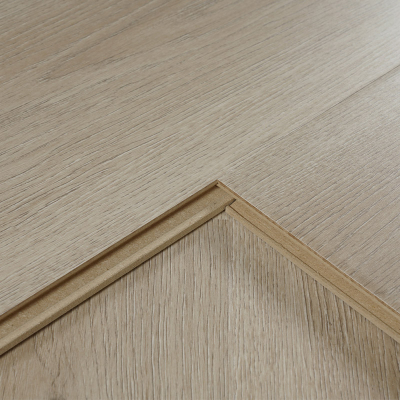
SPC click flooring uses a tongue-and-groove locking system. The planks are connected by inserting the tongue into the groove. The installation is adhesive-free and floating. Full joint engagement is required for the joint to function correctly.
Angle-click: The plank is inserted into the previous plank at an angle (typically 20–30°) and then lowered into place. Drop-lock: The plank is dropped vertically into the previous plank. Both systems are adhesive-free and floating. The appropriate system depends on the product and the installation conditions.
Herringbone and Fishbone Layouts
Herringbone and fishbone are geometric layouts in which the planks are arranged at an angle to each other.
Herringbone: Planks are laid at 90° to each other in a repeating V-shape. The plank ends are cut square. Creates a strong, geometric V-pattern with sharp angles. The pattern is bold and architectural. Suitable for statement floors and large spaces.
Fishbone: Planks are laid at an angle to each other, with the plank ends cut at an angle. The pattern is similar to herringbone but with angled ends. Creates a more continuous, flowing pattern. The pattern is more refined and elegant. Suitable for premium interiors and spaces where a softer pattern is preferred.
Available patterns: Herringbone and fishbone layouts are available. Custom patterns are available for OEM/ODM projects. Contact us for current options.
What Makes Herringbone SPC Different from Standard SPC Flooring?
Herringbone SPC flooring is different from standard SPC plank flooring in several ways. Understanding these differences helps specifiers and installers evaluate the product and plan the installation.
Left and Right Plank Profiles
Herringbone and fishbone layouts require matched left/right planks. The locking profile on the left plank and the locking profile on the right plank are different—they must be correctly paired during installation. If the left and right planks are mixed up, the pattern will not form correctly.
Pattern Alignment
The herringbone pattern requires precise alignment. The planks must be positioned at the correct angle, and the pattern must be continuous across the installation. Pattern alignment is affected by the click profile precision, the plank dimensions, and the installation layout.
Plank Dimensions
Herringbone planks are typically shorter and narrower than standard planks. The plank size determines the scale of the pattern. Larger planks create a larger-scale pattern; smaller planks create a finer pattern.
Cutting and Layout Requirements
Herringbone installation requires a planned layout and a defined starting point. The layout determines where the pattern begins and how the cuts are made at the perimeter. Herringbone installations typically generate more cutting waste than standard plank layouts.
Click Precision
The click-lock profile must be machined with high precision to ensure correct joint engagement at the herringbone angle. The precision of the profile determines how well the planks connect and how well the pattern forms.
Comparison: Standard SPC plank vs herringbone SPC:
| Factor | Standard SPC Plank | Herringbone SPC |
|---|---|---|
| Plank shape | Standard plank | Left/right paired planks |
| Locking profile | Single profile | Left/right profiles |
| Installation layout | Standard plank layout | Herringbone/fishbone layout |
| Pattern alignment | Standard | Critical |
| Cutting waste | Lower | Higher |
| Installation complexity | Standard | Higher |
Important note: Herringbone SPC flooring requires careful planning and installation. Verify the left/right plank pairing, the click profile precision, and the installation layout before ordering.
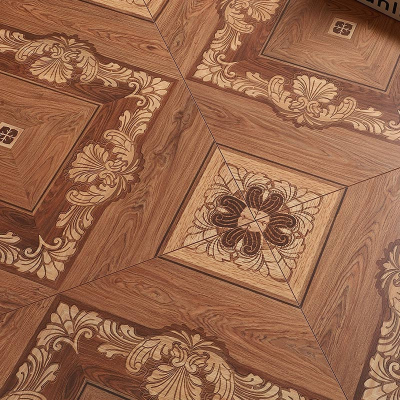
SPC Herringbone Flooring Design Options
SPC herringbone flooring is available in a range of design options. The following options can typically be customized for project-specific requirements.
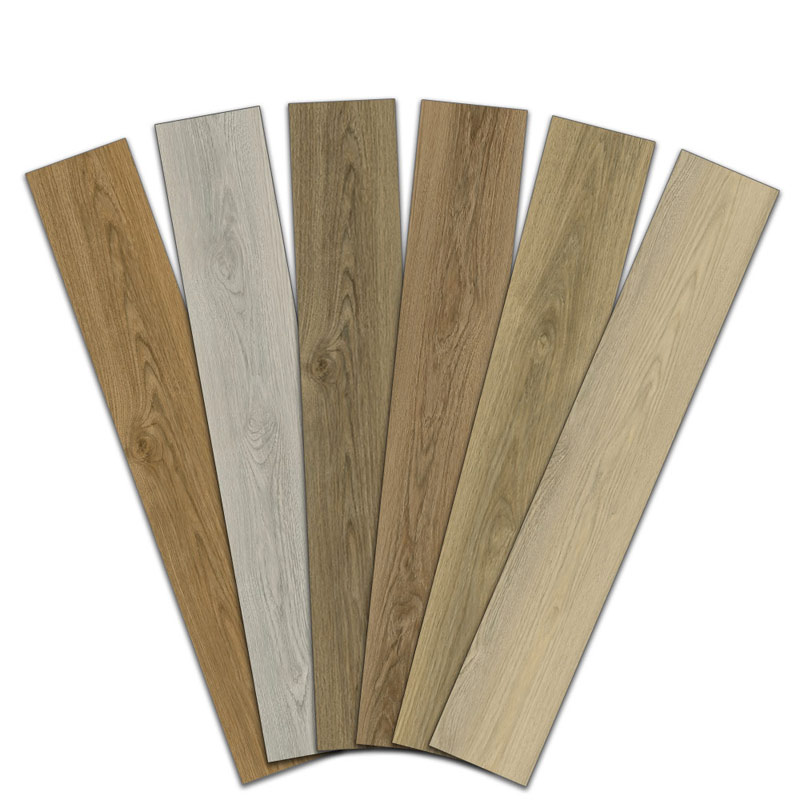
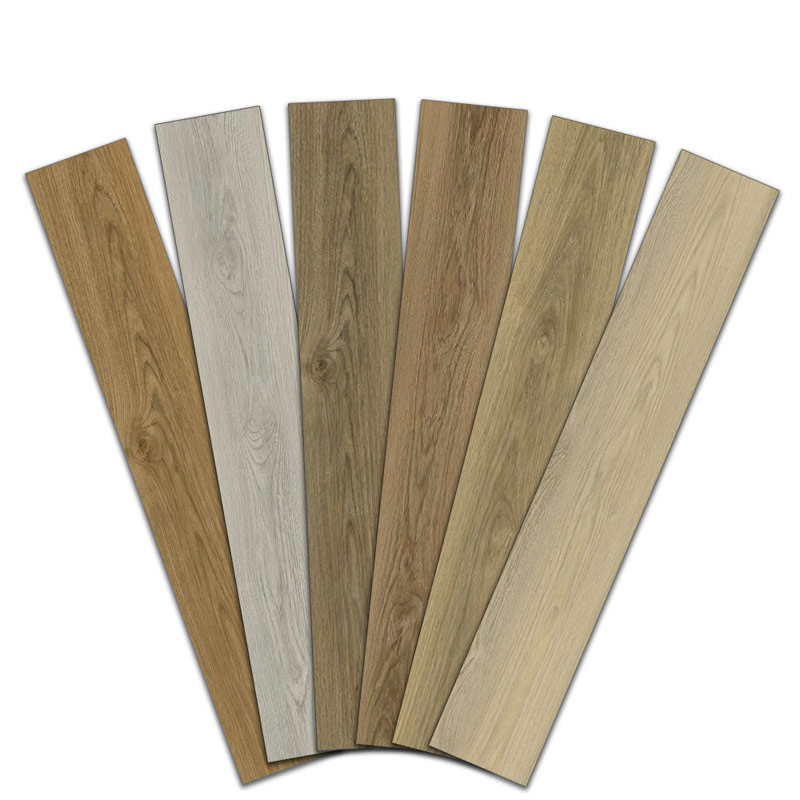
Oak Herringbone
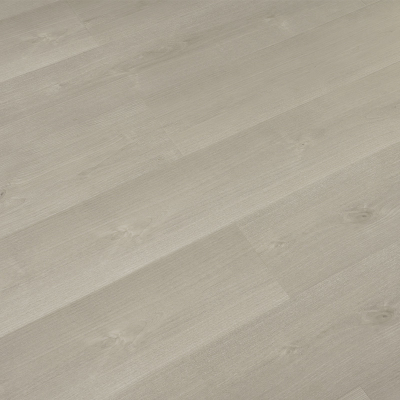
Oak herringbone is the most common design. The printed grain reproduces the appearance of oak, with the characteristic grain lines and colour variation of oak wood. Oak is the most versatile choice; suitable for most residential and commercial interiors.
Walnut and Other Wood Effects
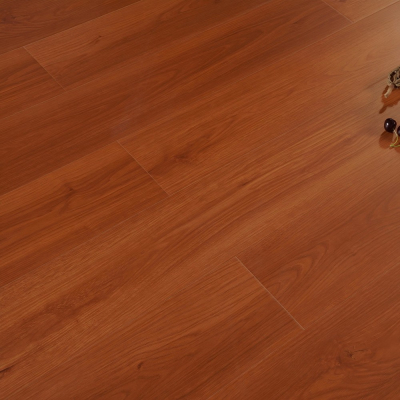
Walnut and other wood effects are also available. The printed grain reproduces the appearance of the specific wood species, with the characteristic colour and grain pattern of that species. Walnut provides a darker, richer appearance; suitable for premium interiors.
Custom Wood-Grain Patterns
Custom wood-grain patterns are available for OEM/ODM projects. Custom décor paper can be produced to match a specific design reference, including wood species, colour, and grain pattern.
Custom Colors
Custom colours are available for OEM/ODM projects. Custom colour matching can be produced to match a specific design reference.
Custom Plank Dimensions
Custom plank dimensions are available for OEM/ODM projects. Custom plank sizes can be produced to match the design intent and the scale of the pattern.
Surface Embossing and Texture
Surface embossing and texture options are available. Options include standard embossed, EIR (Embossed in Register—where the embossing is synchronized with the printed grain), and custom texture patterns.
Important note: Design availability depends on the specific product range. Request physical samples and review them under the actual lighting conditions of the space before making a final decision.
SPC Click Flooring Specifications
| Specification | Available Options |
|---|---|
| Thickness | 4 / 5 / 6 mm (verify actual product range) |
| Wear Layer | 0.3 / 0.5 / 0.7 mm |
| Click System | Unilin / Valinge compatible (verify actual system) |
| Plank Size | Customizable; contact us for available sizes |
| Surface | Wood grain / EIR / custom |
| Underlay | IXPE / EVA / optional |
| Pattern | Herringbone / fishbone / custom |
| Core Density | 1.9–2.1 g/cm³ |
| Dimensional Stability | ≤ 0.15% |
| Slip Resistance | R9–R10 |
| Formaldehyde Emission | Verify applicable emission class for the target market |
Contact us for the complete technical datasheet, test reports, and OEM specifications. Technical values vary by production specification, and the appropriate specification depends on the project requirements. We provide test reports with each shipment.
Important note on specifications: Specifications are not fixed for all products. Verify the actual specification for the specific product before ordering.
How Is SPC Herringbone Flooring Manufactured?
The manufacturing process for SPC herringbone flooring includes the following steps.
SPC Core Production
PVC resin and calcium carbonate are compounded and extruded into a rigid core. The core is cooled, stabilised, and cut to size.
Decorative Layer Lamination
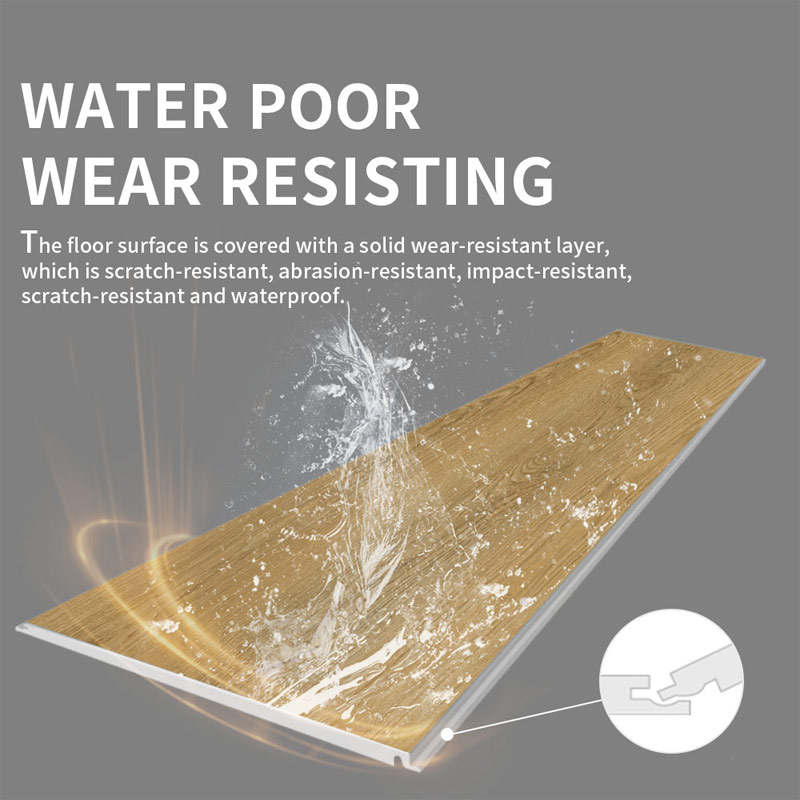
The decorative film and wear layer are laminated onto the core. The surface is coated with a UV coating for abrasion and chemical resistance.
Precision Click Profiling
The click-lock profile is machined into the plank edges using CNC equipment. For herringbone products, the left and right profiles are machined separately and with high precision. The profile precision determines joint engagement and pattern alignment.
Dimensional and Flatness Inspection
The finished panels are inspected for thickness, density, flatness, and profile dimensions. Panels that do not meet the specification are rejected.
Pattern Matching and Packaging Inspection
The left/right planks are verified for pattern matching and packed in matched pairs. Packaging is inspected for correct labelling and batch coding.
For the general SPC manufacturing process, see the SPC flooring manufacturing page.
SPC Herringbone Flooring vs Other Herringbone Floors
| Flooring | Water Resistance | Pattern | Installation | Stability | Typical Use |
|---|---|---|---|---|---|
| SPC Herringbone | Product-dependent; verify test data | Herringbone | Click | High | Residential / Commercial |
| Laminate Herringbone | Product-dependent | Herringbone | Click | Medium | Residential |
| Engineered Wood | Product-dependent | Herringbone | Glue / nail / click | Medium | Premium interiors |
| Glue-down LVT | Product-dependent; verify test data | Custom | Adhesive | High | Commercial |
Important note: Water resistance is product-dependent. Verify the specific product's test data before specification. Do not rely on general claims—request the test report.
Where Is SPC Herringbone Flooring Used?
SPC herringbone flooring is suitable for a range of commercial and residential applications. The following sections explain the considerations for each application.
Apartments
Why it works here: Herringbone SPC provides a design-led appearance for apartment interiors. The click-lock system allows fast installation, and the rigid core provides dimensional stability.
Why not standard SPC plank: Standard SPC plank provides a linear plank appearance. Herringbone SPC provides a geometric pattern that adds architectural definition. The appropriate choice depends on the design intent.
Key considerations: Pattern selection, plank size, subfloor flatness.
Hotels and Serviced Apartments
Why it works here: Herringbone SPC provides a premium appearance for hotel guest rooms and public areas. The click-lock system allows fast installation, and the rigid core handles hotel traffic.
Why not standard SPC plank: Standard SPC plank provides a neutral appearance. Herringbone SPC provides a design statement that supports the hotel's design direction.
Key considerations: Wear layer, pattern consistency, colour consistency.
Offices
Why it works here: Herringbone SPC provides a professional, design-led appearance for offices. The rigid core handles commercial traffic, and the click-lock system allows fast installation.
Why not standard SPC plank: Standard SPC plank provides a clean, linear appearance. Herringbone SPC provides architectural definition for reception and client-facing areas.
Key considerations: Wear layer, rolling loads, pattern alignment.
Retail Interiors
Why it works here: Herringbone SPC provides a distinctive, design-led floor for retail environments. The rigid core handles customer traffic, and the click-lock system allows fast installation.
Why not standard SPC plank: Standard SPC plank provides a neutral backdrop. Herringbone SPC provides a design statement that supports the brand.
Key considerations: Wear layer, cleaning regime, pattern consistency.
Premium Residential Projects
Why it works here: Herringbone SPC provides a premium appearance for residential interiors. The custom design options allow the floor to match the interior design intent.
Why not standard SPC plank: Standard SPC plank provides a general wood-look appearance. Herringbone SPC provides a premium, design-led appearance.
Key considerations: Pattern selection, plank size, colour consistency.
Mixed-Use Developments
Why it works here: Herringbone SPC provides a consistent appearance across mixed-use developments. The click-lock system allows fast installation, and the rigid core handles varied traffic.
Why not standard SPC plank: Standard SPC plank provides a general appearance. Herringbone SPC provides a design-led appearance that supports the development's positioning.
Key considerations: Wear layer, pattern consistency, colour consistency.
For product-specific recommendations, contact us with your project requirements.
How to Choose SPC Herringbone Flooring for a Project
The following factors should be considered when specifying SPC herringbone flooring.
Traffic level. Match the wear layer to the expected traffic level. 0.3 mm for residential; 0.5 mm for general commercial; 0.7 mm for heavy commercial.
Wear layer. The wear layer thickness determines abrasion resistance. Verify the wear layer against the expected traffic level.
Plank size. The plank size determines the scale of the pattern. Larger planks create a larger-scale pattern; smaller planks create a finer pattern.
Pattern. Choose between herringbone and fishbone based on the design intent. Custom patterns are available for OEM/ODM projects.
Click system. Verify the click system type and locking test reports. The precision of the locking profile determines joint engagement and pattern alignment.
Subfloor requirements. Verify subfloor flatness and moisture content before installation. Uneven subfloors can cause pattern misalignment and joint problems.
Acoustic underlay. Specify acoustic underlayment where acoustic performance is required. The appropriate underlayment depends on the project requirements.
Fire and emission requirements. Verify the applicable fire classification and emission class for the target market.
For OEM/ODM inquiries, contact us with your project requirements. For pricing and lead times, submit a formal inquiry.
SPC Herringbone Installation
Herringbone SPC installation requires specific considerations beyond standard SPC installation. The following points are the most important.
Left/right boards. Verify the left/right plank pairing before installation. The left and right planks have different locking profiles and must be correctly paired.
Layout. Plan the installation layout before starting. Determine the starting point and the pattern direction. The layout affects the pattern alignment and the cutting waste.
Starting point. Choose the starting point carefully. The starting point determines where the pattern begins and how the cuts are made at the perimeter.
Pattern alignment. Maintain pattern alignment during installation. Check the pattern at regular intervals to ensure the alignment is correct.
Subfloor flatness. Verify subfloor flatness before installation. Uneven subfloors can cause pattern misalignment and joint problems.
Expansion gap. Maintain expansion gaps at the perimeter and at intermediate intervals, as required by the product and project conditions.
Click engagement. Ensure full click engagement during installation. Use a tapping block (not a mallet) and avoid excessive force.
Damaged plank replacement. Individual planks can be replaced by disassembling the floor from the nearest edge, provided the locking profiles are not damaged.
Post-installation inspection. Check the pattern alignment, joint engagement, and expansion gaps. Verify that the left/right planks are correctly paired and that the pattern is continuous. Check for any damaged planks or edge damage.
For detailed installation instructions, contact us for the installation manual for your specific product. For general SPC installation instructions, see the SPC installation and maintenance guide.
Common SPC Herringbone Problems
The most common problem in SPC herringbone installations is pattern misalignment, followed by left/right plank mismatch, broken click edges, joint opening, uneven subfloor, incorrect wear layer selection, and wrong plank orientation.
Pattern misalignment. Cause: incorrect left/right plank pairing, inaccurate pattern cutting, or incorrect installation layout. Solution: disassemble and reinstall the affected area. Prevention: verify left/right pairing and layout before installation.
Left/right plank mismatch. Cause: left and right planks mixed up during installation. Solution: identify and replace the mismatched planks. Prevention: separate left and right planks before installation.
Broken click edges. Cause: excessive force during installation, incorrect installation angle, or damaged profile. Solution: replace damaged planks. Prevention: use a tapping block (not a mallet) and correct installation angle.
Joint opening. Cause: insufficient expansion gaps, thermal movement, or damaged locking profile. Solution: address the cause and replace affected planks if necessary. Prevention: calculate expansion gaps correctly and handle planks carefully.
Uneven subfloor. Cause: subfloor flatness beyond tolerance. Solution: level the subfloor before installation. Prevention: verify subfloor flatness before installation.
Incorrect wear layer selection. Cause: wear layer insufficient for the traffic level. Solution: replace affected planks and specify a wear layer appropriate for the traffic level. Prevention: verify the wear layer against the expected traffic level.
Wrong plank orientation. Cause: planks installed in the wrong direction. Solution: disassemble and reinstall. Prevention: plan the layout and verify the orientation before installation.
Limitations of SPC Herringbone Flooring
The following limitations should be considered during specification.
Installation complexity. Herringbone installation requires more planning and generates more cutting waste than standard plank layouts. The left/right plank pairing must be correct, and the pattern alignment is critical.
Cutting waste. Herringbone installations typically generate more cutting waste than standard plank layouts. Order additional material to cover waste and future repairs.
Moisture resistance. The product is water-resistant at the core—verify the specific product's test data for the intended application. For wet areas, see the Waterproof SPC Flooring guide.
Surface cannot be refinished. The SPC surface cannot be sanded and refinished. Damaged planks must be replaced.
Colour variation. Colour and texture appearance can vary under different lighting conditions. Request physical samples and review them under the actual lighting conditions of the space.
For projects where these limitations are a concern, consider alternative flooring types or additional system components.
Custom SPC Herringbone Flooring for Projects
For distributors, importers, and project suppliers, OEM and ODM services allow the product to be customized to the market or brand requirements.
Custom color. Custom colour matching to a specific design reference.
Custom decor. Custom wood-grain designs, including species, colour, and grain pattern.
Custom plank size. Custom plank dimensions.
Custom click profile. Click system options according to project requirements.
Custom wear layer. 0.3 / 0.5 / 0.7 mm according to project requirements.
Custom backing. IXPE / EVA / optional backing according to project requirements.
Custom packaging. Custom packaging specifications, including carton design, pallet configuration, and labelling.
Private label. Custom branding on packaging and product.
Sample approval. Custom orders typically require sample approval before production.
MOQ. MOQ depends on the customization scope. Contact us for details.
Lead time. Lead time for OEM orders is typically 20–35 days after sample approval, depending on the customization scope and order volume.
For OEM/ODM inquiries, contact us with your project requirements.
FAQ: SPC Click Herringbone Flooring
1. What should I check in an SPC herringbone specification?
Check the thickness, wear layer, click system, plank size, pattern (herringbone or fishbone), core density, dimensional stability, and emission class. Request test reports and a physical sample before specification.
2. What is the difference between herringbone and fishbone SPC flooring?
Herringbone planks are laid at 90° to each other with square-cut ends. Fishbone planks are laid at an angle with angled ends. The two patterns create different visual effects.
3. Does SPC herringbone flooring use click-lock installation?
Yes. SPC herringbone flooring uses a click-lock system for adhesive-free floating installation. Full joint engagement is required. Both angle-click and drop-lock systems are available.
4. Can SPC herringbone flooring be customized?
Yes. Custom colour, custom décor, custom plank size, custom click profile, custom wear layer, and custom packaging are available for OEM/ODM projects.
5. Can plank size be customized?
Yes. Custom plank dimensions are available for OEM/ODM projects. Contact us with your requirements.
6. Can the wood-grain design be customized?
Yes. Custom wood-grain designs, including species, colour, and grain pattern, are available for OEM/ODM projects.
7. Which wear layer should I choose?
0.3 mm for residential; 0.5 mm for general commercial; 0.7 mm for heavy commercial. Verify the wear layer against the expected traffic level.
8. Can SPC herringbone flooring be used in hotels?
Yes. SPC herringbone flooring is suitable for hotel guest rooms and public areas, with an appropriate wear layer. Verify the wear layer against the expected traffic level.
9. Can it be installed over existing tile?
Yes, if the tile is flat, sound, and clean. Verify subfloor flatness and moisture content before installation.
10. Can individual damaged planks be replaced?
Yes. Individual planks can be replaced by disassembling the floor from the nearest edge, provided the locking profiles are not damaged.
CTA
For project quotations, technical datasheets, custom design samples, or OEM/ODM inquiries for SPC herringbone flooring, procurement and engineering teams may submit formal requests for evaluation and specification support.
E-E-A-T Author Credentials
This article is prepared by a construction materials technical consultant with extensive experience in SPC flooring manufacturing assessment, international sourcing, and EPC project specification, ensuring accuracy, compliance, and practical relevance for B2B decision-makers.