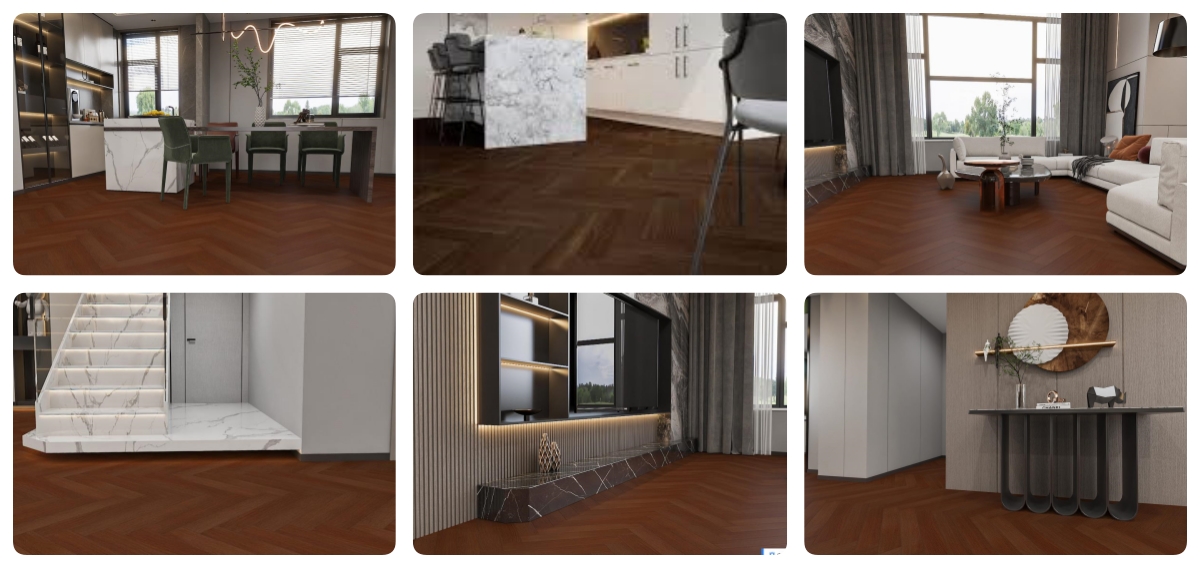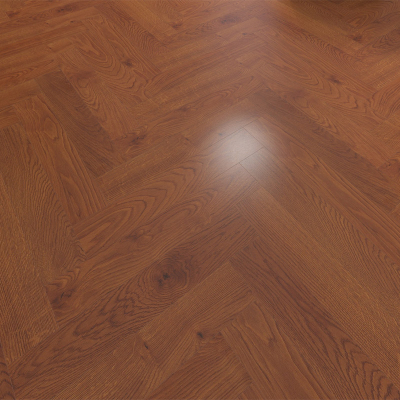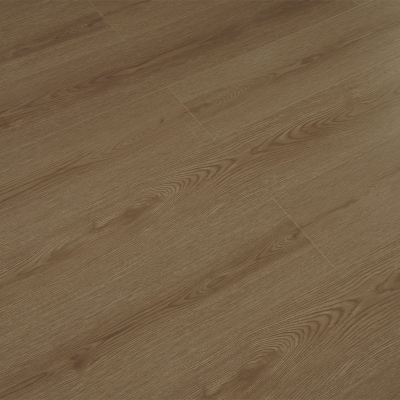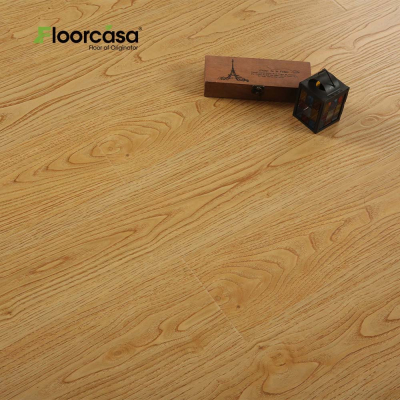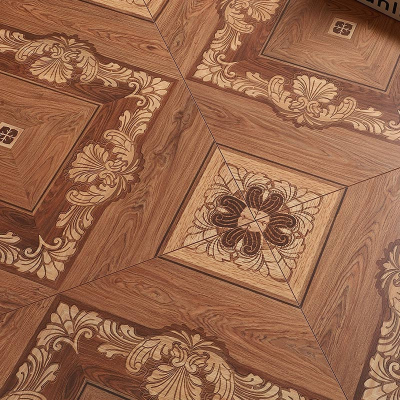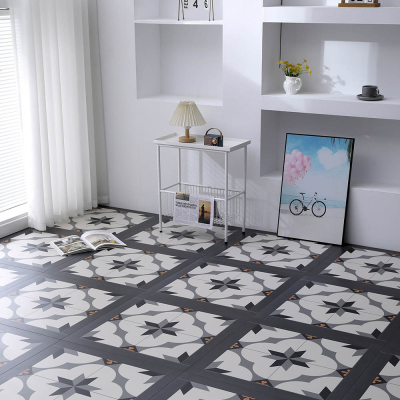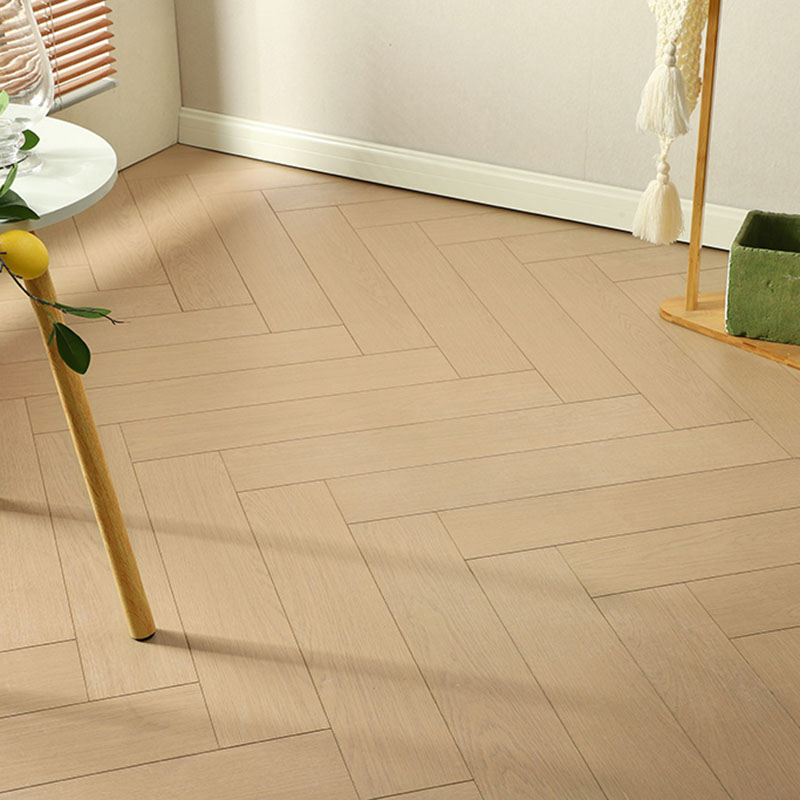
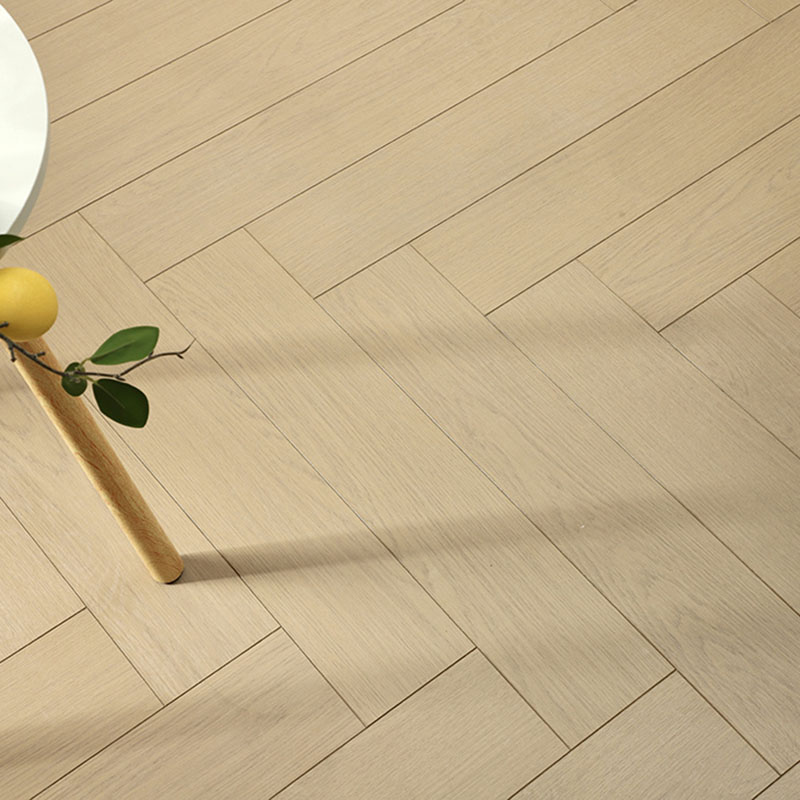
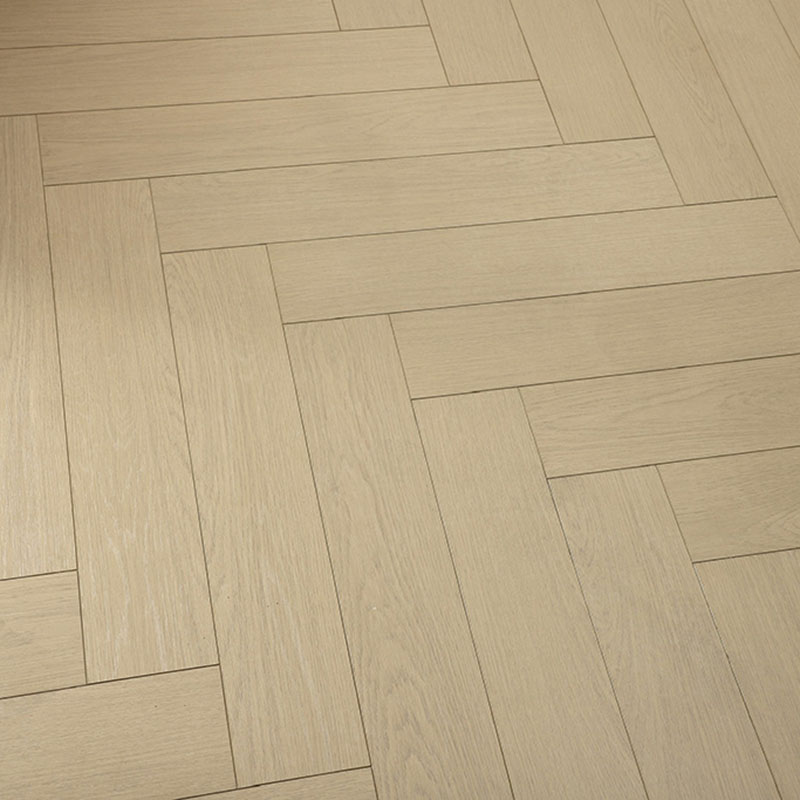
14mm Herringbone Three-Layer Wood Flooring Engineered Flooring
Manufacturing Process
Log Selection and Drying
Hardwood logs are kiln-dried to controlled moisture levels to minimize internal stress.Veneer Slicing
Precision slicing machines produce uniform wear layers suitable for patterned layouts.Core Assembly
Multi-ply plywood cores are cross-laminated using industrial hot presses.Layer Bonding
High-strength, low-emission adhesives bond the three layers under calibrated pressure.Profiling and Cutting
CNC equipment forms tongue-and-groove profiles optimized for herringbone alignment.Surface Finishing
UV coating or oiling lines apply protective finishes with consistent thickness control.
Product Definition
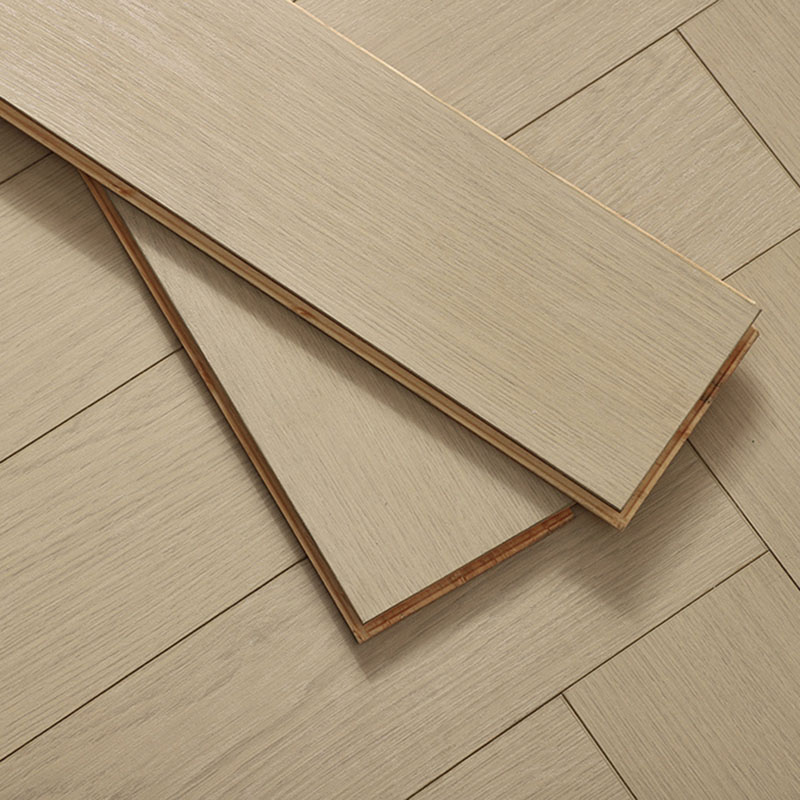
14mm Herringbone Three-Layer Wood Flooring Engineered Flooring is a structural wood flooring solution composed of a hardwood wear layer, a cross-laminated core, and a stabilizing back layer, engineered to deliver dimensional stability, aesthetic consistency, and suitability for patterned installations such as herringbone layouts in residential and commercial projects.
Technical Parameters and Specifications
Total thickness: 14 mm ± 0.3 mm
Wear layer thickness: 2.5–3.0 mm hardwood veneer
Core layer: Multi-ply eucalyptus or birch plywood
Back layer: Balanced softwood veneer (1.8–2.0 mm)
Typical plank size: 600–750 mm length × 90–120 mm width
Moisture content at delivery: 8–11%
Surface finish: UV-lacquered or natural oil
Installation method: Glue-down (recommended for herringbone)
Compatible underfloor heating: Yes (water-based systems)
Structure and Material Composition
Top Layer (Wear Layer)
Natural hardwood species such as oak or walnut
Precision-sliced veneer for grain continuity
Middle Core Layer
Cross-laminated plywood structure
Provides resistance to warping and cupping
Bottom Stabilizing Layer
Balancing veneer aligned opposite grain direction
Improves dimensional equilibrium
Manufacturing Process
Log Selection and Drying
Hardwood logs are kiln-dried to controlled moisture levels to minimize internal stress.Veneer Slicing
Precision slicing machines produce uniform wear layers suitable for patterned layouts.Core Assembly
Multi-ply plywood cores are cross-laminated using industrial hot presses.Layer Bonding
High-strength, low-emission adhesives bond the three layers under calibrated pressure.Profiling and Cutting
CNC equipment forms tongue-and-groove profiles optimized for herringbone alignment.Surface Finishing
UV coating or oiling lines apply protective finishes with consistent thickness control.
Industry Comparison
| Flooring Type | Structural Stability | Design Flexibility | Installation Complexity | Lifecycle Cost |
|---|---|---|---|---|
| 14mm Three-Layer Engineered | High | High (Herringbone) | Medium–High | Moderate |
| Solid Hardwood | Low–Medium | Medium | High | High |
| Laminate Flooring | Medium | Low | Low | Low |
| SPC Vinyl Flooring | Very High | Medium | Low | Low–Moderate |
Application Scenarios
Residential developments requiring premium patterned flooring
Hotel guestrooms and corridors managed by EPC contractors
Retail and showroom spaces seeking visual differentiation
Apartment renovation projects handled by flooring distributors
Core Pain Points and Solutions
Dimensional instability → Cross-laminated core mitigates expansion and contraction
Complex installation → Factory-precision profiling improves alignment accuracy
Inconsistent appearance → Controlled veneer selection ensures grain uniformity
Maintenance concerns → UV-coated surfaces reduce long-term wear
Risk Warnings and Mitigation
Improper subfloor moisture can lead to bonding failure; moisture testing is mandatory
Non-approved adhesives may compromise structural integrity
Incorrect acclimatization increases risk of post-installation movement
Procurement and Selection Guide
Confirm project requirements and traffic classification
Verify wear layer thickness for expected lifecycle
Request technical datasheets and test reports
Evaluate compatibility with underfloor heating systems
Assess supplier production capacity and QC systems
Conduct sample installation trials before bulk order
Engineering Case Example
In a mid-rise residential project of approximately 3,200 m², 14mm herringbone three-layer engineered flooring was specified for living and dining areas. Glue-down installation over cementitious screed achieved stable performance over two seasonal cycles, with no reported joint separation or surface deformation.
FAQ
Is 14mm thickness sufficient for commercial use? — Yes, for light to medium traffic.
Can it be refinished? — Limited refinishing is possible depending on wear layer.
Is herringbone installation mandatory glue-down? — Recommended for stability.
What subfloor tolerance is required? — Flatness within 2 mm over 2 m.
Is it suitable for underfloor heating? — Yes, with controlled temperature limits.
What adhesive type is required? — Elastic MS polymer adhesives.
How long is acclimatization? — Minimum 48–72 hours.
Does it require expansion gaps? — Yes, perimeter expansion is necessary.
What is the typical lead time? — 30–45 days for bulk orders.
How is quality consistency ensured? — Batch-based moisture and bond testing.
Commercial CTA
For project quotations, detailed technical documentation, or engineering samples of 14mm herringbone three-layer wood flooring engineered flooring, please contact our technical sales team with your project specifications.
E-E-A-T Author Credentials
This article is prepared by flooring industry professionals with over 15 years of experience in engineered wood flooring manufacturing, international project supply, and EPC technical consulting, ensuring accuracy, reliability, and engineering relevance for B2B decision-makers.
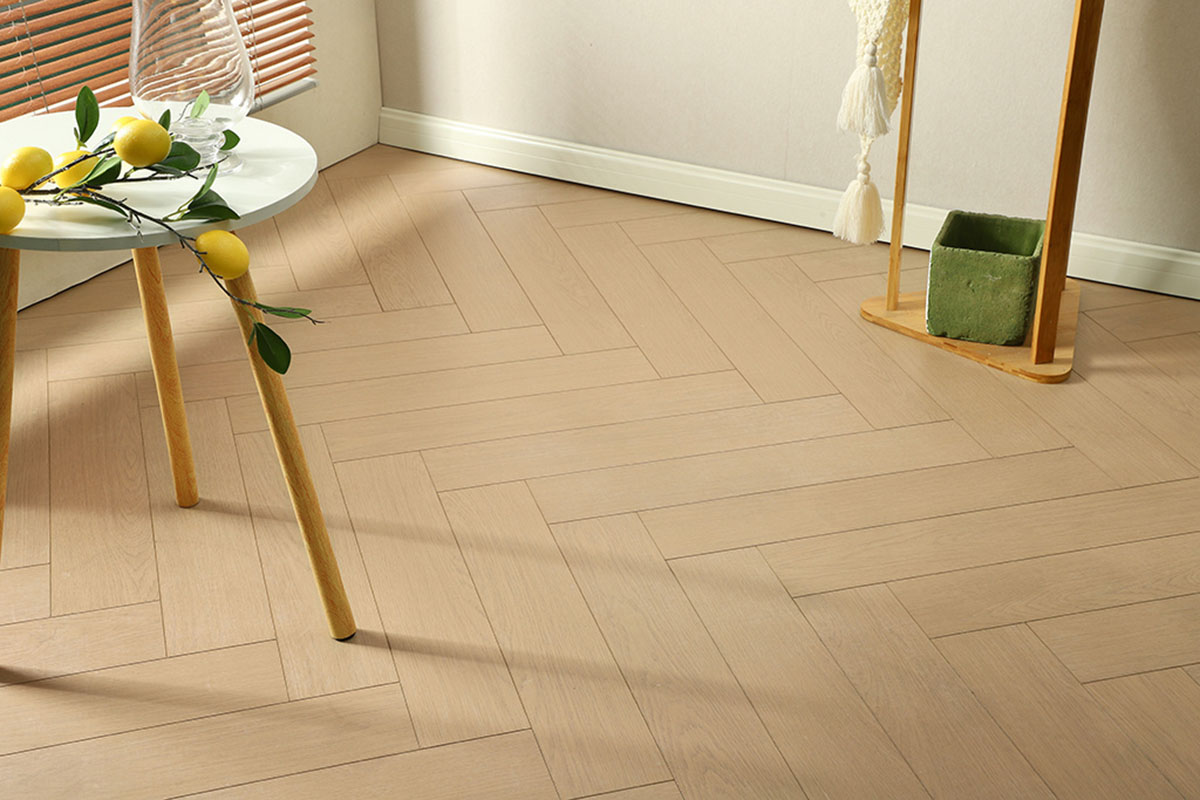
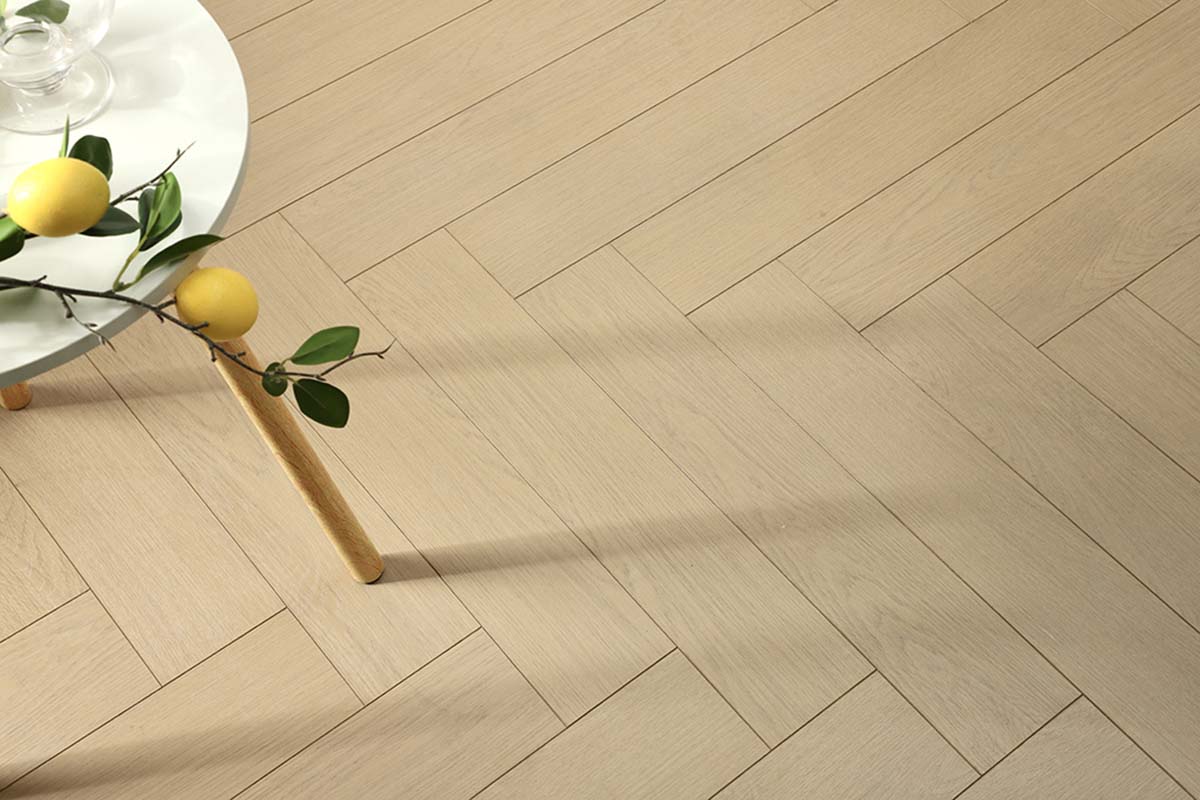
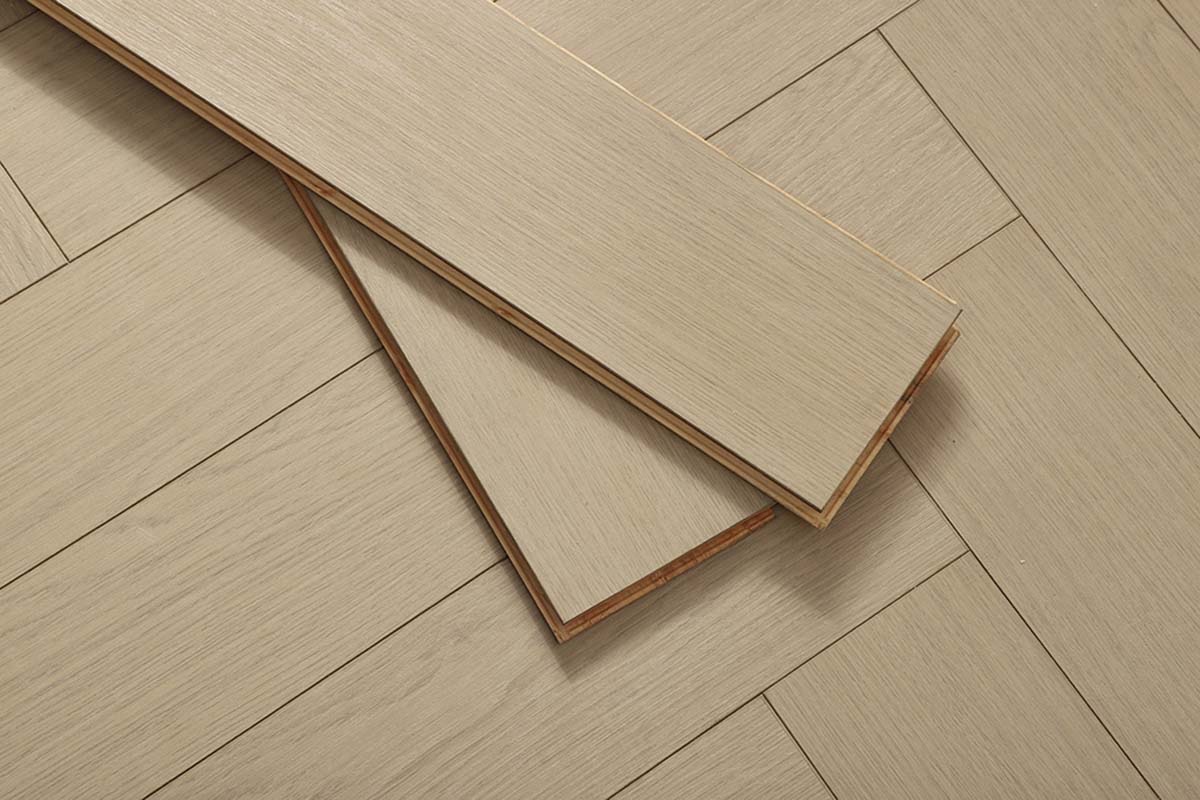

| Application |
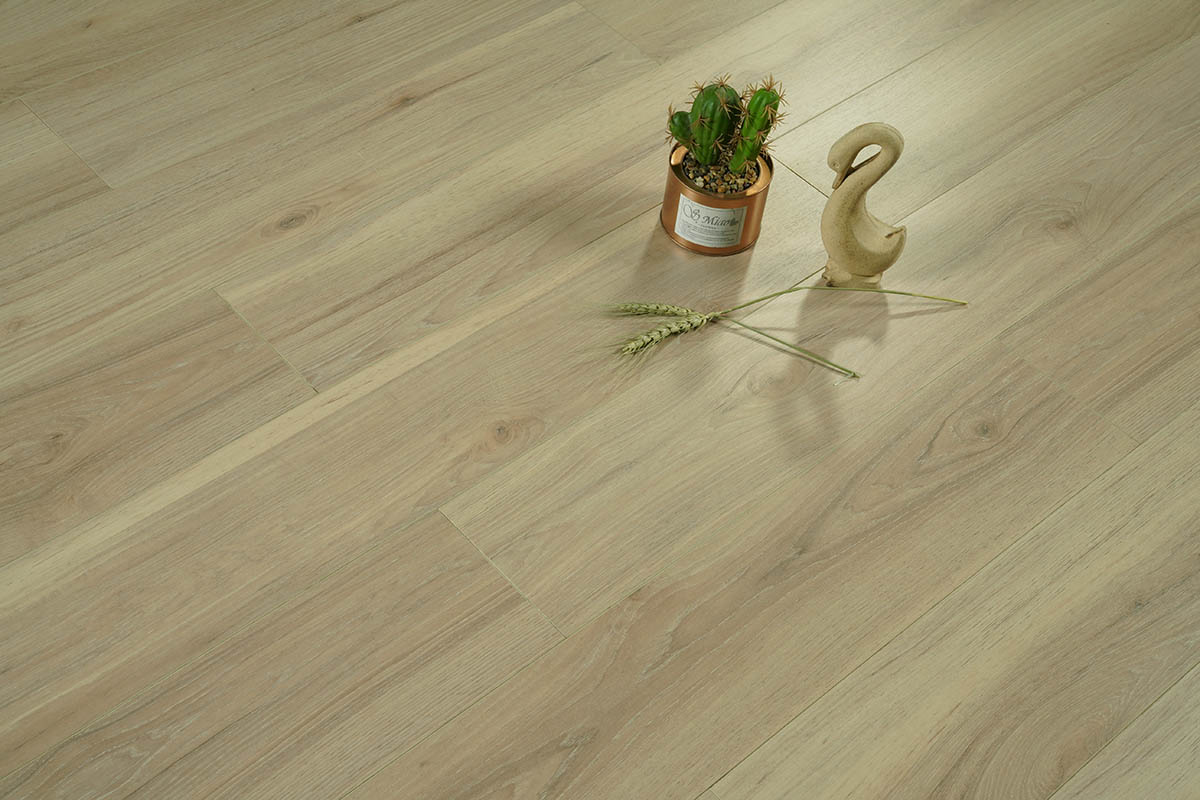
Application :Living room, bedroom, kitchen, toilet, children's play area, office, store, exhibition hall, express hotel, office lobby, primary and secondary school, general hospital, fitness studio, international airport, high-speed rail station, etc.