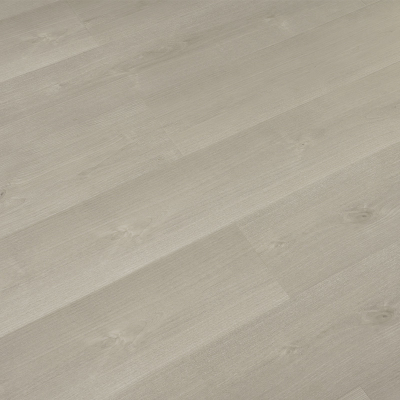
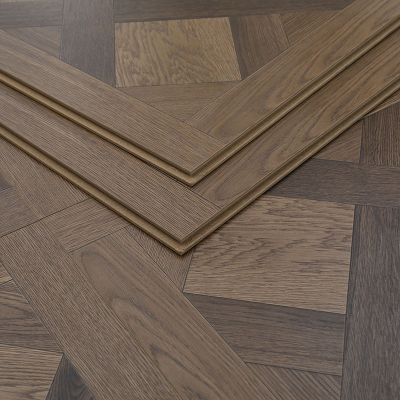
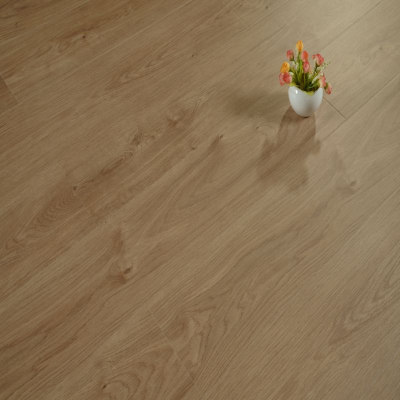
Ac3 laminate flooring commercial use
AC3 laminate flooring commercial use refers to laminate flooring products classified under AC3 abrasion rating, designed primarily for moderate residential traffic but conditionally applicable in low-traffic commercial environments when correctly specified, installed, and maintained within engineering limits.
Technical Parameters and Specifications
AC3 laminate flooring performance is defined by standardized testing under EN 13329, combining abrasion resistance with supporting mechanical indicators.
Abrasion Class: AC3 (≥ 2,000 Taber cycles)
Use Class: Class 31 (Light commercial)
Core Density: 820–880 kg/m³ HDF
Thickness Range: 7–10 mm
Impact Resistance: ≥ 800–1,000 mm (large ball test)
Surface Hardness: ≥ 2H–3H (pencil hardness)
Static Load Resistance: ≥ 700 kg
Dimensional Stability: ≤ 0.15% thickness swelling (24h)
Structure and Material Composition
The durability of AC3 laminate flooring commercial use scenarios depends on balanced layer engineering rather than surface rating alone.
Overlay Layer: Melamine resin with controlled aluminum oxide content
Decor Layer: Printed paper protected from direct abrasion
Core Board: High-density fiberboard (HDF)
Stabilizing Backing: Resin-treated balancing layer
Locking Profile: Precision-milled mechanical click system
Manufacturing Process
AC3 laminate flooring commercial use capability is embedded during manufacturing through controlled material selection and process parameters.
Overlay paper impregnation with melamine resin
Decor paper saturation and pre-curing
Layer stacking on HDF substrate
Hot pressing at 180–200°C under calibrated pressure
Cooling and stress conditioning
CNC profiling of locking systems
Batch abrasion and impact testing
Industry Comparison
| Flooring Type | Abrasion Class | Commercial Suitability | Typical Traffic Level | Cost Efficiency |
|---|---|---|---|---|
| AC3 Laminate | Medium | Conditional | Low | High |
| AC4 Laminate | High | Recommended | Medium | Medium |
| AC5 Laminate | Very High | Heavy Commercial | High | Medium |
| SPC Flooring | High | Commercial | Medium–High | Medium |
Application Scenarios
Distributors: Entry-level commercial flooring lines
EPC Contractors: Small offices, meeting rooms, staff areas
Developers: Budget-controlled mixed-use projects
Importers: Markets with price-sensitive commercial demand
Facility Managers: Low-traffic zones with controlled access
Core Pain Points and Solutions
Overestimating Durability: Limit AC3 to low-traffic commercial zones
Surface Wear Complaints: Specify protective furniture glides
Edge Swelling Risk: Use sealed profiles and moisture control
Warranty Disputes: Clearly define commercial use limitations
Risk Warnings and Mitigation
AC3 laminate flooring commercial use involves inherent limitations that must be managed at the specification stage.
Not suitable for retail corridors or public entrances
Avoid rolling loads without protective mats
Do not install in wet or high-humidity areas
Ensure strict subfloor flatness tolerance
Procurement and Selection Guide
Evaluate actual daily foot traffic volume
Confirm use class (Class 31 minimum)
Review abrasion test certification
Assess core density and swelling resistance
Request commercial-use warranty terms
Test samples under simulated site conditions
Align AC3 use with lifecycle cost expectations
Engineering Application Case
In a regional office renovation project, AC3 laminate flooring was installed in executive offices and meeting rooms with controlled access. After 36 months of monitored use, abrasion and joint integrity remained within acceptable engineering thresholds, validating correct AC3 laminate flooring commercial use specification.
Frequently Asked Questions (FAQ)
Q1: Is AC3 laminate suitable for commercial use?
Yes, for low-traffic areas.Q2: What is the commercial class of AC3?
Typically Class 31.Q3: Can AC3 be used in offices?
Yes, in private offices and meeting rooms.Q4: Is AC3 cheaper than AC4?
Generally, yes.Q5: Does AC3 handle rolling chairs?
Only with protective mats.Q6: Is thickness linked to AC rating?
Not directly.Q7: Can AC3 be used in retail?
Not recommended.Q8: How long does AC3 last commercially?
Depends on traffic control.Q9: Is AC3 certified under EN 13329?
Yes, when properly tested.Q10: Does AC3 require special maintenance?
Standard commercial cleaning.
Call to Action
For technical datasheets, certified abrasion test reports, or project-specific AC3 laminate flooring recommendations, please submit a formal request for samples or engineering documentation.
E-E-A-T Author Credentials
This article is prepared by flooring engineering professionals with experience in EN 13329 compliance, laminate manufacturing quality control, and commercial flooring specification for EPC and procurement teams.