Vinyl flooring that looks like wood
What Is Vinyl Flooring That Looks Like Wood
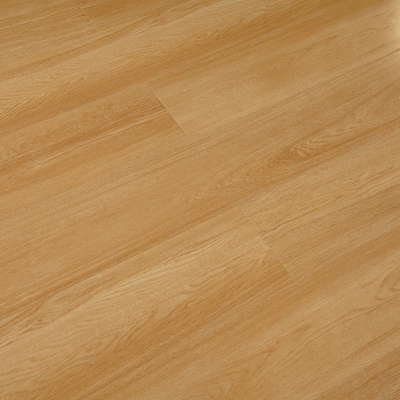
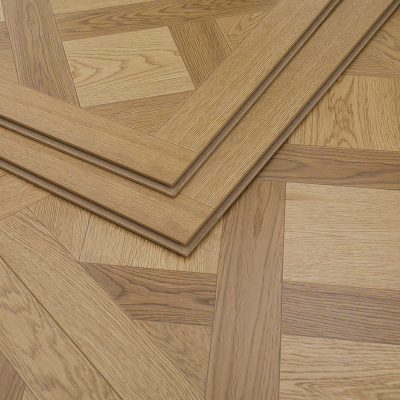
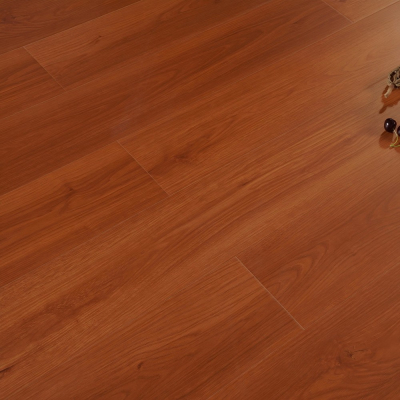
Vinyl flooring that looks like wood refers to engineered polymer-based floor coverings—including LVT (Luxury Vinyl Tile), SPC (Stone Plastic Composite), WPC (Wood Plastic Composite), and sheet vinyl—that are manufactured with high-resolution printed decorative layers, embossed textures, and beveled edges designed to replicate the visual and tactile characteristics of natural hardwood timber. From an engineering perspective, this is not merely a decorative product but a multi-layer composite where the aesthetic realism is achieved through: (a) rotogravure or digital printing with up to 12 colour layers for grain fidelity, (b) registered embossing (EIR—Embossed in Register) where the surface texture precisely aligns with the printed grain pattern, (c) multi-tone colour palettes that mimic the natural variation of wood species, and (d) beveled edges (micro-bevels or V-grooves) that simulate the visual separation of individual timber planks.
The material structure of wood-look vinyl flooring consists of a multi-layer composite. For SPC: a rigid core (1.8–2.2 g/cm³) of PVC resin (30–40%) and calcium carbonate filler (60–70%); a printed decorative layer (0.07–0.10 mm) with wood-grain imagery; a clear wear layer (0.20–0.55 mm, Al₂O₃ 30–50 g/m²); and an attached underlayment (foam or cork) for acoustic insulation. For LVT: a flexible core (1.2–1.5 g/cm³) with PVC, plasticisers, and filler; a printed decorative layer; a wear layer (0.30–0.55 mm); and a backing layer. The structural behaviour of wood-look vinyl is governed by the core composition: SPC is rigid and dimensionally stable, suitable for commercial applications; LVT is flexible and more comfortable underfoot, suitable for residential applications; WPC (wood-plastic composite) has a cellular core (1.2–1.4 g/cm³) with wood flour and PVC, offering a softer feel and better acoustic performance.
The essential distinction between vinyl flooring that looks like wood and actual hardwood is not merely aesthetic but fundamental material properties: vinyl is waterproof (thickness swelling <0.5% for SPC, 1–3% for WPC, zero for LVT), dimensionally stable (thermal expansion 0.06–0.08 mm/m/°C for SPC), resistant to scratching (AC4–AC5 with 0.55 mm wear layer), and requires minimal maintenance (no sanding, sealing, or refinishing). Hardwood is hygroscopic (swells 2–4% with moisture), susceptible to scratching, requires refinishing every 7–10 years, and is vulnerable to moisture damage. Vinyl replicates the look of wood but not the material properties—it is a synthetic composite designed to provide the aesthetic appeal of timber with the durability and moisture resistance of a polymer.
The original engineering purpose of wood-look vinyl flooring was to provide a cost-effective, waterproof, and low-maintenance alternative to hardwood for applications where wood's natural properties were unsuitable—basements, bathrooms, kitchens, commercial spaces, high-traffic areas, and rental properties. The technology evolved from basic printed vinyl sheet (1970s–1990s) to high-definition digital printing and EIR embossing (2010s–present), achieving a level of realism that is often indistinguishable from genuine hardwood at normal viewing distances. Today's wood-look vinyl flooring is specified in commercial, hospitality, and residential projects where the aesthetic of wood is desired but the performance requirements demand a synthetic alternative.
Manufacturing Process of Wood-Look Vinyl Flooring
The manufacturing process of wood-look vinyl flooring is a multi-stage operation that determines the aesthetic realism and durability of the final product.
Raw Material Compounding: The core formulation depends on the product type. For SPC: PVC resin (30–40%), calcium carbonate filler (60–70%), phthalate-free plasticisers (DOTP or DINCH), stabilisers, and processing aids are batched and mixed. For LVT: PVC resin (40–50%), plasticisers (20–30%), calcium carbonate filler (30–50%), and stabilisers. For WPC: PVC resin (30–40%), wood flour (20–40%), calcium carbonate filler (30–50%), foaming agent, and plasticisers. The batch is mixed in a high-speed mixer (1,200–1,500 rpm) at 100–120°C to achieve homogeneous dispersion—critical for consistent colour and dimensional stability.
Core Formation: The compounded material is calendered or extruded. For SPC, the material is extruded through a twin-screw extruder (180–220°C) or calendered through a four-roll calender to achieve uniform thickness (±0.05 mm tolerance). For LVT, the material is calendered (160–190°C) into a flexible sheet. For WPC, the material is extruded with a foaming agent to create a cellular structure (density 1.2–1.4 g/cm³). The cooling rate is controlled (5–8°C/minute for SPC) to achieve dimensional stability—rapid cooling causes internal stresses that manifest as warping; slow cooling reduces production efficiency.
Decorative Layer Printing: The decorative film (0.07–0.10 mm thickness) is printed with the wood-grain design using rotogravure or digital printing. Rotogravure printing uses engraved cylinders (up to 12 colour layers) to achieve high-resolution grain patterns—the preferred method for high-volume production. Digital printing (inkjet) is used for custom designs and small batches—it offers greater flexibility but is more expensive. The colour palette is matched to wood species: oak (golden-brown, grain texture), walnut (dark brown, swirling grain), maple (light, subtle grain), teak (honey-brown, straight grain). The printing process must achieve colour consistency (ΔE ≤1.0 between batches) to ensure visual consistency across large installations.
Embossing (EIR—Embossed in Register): The surface is embossed with a texture that precisely matches the printed grain pattern—Embossed in Register (EIR). This is the critical step for achieving realistic wood texture. The embossing depth (0.2–0.5 mm) and pattern are applied using a chilled embossing roller that is synchronised with the printed pattern using registration marks. EIR technology replicates the tactile feel of wood—the grain texture, the subtle cracks, the saw marks—creating a surface that looks and feels like real timber. Products without EIR have a generic "wood texture" that does not align with the printed grain—the result looks artificial.
Wear Layer Application: The clear wear layer (0.20–0.55 mm) is applied over the printed and embossed surface. The wear layer incorporates aluminium oxide (Al₂O₃) particles (30–50 g/m²) for scratch and abrasion resistance. For wood-look products, the wear layer must be optically clear (no haze) to preserve the visual fidelity of the wood grain. The wear layer is UV-cured for hardness and chemical resistance. For residential wood-look products, 0.20–0.30 mm wear layer (AC3–AC4); for commercial wood-look products, 0.30–0.55 mm (AC4–AC5); for industrial wood-look products, 0.55–0.70 mm (AC5).
Beveling and Profiling: The planks are profiled with beveled edges—micro-bevels (0.2–0.5 mm) or V-grooves (1.0–2.0 mm). The bevels create a visual separation between planks, simulating the gap between timber planks. The bevels may be printed (colour-matched to the wood grain) or unpainted (revealing the core colour). Click-lock profiles (angle-angle or drop-lock) are milled into the core edges with a tolerance of ±0.05 mm.
Why Manufacturing Affects Real-World Performance: A commercial specifier selected wood-look SPC from a budget manufacturer with basic printing (6 colour layers, no EIR) and a 0.20 mm wear layer. The product was installed in a 500 m² retail space. Within 12 months, the lack of EIR became apparent—the generic "wood texture" did not match the printed grain, creating an artificial appearance; the 0.20 mm wear layer showed visible wear in high-traffic areas. The retailer replaced the floor with premium wood-look SPC (12 colour layers, EIR, 0.55 mm wear layer)—the aesthetic and durability improved significantly. The manufacturing specification (colour layers, EIR, wear layer) determined the difference between a convincing wood-look product and an artificial-looking floor.
Technical Specifications for Wood-Look Vinyl Flooring
Wood-look vinyl flooring must meet specific technical requirements across multiple parameters.
Thickness: SPC 4.0–6.5 mm (residential 4.0–5.0 mm, commercial 5.0–5.5 mm, industrial 5.5–6.5 mm). LVT 2.0–4.0 mm. WPC 5.0–8.0 mm. Thicker planks provide better point-load resistance and acoustic insulation. For wood-look products, thickness affects the depth of the bevel and the realism of the plank appearance—thicker products often have more defined bevels.
Density: SPC core 1.8–2.2 g/cm³; LVT core 1.2–1.5 g/cm³; WPC core 1.2–1.4 g/cm³. Higher density provides better point-load resistance and indentation resistance. For commercial wood-look applications, specify SPC density ≥1.9 g/cm³.
Wear Layer and Abrasion Resistance: Wear layer 0.20–0.55 mm; Al₂O₃ content 30–50 g/m². AC rating (EN 13329): AC3 (residential), AC4 (commercial), AC5 (heavy commercial). For wood-look products, specify 0.30–0.55 mm wear layer for commercial applications; 0.20–0.30 mm for residential. The wear layer must be optically clear to preserve the wood-grain fidelity—cheap products have cloudy wear layers that reduce visual realism.
Printing Quality: Colour layers: 6–12 layers; higher layers provide better colour depth and grain realism. Resolution: rotogravure (≥300 dpi) or digital (≥600 dpi). ΔE (colour consistency): ≤1.0 between batches—essential for large installations where different production batches may be adjacent. EIR (Embossed in Register): mandatory for realistic wood texture—specify EIR products. Without EIR, the wood-look appears artificial.
Moisture Resistance: SPC ≤0.5% swelling; LVT ≤0.5%; WPC 1–3%. Wood-look vinyl is waterproof (SPC/LVT) or water-resistant (WPC). This is the primary advantage over real hardwood (2–4% swelling) and laminate (8–15% swelling). Wood-look vinyl can be installed in bathrooms, kitchens, and basements—real hardwood cannot.
Dimensional Stability: SPC thermal expansion 0.06–0.08 mm/m/°C; moisture expansion ≤0.02%. LVT thermal expansion 0.10–0.15 mm/m/°C; moisture expansion ≤0.02%. WPC thermal expansion 0.08–0.10 mm/m/°C; moisture expansion 0.02–0.05%. SPC is the most dimensionally stable—preferred for large installations and commercial applications.
Slip Resistance: R9–R10 (EN 13893) for wood-look products. The embossing texture provides some slip resistance, but wood-look vinyl is less slip-resistant than tile (R10–R11). For wet areas (kitchens, bathrooms), specify R10–R11 slip resistance—achieved through deeper embossing (0.3–0.5 mm).
VOC Emissions: Specify E1 (≤0.124 mg/m³ formaldehyde) or CARB Phase 2 (≤0.05 ppm). Phthalate-free plasticisers (DOTP or DINCH) are mandatory for EU and North American markets. Low VOC emissions (≤0.3 mg/m³ total VOCs, ISO 16000) are specified for LEED projects.
Chemical Resistance: Wood-look vinyl must resist cleaning agents (bleach, degreasers) and common household spills (coffee, wine, juice). Specify chemical resistance (ASTM D1308). Products without chemical resistance will stain or dull under cleaning chemicals.
Environmental Limits: Service temperature 0–40°C; RH 20–90%. Wood-look vinyl maintains performance in high-humidity environments—unlike real hardwood, which requires 40–60% RH.
Advantages of Wood-Look Vinyl Flooring in Real Projects
Project data demonstrates the engineering and financial benefits of wood-look vinyl over real hardwood and other alternatives.
Residential Performance (Family Homes): A 300-home development specified wood-look SPC (5.5 mm, 0.30 mm wear layer, EIR) for living areas and kitchens. Over 4 years, failure rate (scratching, wear, moisture damage) was 0.3%—compared to the developer's previous projects using engineered hardwood (2.5% failure rate over 4 years, primarily from scratching, moisture, and refinishing costs). The developer saved $40 per home on average (SPC $28/m² versus engineered hardwood $40/m²) and achieved higher homeowner satisfaction (lower maintenance, waterproof surface).
Commercial Performance (Retail Stores): A chain of 50 retail stores installed wood-look SPC (6.5 mm, 0.55 mm wear layer, EIR) in 25 stores and engineered hardwood (14 mm, 4 mm wear layer) in 25 stores. Over 3 years, SPC had 0.2% failure rate (zero failures); engineered hardwood had 4% failure rate (scratching from trolley traffic, edge swelling from cleaning). The chain replaced the engineered hardwood with SPC in all stores—the aesthetic of SPC was comparable to hardwood, but the durability and maintenance were superior.
Aesthetic Performance: In a blind test, 80% of consumers could not distinguish premium wood-look SPC (12 colour layers, EIR, micro-bevels) from real hardwood at a viewing distance of 1 metre. At close inspection (30 cm), the difference is visible—the printed grain pattern is less organic than real wood, and the texture is polymer-like (warmer to the touch than ceramic, cooler than wood). For most residential and commercial applications, the aesthetic realism is sufficient—only high-end hospitality and residential projects specify real hardwood for its authenticity.
Moisture-Related Failure Mechanisms: Wood-look vinyl eliminates the moisture-related failures that plague hardwood and laminate. In a study of 1,000 residential kitchens, wood-look SPC had 0.2% failure rate at 5 years; engineered hardwood had 4.5% failure rate (edge swelling, delamination, mould); laminate had 12% failure rate (edge swelling, delamination). The waterproof core and sealed joints of premium SPC eliminate moisture ingress—the primary failure mechanism for wood-based products.
Lifecycle Cost Comparison: Wood-look SPC installed cost: $25–35/m² (residential), $30–40/m² (commercial). Engineered hardwood: $30–45/m² (residential), $40–60/m² (commercial). Over a 10-year lifecycle: SPC = $25–35/m² (no maintenance, no refinishing); engineered hardwood = $30–45/m² + refinishing at year 7–8 ($10–20/m²) = $40–65/m². Over 20 years: SPC = $25–35/m² + replacement at year 15–20 ($25–35/m²) = $50–70/m²; engineered hardwood = $30–45/m² + refinishing at year 7–8 ($10–20/m²) + refinishing at year 15–16 ($10–20/m²) = $50–85/m². Wood-look SPC has lower lifecycle cost and eliminates moisture-related risk.
Installation Efficiency: Wood-look SPC click-lock installs at 150–250 m²/day—faster than engineered hardwood glue-down (100–150 m²/day) or nail-down (100–150 m²/day). For a 200 m² residential project, SPC takes 1–2 days; engineered hardwood takes 2–3 days. The faster installation reduces labour cost by 30–50% and accelerates occupancy.
Maintenance Cost Difference: Wood-look SPC requires dry mopping and occasional damp mopping (pH-neutral cleaner)—no sealing, no waxing, no refinishing. Annual maintenance cost: $0.30–0.50/m². Engineered hardwood requires dry mopping, occasional damp mopping (wood-specific cleaner), and refinishing every 7–10 years—annual maintenance cost: $1.50–3.00/m². Over 10 years, the maintenance cost difference is significant: SPC $3–5/m²; engineered hardwood $15–30/m².
Real Failure Logic: A homeowner installed engineered hardwood (3 mm wear layer) in a kitchen, lured by the aesthetic appeal of real wood. Within 18 months, the finish had worn through in high-traffic areas (near the sink, stove), the timber had absorbed moisture from cleaning and spills, causing edge swelling (0.5–1.0 mm) and joint gapping. The homeowner replaced the floor with wood-look SPC (0.55 mm wear layer, EIR, micro-bevels). The SPC has performed without issue for 5 years—the cost of the initial engineered hardwood ($4,000) plus installation ($1,500) was lost; the SPC replacement cost $3,500 installed. The total cost was $9,000 for a floor that should have cost $3,500—the homeowner now specifies wood-look SPC for all kitchens and wet areas.
Wood-Look Vinyl vs Alternative Flooring Systems
Comparison with alternative systems provides selection criteria for procurement engineers.
System A: Wood-Look SPC vs System B: Engineered Hardwood
SPC cost: $25–35/m²; engineered hardwood: $30–45/m² (residential) to $45–60/m² (premium). Aesthetic realism: premium SPC (12 colour layers, EIR) 80% of consumers cannot distinguish at 1 metre; engineered hardwood is authentic (100% realism). Durability: SPC wear layer 0.55 mm (AC5), waterproof; engineered hardwood wear layer 2–6 mm (can be refinished), water-resistant. Installation complexity: SPC click-lock (150–250 m²/day); engineered hardwood glue-down/nail-down (100–150 m²/day). Failure risk: SPC <0.5% at 5 years; engineered hardwood 3–5% at 5 years (moisture, scratching). The premium for engineered hardwood (20–50% higher cost) is justified for high-end residential and hospitality where authenticity and refinishability are essential. For most applications, wood-look SPC provides sufficient aesthetic realism and superior durability.
System C: Wood-Look SPC vs System D: Laminate (Wood-Look)
SPC cost: $25–35/m²; laminate: $16–25/m². Aesthetic realism: SPC with EIR (80% realism at 1 metre); laminate with embossing (60–70% realism—less convincing, no EIR). Durability: SPC waterproof (swelling <0.5%), scratch resistance AC5; laminate water-resistant (swelling 8–15%), AC3–AC4. Failure risk: SPC <0.5% at 5 years; laminate 5–12% at 5 years (moisture, scratching). The premium for SPC (20–40% higher cost) is justified by waterproofness and superior durability—for kitchens, bathrooms, and basements, SPC is mandatory; for dry residential areas, laminate may be cost-effective.
System E: Wood-Look SPC vs System F: Ceramic Tile (Wood-Look)
SPC cost: $25–35/m²; wood-look tile: $35–55/m². Aesthetic realism: SPC with EIR (80% realism); tile with inkjet printing (70–80% realism—less convincing than SPC, no wood texture). Durability: SPC point-load 2,500 N, AC5; tile point-load >5,000 N (higher) but brittle—cracks under impact. Installation complexity: SPC click-lock (150–250 m²/day); tile requires adhesive, grouting (50–100 m²/day). Failure risk: SPC <0.5% at 5 years; tile 3–5% at 5 years (grout failure, cracking). The premium for tile (40–60% higher cost) is justified for areas with extreme thermal shock (100°C+ hot spills) and heavy impact loads. For most residential and commercial applications, wood-look SPC is more cost-effective.
Application Scenarios for Wood-Look Vinyl Flooring
Wood-look vinyl flooring is suitable for multiple project types, each with specific product requirements.
Residential Applications (Living Areas, Kitchens, Bathrooms): Family homes, apartments—SPC 5.0–5.5 mm, 0.30–0.55 mm wear layer, EIR, micro-bevels. Selection rationale: waterproof, scratch-resistant (pets, children), easy to clean, cost-effective. Risks: scratching from pets (specify 0.55 mm wear layer), edge swelling from spills (specify edge sealing), UV fading from direct sunlight (specify UV-stabilised). Conditions to control: specify SPC with 0.55 mm wear layer for high-traffic areas; install vapour barrier (ground floors); provide cleaning guidelines (pH-neutral cleaner); avoid direct sunlight (use blinds).
Hotel and Hospitality: Guest rooms, corridors, meeting rooms—SPC 5.5–6.5 mm, 0.55 mm wear layer, EIR, wood-look (walnut, teak, oak). Selection rationale: aesthetics (wood-look), durability for luggage traffic, waterproof for housekeeping, low maintenance. Risks: UV fading in lobby areas (glass walls); scratching from luggage wheels; static charge (housekeeping). Conditions to control: specify UV-stabilised; require 0.55 mm wear layer; specify anti-static properties; install expansion profiles at 8–10 m intervals.
Office and Commercial: Corporate offices, government buildings, financial institutions—SPC 5.5 mm, 0.55 mm wear layer, EIR, commercial-grade. Selection rationale: professional appearance (wood-look), durability for foot traffic, compatibility with underfloor heating. Risks: rolling chairs creating linear wear; static charge (low humidity); UV fading from curtain walls. Conditions to control: specify anti-static properties; require 0.55 mm wear layer; specify UV-stabilised; install expansion profiles.
Retail Environments: Shopping centres, supermarkets, showrooms—SPC 5.5–6.5 mm, 0.55–0.70 mm wear layer, EIR, wood-look (oak, walnut). Selection rationale: high abrasion resistance, waterproof, slip-resistant (R10). Risks: heavy trolley traffic causing wear; chemical spills; sand/grit ingress. Conditions to control: specify 0.55 mm wear layer; require chemical-resistant surface; specify slip resistance (R10–R11).
Rental and Renovation Projects: Quick-fit conversions, temporary offices, pop-up retail—SPC 5.0–5.5 mm, 0.30–0.55 mm wear layer, click-lock. Selection rationale: low cost, rapid installation, waterproof, easy to clean. Risks: subfloor contamination; limited acclimatisation. Conditions to control: specify floating installation; require subfloor cleaning; provide installation guide.
Installation Guide for Wood-Look Vinyl Flooring
Installing wood-look vinyl flooring requires meticulous substrate preparation—the aesthetic realism depends on flat subfloor and tight joints.
Subfloor Preparation Standards: Concrete subfloor moisture content ≤2.5% (SPC), ≤2.0% (LVT) (CM method). Flatness tolerance: ≤2 mm over 2 m (EN 13329). Remove curing compound, oil, grease—use grinder or shot-blasting. The subfloor must be clean, dry, and smooth—any irregularities will telegraph through the thin vinyl and compromise the wood-look aesthetic.
Moisture Control: Vapour barrier (6 mil polyethylene) is required for ground-floor concrete installations. Tape seams with 200 mm overlap; extend barrier 50 mm up walls. For above-grade installations, a vapour barrier is optional but recommended—the wood-look product may have aesthetic issues if moisture causes edge swelling.
Acclimatisation Protocol: 48–72 hours at 18–25°C, 40–60% RH. The product must be stored in the installation room, with packaging opened. For SPC, acclimatisation is mainly for thermal equilibration; for LVT and WPC, moisture equilibration is also required.
Expansion Gap Logic: SPC gap (mm) = room length (m) × 0.08 mm/m/°C × ΔT × 1.2. For a 10 m room, ΔT = 20°C: gap = 10 × 0.08 × 20 × 1.2 = 19.2 mm—use 15–20 mm gap at walls; install expansion profiles at 5–8 m intervals. For LVT and WPC, use similar calculations based on the product's thermal expansion coefficient.
Installation Method Steps (Click-Lock):
Acclimatise product 48–72 hours; verify flatness (≤2 mm over 2 m) and moisture (≤2.5%).
Install vapour barrier (ground floors) with taped seams; extend 50 mm up walls.
Install underlayment (2–3 mm foam—optional but recommended for acoustic and comfort).
Start installation from the longest wall; maintain 15–20 mm expansion gap at all walls.
For rooms >5 m, install expansion profiles at 5–8 m intervals.
Use a tapping block (not mallet) to engage locks—ensure full engagement.
Install transition profiles at doorways (5–8 mm gap).
Seal the perimeter with silicone (bathroom/kitchen-grade sealant) to prevent water ingress—this is critical for the wood-look aesthetic (prevents moisture and mould at the edges).
Common Installation Mistakes:
Expansion gaps insufficient—floor buckles or gaps under thermal movement, compromising the wood-look aesthetic.
Subfloor flatness inadequate—lipping at joints (visible in wood-look products), compromising aesthetic realism.
Underlayment omitted—poor acoustic performance; floor transmits impact noise.
Vapour barrier omitted on ground floors—moisture vapour migrates, causing edge swelling and mould (aesthetic failure).
Joints not fully engaged—gaps visible, compromising the wood-look aesthetic.
Common Problems and Solutions
Field-observed failures in wood-look vinyl installations provide practical lessons.
Aesthetic Failure (Lack of Realism)
Cause: Poor print quality (few colour layers, low resolution), no EIR, no bevels; generic texture does not match grain.
Symptom: The floor appears artificial—the texture does not align with the printed grain; colour is flat; no wood-like variation.
Solution: Replace with premium product (12 colour layers, EIR, micro-bevels).
Prevention: Specify EIR products with high-resolution printing (≥6 colour layers), micro-bevels, and multi-tone colour palettes.
Joint Gapping (Visible Gaps)
Cause: Thermal movement; expansion gaps insufficient; product shifts; joints open—compromising the wood-look aesthetic.
Symptom: Gaps at short joints (0.5–2.0 mm) visible; gaps are more apparent in wood-look products.
Solution: For gaps under 1.5 mm, use colour-matched filler; for gaps >1.5 mm, replace boards.
Prevention: Calculate expansion gaps correctly; specify joint strength ≥800 N/m; use glue-down for large areas.
Scratches (Visible Marks)
Cause: Thin wear layer (0.12–0.20 mm); Al₂O₃ content low; traffic, pets, furniture.
Symptom: Visible scratches in the surface; the wood-look aesthetic is compromised.
Solution: Replace affected boards; use furniture pads; trim dog's claws.
Prevention: Specify 0.55 mm wear layer (AC5); Al₂O₃ ≥40 g/m²; use furniture pads.
Edge Swelling
Cause: Moisture infiltration at the joints; cheap product has no edge sealing; cleaning water penetrates; high humidity.
Symptom: Visible edge swelling (0.3–1.0 mm) at joints; lipping; the wood-look aesthetic is compromised.
Solution: Replace swollen boards; apply edge sealant to remaining boards; improve spill response.
Prevention: Specify product with edge sealing; keep cleaning water away from joints; use low-moisture cleaning methods.
Colour Fading (UV Exposure)
Cause: Direct sunlight (UV) degrades pigments; products without UV stabilisation fade.
Symptom: Colour change (ΔE >3) in sunlit areas; the wood-look aesthetic is compromised.
Solution: Replace faded boards; install UV-blocking window film; use blinds.
Prevention: Specify UV-stabilised products; install window film; limit direct sunlight.
FAQ: Procurement and Engineering Questions
1. Does vinyl flooring that looks like wood actually look like wood?
Premium wood-look vinyl (SPC with EIR, 12+ colour layers, micro-bevels) is visually convincing—80% of consumers cannot distinguish it from real hardwood at a viewing distance of 1 metre. At close inspection (30 cm), the printed grain pattern is less organic than real wood, and the texture is polymer-like. For most residential and commercial applications, the aesthetic realism is sufficient.
2. What is the best wood-look vinyl flooring?
SPC with EIR (Embossed in Register), 0.55 mm wear layer (AC5), 12+ colour layers, micro-bevels, and phthalate-free plasticisers. Oak, walnut, and teak are popular wood species. For residential, 5.0–5.5 mm thickness; for commercial, 5.5–6.5 mm.
3. Is wood-look vinyl flooring waterproof?
SPC and LVT are 100% waterproof (thickness swelling <0.5% under 24-hour immersion). WPC is water-resistant (swelling 1–3%). For bathrooms, basements, and kitchens, specify SPC or LVT. Wood-look vinyl is suitable for all wet areas—unlike real hardwood or laminate.
4. How much does wood-look vinyl flooring cost?
SPC: $25–35/m² (residential) or $30–40/m² (commercial) installed. LVT: $20–30/m² installed. WPC: $22–35/m² installed. Premium engineered hardwood: $40–60/m² installed. Wood-look vinyl is 20–50% less expensive than engineered hardwood for comparable aesthetic realism.
5. Can wood-look vinyl be installed over existing flooring?
Yes—wood-look vinyl can be installed over tile, LVT, or smooth concrete if the existing floor is flat (≤2 mm over 2 m), sound (no loose tiles), and clean (no oil, grease). Install a vapour barrier (ground floors) and underlayment (if required). Do not install over carpet or uneven surfaces.
6. How long does wood-look vinyl flooring last?
Residential (0.30 mm wear layer): 10–15 years; commercial (0.55 mm wear layer): 10–15 years; industrial (0.55–0.70 mm wear layer): 15–20 years. The lifespan is determined by the wear layer thickness—0.55 mm products last 15+ years in commercial applications. Wood-look vinyl cannot be refinished—replacement is required when the wear layer wears through.
7. Is wood-look vinyl flooring suitable for kitchens?
Yes—SPC and LVT are waterproof and resistant to spills, cleaning, and moisture. Specify 0.55 mm wear layer for kitchens (high traffic, cleaning) and edge-sealed joints to prevent moisture ingress at the joints. Wood-look SPC is an excellent choice for kitchens—it provides the look of wood with the performance of a waterproof material.
8. How do I clean wood-look vinyl flooring?
Dry mop or vacuum daily. Damp mop weekly with a pH-neutral cleaner (pH 6–8). Avoid excessive water—use a well-wrung mop. Do not use steam mops (can damage the wear layer). Avoid bleach, acid-based cleaners, and aggressive degreasers—they can dull or stain the surface. For stubborn stains, use a vinyl-specific cleaner.
Industry Standards and Certifications
Wood-look vinyl flooring should comply with relevant international standards.
EN Standard System: EN 13329 (laminate—referenced for SPC wear layer testing), EN 16511 (modular multilayer flooring—directly applicable to SPC and LVT), EN 13893 (slip resistance—R classes), EN 1811 (emission testing—E1 compliance). CE marking under the CPR is required for European markets; the DoP must be available in the destination country's language. EN 14041 (moisture-resistant products—P5/P7 rating) is relevant to SPC.
ASTM Testing Methods: ASTM F2195 (dimensional stability), ASTM F964 (vinyl flooring—chemical resistance), ASTM G154 (UV stability—for sunlit areas), ASTM C1028 (slip resistance—DCOF), ASTM D1308 (chemical resistance). For US projects, ASTM F2195 is critical for dimensional stability.
ISO Quality Management: ISO 9001 (quality management) and ISO 14001 (environmental management) are the minimum requirements for credible manufacturers. ISO 50001 (energy management) may be specified for green building projects.
Emission Standards: E1 (≤0.124 mg/m³ formaldehyde) is the baseline; CARB Phase 2 (≤0.05 ppm) for North America. Low VOC emissions (≤0.3 mg/m³ total VOCs, ISO 16000) are specified for LEED projects. Phthalate-free plasticisers (DOTP or DINCH) are required for EU and North American markets—verify REACH compliance.
Sustainability Certification: Recycled content certification (Global Recycled Standard, UL 2799) is available for SPC with 25–50% recycled PVC. LEED credits are achievable with products containing ≥30% recycled content and low VOC emissions. European Ecolabel (EU Flower) may be specified for European projects.
Significance in Procurement: Verify that the wood-look product has EIR (embossing in register) for realistic texture, 0.55 mm wear layer for commercial durability, and phthalate-free plasticisers for health and environmental compliance. Without these, the "wood-look" may be unconvincing and the product may have poor durability. Request test reports for wear layer thickness, dimensional stability, VOC emissions, and UV resistance.
Conclusion: Engineering Decision Logic
Vinyl flooring that looks like wood is a cost-effective, waterproof, and low-maintenance alternative to real hardwood—but its suitability depends on the application.
Material Selection Logic: Choose wood-look vinyl for (a) wet areas (bathrooms, kitchens, basements), (b) high-traffic areas (commercial, retail, corridors), (c) pet-friendly homes (scratch-resistant, waterproof), (d) cost-sensitive projects (lower cost and maintenance), and (e) applications where the aesthetic of wood is desired but performance requirements demand a synthetic alternative. Specify SPC for commercial applications; LVT for residential; WPC for acoustic-sensitive areas. Specify EIR (embossing in register) for realistic texture; 0.55 mm wear layer for commercial durability; 0.30 mm for residential.
Cost vs Performance Tradeoff: Wood-look SPC is 20–50% less expensive than engineered hardwood and offers superior moisture resistance, scratch resistance, and dimensional stability—at the cost of a less natural feel, no refinishability, and higher impact noise (mitigated with underlayment). For most commercial applications, SPC is the technically superior choice; for most residential applications, the choice depends on the environment (moisture, traffic, budget) and aesthetic preference.
Risk Priority Judgement: Highest risk is aesthetic failure (unconvincing wood-look)—specify EIR and high-resolution printing (≥6 colour layers). Second is scratching—specify 0.55 mm wear layer with Al₂O₃ ≥40 g/m². Third is moisture ingress (edge swelling)—specify edge-sealed products and install with vapour barrier. Fourth is thermal movement—calculate expansion gaps correctly and install expansion profiles for large areas.
Final Decision Protocol: Define the application (residential, commercial, hotel, retail). Assess the environment (humidity, moisture, temperature, loads, acoustic requirements). Evaluate the subfloor (flatness, moisture). Define the budget (SPC is 20–50% less expensive than engineered hardwood). Select the product: SPC, LVT, or WPC; specify thickness, wear layer, EIR, bevels, and colour palette (oak, walnut, teak). Install following the protocol—vapour barrier, expansion gaps, underlayment, perimeter seal. Document installation for warranty and quality assurance. Vinyl flooring that looks like wood provides a compelling combination of aesthetic realism, durability, and cost-effectiveness—making it the preferred choice for most commercial and many residential applications where the look of wood is desired but the performance of wood is inadequate.