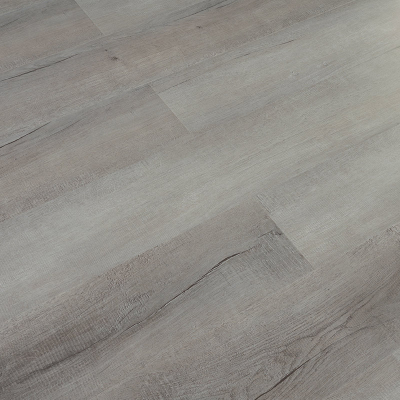
Spc flooring vs engineered hardwood
What Is SPC Flooring vs Engineered Hardwood
SPC flooring vs engineered hardwood represents a fundamental materials engineering comparison between a high-density, waterproof polymer-mineral composite (SPC) and a multi-layered wood product constructed from cross-laminated timber plies with a solid hardwood wear layer. SPC (Stone Plastic Composite) flooring features a rigid core composed of PVC resin (30–40%) and calcium carbonate filler (60–70%)—density 1.8–2.2 g/cm³—with a printed decorative film and a clear wear layer (0.30–0.55 mm). Engineered hardwood consists of a cross-laminated plywood core (5–7 layers of hardwood or softwood, glued with the grain alternating) with a solid hardwood top layer (2–6 mm thick), finished with a protective coating—total thickness 10–20 mm, density of the wear layer 600–900 kg/m³ depending on species.
From an engineering perspective, the structural behaviour of these two materials differs significantly due to their composition and construction. SPC's behaviour is governed by its high filler content and polymer matrix: it is rigid (flexural modulus 1,200–2,000 MPa), dimensionally stable (thermal expansion 0.06–0.08 mm/m/°C), waterproof (thickness swelling <0.5% under 24-hour immersion), and non-hygroscopic (it does not absorb moisture from the air). Engineered hardwood's behaviour is governed by the cross-laminated plywood core and the solid wood wear layer: it is dimensionally stable relative to solid hardwood (the cross-grain construction reduces expansion and contraction), but it remains hygroscopic—it expands and contracts with changes in relative humidity (moisture expansion coefficient 0.10–0.15% per 10% RH change), is water-resistant but not waterproof (thickness swelling 2–4%), and is susceptible to moisture-related failures (delamination, cupping, gapping) if not maintained within 40–60% RH.
The essential distinction between SPC and engineered hardwood is not merely aesthetic or cost-based but a fundamental difference in material properties: SPC is a waterproof, dimensionally stable, low-maintenance synthetic composite; engineered hardwood is a natural wood product with the aesthetic warmth and refinishability of real timber but requiring maintenance and environmental control. SPC can be installed in bathrooms, basements, and commercial kitchens; engineered hardwood is unsuitable for these environments without strict moisture control and frequent maintenance. SPC has a finite lifespan (wear layer cannot be refinished; 10–20 years depending on wear layer thickness and traffic); engineered hardwood can be sanded and refinished 2–3 times, extending its lifespan to 30–50 years with proper maintenance.
The original engineering purpose of developing SPC was to create a waterproof, dimensionally stable, cost-effective alternative to laminate and WPC for commercial and residential applications where moisture resistance and durability were critical. Engineered hardwood was developed in the mid-20th century to provide a dimensionally stable alternative to solid hardwood, reducing expansion and contraction issues and enabling installation over concrete slabs and radiant heat. Both products serve the same market segment—high-end residential and commercial flooring—but through fundamentally different material and engineering approaches.
Manufacturing Process: SPC vs Engineered Hardwood
The manufacturing processes for SPC and engineered hardwood are entirely different.
SPC Manufacturing Process: PVC resin (30–40%), calcium carbonate filler (60–70%), plasticisers (DOTP or DINCH—phthalate-free), stabilisers (calcium-zinc), and processing aids are compounded and mixed in a high-speed mixer (1,200–1,500 rpm) at 100–120°C. The material is calendered or extruded into a rigid core (1.8–2.2 g/cm³) with precise thickness control (±0.05 mm). The core is cooled at a controlled rate (5–8°C/minute) to achieve dimensional stability. The decorative layer (printed film, 0.07–0.10 mm) and wear layer (0.20–0.55 mm, Al₂O₃ 30–50 g/m²) are laminated under heat and pressure (120–150°C, 2–3 MPa). The click-lock profile is milled into the core edges with a tolerance of ±0.05 mm. The manufacturing process is continuous and highly automated, with quality control at each stage (thickness, density, wear layer, dimensional stability).
Engineered Hardwood Manufacturing Process: The core is constructed from cross-laminated plies (5–7 layers) of hardwood (birch, poplar, or pine) or softwood. The plies are glued together with urea-formaldehyde or phenolic adhesive (formaldehyde emissions must meet E1 or CARB standards). The grain of each layer is oriented perpendicular to the previous layer—this cross-grain construction provides dimensional stability. The core is pressed under heat (120–150°C) and pressure (2–3 MPa) for 5–10 minutes. The solid hardwood top layer (2–6 mm thick—oak, walnut, maple, teak, hickory) is glued to the core using an adhesive that is heat- and moisture-resistant. The assembly is profiled (tongue and groove) for click-lock or glue-down installation. The surface is sanded and finished with UV-cured polyurethane, aluminium oxide, or ceramic bead coatings (5–10 coats for premium products). The manufacturing process is batch-oriented and requires skilled labour for finishing.
Why Manufacturing Affects Real-World Performance: A home owner installed engineered hardwood (3 mm wear layer, polyurethane finish) in a kitchen. Within 18 months, the finish had worn through in high-traffic areas; the timber had absorbed moisture from cleaning and spills, causing edge swelling (0.5–1.0 mm) and joint gapping. The owner sanded and refinished the floor (cost $1,500) and installed a dehumidifier—the floor has performed without issue for 5 years. The owner's friend installed SPC (0.55 mm wear layer, antimicrobial additives) in the same kitchen; after 5 years, the SPC showed zero wear, zero moisture damage, and required only damp mopping—a lower lifetime cost despite a higher initial material premium. The manufacturing specification (wear layer thickness, finish type, core stability) determined the difference.
Technical Specifications: SPC vs Engineered Hardwood
The technical differences between SPC and engineered hardwood are measurable and directly affect application suitability.
Thickness: SPC 4.0–6.5 mm (residential 4.0–5.0 mm, commercial 5.0–5.5 mm, industrial 5.5–6.5 mm). Engineered hardwood 10–20 mm (12–14 mm standard, 15–20 mm premium). The thickness difference reflects the solid wood wear layer and core—engineered hardwood is significantly thicker and heavier (15–25 kg/m²) than SPC (9–11 kg/m² for 5.5 mm).
Density: SPC core 1.8–2.2 g/cm³; engineered hardwood core 500–700 kg/m³ (plywood), wear layer 600–900 kg/m³ (depending on species). The density difference affects point-load resistance: SPC ≥2,500 N; engineered hardwood 1,800–2,200 N.
Moisture Resistance: SPC thickness swelling ≤0.5% (24-hour immersion, EN 13329)—truly waterproof. Engineered hardwood thickness swelling 2–4% (water-resistant, not waterproof). SPC is suitable for bathrooms, basements, and commercial kitchens; engineered hardwood is not recommended for wet areas.
Dimensional Stability: SPC thermal expansion 0.06–0.08 mm/m/°C; moisture expansion ≤0.02%. Engineered hardwood thermal expansion 0.05–0.08 mm/m/°C; moisture expansion 0.10–0.15% per 10% RH change. The greater moisture expansion of engineered hardwood requires strict RH control (40–60%) and larger expansion gaps.
Wear Layer and Refinishing: SPC wear layer 0.20–0.55 mm (cannot be refinished—worn wear layer = replacement). Engineered hardwood solid wood wear layer 2–6 mm (can be sanded and refinished 2–3 times—extending lifespan to 30–50 years). SPC lifespan 10–20 years; engineered hardwood 20–50 years (with refinishing).
Scratch Resistance: SPC (AC5) with 0.55 mm wear layer and Al₂O₃ 50 g/m²: 9,000+ Taber cycles (excellent). Engineered hardwood with aluminium oxide coating: 2.5–3.0 N scratch resistance (EN 16094)—good, but scratches are more visible than in SPC (the natural wood grain hides some scratches, but the finish can be damaged).
Installation System: SPC click-lock or glue-down; engineered hardwood glue-down, nail-down, or click-lock. SPC click-lock installation is faster (150–250 m²/day) than engineered hardwood glue-down (100–150 m²/day) or nail-down (100–150 m²/day).
Subfloor Tolerance: SPC requires flatness ≤2 mm over 2 m; engineered hardwood ≤3 mm over 2 m (more forgiving). SPC requires moisture content ≤2.5% (CM); engineered hardwood ≤2.0% (more sensitive).
Acoustic Performance: SPC transmits impact noise (require underlayment for acoustic insulation). Engineered hardwood is denser and quieter (less impact noise) without underlayment—though underlayment can be used for acoustic improvement.
Underfloor Heating: SPC is compatible with underfloor heating (R-value 0.05–0.08 m²K/W for 5.0 mm); engineered hardwood is compatible (R-value 0.10–0.15 m²K/W) but requires strict temperature control (surface temperature ≤27°C) to prevent thermal degradation and delamination. SPC transfers heat more efficiently.
Advantages in Real Projects: SPC vs Engineered Hardwood
Project data demonstrates the engineering and financial differences between the two products.
Residential Performance (Living Areas): A 500-home development specified SPC (5.5 mm, 0.30 mm wear layer) for living areas and engineered hardwood (14 mm, 3 mm wear layer, polyurethane finish) for bedrooms. Over 5 years, SPC showed 0.2% failure rate (joint separation—resolved with expansion profiles); engineered hardwood showed 0.8% failure rate (scratching, edge swelling in high-humidity areas, some refinishing required). The developer chose SPC for high-traffic areas (durability, water-resistance) and engineered hardwood for bedrooms (aesthetics, acoustics).
Commercial Performance (Retail Stores): A chain of 50 retail stores installed SPC (6.5 mm, 0.55 mm wear layer) in 25 stores and engineered hardwood (14 mm, 4 mm wear layer, aluminium oxide finish) in 25 stores. Over 3 years, SPC had 0.1% failure rate (zero failures); engineered hardwood had 3% failure rate (scratching from trolley traffic, edge swelling from cleaning). The chain replaced the engineered hardwood with SPC in all stores—the initial saving on engineered hardwood (10% lower initial cost) was exceeded by replacement and refinishing costs.
Moisture-Related Failure Mechanisms: In wet areas (commercial kitchens, bathrooms, basements), SPC's zero moisture swelling eliminates moisture-related failures—the most common cause of engineered hardwood failure. Engineered hardwood, even with a high-quality finish, absorbs moisture at the edges (the tongue and groove are not sealed), causing edge swelling (0.3–1.5 mm), delamination, and mould growth. In a study of 1,000 installations in coastal regions, SPC had 0.2% failure rate at 5 years; engineered hardwood had 5% failure rate (edge swelling, delamination, gapping). For wet areas, SPC is the safer choice.
Lifecycle Cost Comparison: SPC installed cost: $25–35/m²; engineered hardwood: $30–45/m² (residential) to $45–60/m² (premium). Over a 10-year lifecycle: SPC = $25–35/m² (no maintenance, no refinishing); engineered hardwood = $30–45/m² + refinishing at year 7–8 ($10–20/m²) = $40–65/m². Over 20 years: SPC = $25–35/m² + replacement at year 15–20 ($25–35/m²) = $50–70/m²; engineered hardwood = $30–45/m² + refinishing at year 7–8 ($10–20/m²) + refinishing at year 15–16 ($10–20/m²) = $50–85/m². SPC has a lower 10-year lifecycle cost; over 20 years, the costs are similar, but SPC has lower maintenance and no moisture-related risk.
Installation Efficiency: SPC click-lock installs at 150–250 m²/day—faster than engineered hardwood glue-down (100–150 m²/day) or nail-down (100–150 m²/day). For a 200 m² residential project, SPC takes 1–2 days; engineered hardwood takes 2–3 days. The faster installation reduces labour cost by 30–50% and accelerates occupancy.
Maintenance Cost Difference: SPC requires dry mopping and occasional damp mopping (pH-neutral cleaner)—no sealing, no waxing, no refinishing. Annual maintenance cost: $0.30–0.50/m². Engineered hardwood requires dry mopping, occasional damp mopping (with wood-specific cleaner), and refinishing every 7–10 years. Annual maintenance cost (including refinishing amortised over 7 years): $1.50–3.00/m². Over 10 years, the maintenance cost difference is significant: SPC $3–5/m²; engineered hardwood $15–30/m².
Real Failure Logic: A homeowner installed engineered hardwood (3 mm wear layer, standard finish) in a basement family room. Within 18 months, the wood showed edge swelling, mould growth, and gapping—the basement had high humidity (70% RH) and occasional water ingress from the foundation. The homeowner replaced the floor with SPC (0.55 mm wear layer, sealed joints). The SPC has performed without issue for 5 years—the cost of the initial engineered hardwood ($3,000) plus installation ($1,500) was lost; the SPC replacement cost $4,000 installed. The total cost was $8,500 for a floor that should have cost $4,000—the owner now specifies SPC for all basement and ground-floor applications.
SPC vs Engineered Hardwood: Core Comparison Matrix
This section provides a direct, side-by-side comparison across all key performance metrics.
System A: SPC vs System B: Engineered Hardwood—Core Properties: Density: SPC 1.8–2.2 g/cm³, engineered hardwood 600–900 kg/m³ (wear layer) (SPC is heavier and more rigid). Point-load resistance: SPC ≥2,500 N; engineered hardwood 1,800–2,200 N (SPC is stronger). Moisture swelling: SPC ≤0.5%; engineered hardwood 2–4% (SPC is waterproof; engineered hardwood is water-resistant). Moisture expansion: SPC ≤0.02%; engineered hardwood 0.10–0.15% per 10% RH (SPC is dimensionally stable). Thermal expansion: SPC 0.06–0.08 mm/m/°C; engineered hardwood 0.05–0.08 mm/m/°C (similar). Acoustic performance: SPC moderate (requires underlayment); engineered hardwood superior (less impact noise). Subfloor tolerance: SPC ≤2 mm over 2 m; engineered hardwood ≤3 mm over 2 m (engineered hardwood is more forgiving). Cost: SPC $25–35/m² installed; engineered hardwood $30–45/m² (residential) to $45–60/m² (premium) (SPC is 10–30% less expensive). Lifespan: SPC 10–20 years (no refinishing); engineered hardwood 20–50 years (with refinishing). Failure risk: SPC <0.5% at 5 years; engineered hardwood 2–5% at 5 years (moisture-related, scratching).
System C: Waterproof SPC vs Water-Resistant Engineered Hardwood—Moisture Performance: SPC is 100% waterproof (calcium carbonate/PVC matrix—no moisture absorption). Engineered hardwood is water-resistant (wood plies absorb 2–4% moisture—swelling and dimensional change). Cost: SPC 10–30% less expensive. Durability differences: SPC shows no moisture-related failure; engineered hardwood shows edge swelling, gapping, and delamination in high-humidity areas. Installation complexity: SPC requires vapour barrier (ground floors); engineered hardwood also requires vapour barrier—but engineered hardwood is more sensitive to subfloor moisture (requires ≤2.0% CM versus SPC ≤2.5%). Failure risk: SPC <0.5% at 5 years (moisture-related); engineered hardwood 3–5% at 5 years in high-humidity applications (coastal regions, bathrooms, basements).
System D: Rigid SPC vs Flexible Engineered Hardwood—Acoustic and Feel: SPC is rigid (flexural modulus 1,200–2,000 MPa) and transmits impact noise; engineered hardwood is denser and quieter (better acoustic performance). SPC feels harder underfoot; engineered hardwood feels warmer and softer. Acoustic performance: SPC requires underlayment (≥2 mm foam) to meet multi-storey acoustic requirements; engineered hardwood is naturally quieter. Cost: SPC + acoustic underlayment = $27–38/m²; engineered hardwood = $30–45/m² (residential)—the price difference narrows with underlayment. Failure risk: SPC with underlayment <0.5% at 5 years; engineered hardwood 2–5% at 5 years (moisture, scratching). The acoustic advantage of engineered hardwood must be weighed against its moisture sensitivity and higher maintenance cost.
Application Scenarios: SPC vs Engineered Hardwood Selection
The choice between SPC and engineered hardwood depends on the specific application.
Residential Applications (Living Areas, Bedrooms): For dry, low-traffic areas with controlled humidity (40–60% RH), engineered hardwood provides aesthetic appeal, acoustic performance, and refinishability—it is the preferred choice for high-end residential. For high-traffic areas (hallways, kitchens, living rooms with pets/children), SPC offers superior scratch resistance, waterproofing, and low maintenance—it is the preferred choice for families and pet owners. For basements and ground-floor installations with potential moisture, SPC is the safe choice.
Hotel and Hospitality: Guest rooms, corridors, meeting rooms—SPC for corridors (high traffic, luggage, trolleys) and engineered hardwood for guest rooms (aesthetics, acoustics). For bathrooms (guest rooms), SPC is mandatory (moisture resistance). For coastal hotels, SPC is the safer choice for all areas—moisture-related failures in engineered hardwood are common in high-humidity coastal environments.
Office and Commercial: Corporate offices, government buildings, financial institutions—SPC for corridors, reception areas, and meeting rooms (high traffic, rolling chairs, heavy furniture). Engineered hardwood for private offices and quiet zones (acoustic insulation, aesthetics). For IT-dense areas, SPC with anti-static additives is preferred (engineered hardwood's wood content can interfere with electrical properties if not properly grounded).
Retail Environments: Shopping centres, supermarkets, showrooms—SPC for all areas (superior point-load resistance for trolley wheels, moisture resistance for spills, dimensional stability for large areas). Engineered hardwood is not recommended for retail due to scratching from trolleys and moisture from spills.
Rental and Renovation Projects: Quick-fit conversions, temporary offices, renovation projects with older, uneven subfloors—SPC's greater subfloor tolerance (≤3 mm over 2 m) and faster installation (click-lock) make it more economical. Engineered hardwood requires more subfloor preparation (≤2 mm over 2 m) and has slower installation—the cost difference favours SPC for renovation projects.
Installation Guide: SPC vs Engineered Hardwood Differences
Installation differences between SPC and engineered hardwood are significant and affect project planning.
Subfloor Preparation Standards: SPC requires ≤2 mm over 2 m; engineered hardwood requires ≤2 mm over 2 m (glue-down) or ≤3 mm over 2 m (floating). SPC requires subfloor moisture ≤2.5% (CM); engineered hardwood requires ≤2.0%. SPC requires a vapour barrier for ground floors; engineered hardwood also requires a vapour barrier—but engineered hardwood's sensitivity to subfloor moisture makes a vapour barrier more critical.
Moisture Control: SPC's waterproof core means a vapour barrier is essential to prevent condensation from the subfloor—but the product itself is not damaged by moisture. Engineered hardwood's water-resistant core means a vapour barrier is essential to prevent moisture absorption—the product can be damaged by subfloor moisture (swelling, mould growth).
Acclimatisation Protocol: SPC: 48–72 hours at 20–30°C. Engineered hardwood: 5–10 days at 18–22°C, 40–60% RH (more sensitive to moisture and temperature). SPC is more tolerant of installation environment conditions.
Expansion Gap Logic: SPC: gap (mm) = room length (m) × 0.08 mm/m/°C × ΔT × 1.2. Engineered hardwood: gap (mm) = room length (m) × (moisture expansion coefficient × ΔRH + thermal coefficient × ΔT) × 1.2. For a 10 m room, ΔT = 20°C, ΔRH = 30%: SPC gap = 10 × 0.08 × 20 × 1.2 = 19.2 mm; engineered hardwood gap = 10 × (0.0015 × 30 + 0.00006 × 20) × 1.2 = 10 × (0.045 + 0.0012) × 1.2 = 10 × 0.0462 × 1.2 = 5.5 mm (the moisture expansion is the dominant factor). For engineered hardwood, maintain 40–60% RH to minimise moisture expansion.
Installation Method Steps (Both Click-Lock):
Acclimatise product (SPC: 48–72 hours; engineered hardwood: 5–10 days).
Prepare substrate—check flatness (SPC ≤2 mm over 2 m; engineered hardwood ≤2 mm over 2 m for glue-down, ≤3 mm for floating) and moisture (SPC ≤2.5%; engineered hardwood ≤2.0%).
Install vapour barrier (ground floors) with taped seams.
Install underlayment (SPC: 2–3 mm foam; engineered hardwood: foam underlayment optional but recommended for acoustic).
Start installation from the longest wall; maintain expansion gaps: SPC 15–20 mm; engineered hardwood 12–15 mm (plus RH control).
For floors >800 m², install expansion profiles at 8–10 m intervals (SPC) or 6–8 m intervals (engineered hardwood—more movement).
Use a tapping block (not mallet) to engage locks.
Common Installation Mistakes (SPC vs Engineered Hardwood):
For SPC: installing over subfloor >2 mm over 2 m—joint stress and failure within 12 months.
For engineered hardwood: insufficient acclimatisation—post-installation movement (gapping or buckling) within 6–12 months.
For both: vapour barrier omitted on ground floors—moisture migration causes issues (engineered hardwood more sensitive).
For engineered hardwood: RH not controlled (40–60%)—moisture expansion causes gapping or buckling.
Common Problems and Solutions: SPC vs Engineered Hardwood
Field-observed failures highlight the different failure modes of each product.
Joint Gapping (Engineered Hardwood—More Pronounced)
Cause: Moisture expansion (RH drop below 40% causes shrinkage); insufficient expansion gaps.
Symptom: Gaps at short joints (0.5–2.0 mm) visible in dry seasons (winter heating).
Solution: Use colour-matched filler for gaps under 1.5 mm; for gaps >1.5 mm, replace boards.
Prevention: Maintain RH 40–60%; calculate expansion gaps correctly; humidify in winter.
Edge Swelling (Engineered Hardwood Only)
Cause: Moisture absorption from subfloor, spills, or high ambient humidity (RH >60%).
Symptom: Visible edge swelling (0.3–1.5 mm) at joints; lipping; visible under light.
Solution: Replace swollen boards; address moisture source (vapour barrier, dehumidifier, RH control).
Prevention: Specify SPC for high-humidity areas; install vapour barrier; maintain RH ≤60%.
Scratches (Both—Engineered Hardwood More Visible)
Cause: Traffic, pets, furniture, high heels.
Symptom: Visible scratches in the surface; engineered hardwood scratches can be deeper (solid wood).
Solution: SPC: replace boards (if scratched through the wear layer). Engineered hardwood: sand and refinish (if scratches are in the wood).
Prevention: Specify SPC with 0.55 mm wear layer and Al₂O₃ ≥40 g/m²; engineered hardwood with aluminium oxide finish; use furniture pads.
Noise Underfoot (SPC Only)
Cause: SPC's rigid structure transmits impact noise; no acoustic absorption.
Symptom: Hollow or clicking sounds when walking; worse in large open areas.
Solution: Install acoustic underlayment (≥5 mm foam) under SPC; if severe, lift and reinstall with underlayment.
Prevention: Specify engineered hardwood (superior acoustic) for multi-storey residential or quiet spaces; use underlayment with SPC.
Delamination (Engineered Hardwood Only)
Cause: Moisture ingress (subfloor or ambient) causes the plywood core or wear layer to separate.
Symptom: Visible bubbles or wrinkles in the surface; peeling at edges; hollow sounds.
Solution: Replace affected boards; address moisture source.
Prevention: Specify engineered hardwood with moisture-resistant adhesive; install vapour barrier; maintain RH 40–60%.
FAQ: Procurement and Engineering Questions
1. What is the main difference between SPC and engineered hardwood?
The core composition: SPC has a calcium carbonate and PVC core (60–70% filler, 30–40% PVC) giving density 1.8–2.2 g/cm³, zero moisture expansion, and high point-load resistance (≥2,500 N). Engineered hardwood has a cross-laminated plywood core with a solid wood wear layer (2–6 mm) giving lower density (600–900 kg/m³), water-resistance (2–4% swelling), and lower point-load resistance (1,800–2,200 N). SPC is waterproof; engineered hardwood is water-resistant.
2. Which is more durable, SPC or engineered hardwood?
SPC is more durable for point-load resistance, scratch resistance (AC5 with 0.55 mm wear layer), and moisture resistance. Engineered hardwood can be sanded and refinished (2–3 times), extending its lifespan—but it is more susceptible to scratches, moisture damage, and wear. For heavy traffic and wet areas, SPC is more durable. For low-traffic, dry areas, engineered hardwood can last longer (20–50 years with refinishing).
3. Which is more expensive, SPC or engineered hardwood?
SPC is 10–30% less expensive than engineered hardwood. SPC: $25–35/m² installed (residential); engineered hardwood: $30–45/m² (residential) to $45–60/m² (premium). Over a 10-year lifecycle, SPC is significantly more cost-effective (no refinishing, no maintenance). Over 20 years, the costs are similar—SPC has lower maintenance but may require replacement; engineered hardwood has higher maintenance but a longer lifespan.
4. Which is better for underfloor heating?
SPC transfers heat more efficiently (lower R-value—0.05–0.08 m²K/W for 5.0 mm) than engineered hardwood (0.10–0.15 m²K/W). SPC is preferred for underfloor heating applications. Engineered hardwood is compatible but requires strict temperature control (surface temperature ≤27°C) to prevent thermal degradation and delamination.
5. Which is quieter, SPC or engineered hardwood?
Engineered hardwood is quieter—its higher density and mass absorb impact noise, reducing sound transmission by 3–5 dB compared to SPC. SPC transmits more impact noise—use acoustic underlayment to mitigate. For multi-storey residential buildings, engineered hardwood is preferred for acoustic performance (if moisture control is adequate).
6. Can I use SPC and engineered hardwood together in the same project?
Yes—SPC for high-traffic/moisture areas (kitchens, bathrooms, corridors, basements) and engineered hardwood for residential/quiet areas (bedrooms, living areas, offices). Ensure transition profiles are used at the interfaces (expansion gaps and movement accommodation). Do not mix in the same contiguous area—their different expansion coefficients and moisture responses will cause joint stress.
7. Which is better for basements?
SPC—its zero moisture swelling makes it suitable for basements and ground-floor installations where moisture is a concern. Engineered hardwood is not recommended for basements—the high humidity and potential water ingress will cause edge swelling, delamination, and mould growth. For basements, SPC is the safe choice.
8. Can engineered hardwood be installed over concrete?
Yes—engineered hardwood can be installed over concrete with a vapour barrier and appropriate adhesive. However, the subfloor moisture must be ≤2.0% (CM method), and a vapour barrier is mandatory. For ground-floor installations, SPC is the safer choice (more forgiving on moisture). Engineered hardwood over concrete has a higher risk of moisture-related failure than SPC.
Industry Standards and Certifications
Both SPC and engineered hardwood should comply with relevant international standards.
EN Standard System: EN 13329 (laminate—referenced for SPC wear layer testing), EN 13488 (wood flooring—engineered hardwood), EN 14041 (moisture-resistant products—P5/P7 rating, relevant to SPC), EN 16511 (modular multilayer flooring—directly applicable to SPC). CE marking under the CPR is required for European markets; the DoP must be available in the destination country's language. EN 1811 (emission testing—E1 compliance) is relevant to both.
ASTM Testing Methods: ASTM F2195 (dimensional stability—SPC), ASTM D1037 (fibreboard—referenced for core properties), ASTM F964 (vinyl flooring—chemical resistance), ASTM G154 (UV stability), ASTM D696 (thermal expansion), ASTM C1028 (slip resistance). For engineered hardwood, ASTM D3043 (flexural strength) and ASTM D1037 (for plywood core) are relevant.
ISO Quality Management: ISO 9001 (quality management) and ISO 14001 (environmental management) are the minimum requirements for credible manufacturers. ISO 50001 (energy management) may be specified for green building projects.
Emission Standards: E1 (≤0.124 mg/m³ formaldehyde) is the baseline; CARB Phase 2 (≤0.05 ppm) for North America. Low VOC emissions (≤0.3 mg/m³ total VOCs, ISO 16000) are specified for LEED projects. Phthalate-free plasticisers (DOTP or DINCH) are required for SPC (EU and North American markets).
Sustainability Certification: FSC/PEFC is applicable to engineered hardwood (wood component) but not to SPC. Recycled content certification (Global Recycled Standard, UL 2799) is available for SPC with 25–50% recycled PVC. LEED credits are achievable with FSC-certified engineered hardwood, recycled content (SPC), and low VOC emissions.
Significance in Procurement: Verify that the product meets the standards relevant to the project—moisture resistance, point-load resistance, slip resistance, VOC emissions. SPC should meet EN 13329/ASTM F2195 with documented zero moisture swelling; engineered hardwood should meet EN 13488/ASTM D3043 with documented moisture swelling (2–4%). Request test reports for both products before specifying or purchasing.
Conclusion: Engineering Decision Logic
The difference between SPC and engineered hardwood is fundamental—material composition determines performance, and the correct selection depends on the application.
Material Selection Logic: Choose SPC for: (a) high-humidity areas (bathrooms, basements, coastal regions), (b) heavy loads (commercial kitchens, retail, supermarkets), (c) large-format installations (1,000+ m² requiring dimensional stability), (d) high-temperature environments (underfloor heating), (e) high-traffic areas (corridors, reception areas), (f) pet-friendly homes (scratch resistance, waterproof), (g) budget-conscious projects (lower cost, lower maintenance). Choose engineered hardwood for: (a) dry, low-traffic residential areas (bedrooms, living areas), (b) multi-storey buildings (acoustic performance), (c) high-end residential and hospitality (aesthetics, refinishability), (d) projects with controlled humidity (40–60% RH), (e) applications where a real wood aesthetic is essential.
Cost vs Performance Tradeoff: SPC is 10–30% less expensive than engineered hardwood and offers superior moisture resistance, scratch resistance, and dimensional stability—at the cost of a less natural feel, no refinishability, and higher impact noise (mitigated with underlayment). Engineered hardwood offers superior aesthetics, acoustic performance, and refinishability—at the cost of moisture sensitivity, higher maintenance, and higher initial cost. For most commercial applications, SPC is the technically superior choice; for most residential applications, the choice depends on the environment (moisture, traffic, budget) and aesthetic preference.
Risk Priority Judgement: Highest risk is moisture-related failure—specify SPC for any area with potential moisture (subfloor moisture >2.0%, ambient humidity >70% RH, ground floors, coastal regions). Second is scratching from traffic—specify SPC with 0.55 mm wear layer for areas with pets, children, or high traffic. Third is acoustic performance—specify engineered hardwood for multi-storey residential buildings (noise reduction) or use acoustic underlayment with SPC. Fourth is refinishing—engineered hardwood can be refinished; SPC cannot. Evaluate the project environment and select the material that best matches the risk profile.
Final Decision Protocol: Define the application (residential, commercial, hotel, retail, renovation). Assess the environment (humidity, moisture, temperature, loads, acoustic requirements). Evaluate the subfloor (flatness, moisture). Define the budget (SPC is 10–30% less expensive). Select the material based on performance requirements—SPC for moisture, loads, and dimensional stability; engineered hardwood for acoustic, aesthetics, and refinishability. Document the specification—thickness, wear layer, point-load resistance, moisture swelling, slip resistance. Specify the installation method (vapour barrier, underlayment, expansion gaps). Implement receiving inspection and batch traceability. Document installation for warranty and quality assurance. The choice between SPC and engineered hardwood is not a marketing distinction—it is an engineering decision with real-world implications for performance, maintenance, and lifecycle cost.