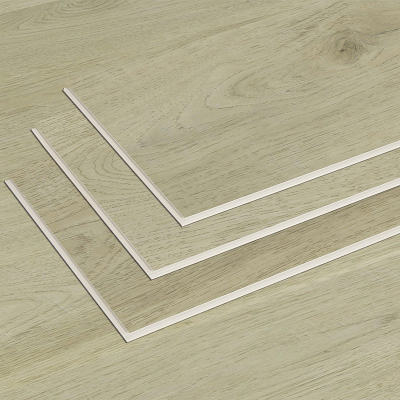
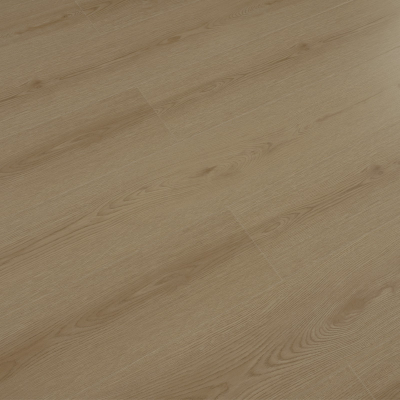
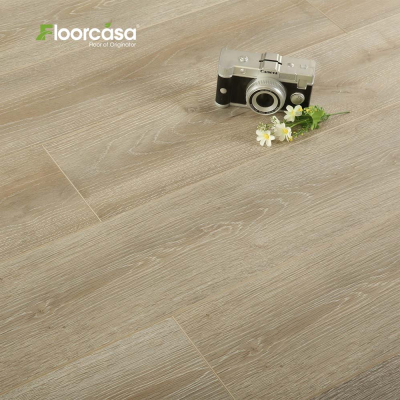
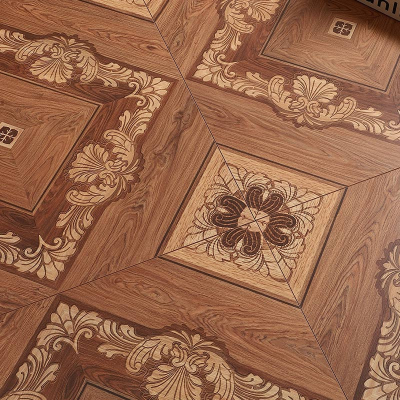
8mm Brown Herringbone Laminate Flooring
8mm brown herringbone laminate flooring offers a balanced combination of elegance, durability, and practicality. Its engineered HDF core ensures stability against warping, while the protective wear layer provides resistance to scratches, stains, and daily wear. The herringbone pattern delivers a sophisticated visual effect, adding depth and character to both modern and traditional interiors. Easy click-lock installation reduces labor costs and allows for DIY-friendly projects. Compliant with EN and DIN standards, it is safe, sustainable, and suitable for underfloor heating. This flooring option provides long-term value, making it a reliable choice for homeowners and commercial projects alike.
Product Overview
8mm brown herringbone laminate flooring is a laminate floor with an 8mm HDF core, a brown printed décor and a herringbone pattern laid with matched left and right planks. The planks are jointed with a click-lock profile, so the floor is installed as a floating system without adhesive.
This page describes the HDF laminate construction. A rigid core SPC herringbone floor is a different construction, with a different core, weight and water behaviour, and it is specified on its own page rather than from this specification. A waterproof herringbone laminate is a separate product with its own test basis and is specified on its own page; this page does not claim a waterproof rating.
The herringbone layout is the staggered zigzag in which the end of one rectangular plank meets the side of the next; the market also calls it fishbone, and chevron is a different pattern with angled plank ends. The pattern needs a left and a right plank, and the pair is supplied as a matched set.
At a glance: 8mm total thickness, HDF core, brown herringbone décor, click-lock floating installation, and the brown tone, surface texture and packaging available for customization. The plank length and width, and the A and B plank dimensions, are stated in the specification table and confirmed in the quotation; the coverage per carton is calculated for the A/B pair. To request the specification, a sample or a quotation, see the supply section below.
The general laminate knowledge is covered on the laminate flooring guide, and the pattern as a design choice on the herringbone flooring page; this page stays with this product.
Product Specifications
The table states the specification for the product. Entries marked as pending are confirmed for the order; a value is published only where the product documentation supports it.
| Specification | Product details |
|---|---|
| Product type | 8mm brown herringbone HDF laminate flooring |
| Total thickness | 8mm, with the tolerance stated in the product specification |
| Core material | HDF, with the core specification stated per product |
| Plank length and width | Actual dimensions, pending confirmation |
| A/B plank dimensions | The A and B plank length and width, and whether the pair differs in size or only in profile orientation |
| Wear resistance class | The abrasion class stated in the test report for this product, pending confirmation |
| Surface finish | Matte, satin, embossed or other finish actually supplied, pending confirmation |
| Edge profile | V-groove or square edge, as supplied |
| Locking system | The locking profile for the product, with the licence status stated |
| Installation | Floating click-lock installation; whether glue-down is permitted is stated in the installation instructions |
| Underlay | Whether an integrated backing is offered, or a separate underlay is specified |
| Formaldehyde emission | The emission class and the report held for the product, for the destination market |
| Available brown tones | The brown décors actually offered |
| Customization | Décor, colour, surface texture and packaging actually supported |
| MOQ | Confirmed in the quotation for the configuration |
| Production lead time | Confirmed in the quotation for the order size |
Three points about the specification belong here. First, the A and B planks are supplied as a matched set, and the coverage per carton is calculated for the pair rather than for a single plank. Second, the 8mm figure describes the whole plank, not the core thickness alone, and the wear layer thickness is stated separately in the report. Third, the total thickness is not a measure of load capacity, acoustic performance or service life: those depend on the core, the wear layer, the underlay and the complete floor assembly, and they are confirmed from the product data rather than from the thickness.
Brown Colors and Surface Finishes
Brown is a family rather than a single tone, and the tone is part of the printed décor. On an 8mm plank the tone reads across a thinner profile than on a 12mm plank, so the colour is judged on a sample of this product rather than on a sample of a thicker one from the same range.
The brown tones are described in five groups, and the tones actually offered for this product are listed with it; the groups below are the vocabulary used for selection, not a promise that every group is stocked.
Light brown: a pale, open tone close to natural oak, with a light grain and a warm cast.
Natural oak brown: the mid-light tone that most buyers mean by "natural", with a visible but soft grain.
Medium brown: a fuller body with a more visible cathedral figure and a stronger colour depth.
Walnut brown: a darker, denser grain with a stronger contrast between early and late wood, close to walnut.
Dark brown: the darkest group, with a deep tone in which the grain is visible mainly under direct light.
The tone names used by the factory are confirmed on a sample, because the same name can mean different things between suppliers. The surface finish and the tone are chosen together: a matte finish reduces reflection and makes fine surface marks less obvious, a satin finish sits between matte and gloss, and an embossed finish adds texture and changes how light falls across the grain. Where the embossing is aligned with the printed grain, the product is described as embossed in register, and the specification states for each design whether the embossing is aligned or random.
The colour and the visibility of marks are related but not the same thing. A dark brown floor shows light dust and pale scratches more readily than a mid-tone, and a light brown floor shows dark dirt and some marks; a mid-tone generally shows both less. The finish matters as much as the tone, and the care routine for the product is followed alongside the colour choice.
The tone is judged on a sample in the room where the floor will be laid, because the light changes how warm or how dark the brown reads, and a floor that looks right in a showroom can read differently in a north-facing room.
Herringbone Pattern and Installation
The herringbone pattern differs from a straight lay in that the planks are set at an angle to each other, so the layout has a direction and the pattern cannot be adjusted after the floor is laid. The A and B planks are the two orientations that make the pattern: each plank has its profile on the appropriate edge, and the two are laid in sequence so that the end of one plank meets the side of the next. A mixed set from different batches, or a set in which the A and B profiles are not matched, will not close correctly.
The click-lock system connects the planks along the joint: the profile is milled into the core, and the planks are engaged by hand and closed with the tapping block specified for the system. The installation is a floating system, so the floor is not glued to the subfloor, and the expansion gaps at the perimeter allow the floor to move as a unit. Whether a specific tool is required, and which one, is stated in the installation instructions for the product; the profile is designed for the plank it is milled into, and the tools for one system are not necessarily correct for another.
The laying sequence is planned before the first row: the starting point, the direction and the A and B orientation are decided together, and the joint quality is checked on a sample before the order. On an 8mm plank the joint is thinner in section than on a 12mm plank, so the subfloor tolerance and the A/B fit are checked with more care rather than less. A tight joint resists water at the seam better than a loose one, but a tight joint does not make the seam waterproof. The general installation requirements are covered on the laminate flooring installation guide.
8mm HDF Core and Flooring Structure
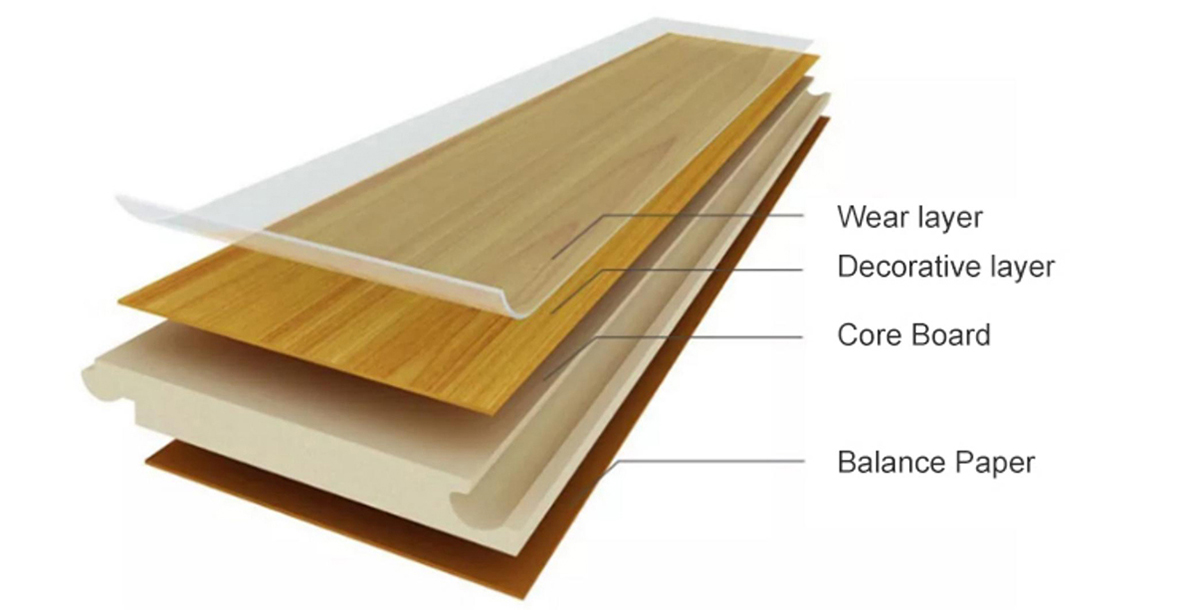
The plank has a wear layer over a printed décor, an HDF core and a balancing layer. The wear layer is the transparent layer that takes the traffic and protects the décor; its abrasion class is stated in the test report. The décor carries the printed brown design. The HDF core gives the plank its stiffness and flatness, and the balancing layer balances the panel and helps control its movement.
The layer structure and what each layer does are covered on the laminate flooring guide. Core density is a property of the core and not a quality score, and the 8mm figure is not a measure of durability.
The 8mm plank is thinner and lighter than a 12mm plank of the same construction, which affects the installed height and the feel underfoot: an 8mm floor sits lower under doors and transitions, and it feels firmer and thinner underfoot than a 12mm plank on the same underlay. The thickness does not by itself determine the wear performance, which depends on the wear layer and the test data; the wear layers and their selection are compared on the laminate flooring wear resistance page.
Applications
In residential interiors, the floor is used in living rooms, bedrooms, studies and hallways, where the brown herringbone pattern is the main reason for the choice.
In commercial interiors, the suitability is checked against the declared use class and the project's requirements rather than assumed from the product type: an office floor turns on the behaviour under chair castors, a retail floor turns on the traffic and the cleaning routine, a hotel turns on the traffic and the maintenance cost, and a school, a library or another public interior turns on the traffic profile and the cleaning routine of the building. A hospital or an exhibition hall is a project-specific environment with its own traffic and cleaning requirements, and it is assessed against the product data and the project's specification rather than assumed suitable from the product type.
The product standard does not treat frequently wet areas as part of the normal scope of use for a laminate floor. A kitchen is assessed on the specific conditions rather than assumed suitable, and a bathroom is not made suitable by adding a moisture-resistant underlay or sealing the joints: a bathroom with a shower requires a product designed for wet areas, and whether any laminate product is permitted there is confirmed from its installation instructions and warranty. Where the project includes underfloor heating, the compatibility and the temperature limits are confirmed from the installation instructions for this specific product and from the heating system's requirements, rather than from a fixed surface temperature applied to every floor.
Quality Control and Testing
The checks below are the ones a buyer can carry out on this product. The brown décor and the A/B pair are the two items this page treats as central, and the other items are the same for any laminate product. The standard each item belongs to is stated, and no figure is quoted here for a test that the product's own report does not state.
| Item | Standard or document it belongs to | What the buyer checks |
|---|---|---|
| Décor consistency | The product's own quality records | The colour and pattern consistency across cartons and batches, against the approved brown reference |
| A/B plank fit | The product's own quality records | Size, profile orientation and pattern fit of the pair |
| Thickness tolerance | The product's own quality records | The measured thickness against the stated tolerance |
| Abrasion resistance | The laminate product standard, abrasion test | The abrasion class and the standard version stated in the report |
| Thickness swelling and dimensional stability | The laminate product standard, the swelling and dimensional tests | The test result and the conditions stated |
| Joint strength | The locking test for the product | The test result, with the specimen and direction |
| Formaldehyde emission | The emission requirement of the destination market | The emission class, the method and the report |
| Reaction to fire | The fire classification system of the destination market | The classification for this product, at this thickness and in the mounting tested |
The standard reference for a product is a product standard, not a certification: a claim that a product is certified to it is supported by the report for the exact model, with the standard version stated. A management-system certificate such as ISO 14001 relates to the production management system and does not demonstrate the performance of the product. The report verification method is covered on the laminate flooring quality standards page.
OEM and Wholesale Supply
The following items are confirmed for the specific order and stated in writing in the quotation:
Brown tones and décor designs actually available, with the tone names used by the factory.
A and B plank dimensions and whether the pair differs in size or only in profile orientation.
Wear resistance class and the standard version stated in the report.
Surface finish, embossing alignment, edge profile and locking profile with its licence status.
Underlay options, including whether an integrated backing is offered.
Packaging, including pieces per carton, coverage per carton for the A/B pair and OEM packaging.
MOQ for standard and customized designs, and the tooling requirement for a custom décor.
Sample availability, and whether the sample is free or charged.
Production lead time for the order size and configuration.
Warranty scope and duration, including commercial use.
To request a quotation, state the required quantity, the destination market, the preferred brown tone, the plank size, whether the order is standard or customized, and whether samples are needed; the quotation states the specification, the packaging, the MOQ, the sample terms and the lead time for that configuration.
Frequently Asked Questions
1. Is 8mm laminate flooring durable enough for high-traffic areas?
It depends on the wear layer and its abrasion class, and on the traffic and the maintenance routine, rather than on the 8mm thickness. The abrasion class for this product is stated in its test report, and the declared use class is read from the same report. Where the 8mm and the 12mm versions are compared, the difference is in installed height and underfoot feel, not in a fixed wear advantage; the structural section above sets out that difference.
2. Can it be installed in kitchens or bathrooms?
A kitchen is assessed on the specific conditions, and the product's installation instructions and warranty are the basis for the decision. A bathroom with a shower requires a product designed for wet areas, and a moisture-resistant underlay or sealed joints do not make a laminate floor suitable for a bathroom.
3. Is underfloor heating compatible with laminate flooring?
It depends on the product and the heating system, and the compatibility and temperature limits are confirmed from the installation instructions for this specific product and from the heating system's requirements.
4. How does it compare to solid wood flooring?
Laminate gives a printed wood-grain surface over an HDF core, while solid wood is a single piece of timber. The two differ in refinishing, in how they respond to humidity and in cost, and the comparison is set out on the engineered wood versus solid hardwood page.
5. What are the brown tones available?
The brown tones are described in five groups: light brown, natural oak brown, medium brown, walnut brown and dark brown. The tones actually offered for this product are listed with it, and the tone is confirmed on a sample in the room where the floor will be laid.
6. Is the herringbone pattern harder to install than a straight lay?
It needs planning rather than difficulty: the A and B planks, the starting point and the direction are planned before the first row, and the click-lock profile is engaged along the joint. On an 8mm plank the joint is thinner in section, so the subfloor tolerance and the A/B fit are checked with care. A professional installer is advisable for a large commercial project.
7. Are samples free or charged?
Sample terms are stated in the quotation: the quotation says whether the sample is free or charged, and what the freight terms are.
8. How is the flooring maintained?
Routine sweeping or vacuuming to remove grit, and damp mopping with a cleaner intended for laminate. Excess water and abrasive pads are avoided, and the care instructions for the product are followed.