HDF Dark Herringbone Laminate Flooring
HDF dark herringbone laminate flooring unites technical performance with design excellence. Its dense HDF core offers strength, stability, and load resistance, while the abrasion-resistant surface withstands scratches, stains, and daily wear. The herringbone pattern elevates interiors with a sophisticated, classic style, while dark tones provide warmth and elegance. This flooring complies with key safety and environmental standards, ensuring reliable indoor air quality and fire safety. Easy installation with click-lock technology and long-term durability makes it suitable for both homes and commercial spaces. Its blend of engineering precision, beauty, and cost-effectiveness ensures a versatile flooring solution for modern projects.
Product Overview
HDF dark herringbone laminate flooring is a laminate floor with an HDF core, a dark printed décor and a herringbone pattern laid with matched left and right planks. The planks are jointed with a click-lock profile and installed as a floating floor.
"Dark" is a family rather than a single tone, and the tones offered for this product are listed with it. The thickness, the A and B plank dimensions, the abrasion class and the surface finish are stated in the specification table and confirmed in the quotation; this page does not present a range of thicknesses as the product specification, because each thickness is a separate product.
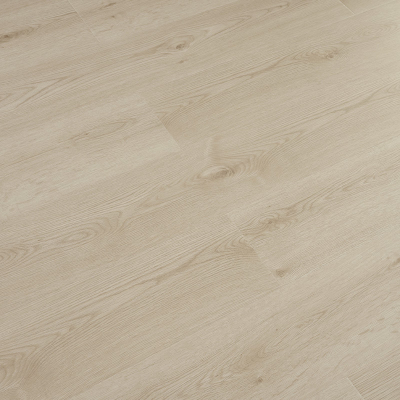
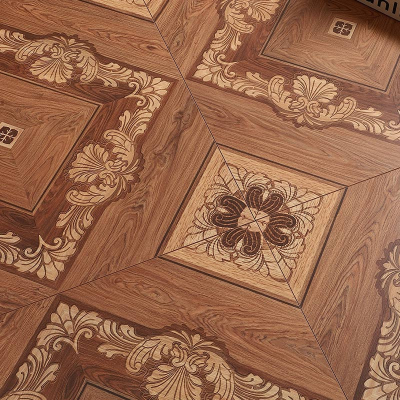
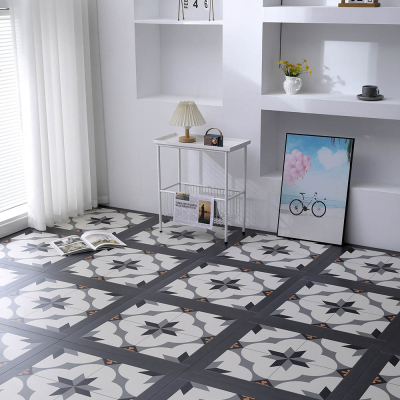
A sample of the actual dark tone and finish is available on request, so that the colour is judged on a physical piece rather than on a screen, and the product photographs on this page show the installed appearance of this range.
This page describes the HDF laminate construction. A rigid core SPC herringbone floor is a different construction and is specified on its own page, and a moisture-resistant herringbone laminate is a separate product with its own test basis and is specified on its own page. The general laminate knowledge is covered on the laminate flooring guide, and the pattern as a design choice on the herringbone flooring page.
Product Specifications
The table states the specification for the product. Entries marked as pending are confirmed for the order; a value is published only where the product documentation supports it.
| Specification | Product details |
|---|---|
| Product type | HDF dark herringbone laminate flooring |
| Total thickness | The actual thickness for this product, stated in the specification sheet; each thickness is a separate product |
| Core material | HDF, with the core specification stated per product |
| Core density | The tested value and the test method, pending confirmation |
| Plank length and width | Actual dimensions, pending confirmation |
| A/B plank dimensions | The A and B plank length and width, and whether the pair differs in size or only in profile orientation |
| Wear resistance class | The abrasion class stated in the test report for this product, pending confirmation |
| Surface finish | Matte, satin, embossed or other finish actually supplied, pending confirmation |
| Edge profile | V-groove or square edge, as supplied |
| Locking system | The locking profile for the product, with the licence status stated |
| Installation | Floating click-lock installation; whether glue-down is permitted is stated in the installation instructions |
| Underlay | Whether an integrated backing is offered, or a separate underlay is specified |
| Formaldehyde emission | The emission class and the report held for the product, for the destination market |
| Raw material sourcing claim | FSC or PEFC only where a chain-of-custody certificate is held for the material; the certificate status is stated for the order, pending confirmation |
| Available dark tones | The dark décors actually offered |
| Customization | Décor, colour, surface texture and packaging actually supported |
| MOQ and lead time | Confirmed in the quotation for the configuration |
Three points about the specification belong here. First, the wear resistance class is one class for this product, not a choice between classes: where a second class is available it is a separate product and is quoted separately. Second, the A and B planks are supplied as a matched set, and the coverage per carton is calculated for the pair. Third, the total thickness is not a measure of load capacity, acoustic performance or service life: those depend on the core, the wear layer, the underlay and the complete floor assembly.
Dark Colors and Wood Grain Finishes
"Dark" is the family, and the specific tone is part of the printed décor. The dark tones are described in five groups, and the tones actually offered for this product are listed with it; the groups below are the vocabulary used for selection, not a promise that every group is stocked. Deep brown tones that read as brown rather than as dark, such as medium brown and natural brown, are specified on the 8mm brown herringbone page rather than here, so that the two pages do not offer the same tone under different names.
Dark oak: a deep brown with an open grain that remains visible under direct light.
Dark walnut: a darker, denser grain with a strong contrast between early and late wood.
Espresso brown: a very dark brown with a warm cast and a subdued grain.
Smoked oak: a grey-brown printed tone that reproduces the look of smoked oak. It is a printed décor rather than a treatment applied to the wood after printing, and the appearance is confirmed on a sample; the term describes the look, not a process.
Charcoal wood grain: a near-black grey with the grain reading mainly as texture rather than as colour contrast.
The tone names used by the factory are confirmed on a sample, because the same name can mean different things between suppliers. The surface finish and the tone are chosen together: a matte finish reduces reflection and makes fine surface marks less obvious, a satin finish sits between matte and gloss, and an embossed finish adds texture and changes how light falls across the grain. Where the embossing is aligned with the printed grain, the product is described as embossed in register, and the specification states for each design whether the embossing is aligned or random.
On a dark floor, the visibility of marks is a real consideration: light dust and pale scratches show more readily on a dark surface than on a mid-tone, and a matte finish reduces that visibility more than a gloss finish. That does not mean a dark floor needs a different cleaning routine; it means the same routine shows its results sooner, so the floor is dusted more often rather than cleaned more heavily. The finish and the care routine are chosen with the tone, and the tone is judged on a sample in the room where the floor will be laid, because a dark floor reads differently in a north-facing room than in a bright one.
HDF Core and Flooring Structure
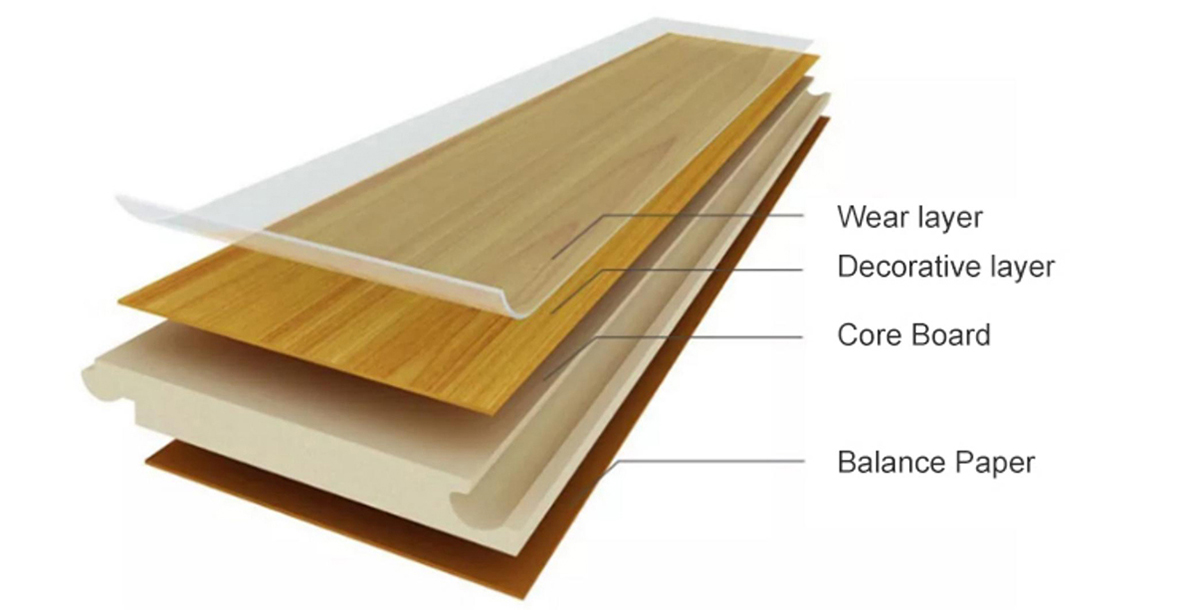
The plank has a wear layer over a printed décor, an HDF core and a balancing layer. The wear layer is the transparent layer that takes the traffic and protects the décor; its abrasion class is stated in the test report. The décor carries the printed dark design. The HDF core gives the plank its stiffness and flatness, and the balancing layer balances the panel and helps control its movement.
The layer structure and what each layer does are covered on the laminate flooring guide. Core density is a property of the core and not a quality score, and the density is read with the swelling and the dimensional stability data for the same product. The thickness of the plank affects the installed height and the feel underfoot; it is not a measure of durability.
Herringbone Pattern and Click Lock System
The herringbone pattern requires matched left and right planks, and the pair is supplied as a matched set: a mixed set from different batches, or a set in which the A and B profiles are not matched, will not close correctly. The layout has a direction, and the starting point, the direction and the A and B orientation are planned before the first row is laid.
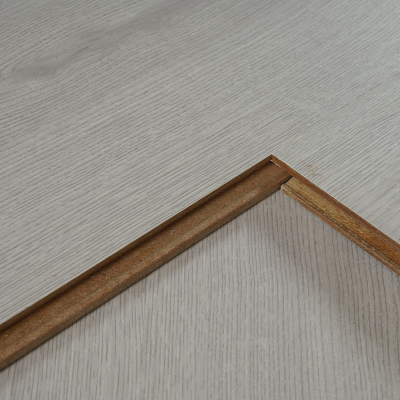
The locking profile for this product is stated in its specification, together with its licence status. The planks are engaged by hand and closed with the tapping block specified for the system, and the floor is installed as a floating system without adhesive to the subfloor. Whether a specific tool is required, and which one, is stated in the installation instructions; the profile is designed for the plank it is milled into, and the tools for one system are not necessarily correct for another. The joint quality is checked on a sample before the order, and the general installation requirements are covered on the laminate flooring installation guide.
Applications
In residential interiors, the floor is used in living rooms, bedrooms, studies and hallways, where the dark herringbone pattern is the main reason for the choice. A dark floor in a small or dimly lit room can make the space feel enclosed, and the room's light should be considered with the tone. A balcony or a children's room is assessed on the specific conditions rather than assumed suitable: a balcony is an outdoor or semi-outdoor space where a laminate floor is not the default choice, and a children's room is assessed on the same wear and moisture conditions as any other interior room.
In commercial interiors, the suitability is checked against the declared use class and the project's requirements rather than assumed from the product type: an office floor turns on the behaviour under chair castors, a retail floor turns on the traffic and the cleaning routine, a hotel turns on the traffic and the maintenance cost, and a school, a library or another public interior turns on the traffic profile and the cleaning routine of the building.
The product standard does not treat frequently wet areas as part of the normal scope of use for a laminate floor. A kitchen or a bathroom is assessed on the specific conditions rather than assumed suitable, and a bathroom with a shower requires a product designed for wet areas. Where the project includes underfloor heating, the compatibility and the temperature limits are confirmed from the installation instructions for this specific product and from the heating system's requirements.
Quality Control and Testing
The dark décor and the A/B pair are the two items this page treats as central, and the other items are the same for any laminate product. The standard each item belongs to is stated, and no figure is quoted here for a test that the product's own report does not state.
| Item | Standard or document it belongs to | What the buyer checks |
|---|---|---|
| Décor consistency | The product's own quality records | The colour and pattern consistency across cartons and batches, against the approved dark reference |
| A/B plank fit | The product's own quality records | Size, profile orientation and pattern fit of the pair |
| Thickness tolerance | The product's own quality records | The measured thickness against the stated tolerance |
| Abrasion resistance | The laminate product standard, abrasion test | The abrasion class and the standard version stated in the report |
| Thickness swelling and dimensional stability | The laminate product standard, the swelling and dimensional tests | The test result and the conditions stated |
| Joint strength | The locking test for the product | The test result, with the specimen and direction |
| Formaldehyde emission | The emission requirement of the destination market | The emission class, the method and the report |
| Reaction to fire | The fire classification system of the destination market | The classification for this product, at this thickness and in the mounting tested |
The standard reference for a product is a product standard, not a certification: a claim that a product is certified to it is supported by the report for the exact model, with the standard version stated. A management-system certificate such as ISO 9001 relates to the production management system and does not demonstrate the performance of the product. A sourcing claim such as FSC or PEFC is a statement about the raw material chain, and it is supported by the chain-of-custody certificate for the material rather than by the product's performance report; where no such certificate is held for the material, the claim is not made. The report verification method is covered on the laminate flooring quality standards page.
OEM and Wholesale Supply
The following items are confirmed for the specific order and stated in writing in the quotation:
Dark tones and décor designs actually available, with the tone names used by the factory.
A and B plank dimensions and whether the pair differs in size or only in profile orientation.
Wear resistance class and the standard version stated in the report.
Surface finish, embossing alignment, edge profile and locking profile with its licence status.
Underlay options, including whether an integrated backing is offered.
Raw material sourcing claim, with the chain-of-custody certificate where one is held.
Packaging, including pieces per carton, coverage per carton for the A/B pair and OEM packaging.
MOQ for standard and customized designs, and the tooling requirement for a custom décor.
Sample availability, and whether the sample is free or charged.
Production lead time and warranty scope, including commercial use.
To request a quotation, state the required quantity, the destination market, the preferred dark tone, the plank size, whether the order is standard or customized, and whether samples are needed; the quotation states the specification, the packaging, the MOQ, the sample terms and the lead time for that configuration.
Frequently Asked Questions
1. Is herringbone laminate harder to install than straight patterns?
It needs planning rather than difficulty: the A and B planks, the starting point and the direction are planned before the first row, and the click-lock profile is engaged along the joint. A professional installer is advisable for a large project.
2. Can HDF laminate flooring be used in kitchens?
A kitchen is assessed on the specific conditions rather than assumed suitable, and the product's installation instructions and warranty are the basis for the decision. A bathroom with a shower requires a product designed for wet areas.
3. What is the AC4 rating?
It is an abrasion class for the wear surface under the abrasion test in the laminate product standard. The class describes abrasion resistance under that test and not the impact resistance, the joint strength or the overall use class; the class for this product is stated in its own report.
4. Does dark laminate fade easily?
A dark printed décor can change with exposure to light and with wear, and the extent depends on the décor and the coating. On a dark floor a given change in tone is usually more noticeable than the same change on a light floor, because the contrast against the surrounding décor is greater; the product's documentation states what is known about the specific product, and a matte finish reduces the visibility of surface marks more than a gloss finish.
5. What dark tones are available?
The dark tones are described in five groups: dark oak, dark walnut, espresso brown, smoked oak and charcoal wood grain. The tones actually offered for this product are listed with it, and the tone is confirmed on a sample in the room where the floor will be laid. Medium and natural brown tones are specified on the 8mm brown herringbone page.
6. What is the thickness of this product?
The actual thickness is stated in the specification sheet for this product, and each thickness is a separate product rather than a range within one specification. The thickness affects the installed height and the feel underfoot, and it is not a measure of durability.
7. Can the flooring be installed as a floating floor?
Yes, it is installed as a floating click-lock floor without adhesive to the subfloor. Whether a glue-down installation is permitted is stated in the installation instructions.
8. Are samples free or charged?
Sample terms are stated in the quotation: the quotation says whether the sample is free or charged, and what the freight terms are.
9. Is FSC or PEFC certification available for this product?
A sourcing claim such as FSC or PEFC is made only where a chain-of-custody certificate is held for the material used, and the certificate status is confirmed for the order. The claim relates to the raw material chain and is separate from the product's performance reports.