Herringbone Flooring vs Parquet Flooring — What Is the Difference?
In international flooring procurement, herringbone flooring and parquet flooring are frequently discussed together, yet they are not interchangeable terms. For architects, distributors, and project buyers, understanding the structural, technical, and commercial differences between these two flooring categories is essential for accurate specification and cost control.
At a fundamental level, herringbone flooring is one specific pattern within the broader category of parquet flooring. However, differences in design logic, manufacturing requirements, installation complexity, and market positioning create meaningful distinctions that influence pricing and buyer preference.
Global Flooring Industry Background
Growth of Decorative and Patterned Flooring
The global flooring market continues to expand, driven by urban renewal, hospitality investment, and premium residential construction. Patterned flooring has emerged as a high-growth segment, particularly in Europe and North America, where design-led interiors dominate specification decisions.
Within this segment:
Parquet flooring represents a broad family of patterned wood floors
Herringbone flooring remains the most commercially successful parquet pattern worldwide
According to industry estimates, patterned wood and laminate flooring now accounts for over 15% of value-based flooring sales in developed markets.
Design as a Procurement Driver
International buyers increasingly prioritize visual differentiation, brand positioning, and lifecycle value. As a result, herringbone flooring and parquet flooring are often selected for projects seeking architectural character rather than purely functional finishes.
What Is Parquet Flooring?
Definition and Scope
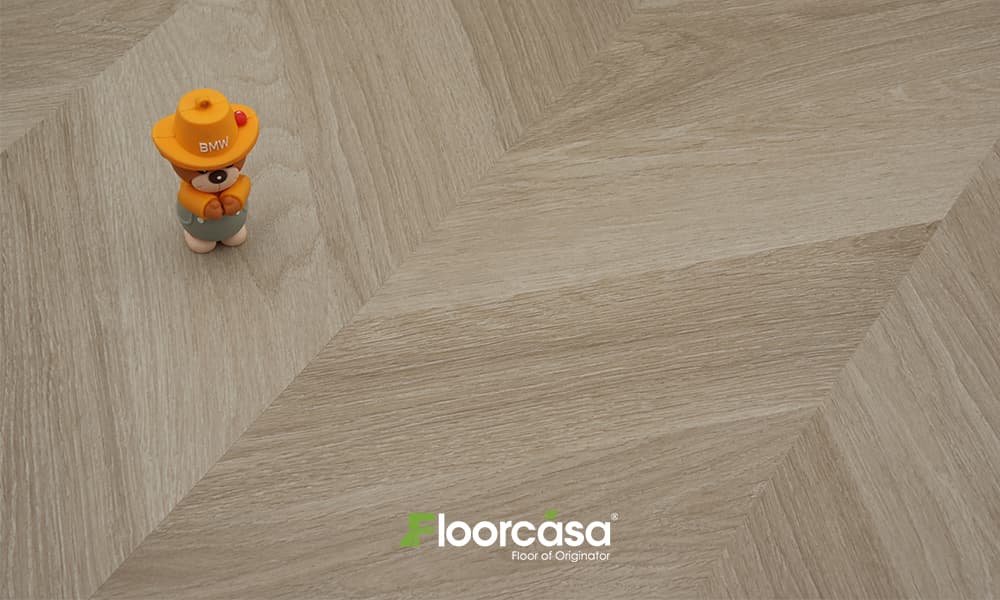
Parquet flooring refers to a category of flooring defined by geometric patterns formed from small wood blocks or planks. Unlike straight-lay plank flooring, parquet emphasizes decorative layouts.
Common parquet patterns include:
Herringbone
Chevron
Versailles
Basket weave
Mosaic block
Therefore, parquet flooring is a design category, not a single pattern.
Materials Used in Parquet Flooring
Parquet flooring can be manufactured using:
Solid hardwood
Engineered wood
Laminate
SPC or rigid core structures
Material selection significantly affects durability, cost, and suitability for different markets.
What Is Herringbone Flooring?
Herringbone as a Specific Parquet Pattern
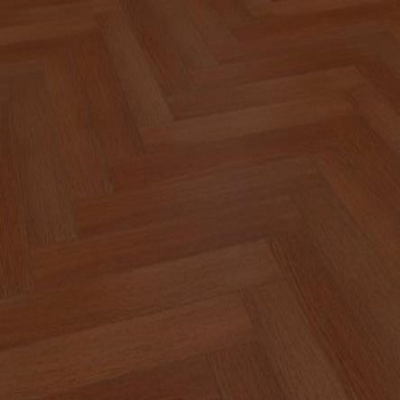
Herringbone flooring is a classic parquet pattern where rectangular planks are laid at 90-degree angles in a staggered zigzag formation resembling a fish skeleton. It originated in European architecture and remains a symbol of craftsmanship and elegance.
In technical terms:
All herringbone flooring is parquet flooring
Not all parquet flooring is herringbone flooring
This distinction is critical in B2B product classification and buyer communication.
Commercial Popularity of Herringbone Flooring
Among all parquet patterns, herringbone flooring has the highest global demand due to:
Visual balance and symmetry
Compatibility with modern and traditional interiors
Strong recognition among architects and designers
Key Differences Between Herringbone and Parquet Flooring
Pattern Complexity
The most fundamental difference lies in pattern scope:
Parquet flooring includes multiple patterns with varying complexity
Herringbone flooring uses a standardized, repeating layout
Complex parquet designs such as Versailles panels require significantly more material preparation and installation expertise than herringbone flooring.
Manufacturing Requirements
From a production standpoint:
Parquet flooring may require multiple block sizes and shapes
Herringbone flooring typically uses uniform rectangular planks with left- and right-handed profiles
This makes herringbone flooring more scalable for mass production, particularly in engineered and laminate formats.
Technical Parameters Comparison
Dimensional Precision
Both parquet flooring and herringbone flooring demand higher dimensional accuracy than standard plank flooring. However:
Herringbone flooring requires strict length-to-width consistency
Complex parquet patterns require even tighter tolerances across varied components
Floorcasa applies enhanced quality control to ensure alignment accuracy in export-grade patterned flooring.
Core Structure and Stability
In engineered parquet and herringbone flooring:
Multi-layer plywood cores improve dimensional stability
Cross-grain construction reduces movement in fluctuating climates
This is particularly important for international buyers sourcing flooring for multi-region distribution.
Product Structure Overview
A typical engineered herringbone flooring product includes:
Hardwood wear layer
Cross-laminated plywood core
Balancing backing layer
For engineered parquet flooring with complex patterns, additional pre-assembled panels or modular systems may be used, increasing material and logistics costs.
Manufacturing Process Differences
Herringbone Flooring Production
Herringbone flooring manufacturing involves:
Precision cutting of short planks
CNC profiling for interlocking systems
Pattern-specific packaging (A/B boards)
This process allows for relatively efficient large-scale production.
Parquet Flooring Production
Traditional parquet flooring production may include:
Multiple block geometries
Pre-assembled panels
Manual sorting and pattern matching
These steps increase labor input and reduce production yield, raising unit cost.
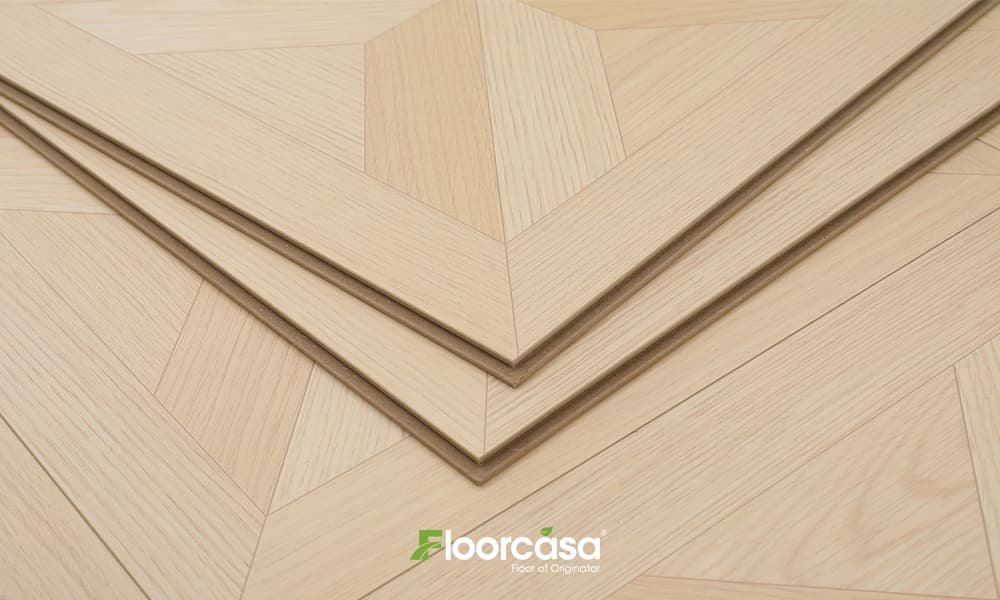
Cost and Pricing Comparison
From a procurement perspective:
Herringbone flooring is generally less expensive than complex parquet designs
Standard plank flooring remains the most cost-efficient option
Laminate herringbone flooring and SPC herringbone flooring provide cost-effective alternatives for projects requiring the parquet aesthetic with controlled budgets.
International Buyer Preferences and Pain Points
Buyer Preferences
Global buyers increasingly favor:
Engineered herringbone flooring for premium projects
Laminate herringbone flooring for volume-driven retail markets
Click-lock systems to reduce installation costs
Floorcasa aligns product development with these purchasing trends.
Common Buyer Pain Points
International buyers frequently face:
Inconsistent pattern accuracy between batches
Limited technical documentation
Installation complexity in parquet flooring
Reliable manufacturing standards and clear technical support are decisive factors in supplier selection.
Market Trends Shaping Herringbone and Parquet Flooring
Key trends include:
Growth of engineered over solid wood parquet
Expansion of laminate and rigid core herringbone flooring
Increased demand for sustainable materials and certified sourcing
These trends reinforce herringbone flooring as the most commercially scalable parquet solution.
Frequently Asked Questions (B2B)
Is herringbone flooring considered parquet flooring?
Yes. Herringbone flooring is one of the most common and recognizable parquet flooring patterns.
Is parquet flooring always made of real wood?
No. Parquet flooring can be manufactured using engineered wood, laminate, or rigid core materials.
Which is easier to install, herringbone or parquet flooring?
Herringbone flooring is generally easier to install than complex parquet patterns such as Versailles or mosaic designs.
Which option offers better value for international projects?
Herringbone flooring offers a strong balance of design impact, manufacturing efficiency, and cost control.
Conclusion and Professional Call to Action
Understanding the difference between herringbone flooring and parquet flooring is critical for accurate specification, budgeting, and market positioning. While parquet flooring represents a broad design category, herringbone flooring stands out as the most scalable, recognizable, and commercially viable option for global projects.
Floorcasa supplies engineered, laminate, and rigid core herringbone flooring solutions tailored to international B2B requirements.
For pricing, technical datasheets, or project samples, contact Floorcasa’s export team to support your next flooring specification with confidence and precision.