Is Parquet the Same as Laminate Flooring?
In global flooring procurement, parquet flooring and laminate flooring are often compared or even confused—particularly when both are offered in patterned designs such as herringbone or chevron. This leads to a frequent and commercially relevant question among international buyers: is parquet the same as laminate flooring?
The short answer is no. While parquet flooring and laminate flooring may share certain visual similarities, they differ fundamentally in materials, construction, manufacturing processes, performance characteristics, and long-term value. Understanding these differences is essential for distributors, developers, and project specifiers seeking the right product for specific markets and applications.
This article provides a detailed, B2B-focused comparison to clarify misconceptions and support informed sourcing decisions.
Global Flooring Industry Background and Market Context
Global Market Overview
The global flooring market exceeded USD 450 billion in 2024, driven by urbanization, renovation cycles, and commercial development. Within this market:
Wood flooring (including parquet flooring) represents a premium segment
Laminate flooring remains a high-volume, cost-efficient category
Parquet flooring holds strong positions in Europe and high-end residential markets, while laminate flooring dominates large-scale residential and commercial projects due to pricing and installation efficiency.
Why Buyers Compare Parquet and Laminate Flooring
International buyers often evaluate parquet flooring and laminate flooring side by side because both can offer:
Decorative patterns
Wood-inspired aesthetics
Compatibility with modern interior design trends
However, similarity in appearance does not equate to similarity in structure or value.
What Is Parquet Flooring?
Definition and Core Characteristics
Parquet flooring is a wood flooring product composed of small wood elements arranged in geometric patterns. It is traditionally made from real wood and is available in two main formats:
Solid parquet flooring
Both formats feature a genuine wood surface and are considered real wood flooring products.
Common Parquet Flooring Patterns
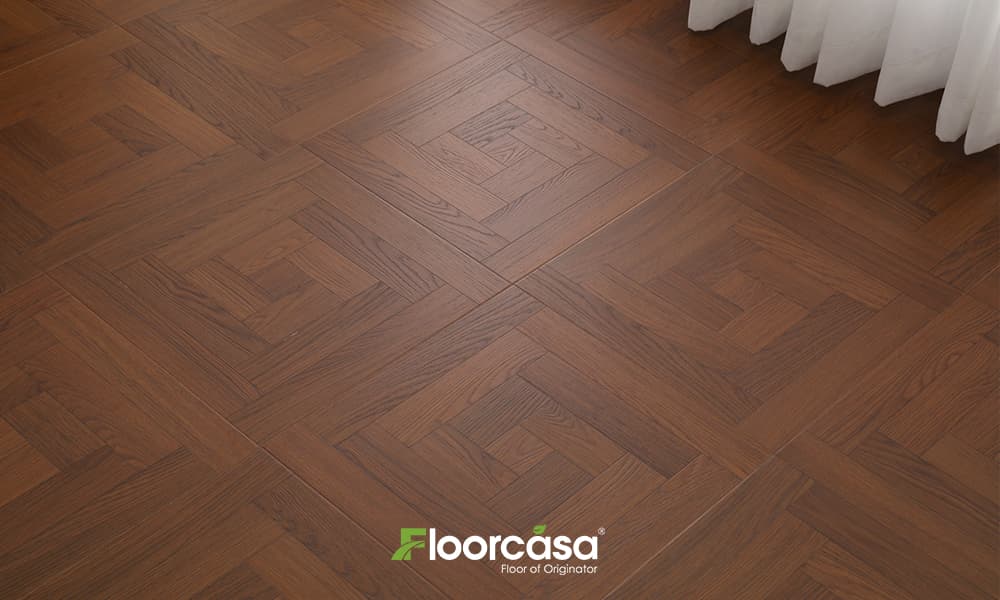
Parquet flooring is valued for its design flexibility, with popular patterns including:
Herringbone parquet flooring
Chevron parquet flooring
Basket weave and Versailles patterns
These patterns contribute to parquet flooring’s premium architectural appeal.
What Is Laminate Flooring?
Laminate Flooring Structure Explained
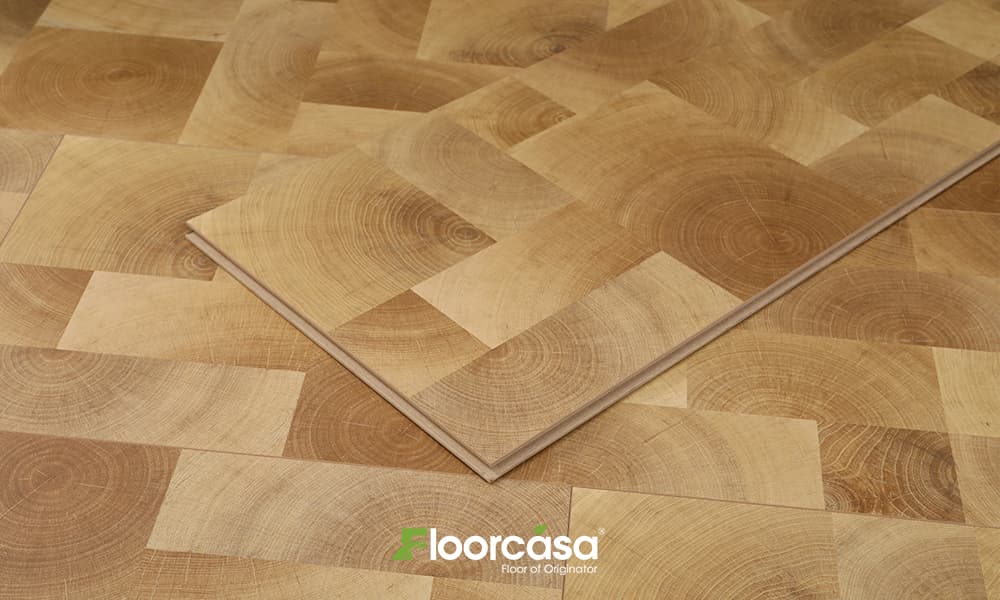
Laminate flooring is a synthetic, multi-layer product designed to replicate the appearance of wood. A typical laminate flooring plank consists of:
A wear-resistant overlay
A printed décor layer
A high-density fiberboard (HDF) core
A balancing layer
Unlike parquet flooring, laminate flooring does not contain real wood on the surface layer.
Patterned Laminate vs Parquet Flooring
Modern laminate flooring can imitate parquet patterns, including herringbone designs. However, these are visual reproductions rather than true wood constructions, which is a key distinction for buyers evaluating authenticity and long-term value.
Parquet Flooring vs Laminate Flooring: Key Differences
Materials and Product Structure
The most fundamental difference is material composition:
Parquet flooring: Made from real wood (solid or engineered)
Laminate flooring: Made from synthetic layers with a printed image
This difference directly impacts performance, cost, and market positioning.
Manufacturing Process Comparison
Parquet flooring manufacturing involves:
Hardwood sourcing and grading
Precision cutting and pattern assembly
Moisture conditioning and finishing
Laminate flooring manufacturing focuses on:
Digital décor printing
High-pressure lamination
Click-lock profiling
The parquet flooring manufacturing process requires more raw material control and craftsmanship, while laminate emphasizes scalability and efficiency.
Technical Performance and Application Considerations
Durability and Maintenance
Engineered parquet flooring offers good durability but requires controlled environments and professional installation. Laminate flooring provides:
High abrasion resistance
Lower maintenance requirements
Easier replacement cycles
This makes laminate more suitable for high-traffic commercial applications, while parquet flooring is often specified for premium residential or hospitality spaces.
Moisture and Climate Performance
Laminate flooring generally performs better in fluctuating humidity due to its engineered core. Engineered parquet flooring, when properly specified, can also perform well but remains more sensitive than laminate flooring.
Market Trends Influencing Buyer Decisions
Design-Led Demand for Parquet Flooring
Parquet flooring continues to benefit from trends favoring:
Natural materials
Authentic textures
Architectural flooring statements
These trends support parquet flooring in luxury residential and boutique commercial projects.
Cost and Scalability Driving Laminate Growth
Laminate flooring growth is driven by:
Competitive pricing
Faster installation
Consistent quality across large volumes
Patterned laminate flooring is increasingly used where parquet visuals are desired without wood-related constraints.
International Buyer Preferences and Procurement Pain Points
What Global Buyers Look For
Professional buyers assess parquet flooring and laminate flooring differently:
Parquet flooring buyers prioritize wood grading, veneer thickness, and pattern precision
Laminate flooring buyers focus on AC ratings, HDF density, and locking system performance
Floorcasa supports both categories with clear technical documentation and export-ready specifications.
Common Buyer Challenges
Buyers frequently encounter:
Mislabeling of laminate as parquet-style flooring
Inconsistent quality between samples and bulk orders
Limited clarity on performance expectations
Clear differentiation between parquet flooring and laminate flooring is essential to avoid specification errors.
Is Parquet the Same as Laminate? A B2B Conclusion
From a professional procurement standpoint, parquet flooring is not the same as laminate flooring. While both may offer wood-inspired designs and similar patterns, they differ significantly in:
Material composition
Manufacturing process
Performance characteristics
Market positioning
Selecting the right product depends on project requirements, target market expectations, and long-term value considerations.
Why Floorcasa Is a Trusted Flooring Partner
Floorcasa offers both parquet flooring and laminate flooring solutions for international markets, providing:
Real wood parquet flooring with engineered stability
High-performance laminate flooring with patterned designs
Stable production capacity and strict quality control
Comprehensive technical documentation and sampling support
Floorcasa works with distributors and developers to ensure accurate product positioning and reliable supply.
B2B FAQs – Parquet Flooring vs Laminate Flooring
Q1: Is parquet flooring always made from real wood?
Yes. Parquet flooring contains real wood, either as a solid block or as a real wood veneer in engineered constructions.
Q2: Can laminate flooring look like parquet flooring?
Laminate flooring can visually replicate parquet patterns, but it does not contain real wood.
Q3: Which is better for large commercial projects, parquet or laminate flooring?
Laminate flooring is generally preferred due to cost efficiency and durability, while parquet flooring suits premium or design-led projects.
Q4: Does Floorcasa supply both parquet and laminate flooring?
Yes. Floorcasa provides export-ready parquet flooring and laminate flooring with full technical support.
Professional Call to Action
If you are evaluating whether parquet flooring is the same as laminate flooring for your target market or upcoming projects, Floorcasa offers expert guidance and reliable supply across both categories.
Contact Floorcasa today to request:
Competitive quotations
Detailed technical specifications
Product samples and OEM solutions
Partner with a flooring manufacturer that delivers clarity, quality, and long-term value for international B2B markets.