Is Parquet Flooring Real Wood?
As global demand for premium interior materials continues to grow, parquet flooring has re-emerged as a preferred choice for high-end residential and commercial projects. However, for international buyers, distributors, and project contractors, one fundamental question frequently arises: is parquet flooring real wood, or is it an engineered alternative?
The answer is nuanced. Traditionally, parquet flooring is made from real wood, but modern parquet products now include both solid wood and engineered constructions. Understanding these distinctions is critical for buyers seeking the right balance between authenticity, performance, cost, and scalability. This article provides a comprehensive, B2B-focused analysis of parquet flooring from a global trade perspective.
Global Flooring Industry Background and Market Overview
Global Market Size and Growth
The global wood flooring market exceeded USD 60 billion in 2024, with parquet flooring accounting for a growing share due to renewed interest in classic patterns and natural materials. Europe remains the largest market for parquet flooring, followed by North America and selected Asia-Pacific countries where luxury residential construction is expanding.
Key growth drivers include:
High-end residential developments
Hospitality and heritage renovation projects
Increased consumer preference for natural materials
Rising disposable income in emerging markets
Why Parquet Flooring Is Regaining Popularity
Design-driven markets are increasingly favoring distinctive flooring layouts over uniform plank formats. Parquet flooring, with its geometric patterns and real wood surface, offers differentiation that aligns with premium branding and architectural value.
Understanding Parquet Flooring and Its Materials
Is Parquet Flooring Made from Real Wood?
Yes, parquet flooring is real wood in its traditional form. Solid parquet flooring is manufactured entirely from hardwood species such as oak, walnut, maple, or teak. Each block is cut from natural timber and assembled into patterns like herringbone, chevron, or basket weave.
However, modern markets also widely adopt engineered parquet flooring, which features:
A real wood veneer surface layer
A multi-layer plywood or HDF core
Enhanced dimensional stability
Both formats are considered real wood flooring, as the visible surface is genuine hardwood.
Solid Parquet vs Engineered Parquet Flooring
Solid parquet flooring offers authenticity but requires strict environmental control and skilled installation. Engineered parquet flooring, by contrast, provides improved stability, wider application, and easier installation—making it more suitable for large-scale international projects.
Technical Parameters That Define High-Quality Parquet Flooring
Wood Species and Wear Layer Thickness
High-quality parquet flooring is evaluated based on:
Hardwood species grade
Wear layer thickness (typically 3–6 mm for engineered parquet)
Moisture content control
European oak parquet remains the most specified option due to its balance of hardness, appearance, and availability.
Structural Stability and Performance
Engineered parquet flooring is designed to minimize movement. Key technical indicators include:
Cross-laminated plywood cores
Low expansion and contraction rates
Compatibility with underfloor heating systems
Floorcasa focuses on engineered parquet structures that meet international performance expectations.
Product Structure of Parquet Flooring
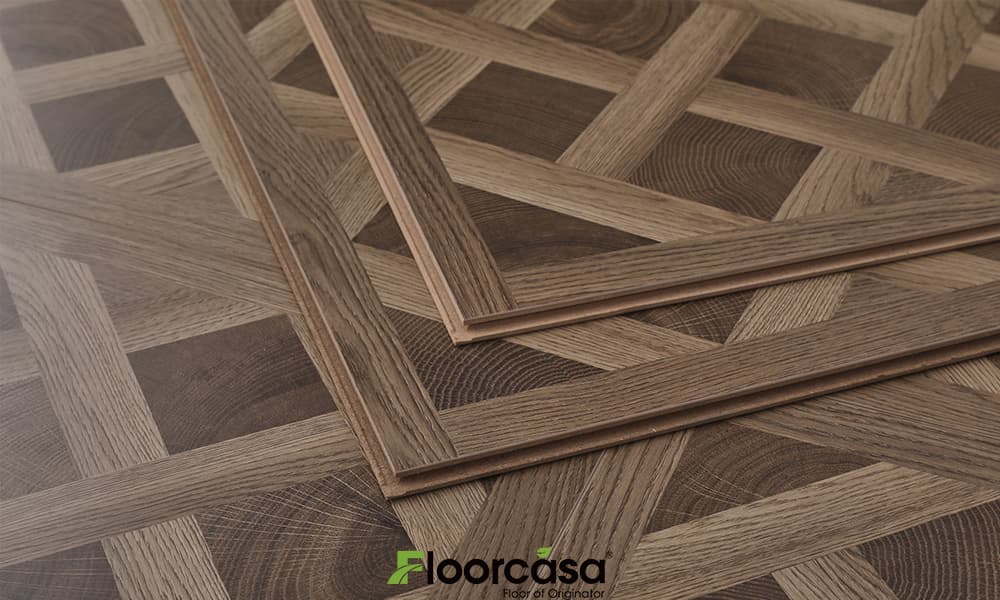
A typical engineered parquet flooring product consists of:
Surface Layer – Real hardwood veneer
Core Layer – Multi-layer plywood or engineered wood
Balancing Layer – Stabilizing back layer
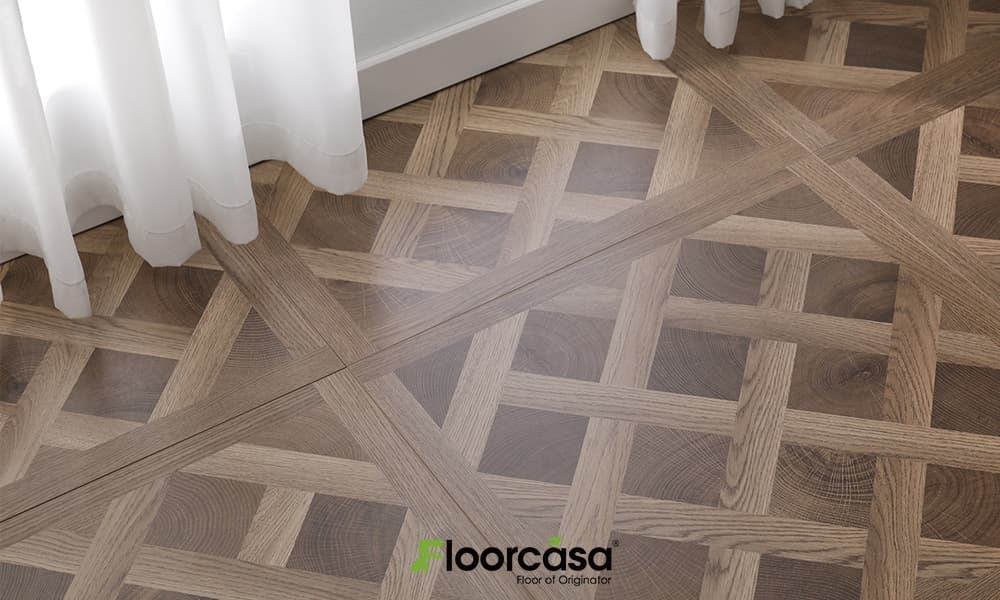
This structure allows parquet flooring to maintain the aesthetic value of real wood while improving durability and climate adaptability.
Manufacturing Process and Quality Control
Parquet Flooring Production Workflow
The manufacturing process of parquet flooring involves:
Timber selection and grading
Precision cutting and veneer slicing
Moisture conditioning
Hot pressing and bonding
CNC machining for pattern accuracy
Surface finishing and curing
Floorcasa applies strict quality control protocols to ensure consistency across export batches.
Environmental Compliance and Certifications
International buyers increasingly require parquet flooring suppliers to meet:
FSC or PEFC certification
E1 / E0 formaldehyde emission standards
CE marking for EU markets
These certifications are essential for regulatory compliance and market acceptance.
Market Trends Shaping Parquet Flooring Demand
Shift Toward Engineered Parquet Flooring
While solid parquet remains relevant in niche markets, engineered parquet flooring dominates international trade due to:
Improved stability
Lower installation risk
Better compatibility with modern building systems
Design and Finish Trends
Current trends in parquet flooring include:
Herringbone and chevron patterns
Natural oil and matte lacquer finishes
Light oak and smoked tones
These trends reinforce parquet flooring’s premium positioning.
International Buyer Preferences and Procurement Challenges
What Global Buyers Look For
Professional buyers prioritize:
Consistent wood grading
Stable supply capacity
Pattern precision and dimensional accuracy
OEM and private-label capabilities
Floorcasa supports customized parquet flooring programs for distributors and developers.
Common Buyer Pain Points
Buyers often face challenges such as:
Inconsistent color variation
Warping due to improper moisture control
Limited technical documentation
Selecting an experienced parquet flooring manufacturer mitigates these risks.
Is Parquet Flooring a Practical Choice for International Projects?
From a B2B perspective, parquet flooring is real wood and remains a viable, high-value option when specified correctly. Engineered parquet flooring, in particular, offers a balance of authenticity, performance, and scalability that aligns well with international trade requirements.
Why Floorcasa Is a Trusted Parquet Flooring Partner
Floorcasa provides engineered parquet flooring solutions tailored for global markets, offering:
Real wood parquet flooring with verified sourcing
Advanced manufacturing and QC systems
Stable production capacity
Comprehensive technical documentation and samples
Floorcasa works as a long-term partner for international buyers seeking reliable parquet flooring supply.
B2B FAQs – Parquet Flooring
Q1: Is parquet flooring always made from real wood?
Yes. Parquet flooring features a real wood surface, whether solid or engineered construction.
Q2: Which is better for export projects, solid or engineered parquet flooring?
Engineered parquet flooring is generally preferred due to better stability and lower risk during transport and installation.
Q3: Can parquet flooring be used with underfloor heating?
Engineered parquet flooring is suitable for underfloor heating when properly specified.
Q4: Does Floorcasa provide samples and technical documentation?
Yes. Floorcasa offers samples, specifications, and compliance reports upon request.
Professional Call to Action
If you are sourcing parquet flooring for international distribution or project applications and need reliable real wood solutions, Floorcasa offers proven products backed by manufacturing expertise.
Contact Floorcasa today to request:
Competitive quotations
Detailed technical datasheets
Product samples and OEM solutions
Partner with a parquet flooring manufacturer that delivers authenticity, consistency, and global compliance.