Decoding the Best Grade: How EIR Technology Redefines Premium Laminate Flooring
The global laminate flooring market continues to grow, driven by innovation and demand for durable, aesthetically pleasing solutions. Within this growth, the premium segment featuring EIR technology and high-performance specifications is capturing increasing market share, particularly in Europe and North America, where discerning consumers and commercial clients seek authentic wood and stone alternatives without compromise.
Deconstructing "Grade": The Multi-Dimensional Assessment Matrix
Identifying the best grade requires evaluating multiple, interconnected factors. A high AC rating on a poorly constructed plank is not a mark of quality.
1. The Surface: AC Rating and EIR Technology
The wear layer's durability is classified by the AC Rating (Abrasion Class), a pan-European standard that indicates suitable use:
AC3: Suitable for all residential rooms. Often considered the commercial entry-point for "best" residential grade.
AC4: For general commercial use (offices, boutiques) and heavy residential. This is a benchmark for high-traffic laminate flooring.
AC5: For heavier commercial use (department stores, classrooms).
AC6: For the heaviest commercial traffic (airports, malls).
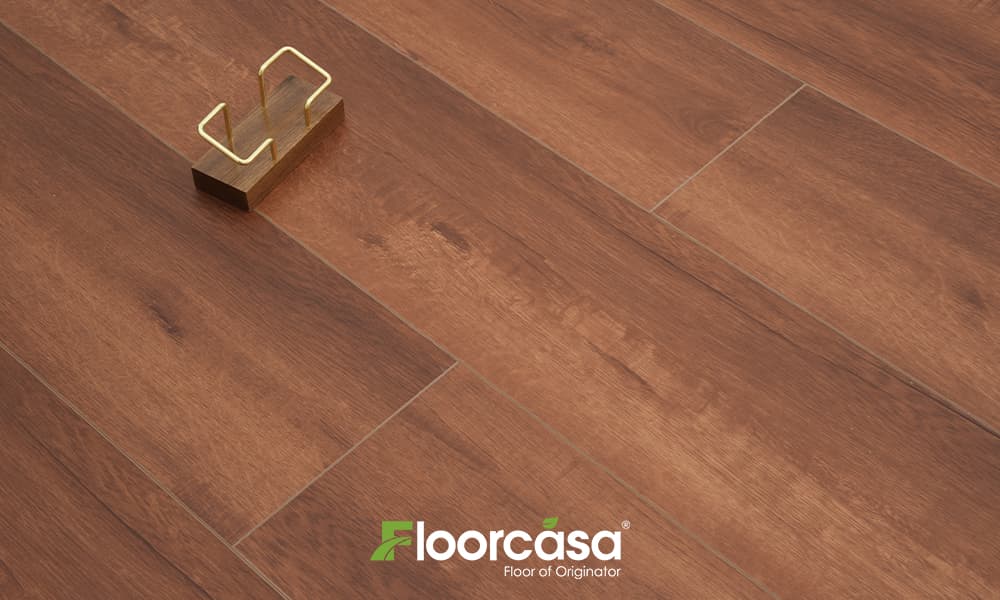
However, the "best" surface is not just hard—it's authentic. EIR Laminate Flooring utilizes a precision manufacturing process where the embossed texture on the wear layer is perfectly synchronized (in-register) with the printed grain pattern beneath. This creates a deeply tactile, realistic surface where knots are indented and grain lines are raised, eliminating the artificial, smooth feel of lower-grade laminates. This technology is a definitive marker of a premium grade.
2. The Core: The Foundation of Stability
The core is the engine. Quality is determined by:
Density: Measured in kg/m³. Premium laminate flooring uses High-Density Fiberboard (HDF) with a density of 850 kg/m³ or higher. Higher density equates to better impact resistance, screw-holding force, and overall structural stability.
Moisture Resistance: While traditional HDF is susceptible to water, best-grade laminates often feature moisture-resistant or waterproof laminate cores treated with resins or waxes. Some utilize rigid polymer cores for complete waterproof performance, a key differentiator.
3. Locking System and Installation Integrity
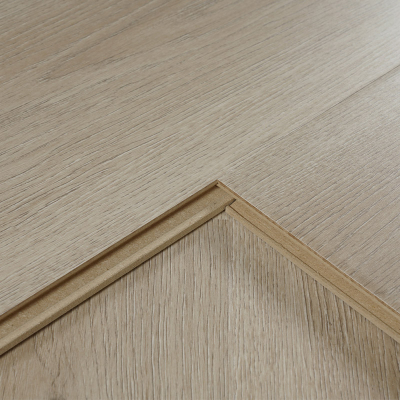
A premium grade is undermined by a weak lock. The best products feature precision-milled, robust locking systems (e.g., Unilin's 5G, Välinge's mechanical locks) that ensure seamless, gap-free installation and long-term dimensional stability. The ease and security of the click-lock system are critical for professional installers and end-customer satisfaction.
4. Health, Safety, and Environmental Certifications
Regulatory compliance is non-negotiable. The best grades carry leading certifications:
Formaldehyde Emissions: CARB NAF (USA) and EPD (Europe) or Japanese F4 Star are the highest standards, indicating ultra-low emissions.
Fire Safety: Relevant classifications like Euroclass Bfl-s1 or ASTM E84.
Sustainability: Certifications like FSC® or PEFC™ for responsible sourcing are increasingly demanded.
The Manufacturing Edge: How EIR and High Density are Achieved
The creation of best-grade EIR Laminate Flooring is a feat of precision engineering. It begins with the formation of an ultra-dense HDF core from refined wood fibers under intense heat and pressure. The core is then fused with a high-resolution decorative layer. The key step for EIR involves using a specially textured press plate. As the decorative paper—with its precise wood grain image—is aligned under the press, the heated plate embosses its texture directly onto the exact corresponding areas of the print. This requires extraordinary calibration. Finally, a super-hard aluminum oxide wear layer is cured on top, locking in the texture. This integrated process ensures the realism is durable, not just a surface coating.
Global Buyer Priorities and Sourcing Complexities
For B2B buyers, sourcing the best grade involves navigating both performance needs and market realities.
Key Procurement Drivers:
Market-Specific Demand: European buyers prioritize AC ratings and EIR aesthetics. North American markets strongly value waterproof claims and scratch resistance. Asia-Pacific markets may balance cost with rising demand for higher certifications.
Total Cost of Ownership (TCO): Savvy buyers evaluate longevity, installation efficiency, and warranty. A best-grade AC4 or AC5 laminate may have a higher upfront cost but offers lower lifetime cost due to reduced replacement and maintenance.
Supply Chain Verifiability: Buyers demand transparency—factory audits, batch test reports, and consistent quality across container loads. They partner with suppliers whose "best grade" claims are backed by data.
Common Sourcing Pain Points:
Inconsistent Core Density: Products claiming high AC ratings but using lower-density cores that lead to chipping edges or poor long-term performance.
EIR Misalignment: Poorly calibrated EIR results in "ghosting" where texture and print don't match, degrading the premium appeal.
Certification Fraud: False or outdated certificates that risk non-compliance at the destination port.
Floorcasa's Benchmark: Defining Best Grade in Practice
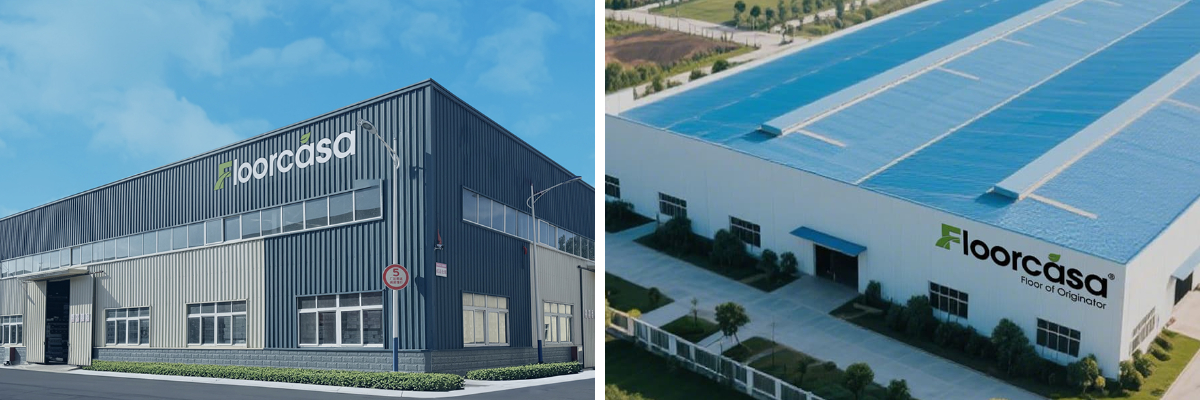
For Floorcasa, the "best grade" is a guaranteed specification. Our premium EIR Laminate Flooring is engineered to the highest benchmarks: featuring synchronized embossing on AC4/AC5 rated surfaces, built on ultra-dense (880+ kg/m³) moisture-resistant cores, and secured by patented locking systems. Every shipment is supported by a full suite of valid international certifications (CARB NAF, EPD, etc.), ensuring our partners receive not just a product, but a verified, high-performance asset for their market.
Frequently Asked Questions (FAQ)
Q1: Is AC5 always a better grade than AC4 for commercial projects?
A1: Not necessarily. While AC5 offers higher abrasion resistance, the "best" grade depends on specific traffic. For most offices, retail shops, and cafes, a well-constructed AC4 laminate flooring with a high-density core is perfectly suitable and cost-effective. AC5 is designed for severe commercial use like department stores or public buildings. Evaluate footfall, rolling loads, and budget to choose the most efficient grade.
Q2: How can we verify the authenticity of EIR technology in samples?
A2: Use both sight and touch. Visually, find a distinctive grain feature on the sample (e.g., a dark knot). Run your finger over it. In true EIR Laminate Flooring, you will feel a tactile indentation exactly matching that knot's location. On a non-EIR or poorly registered product, the texture will feel random or the knot will be smooth.
Q3: What is more important for a "best grade" in a humid climate: a high AC rating or a waterproof core?
A3: In humid climates or for installations like kitchens, a waterproof or moisture-resistant core is fundamentally more important for long-term integrity. A high AC rating on a standard HDF core is compromised if the core swells from ambient moisture. Prioritize products with advanced, stable cores designed for wet areas, then select the appropriate AC rating for the traffic.
Q4: What documentation should we require to prove core density and formaldehyde claims?
A4: Request a Technical Data Sheet (TDS) stating the exact core density in kg/m³. For formaldehyde, insist on official, dated test reports from an accredited lab (e.g., a CARB NAF exemption certificate or an EN 717-1 test report showing emissions ≤0.020 ppm for the highest standard). Do not accept a supplier's word; certified documentation is mandatory for premium grade claims.
Defining the best grade of laminate flooring is an exercise in discerning total quality. It is the synergy of a durable, authentic surface (EIR technology), a stable, dense core, certified safety, and reliable installation performance.
Ready to source laminate flooring where the grade is defined by verifiable engineering?
Contact Floorcasa today to request detailed technical specifications and third-party certification packages for our premium EIR collections. We invite you to evaluate the difference—order full-size, A-grade samples to test the lock, feel the authentic texture, and assess the quality firsthand. Let our team provide a competitive quotation and become your partner in supplying truly superior flooring.