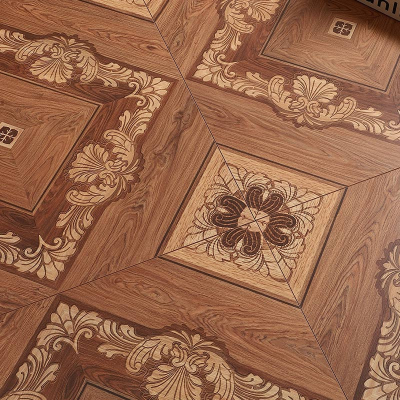
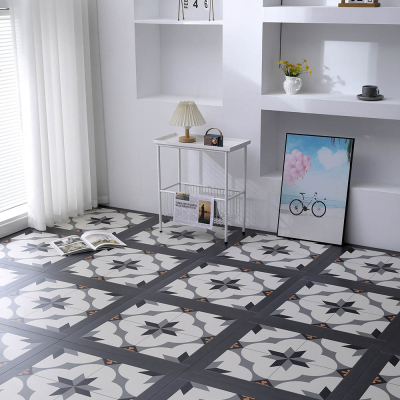
12mm AC4 Herringbone Laminate Flooring with Custom Designs
The global flooring industry continues to evolve as residential and commercial buyers demand products that combine durability, aesthetic flexibility, and cost efficiency. Within this competitive landscape, **12mm AC4 graphic design customized herringbone laminate flooring** has emerged as a preferred choice for interior design projects worldwide. Its structure, wear-resistance rating, and customizable surface patterns make it highly suitable for luxury homes, retail stores, hospitality developments, and institutional buildings.
Driven by rising construction activity in North America, Europe, Southeast Asia, and the Middle East, the laminate flooring market is experiencing sustained expansion. With modern digital printing, advanced abrasion technologies, and innovative locking systems, herringbone laminate flooring now competes directly with traditional parquet and engineered wood—delivering similar visual appeal at a significantly lower cost.
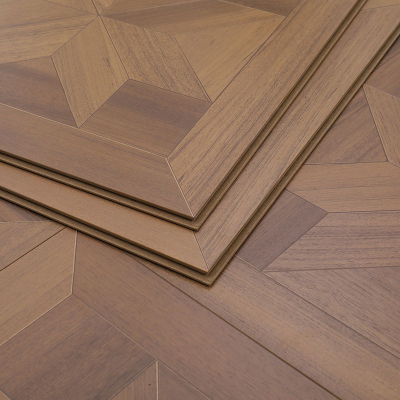
12mm AC4 herringbone laminate flooring with custom designs is a laminate floor with a 12mm HDF core, a printed décor that can be specified for a project, and a herringbone pattern laid with matched left and right planks. The staggered zigzag that the market calls herringbone is also called fishbone by some buyers; the two terms describe the same pattern, while chevron is a different pattern.
At a glance: 12mm total thickness, AC4 abrasion class, HDF core, herringbone pattern with A and B planks, click-lock joint, and customization of the wood-grain pattern, the colour, the surface texture, the gloss level and the packaging. The full specification is in the table below, and the quotation confirms the values for the order.
The custom capability on this product is the décor: the wood-grain pattern, the colour and the surface texture can be specified from the designs the factory can produce, and the process from design to sample approval is set out in the custom designs section below. The AC4 rating describes the abrasion resistance of the wear surface; it does not by itself describe the impact resistance, the joint strength or the overall use class of the product.
This is a product page. The general laminate knowledge is covered on the laminate flooring guide, the abrasion classes and their test method on the laminate flooring wear resistance page, and the herringbone pattern as a design choice on the herringbone flooring page; this page stays with this product.
Product Specifications
The table states the specification for the product. Entries marked as pending are confirmed for the order; a value is published only where the product documentation supports it.
| Specification | Product details |
|---|---|
| Product name | 12mm AC4 customized herringbone laminate flooring |
| Flooring type | HDF laminate flooring |
| Total thickness | 12mm; this is the whole plank, not the core thickness alone |
| Abrasion class | AC4, as stated in the test report for this product |
| Core material | HDF, with the core specification stated per product |
| Core density | The tested value and the test method, pending confirmation |
| A plank length and width | Actual dimensions, pending confirmation |
| B plank length and width | Actual dimensions, pending confirmation; whether the pair differs in size or only in profile orientation is stated for the product |
| Plank structure | A and B planks, supplied as a matched set |
| Pattern | Herringbone, laid with matched left and right planks |
| Surface design | The wood-grain, colour and pattern options actually available for customization; the design is produced from printed decorative paper |
| Surface finish | Matte, satin, embossed or other finish actually supplied, pending confirmation |
| Embossing alignment | Whether the embossing is aligned with the printed grain, stated for the design |
| Edge profile | V-groove or square edge, as supplied |
| Locking system | The locking profile for the product, with the licence status stated |
| Locking orientation | The profile direction of the A and B plank, stated for the product |
| Installation | Floating click-lock installation; whether glue-down is permitted is stated in the installation instructions |
| Formaldehyde emission | The emission class and the report held for the product, for the destination market |
| Packaging | Pieces per carton and coverage per carton, calculated for the A/B pair |
| Customization | Décor, colour, surface texture, gloss level and packaging actually supported |
Three points about the specification belong here. First, the A and B planks are supplied as a matched set: a mixed set from different batches will not close correctly, and the pair can be identical in size with the profile reversed or differ in length as well as in profile, which is stated for the product. Second, the coverage per carton is calculated for the pair, because the A and B planks are laid together. Third, the 12mm figure describes the whole plank; the core is thinner than 12mm and the wear layer thickness is stated separately in the report.
Custom Designs and Surface Finishes
The customization on this product is the décor, and it is produced from printed decorative paper rather than from a digital printer on the finished board. The paper is printed with the design, impregnated with melamine resin and pressed onto the core, and the surface texture is produced in the press. This is what a buyer should confirm when a design is discussed: the design is specified as a printed décor, and the achievable detail depends on the print resolution, the number of décor repeats and the tooling available for the texture.
Custom Wood Grain Patterns
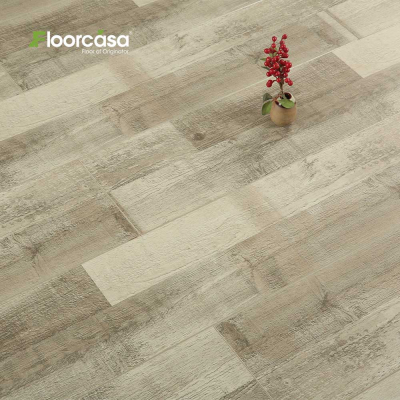
The wood-grain patterns available are the ones the factory can print and press. The grain can be a straight grain, a cathedral grain or a natural oak-style pattern, depending on the design. A custom pattern is produced from artwork and confirmed on a printed sample before the order, and the number of décor repeats is stated with the design, because a low repeat count becomes visible across a large floor.
Oak and Walnut Patterns
Oak and walnut are the two species effects most often specified, and they differ in more than tone. An oak effect is usually printed with a lighter, more open grain and a smaller cathedral figure, and it suits pale, natural and Scandinavian schemes; a walnut effect is printed with a darker, denser grain and a stronger contrast between the early and late wood, and it suits formal and dark-toned schemes. The two are produced from different artwork and different print separations, so a project that specifies walnut is quoted from the walnut artwork rather than from the oak artwork recoloured, and the difference is confirmed on a printed sample of each.
Custom Colors and Decorative Papers
The colour is part of the printed décor rather than a stain applied to a board, so a custom colour is specified as a printed colour and confirmed on a printed sample. The tone names used by the factory are confirmed on the sample, because the same name can mean different things between suppliers. The décor repeat and the colour consistency between batches are stated with the design, and the batch reference is retained for the order.
Surface Embossing and Texture
The surface texture is produced by the press plate or roller. Where the texture is aligned with the printed grain, the product is described as embossed in register, or EIR, and the specification states for each design whether the embossing is aligned or random. Where alignment is claimed, it is checked on a sample at close range: the printed knots and pores should be matched by the texture at the same position, and the alignment should be consistent across planks from the same batch. The technology behind the alignment is covered on the EIR flooring page.
Matte and Glossy Finishes
The gloss level is part of the surface finish, and it is stated for each design. A matte finish reduces reflection and makes fine surface marks less obvious; a satin finish sits between matte and gloss; a gloss finish reflects more light and shows marks more readily. The gloss level offered is confirmed from the finish options actually supplied, and the gloss figure is stated with its measurement angle.
From Design to Sample Approval
A custom design goes through four steps before production, and each step is confirmed before the next begins: the artwork or colour reference is supplied with the target application; the printable design and the achievable detail are confirmed against the artwork; a printed and pressed sample of the exact design is produced; and the sample is reviewed in the intended lighting, approved and retained as the reference for bulk production. The full supply sequence, including packaging and MOQ, is set out in the OEM section below.
12mm HDF Core and Product Structure
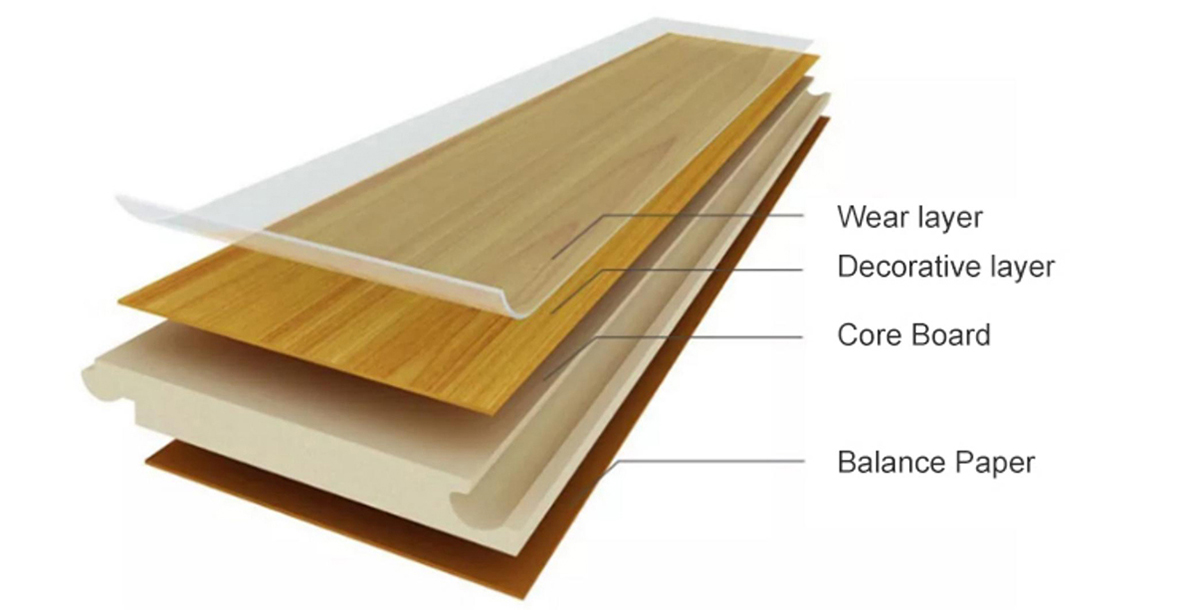
The plank has four functional layers. The wear layer is the transparent layer that takes the traffic and protects the décor; its abrasion class is stated in the test report. The decorative layer carries the printed design. The HDF core gives the plank its stiffness and flatness, and its density and thickness are stated for the product. The balancing layer balances the panel and helps control its movement; it is a structural layer rather than a performance claim.
The layer structure and what each layer does are covered on the laminate flooring guide. Core density is a property of the core and not a quality score, and the 12mm figure is not a measure of durability, acoustic performance or impact resistance.
What Does AC4 Mean in Laminate Flooring?
AC4 is an abrasion class for the wear surface, defined in the laminate product standard. The classes are divided by the result of the abrasion test: each class covers a range of test results, and the ranges are set by the standard version, so the same class name can correspond to different test results under different versions. The class describes abrasion resistance under that test and nothing else.
The abrasion class and the use class are different concepts. The use class, such as class 32, describes the areas of use a product is declared suitable for under the product standard, and it is determined from a set of performance tests. AC4 is one of the abrasion requirements that a product declared for that use class has to meet, together with the other performance requirements of the class; a product can carry an AC4 wear surface and still not be declared for that use class if another requirement is not met. The declared use class for this product is stated from its own test report, and it is not inferred from the abrasion class.
How the abrasion classes compare with each other, and how the use classes are assigned, is covered on the laminate flooring wear resistance page and on the AC4 laminate flooring page; the AC4 brown fishbone product is covered on its own page. This section states only what the class means for this product.
Herringbone Pattern and Click-Lock System
The herringbone pattern in which the end of one rectangular plank meets the side of the next requires matched left and right planks, and the pair is planned before the first row is laid: the starting point, the laying direction and the A and B orientation are decided together. A tight joint resists water at the seam better than a loose one, but a tight joint does not make the seam waterproof: the profile, the edge and the installation together determine how much water can reach the core, and the joint is checked on a sample before the order.
The locking profile for this product is stated in its specification, together with its licence status, and the locking strength is confirmed from the joint test data. The laying sequence and the general installation requirements are covered on the laminate flooring installation guide.
Applications of 12mm AC4 Herringbone Flooring
In residential interiors, the floor is used in living rooms, bedrooms, studies and hallways, where the herringbone pattern and the custom décor are the main reasons for the choice, and the wear layer and the care routine are checked against the rooms.
In hotels, in offices, in retail spaces, and in education and public buildings such as schools, libraries, lobbies and shared corridors, the suitability is checked against the declared use class and the project's requirements rather than assumed from the product type: an office floor turns on the behaviour under chair castors, a retail floor turns on the traffic and the cleaning routine, a hotel turns on the traffic, the acoustic behaviour of the assembly and the maintenance cost, and a school or a library turns on the traffic profile and the cleaning routine of the building.
The product standard does not treat frequently wet areas as part of the normal scope of use for a laminate floor. A kitchen, a restaurant or a similar space is assessed on the specific conditions rather than assumed suitable, and the product is not intended for areas with frequent standing water or persistent damp. Where the project includes underfloor heating, the compatibility and the temperature limits are confirmed from the installation instructions for this specific product and from the heating system's requirements.
Quality Testing and Product Inspection
The checks below are the ones a buyer can carry out on this product. The standard each item belongs to is stated, and no grade is quoted here for a test that the product's own report does not state.
| Item | Standard or document it belongs to | What the buyer checks |
|---|---|---|
| Abrasion resistance | The laminate product standard, abrasion test | The abrasion class and the standard version stated in the report |
| Thickness swelling and dimensional stability | The laminate product standard, the swelling and dimensional tests; some standard versions report the two from the same test series | The test result, the immersion conditions and the temperature and duration stated |
| Internal bond strength of the core | The laminate product standard, where the report holds it | The test result and the method |
| Joint strength | The locking test for the product | The test result, with the specimen and direction |
| Formaldehyde emission | The emission requirement of the destination market | The emission class, the method and the report; a product carries one emission class for one market, and the class is stated for the product rather than quoted as alternatives |
| Reaction to fire | The fire classification system of the destination market | The classification for this product, at this thickness and in the mounting tested |
| Décor consistency | The product's own quality records | The colour and pattern consistency across cartons and batches, against the approved décor reference |
| A/B plank fit | The product's own quality records | Size, profile orientation and pattern fit of the pair |
| Thickness tolerance | The product's own quality records | The measured thickness against the stated tolerance |
The standard reference for a product is a product standard, not a certification: a claim that a product is certified to it should be supported by the report for the exact model, with the standard version stated. A management-system certificate such as ISO 14001 relates to the production management system and does not demonstrate the emission or fire performance of the product. The report verification method is covered on the laminate flooring quality standards page, and the production controls behind these checks are described on the laminate flooring manufacturing page.
OEM Customization and Wholesale Supply
A custom order runs in five steps, and each step is confirmed before the next begins:
Customer design: the artwork, the wood-grain reference or the colour reference is supplied, with the target application.
Decorative paper selection: the printable design and the achievable detail are confirmed against the artwork.
Sample production: a printed and pressed sample of the exact design is produced.
Sample approval: the sample is reviewed in the intended lighting, approved and retained as the reference for bulk production.
Mass production: the approved décor is produced, with the décor reference and the batch records retained for the order.
A custom décor changes the commercial terms, not only the appearance. The tooling for the design has to be prepared, the décor has its own minimum run, and the MOQ for a custom décor is therefore higher than for a standard design from the existing range; the quotation states the MOQ and the tooling requirement for the design being ordered, together with the following items:
Décor, colour, pattern and surface texture options actually available.
A and B plank dimensions and whether the pair differs in size or only in profile orientation.
Abrasion class and the standard version stated in the report.
Surface finish, gloss level, embossing alignment, edge profile and locking profile with its licence status.
Packaging, including pieces per carton, coverage per carton for the A/B pair and OEM packaging.
MOQ for standard and customized designs, and the tooling requirement for a custom décor.
Sample availability and the terms that apply.
Production lead time for the order size and configuration.
Warranty scope and duration, including commercial use.
To request a quotation, state the required quantity, the destination market, the décor or colour reference, the plank size, whether the order is standard or customized, and whether samples are needed; the quotation states the specification, the packaging and the lead time for that configuration.
Frequently Asked Questions
1. Can the graphic design be fully customized?
The décor can be specified within what the factory can print and press, and it is produced from printed decorative paper rather than from a digital printer on the finished board. The artwork is confirmed on a printed sample before the order, and the achievable detail depends on the print resolution, the décor repeat and the tooling for the texture.
2. Is AC4 suitable for commercial projects?
It can be, where the product's declared use class and other test data match the project's requirements. AC4 is one of the abrasion requirements of a commercial use class, not a substitute for the declared use class, and the declared use class is read from the product's own report.
3. What is the expected lifespan of 12mm laminate flooring?
Service life depends on the wear layer, the traffic, the maintenance and the installation, and it is confirmed from the warranty terms and the product documents rather than stated as a fixed number of years.
4. Does the product require professional installation?
The click-lock system allows a competent installer to lay the floor, and for a large commercial project a professional installer is advisable, because the herringbone layout needs the A and B planks, the starting point and the direction planned before the first row.
5. Is the embossing on this product aligned with the print?
The specification states for each design whether the embossing is aligned with the printed grain or random. Where alignment is claimed, it is checked on a sample at close range and across planks from the same batch.
6. What is the difference between the abrasion class and the use class?
The abrasion class describes the wear surface under the abrasion test; the use class describes the areas of use the product is declared suitable for, and it is determined from a set of performance tests. AC4 is one of the abrasion requirements of that class rather than a substitute for it.
7. What tests should buyers request before a bulk purchase?
The abrasion report with the standard version, the thickness swelling and dimensional stability reports, the joint strength test, the formaldehyde emission report for the destination market, the fire classification report where the project requires it, and the quality records for décor consistency, thickness tolerance and A/B plank fit.
8. Can the packaging be customized?
OEM packaging is available, and the carton specification, the pieces per carton, the coverage per carton for the A/B pair and the pallet arrangement are confirmed in the quotation.
9. Does a custom design change the order terms?
Yes. A custom décor requires its own tooling and has its own minimum run, so the MOQ for a custom design is higher than for a standard design from the existing range, and the quotation states the MOQ and the tooling requirement for the design being ordered.