
Budget Laminate Flooring
Manufacturing Process
Budget laminate flooring production emphasizes throughput, material efficiency, and quality consistency.
Fiber Preparation: Recycled and fresh wood fibers refined and dried.
HDF Panel Pressing: Hot pressing with optimized resin ratios.
Paper Impregnation: Decorative and overlay papers saturated with melamine resin.
Short-Cycle Lamination: Layers bonded under controlled pressure and temperature.
Panel Conditioning: Stabilization to minimize post-installation movement.
Edge Profiling: Milling of locking systems using CNC lines.
Quality Inspection: Density, thickness, and surface checks.
Packaging: Export-grade cartons with moisture protection.
Product Definition
Budget laminate flooring is an engineered flooring solution designed to deliver stable performance, standardized aesthetics, and predictable lifecycle costs by optimizing material structure and manufacturing efficiency, making it suitable for cost-sensitive residential and commercial construction projects.
Technical Parameters and Specifications
Budget laminate flooring is typically manufactured in accordance with EN 13329 and related international standards, focusing on balanced cost and functional performance.
Total Thickness: 6 mm / 7 mm / 8 mm
Wear Resistance Class: AC2 / AC3
HDF Core Density: 780–850 kg/m³
Board Size: 1200–1380 mm × 190–240 mm
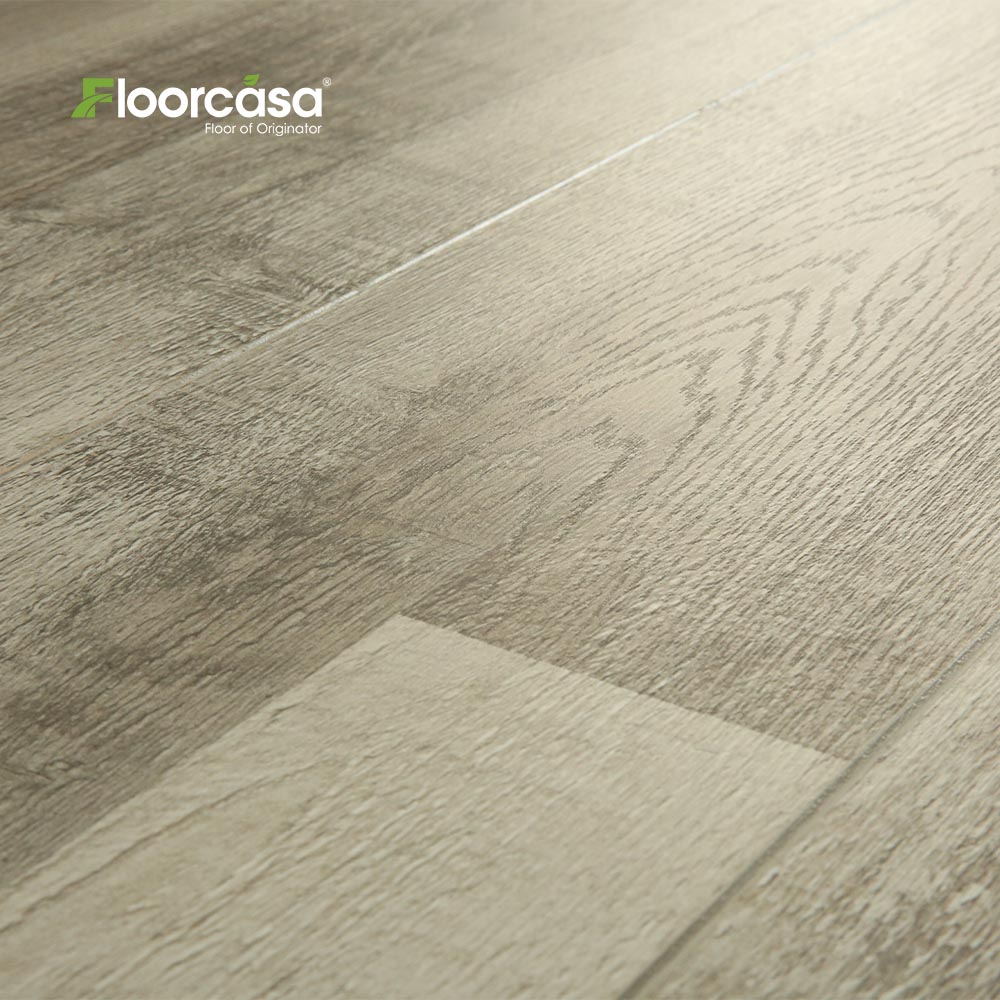
Surface Finish: Smooth or light embossed
Locking System: Basic click-lock or tongue-and-groove
Formaldehyde Emission: E1 (optional E0)
24h Thickness Swelling: ≤20%
Slip Resistance: R9–R10
Recommended Service Life: 8–15 years
Structure and Material Composition
The structure of budget laminate flooring is engineered to reduce material cost while maintaining essential performance characteristics.
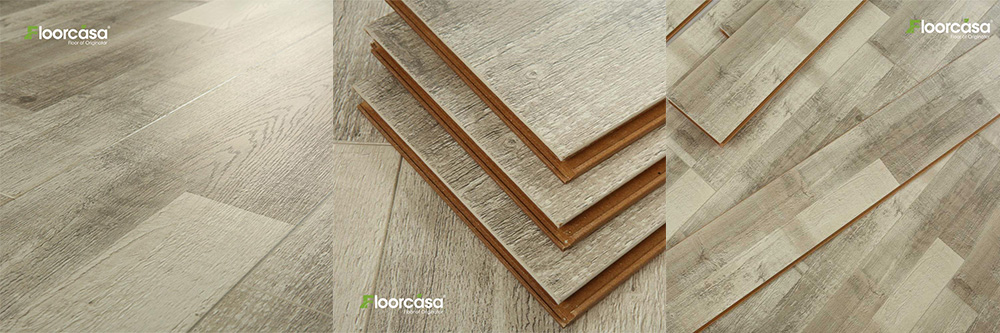
Wear Layer: Melamine-based overlay with basic abrasion resistance
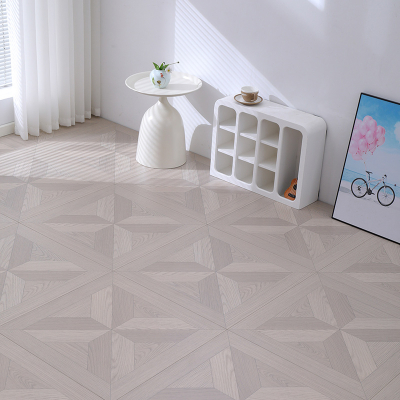
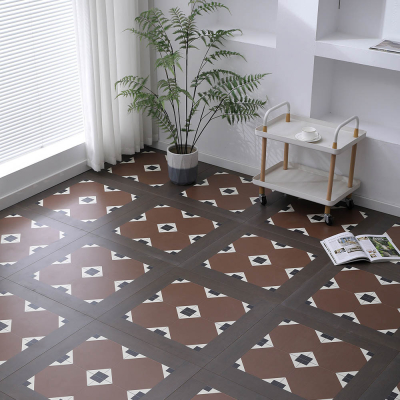
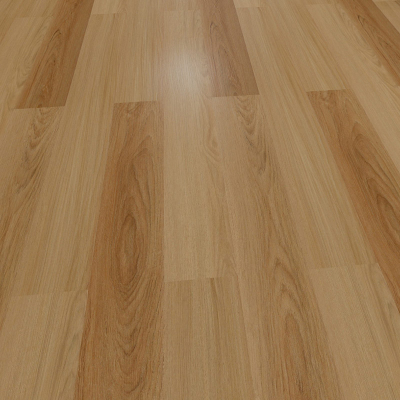
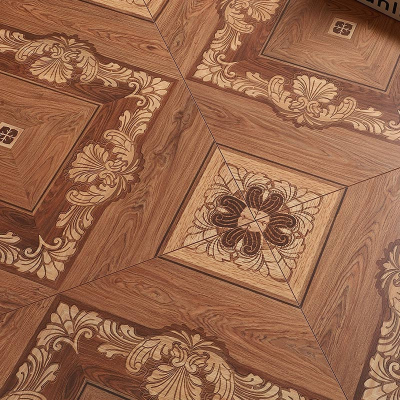
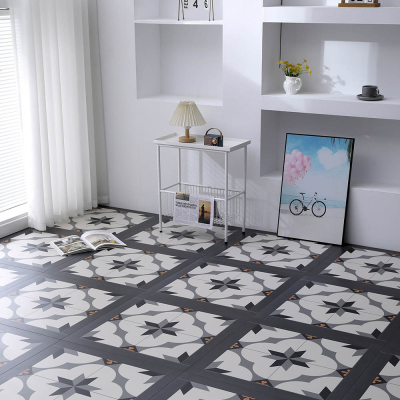
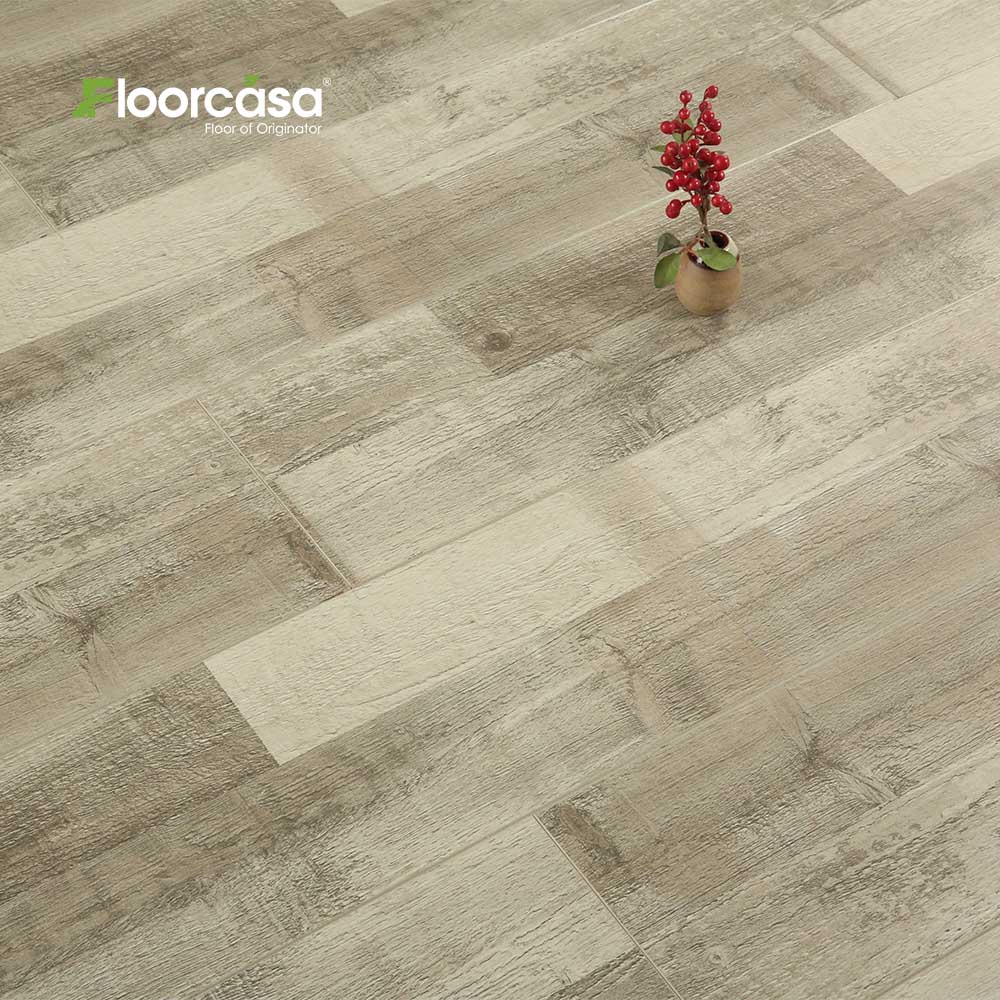
Decorative Layer: Printed paper simulating wood or stone textures
Core Layer: Medium- to high-density fiberboard (HDF)
Balancing Layer: Kraft backing paper for dimensional stability
Manufacturing Process
Budget laminate flooring production emphasizes throughput, material efficiency, and quality consistency.
Fiber Preparation: Recycled and fresh wood fibers refined and dried.
HDF Panel Pressing: Hot pressing with optimized resin ratios.
Paper Impregnation: Decorative and overlay papers saturated with melamine resin.
Short-Cycle Lamination: Layers bonded under controlled pressure and temperature.
Panel Conditioning: Stabilization to minimize post-installation movement.
Edge Profiling: Milling of locking systems using CNC lines.
Quality Inspection: Density, thickness, and surface checks.
Packaging: Export-grade cartons with moisture protection.
Industry Comparison
| Criteria | Budget Laminate Flooring | Mid-Range Laminate Flooring | Vinyl Flooring (LVT) |
|---|---|---|---|
| Initial Cost | Low | Medium | Medium–High |
| Abrasion Resistance | AC2–AC3 | AC4 | High |
| Moisture Tolerance | Moderate | Moderate | High |
| Installation Speed | Fast | Fast | Fast |
| Lifecycle Cost | Predictable | Balanced | Higher |
Application Scenarios
Budget laminate flooring is commonly specified where cost control and standardized delivery are priorities.
Distributors & Wholesalers: Entry-level flooring product lines
EPC Contractors: Large-scale residential housing projects
Property Developers: Affordable housing and rental apartments
Commercial Fit-Outs: Temporary offices and low-traffic retail areas
Public Projects: Dormitories and staff accommodations
Core Pain Points and Solutions
Strict Budget Constraints: Optimized thickness and material ratios reduce unit cost.
Fast Project Timelines: Floating installation minimizes labor requirements.
Quality Consistency: Standardized production ensures batch uniformity.
Maintenance Concerns: Sealed surfaces simplify routine cleaning.
Risk Warnings and Mitigation Measures
Moisture Sensitivity: Avoid wet areas; use vapor barriers when required.
Limited Wear Resistance: Restrict use to low- and medium-traffic zones.
Subfloor Preparation: Ensure flatness within industry tolerances.
Over-Aggressive Cost Cutting: Verify core density and bonding strength.
Procurement and Selection Guide
Define project traffic load and usage classification.
Select appropriate thickness for structural stability.
Confirm emission standards required by local regulations.
Review locking system durability and installation tolerance.
Request laboratory test reports and samples.
Evaluate supplier production capacity and lead time.
Confirm packaging suitability for transport and storage.
Engineering Case Study
In a 24,000 m² affordable housing development, 7 mm budget laminate flooring with AC3 rating was installed across multiple apartment blocks. The solution reduced flooring procurement costs by approximately 28% compared to mid-range laminate while meeting durability and indoor air quality requirements for rental occupancy.
FAQ
Q1: What defines budget laminate flooring?
A: Optimized structure and specifications focused on cost efficiency.Q2: Is it suitable for commercial use?
A: Yes, in low-traffic commercial environments.Q3: What is the typical wear class?
A: AC2 or AC3.Q4: Can it be installed floating?
A: Yes, floating installation is standard.Q5: Is underlayment required?
A: Recommended for moisture and sound control.Q6: How long does it last?
A: Typically 8–15 years under normal conditions.Q7: Are private labels supported?
A: Yes, for bulk B2B orders.Q8: How is quality verified?
A: Through density, abrasion, and emission testing.Q9: What designs are available?
A: Standard wood grain and neutral patterns.Q10: Is it recyclable?
A: Partially, depending on local recycling systems.
Call to Action
For project-based pricing, technical datasheets, or sample evaluation of budget laminate flooring, procurement teams are invited to submit specifications, quantities, and destination markets for professional assessment.
E-E-A-T Author Credentials
This article is prepared by construction material engineers and flooring supply specialists with extensive experience in laminate flooring manufacturing, international trade, and large-scale project procurement. All technical references are aligned with established industry standards and engineering practices.