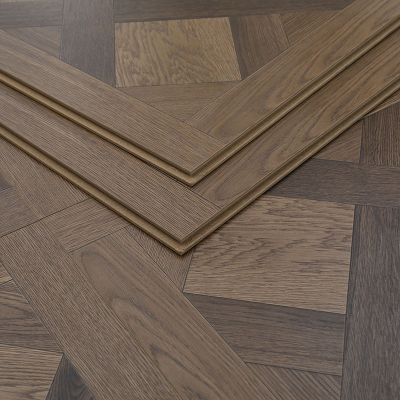
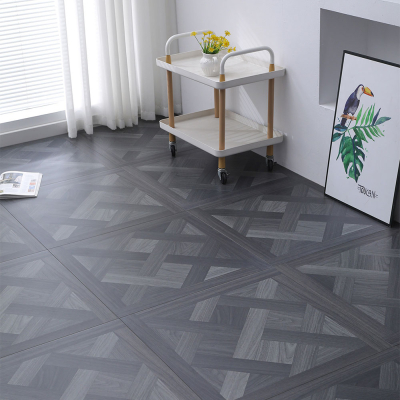
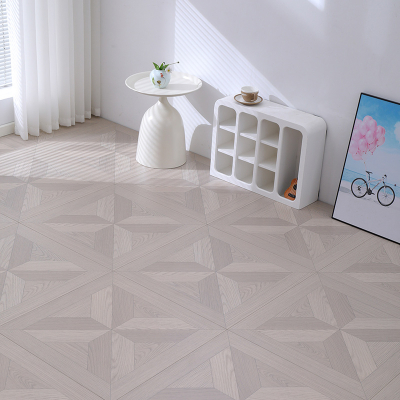
Laminate Flooring for Cold Climate Areas
Product Definition
Laminate flooring for cold climate areas refers to engineered multi-layer laminate boards specifically designed to maintain dimensional stability, impact resistance, and structural integrity under low temperatures, fluctuating humidity, and underfloor heating conditions. It combines a high-density core with protective surface layers to minimize contraction, edge swelling, and joint failure in cold regions.
Technical Parameters and Specifications
Selecting laminate flooring for cold climate areas requires attention to structural density, moisture resistance, and thermal compatibility. The following parameters are commonly specified in commercial projects:
Total Thickness: 8mm, 10mm, 12mm (10–12mm recommended for cold regions)
Core Density (HDF): ≥850 kg/m³ (preferably 880–920 kg/m³)
Moisture Swelling (24h): ≤8%
Surface Abrasion Class: AC4 (commercial light) / AC5 (heavy traffic)
Locking System: Click-lock with wax or paraffin edge treatment
Thermal Resistance: ≤0.15 m²·K/W (compatible with underfloor heating)
Formaldehyde Emission: E1 or E0 compliant
Installation Temperature: ≥10°C ambient condition
For distributors and EPC contractors, verifying these specifications ensures that laminate flooring for cold climate areas performs reliably in sub-zero seasonal environments.
Structure and Material Composition
Typical layered structure:
Wear Layer: Aluminum oxide overlay (abrasion resistance)
Decor Layer: High-resolution printed paper
Core Layer: High-density fiberboard (HDF), moisture-resistant grade
Balance Layer: Stabilizing backing sheet
Optional Edge Seal: Wax-coated locking profile
In laminate flooring for cold climate areas, the HDF core quality is the primary factor affecting thermal contraction and dimensional stability.
Manufacturing Process
1. Raw Material Preparation
Wood fibers are refined and dried to controlled moisture content (6–8%). Resin systems are blended for structural bonding.
2. HDF Board Pressing
Continuous or multi-opening hot presses compress fibers under high pressure (700–900 kg/m³ target density).
3. Surface Lamination
Decor paper and wear layer are impregnated with melamine resin and fused under heat and pressure.
4. Profiling and Click System Milling
CNC milling machines form precision locking systems. For laminate flooring for cold climate areas, tighter tolerances reduce gap formation during shrinkage.
5. Edge Treatment
Wax or hydrophobic agents are applied to improve water resistance in low-temperature condensation conditions.
Industry Comparison
| Material | Cold Stability | Moisture Resistance | Cost Level | Underfloor Heating |
|---|---|---|---|---|
| Standard Laminate | Moderate | Limited | Low | Conditional |
| Laminate Flooring for Cold Climate Areas | High | Improved | Medium | Compatible |
| SPC Flooring | Very High | Excellent | Medium–High | Excellent |
| Engineered Wood | Moderate | Moderate | High | Limited |
Application Scenarios
Distributors: Northern Europe, Canada, Northern US, Russia, Japan Hokkaido region.
EPC Contractors: Residential complexes, prefabricated housing, student dormitories.
Developers: Cold storage-adjacent offices, mountain resorts, rural housing projects.
Laminate flooring for cold climate areas is particularly suitable where seasonal indoor heating creates humidity variation.
Core Pain Points and Solutions
Joint Gapping in Winter: Use ≥10mm thickness and high-density core.
Edge Swelling from Condensation: Apply wax-sealed locking systems.
Cracking Under Thermal Stress: Maintain expansion gaps ≥8–10mm at walls.
Underfloor Heating Distortion: Ensure gradual heating increase (≤5°C per day).
Risk Warnings and Avoidance
Do not install below 10°C ambient temperature.
Avoid direct exposure to freezing moisture before installation.
Ensure subfloor moisture content ≤2% (cement-based).
Allow 48-hour acclimatization in heated space.
Improper installation, not material defect, is the primary failure cause of laminate flooring for cold climate areas.
Procurement Selection Guide
Define climate classification and minimum seasonal temperature.
Select thickness ≥10mm for heavy-use zones.
Verify HDF density documentation.
Request swelling and thermal resistance test reports.
Confirm click system precision tolerances.
Specify edge sealing treatment in purchase contract.
Review underfloor heating compatibility certificate.
Engineering Case Study
Project: 12,000 m² residential complex in Northern Europe (winter -15°C). Specification: 12mm laminate flooring for cold climate areas, AC5 rating, 900 kg/m³ HDF core. Installation: Floating method with PE moisture barrier and 10mm perimeter expansion gap. Result: After two winter cycles, no visible joint separation; moisture swelling within tolerance.
FAQ
1. Is 8mm laminate suitable for cold regions?
Generally not recommended for heavy-use areas.
2. What thickness is optimal?
10–12mm provides better thermal stability.
3. Can it be installed over concrete?
Yes, with proper moisture barrier.
4. Does underfloor heating damage laminate?
Not if thermal resistance ≤0.15 m²·K/W.
5. How much expansion gap is required?
8–10mm perimeter spacing.
6. Does cold temperature cause cracking?
Only if moisture and installation are poorly controlled.
7. Is water-resistant core necessary?
Highly recommended for condensation-prone areas.
8. How long should boards acclimate?
Minimum 48 hours in heated environment.
9. What abrasion class is recommended?
AC4 or AC5 for commercial durability.
10. Is laminate better than SPC in cold climates?
SPC has higher stability but different cost and feel characteristics.
Request Technical Documentation or Quotation
For project-based pricing, technical data sheets, sample boards, or distributor cooperation inquiries, please submit your project specifications including area size, climate zone, and installation method. Engineering support and compliance documentation are available upon request.
E-E-A-T Author Credentials
This article is prepared by a flooring industry technical consultant with over 10 years of experience in laminate manufacturing, export compliance, and cold-region project specification advisory. Content is based on industry testing standards and practical engineering applications in international markets.