Laminate Floor Gaps Between Planks | Technical Guide
For facility managers, flooring contractors, and property engineers, the occurrence of laminate floor gaps between planks is a frequent performance complaint that signals underlying mechanical or environmental stress. Unlike cosmetic surface wear, gaps – typically 0.5 mm to 3 mm wide – indicate failure of the tongue-and-groove locking system, dimensional instability of the HDF (high-density fiberboard) core, or improper installation conditions. This guide applies engineering logic to quantify acceptable gap tolerances (per EN 13329, maximum 0.2 mm for individual joints), diagnose root causes using moisture mapping and subfloor flatness tests, and specify permanent repair methods including re-seating, seam filling, or targeted plank replacement. Procurement managers will learn how to specify gap-resistant products and warranty conditions.
What is Laminate Floor Gaps Between Planks
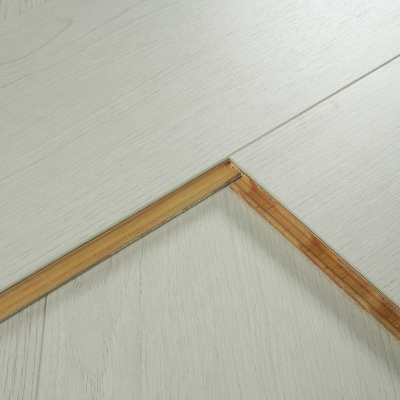
Laminate floor gaps between planks refer to visible separation at the longitudinal or transversal joints of a floating floor assembly. In a correctly installed and stabilized laminate floor, the locking mechanism (mechanical click system or glued tongue-and-groove) maintains contact with a separation of less than 0.1 mm – imperceptible to touch. Gaps form when the HDF core shrinks due to low relative humidity (below 30% RH), when the subfloor has excessive deflection exceeding 3 mm per 2 meters, or when the locking profile was damaged during installation. For engineering and procurement, gaps are not merely aesthetic: they allow moisture ingress leading to edge swelling, reduce the floor's structural continuity under rolling loads, and accelerate wear layer chipping. Repair protocols must address both the symptom (gap) and the underlying cause (humidity control, subfloor correction, or locking system mismatch).
Technical Specifications of Laminate Floor Gaps Between Planks
Before diagnosing laminate floor gaps between planks, the original floor's tolerances and environmental parameters must be documented. The table below lists critical values per EN 13329 and ASTM F1303.
| Parameter | Typical Value (Standard Laminate) | Engineering Importance |
|---|---|---|
| Plank width tolerance | ±0.15 mm (EN 13329) | Excessive width variation (>0.2 mm) prevents tight joints. Gaps appear along the length of shorter planks. |
| HDF core moisture content at manufacturing | 6% – 8% | If planks are installed when moisture >10%, subsequent drying shrinks core, creating gaps >1 mm within 6 months. |
| Equilibrium moisture content (service) | 6% – 9% (corresponds to 30% – 60% RH) | Below 30% RH (winter heating), HDF shrinks, opening joints. Above 70% RH, expansion causes buckling. |
| Linear expansion coefficient | 0.02% – 0.04% per 1% RH change | A 3 m wide floor experiences up to 3.6 mm width change across 30% RH seasonal swing. Expansion gaps at walls must accommodate this. |
| Subfloor flatness tolerance | ≤3 mm over 2 m straightedge (ASTM F710) | High spots cause vertical misalignment; low spots allow plank flexing, opening joints under point loads. |
| Acceptable gap width (new installation) | ≤0.1 mm for click systems; ≤0.2 mm for glued joints | Gaps >0.5 mm are considered failure and typically excluded from warranty unless environmental deviation is proven. |
| Locking system pull-apart strength | ≥300 N/m (for 8mm thick planks, EN 13329) | Low pull-apart strength allows joints to separate under foot traffic or sliding furniture. |
Material Structure and Composition
The tendency for laminate floor gaps between planks is directly related to the composite layers and lock profile geometry. The table below explains each component's role in gap formation.
| Layer / Component | Material | Function & Gap Formation Mechanism |
|---|---|---|
| Wear layer (overlay) | Melamine resin + aluminum oxide | Inelastic. If gaps open, edges of the wear layer become vulnerable to chipping and moisture intrusion. |
| HDF core | Wood fibers (pine/spruce) + UF resin, density 850-950 kg/m³ | Primary structural layer. Shrinks/swells with humidity. Low-density HDF (<850 kg/m³) exhibits high shrinkage → large gaps. |
| Balancing backing | Melamine-impregnated paper | Provides counter-tension. Uneven backing adhesion causes cupping, which forces joint separation. |
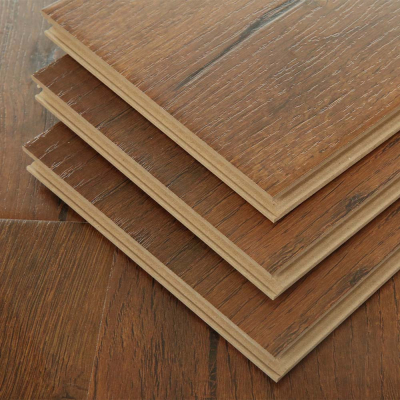
| Locking profile (tongue) | Milled HDF, sometimes wax-coated | The tongue angle and undercut geometry (e.g., Uniclic, Valinge 2G) determine pull-apart resistance. Worn tooling creates loose tolerances allowing gaps >0.3 mm from day one. |
| Acoustic underlay (attached or separate) | Polyethylene foam, cork, or felt | Soft underlay compresses under load, allowing vertical movement that can unlock joints over time → gaps. |
Engineering impact: For commercial applications with high point loads (office chairs, pallet jacks), specify planks with a densified HDF core (>920 kg/m³) and a locking system with a vertical click lock that resists horizontal separation.
Manufacturing Process of Laminate Floor Gaps Between Planks
Defects in manufacturing contribute to premature gaps. Understanding each step helps procurement teams audit supplier quality.
Raw material preparation: Wood fibers are refined and blended with urea-formaldehyde resin and paraffin (to reduce water absorption). Inadequate paraffin dosage (<0.5%) leads to higher hygroscopic expansion/shrinkage.
HDF pressing (forming): Fiber-resin mat is pressed at 200°C and 5 MPa. Uneven pressure distribution creates internal stress gradients. When the plank later acclimatizes, differential release of stress causes warping and joint opening.
Conditioning (moisture stabilization): Boards are stored for 72+ hours at 6-8% moisture content. Insufficient conditioning results in planks that shrink further in the building, pulling apart at joints within 2-3 months.
Surface finishing: Wear layer application (melamine at 200°C). High heat can slightly dry the HDF surface, causing micro-cracks that later propagate as gap openings.
Precision machining (tongue and groove milling): High-speed carbide tooling machines locking profiles. Tolerances: ±0.05 mm for critical undercut dimensions. Worn tools or excessive feed rates produce loose fits. A simple field test: two planks clicked together should not separate under a 5 kg pull force.
Quality inspection: Automated optical systems check joint gap of assembled samples. Acceptable gap ≤0.1 mm. Reputable factories perform destructive pull-apart tests every shift and retain specimens.
Performance Comparison with Alternative Materials
When evaluating repair or replacement of a floor exhibiting laminate floor gaps between planks, consider alternative materials that inherently resist gapping.
| Material | Durability (gap resistance) | Cost level (installed) | Installation complexity | Maintenance | Typical applications |
|---|---|---|---|---|---|
| Standard laminate (8 mm, AC3) | Low (gaps appear with RH<30%) | $2 – $4 / ft² | Low (floating click) | Frequent (seam sealing) | Residential, low-traffic offices |
| Premium laminate (12 mm, AC5, HDF >950 kg/m³) | Medium (less shrinkage) | $4 – $7 / ft² | Low-Medium | Moderate (humidity control) | Commercial showrooms, hospitality |
| Luxury Vinyl Plank (LVP, rigid core) | High (dimensionally stable, no organic core) | $3 – $7 / ft² | Low (floating click) | Low | Healthcare, retail, kitchens |
| Engineered wood (3-layer, cross-ply) | Moderate (some seasonal movement) | $6 – $12 / ft² | Medium (glue or staple) | Moderate (refinishing) | Executive offices, luxury residential |
| Glue-down solid vinyl tile | Very high (no joints to gap) | $4 – $8 / ft² | Medium (adhesive application) | Low | Hospitals, laboratories, wet areas |
Recommendation: For facilities with seasonal humidity swings below 30% RH (e.g., heated warehouses in winter), avoid standard laminate entirely. Specify LVP or glue-down vinyl.
Industrial Applications of Laminate Floor Gaps Between Planks
Gap formation is reported in multiple environments, requiring distinct repair strategies.
Residential multi-family (apartments): Seasonal heating reduces indoor RH to 20-25%, causing widespread gaps >1 mm. Repair: whole-room re-seating using a pull bar and tapping block, then install a humidifier on the HVAC system.
Commercial offices (open-plan): Gaps often occur near floor supply diffusers where dry air blows directly on the floor surface. Repair: relocate diffusers or add baffles. For existing gaps, use a laminate seam filler (colored acrylic) and apply a humidistat-controlled steam injection system.
Retail stores (fashion): Rolling clothes racks exert lateral forces that separate click locks. Gaps appear perpendicular to the rolling direction. Repair: install transition strips at 10 m intervals to break the floating floor into smaller zones, reducing cumulative force.
Hospitality (hotel corridors): Housekeeping carts with swivel casters cause micro-movements that gradually unlock joints. Repair: replace the corridor floor with glued laminate (instead of floating) or use a high-friction underlayment.
Educational (classrooms): Gaps appear at the end of rows adjacent to exterior walls where temperature and humidity fluctuate most. Repair: remove baseboards, re-tap the row toward the wall, and add a 15 mm expansion gap concealed under a new wider baseboard.
Common Industry Problems and Engineering Solutions
Field data reveal four recurring causes of laminate floor gaps between planks. Each demands a specific engineering solution.
Problem: Gaps along short edges (end joints) only.
Root cause: Insufficient tapping force during installation or debris in the locking channel. The locking click did not fully engage. Solution: Using a pull bar and mallet, tap the end joint while holding adjacent planks down with double-sided tape. If gap persists, disassemble the row and clean the locking mechanism with a vacuum and brush.Problem: Uniform gaps across entire floor (every joint ≥0.5 mm).
<30% 7="" or="" hdf="" core="" that="" was="" installed="" above="" moisture="" content.="" solution:="" raise="" rh="" to="" using="" commercial="" humidifiers="" for="" days.="" many="" gaps="" will="" close="" partially.="" remaining="">0.5 mm, inject water-based seam filler (color-matched acrylic) using a syringe and smooth with a plastic spatula.
Root cause: Whole-room shrinkage due to sustained RHProblem: Gaps only near windows or exterior doors.
Root cause: Differential hygrothermal expansion; the floor near the envelope experiences wider temperature and humidity swings. Solution: Install a thermal break (e.g., 6 mm cork underlayment) in the perimeter zone. For existing gaps, remove the row closest to the wall, re-cut planks 5 mm shorter, and reinstall with a wider expansion gap.Problem: Gaps appear after furniture relocation or heavy sliding.
Root cause: Horizontal shear force exceeded the locking system's frictional resistance. Common with sofas or filing cabinets dragged without felt pads. Solution: Push the floor back together using a suction cup puller (available for laminate). Apply a bead of cyanoacrylate adhesive into the gap and clamp for 10 minutes. This permanently bonds the joint but prevents future disassembly.
Risk Factors and Prevention Strategies
Preventing laminate floor gaps between planks begins at specification and continues through building operation.
Improper installation (insufficient expansion gap or tapping error): Prevention: Maintain 10-15 mm gap at all walls. Use a tapping block directly against the plank edge – never strike the locking protrusion. Pull-apart test three random joints per 100 m² after installation.
Material mismatch (planks from different batches): Prevention: Purchase all planks from the same production batch number. Mixing batches can lead to thickness differences >0.2 mm, preventing full lock engagement.
Environmental exposure (low RH or high temperature): Prevention: Design HVAC to maintain 40-60% RH and 18-25°C. For dry climates, specify laminate with paraffin-impregnated HDF (swell rate<8% per EN 13329). Install a whole-building humidification system if RH regularly drops below 30%.
Subfloor or foundation issues (excessive deflection or moisture vapor): Prevention: Test concrete subfloor flatness (≤3 mm per 2 m). Use a moisture vapor barrier (6-mil polyethylene) if calcium chloride test exceeds 3 lbs/1000ft²/24h. For wood subfloors, ensure moisture content ≤12% and fasten any loose boards.
Procurement Guide: How to Choose the Right Laminate Floor Gaps Between Planks
For procurement managers and contractors, use this checklist to select a floor system that minimizes future gapping.
Traffic load evaluation: Determine point loads (office chairs: 100 kg; pallet jacks: 500 kg). High point loads require HDF density >950 kg/m³ and locking system with vertical locking (e.g., Valinge 5G).
Specification verification: Request EN 13329 test report. Pay attention to: thickness swelling (<12% after 24h), moisture content (6-8% at packaging), and pull-apart strength (≥300 N/m).
Supplier capability: Prefer ISO 9001:2015 certified factories that perform inline laser measurement of locking profile dimensions. Request proof of tooling replacement schedule (every 200,000 linear meters).
Quality control documentation: Ask for control charts of plank width tolerance and pull-apart strength from the last 6 months. Acceptable CV<2%.
Sample testing before bulk purchase: Order 2 m². Click planks together and attempt to pull apart by hand. No separation under 5 kg force. Condition samples at 30% RH for 2 weeks; measure gap width – should be<0.2 mm.
Warranty evaluation: Standard laminate warranty excludes gaps caused by humidity below 30% RH. Some premium suppliers offer a "gap-free warranty" for 10 years provided RH remains 30-60%. Require a humidistat logging requirement.
Underlayment selection: Use a closed-cell foam underlayment with density >60 kg/m³. Avoid thick (>3 mm) soft foam, which allows vertical movement that unlocks joints.
Engineering Case Study
Project type: Class A office building, 8th floor open-plan workspace.
Location: Chicago, USA (continental climate, winter RH as low as 15% without humidification).
Project size: 1,200 m² of AC4 laminate, 8 mm thick, installed floating over concrete with 2 mm foam underlayment.
Product specification: Original laminate: HDF density 880 kg/m³, locking system: Uniclic clone, batch 2022-08. Gaps up to 1.2 mm appeared after first heating season.
Results and benefits: Engineering investigation found building HVAC lacked humidification, with 6-week average RH = 22%. Solution: The facility added four steam humidifiers to the AHU serving the floor, maintaining RH 45-50%. Over 3 weeks, gaps self-closed to<0.3 mm. For residual 0.5-0.8 mm gaps near diffusers, maintenance used a seam filler kit (resin-based, color-matched). Total repair cost: $14,000 (humidifiers) + $2,500 labor vs. full replacement estimated at $210,000. The owner now mandates RH logging for all leased spaces with laminate floors.
FAQ Section
Q: What is the maximum acceptable gap between laminate planks?
A: Per EN 13329, ≤0.2 mm for individual joints and ≤0.5 mm cumulative over 1 m length. Visible gaps >0.5 mm are considered a defect in new installations.Q: Can I fill gaps with caulk?
A: No. Standard acrylic or silicone caulk will trap debris and crack as the floor moves. Use a specialized laminate seam filler (water-based acrylic with wood flour) or a color-matched putty stick for gaps<1 mm.Q: How do I close gaps without replacing planks?
A: Use a laminate gap puller (suction cup tool) or a pull bar and mallet. Apply double-sided tape to the plank surface to hold adjacent planks still. Tap toward the wall. If the floor is against a fixed obstacle, you may need to remove baseboards and use a ratchet strap.Q: Why do gaps appear only in winter?
A: Heating systems lower relative humidity. HDF core absorbs less moisture and shrinks. This is normal seasonal movement. If gaps exceed 1 mm, the floor likely lacks proper expansion gap or was installed with high initial moisture.Q: Can gaps cause structural failure of the floor?
A: Yes. Open gaps allow water spills to reach the HDF core, causing edge swelling that destroys the locking mechanism. Gaps also create stress risers – under rolling loads, the wear layer may chip.Q: Does the manufacturer warranty cover gaps?
A: Only if gaps are due to manufacturing defect (e.g., incorrect profile milling) and RH was maintained within specified range (typically 30-60%). Most claims are denied because low RH is considered environmental abuse.Q: How to prevent gaps during installation?
A: Acclimatize planks in the room for 48-72 hours at final RH and temperature. Use a tapping block and protect locking edges. Perform a pull-apart test after every 20 rows. Leave 10-15 mm expansion gap at walls.Q: What is the effect of wide planks (≥240 mm) on gaps?
A: Wide planks experience greater cumulative expansion/shrinkage across their width. They are more prone to gapping than narrow planks (≤160 mm). Use glued installation for wide-format laminate.Q: Can an uneven subfloor cause gaps?
A: Yes. Low spots allow planks to flex downward when walked on, applying tensile force to the joints. Over time, repeated flexing unlocks the click system. Level subfloor to ≤3 mm per 2 m before installation.Q: Is it possible to repair gaps in a glued laminate floor?
A: More difficult. Glued floors cannot be tapped together easily. For gaps<2 mm, inject a two-part epoxy seam filler. For larger gaps, you must cut out the affected plank using a circular saw set to plank depth, then glue in a new plank.
Request Technical Support or Quotation
For facility managers and contractors dealing with recurrent gapping issues, technical support is available to review your subfloor moisture readings, RH logs, and plank samples. Request a gap analysis report or quotation for humidity control equipment, seam filler kits, or replacement planks from matching batches.
About the Author
This guide was developed by flooring engineers and building science specialists with over 15 years of experience in laminate manufacturing, large-scale installation QA/QC, and failure forensics. The authors have investigated over 800 gap-related claims across North America, Europe, and Asia. All recommendations are based on EN 13329, ASTM F1303, and field measurements from commercial and residential projects.