Fishbone vs. Herringbone: A Definitive Technical and Commercial Analysis for Global Flooring Procurement
Decoding Luxury Parquet: A Strategic Guide for International Buyers
In the high-end segment of the global flooring market, the visual distinction between herringbone and fishbone flooring is a critical point of knowledge for architects, project developers, and B2B buyers. While often conflated, these two patterns represent distinct design legacies, installation complexities, and market positions. The question, "What is the difference between herringbone and fishbone flooring?" is not merely aesthetic but fundamentally impacts procurement strategy, cost calculation, and installation logistics for suppliers targeting premium residential and commercial projects. This article provides a definitive technical and commercial analysis, empowering international buyers to specify, source, and supply these luxury flooring styles with precision and confidence.
The resurgence of classic parquet is a dominant global trend. Once a hallmark of European aristocratic interiors, these patterns have seen a remarkable revival, becoming a highly sought-after feature in luxury apartments, boutique hotels, and high-end retail spaces worldwide. This demand is driven by a desire for flooring that combines timeless artistry with a powerful, directional visual statement capable of enhancing spatial perception.
Fundamental Pattern Analysis: Geometry and Visual Impact
The core difference lies in the geometry of the individual plank and the resulting joint pattern.
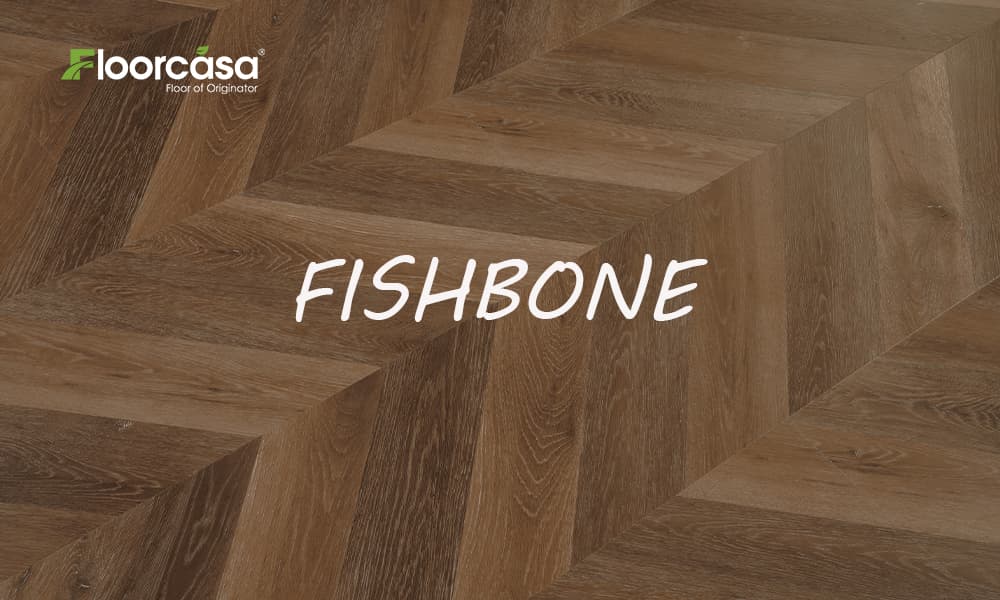
Fishbone Flooring (Chevron): The Directional Statement
Fishbone flooring, correctly termed chevron, is characterized by a continuous, flowing "V" or arrowhead pattern. Each plank is precision-cut as a parallelogram, with both ends angled at either 45 or 60 degrees. During installation, these angled ends meet to form sharp, seamless lines that run in unbroken, straight paths across the floor. This creates a bold, graphic effect with strong visual momentum, often resembling a series of interconnected arrows. Achieving this requires specialized manufacturing and meticulous installation, typically resulting in higher material yield loss compared to standard patterns.
Herringbone Flooring: The Interlocking Classic
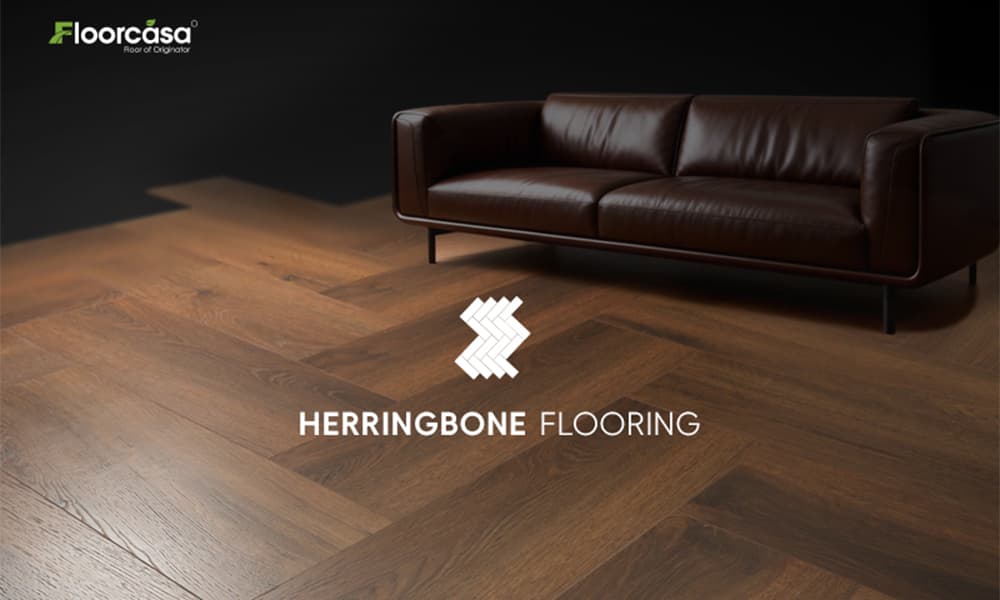
Herringbone flooring utilizes classic rectangular planks. The pattern is formed by placing each plank perpendicular to its neighbor, with the end of one plank meeting the side of the next, creating a staggered series of interlocking "L" shapes. This results in a more textured, broken zig-zag effect. The name derives from its resemblance to the skeletal structure of a herring fish. It offers a timeless, layered look that is generally less complex to manufacture and install than true chevron, leading to relatively lower costs and material waste.
Technical Comparison Table: Herringbone vs. Fishbone (Chevron)
Aspect | Fishbone Flooring (Chevron) | Herringbone Flooring |
Plank Shape | Parallelogram (angled cuts on both ends) | Rectangle |
Joint Formation | Planks meet at points, creating continuous straight seams. | Planks meet end-to-side, creating a broken, staggered seam. |
Primary Visual Effect | Dynamic, directional, modern, graphic elegance. | Classic, textured, traditional, interlocking charm. |
Manufacturing Complexity | Higher (requires precision angle cutting for consistency). | Lower (utilizes standard rectangular plank production). |
Installation Complexity | Higher (demands precise alignment for seamless lines). | Moderate (forgiving pattern with more margin for adjustment). |
Typical Material Utilization | Lower yield, higher potential waste (up to 15-20%). | Higher yield, lower waste (typically 5-10%). |
Market Trends and Global Application Preferences
Demand for luxury patterned flooring is robust but varies by region, influenced by design heritage and project type.
European Market: There is a deep appreciation for historical authenticity. Both patterns are highly valued, with a strong preference for high-quality solid wood or multilayer engineered wood constructions. Herringbone flooring is particularly prevalent in renovation projects aiming for classic elegance.
North American Market: A strong affinity exists for the clean, dramatic lines of fishbone (chevron) flooring, especially in modern, open-plan residential and commercial designs. This drives demand for stable, engineered products and precision lock systems that facilitate installation.
Asia-Pacific Market: Experiencing rapid growth in luxury real estate, this region shows strong uptake of both patterns as symbols of affluence and sophisticated taste. Buyers highly value innovative manufacturing that delivers the premium aesthetic with improved installation efficiency and moisture resistance, such as patterns applied to SPC rigid core flooring.
A key market innovation is the development of engineered chevron-effect flooring. This involves applying specifically designed, opposing wood-grain decorative films onto a stable HDF or SPC core. Paired with a precision-milled locking system, this technology allows installers to create a perfect chevron pattern using a simple, efficient plank-to-plank method, drastically reducing installation complexity and waste to 3-5%. For B2B buyers, this translates to a high-design product that is logistically simpler to stock, ship, and install, addressing a major commercial pain point.
Technical Specifications and Manufacturing Precision
Producing premium herringbone and fishbone flooring requires advanced engineering, whether for authentic solid parquet blocks or engineered effect panels.
For Engineered/Laminate Products:
Core Stability: A high-density fiberboard (HDF) or stone plastic composite (SPC) core is essential. Density ratings above 850 kg/m³ for HDF ensure the locking system's integrity and the pattern's long-term dimensional stability.
Decorative Fidelity: For the highest realism, Embossed-in-Register (EIR) technology is employed. A textured press plate is perfectly aligned with the printed grain during lamination. For chevron-effect products, this involves using two mirrored decorative layers (A and B versions) to create the directional pattern upon installation.
Locking System Integrity: The lock is critical for pattern alignment. Precision CNC milling creates robust tongue-and-groove or drop-lock mechanisms. In advanced chevron-effect systems, the A and B planks have unique groove profiles to ensure they only connect in the correct sequence.
Surface Durability: Multiple coats of UV-cured aluminum oxide provide the necessary scratch and wear resistance (typically AC4 or AC5 rating), protecting the intricate pattern in high-traffic settings.
International Buyer Preferences and Sourcing Considerations
Sourcing these patterned floors requires a nuanced understanding of buyer needs beyond aesthetics.
Key Procurement Criteria:
echnical Clarity: Buyers prefer suppliers who provide unambiguous technical drawings, distinguishing between true chevron and herringbone, and detailing installation methods.
Complete System Supply: Demand is high for suppliers offering full systems, including all necessary transition moldings, detailed layout guides, and recommended underlayments.
Compliance Documentation: Products must be backed by valid certificates for emissions (CARB NAF, EPD, AgBB), formaldehyde (E0, F****), and fire safety (Euroclass, ASTM E84) relevant to the destination market.
Supply Chain Consistency: Guaranteed color and finish consistency across large container orders is non-negotiable for project success.
Common Sourcing Pain Points:
Terminology Confusion: Miscommunication between herringbone and fishbone/chevron can lead to incorrect orders and costly disputes.
Inconsistent Locking Quality: Poorly milled locks lead to pattern misalignment, visible gaps, and installation failures.
Hidden Logistics Cost: The higher number of pieces per square meter for traditional parquet can increase packaging volume and shipping costs, factors often overlooked in initial costing.
Conclusion: Strategic Sourcing for a Design-Led Market
The choice between herringbone and fishbone (chevron) flooring is a strategic one, defining the aesthetic signature of a space. Herringbone offers versatile, timeless appeal with relatively straightforward logistics. Fishbone (chevron) delivers unmatched dramatic impact, commanding a premium price and requiring more precise execution.
For the global B2B buyer, success lies in partnering with a manufacturer that masters both the artistry and the advanced engineering behind these patterns. Suppliers like Floorcasa, which invest in innovative production technologies—such as precision-milled locking systems and stable, high-performance cores—enable buyers to offer these luxury designs with confidence, reliability, and competitive advantage in a discerning global marketplace.
Frequently Asked Questions (FAQ) for B2B Buyers
Q1: For a luxury hotel corridor, which pattern is more practical in terms of durability and maintenance?
A1: Both patterns are equally durable when using products with the same wear layer specification (e.g., AC5). However, herringbone flooring can be marginally more practical. Its broken-joint pattern is slightly more forgiving of subfloor micro-imperfectities and may better disguise fine wear over time. The rectilinear planks also simplify future localized repairs or access to subfloor utilities if needed.
Q2: We love the chevron look but our installers are unfamiliar with it. Are there user-friendly options?
A2: Yes. Engineered chevron-effect flooring is designed specifically for this scenario. Products utilize a standard click-lock system where each plank is pre-designed to form the chevron pattern when installed in sequence. This eliminates the need for complex angled cuts and on-site fitting, allowing any installer familiar with floating floors to achieve a perfect chevron result, significantly reducing labor time and risk.
Q3: What are the critical quality checks we should perform upon shipment arrival?
A3: 1. Pattern & Lock Test: Assemble multiple cartons' worth of planks to verify pattern continuity and locking mechanism smoothness. 2. Documentation Audit: Verify all stated certifications are physically present and valid for the production batch. 3. Visual Consistency Check: Inspect planks from different boxes for color, gloss, and texture uniformity under consistent lighting to avoid batch variation. 4. Dimensional Tolerance: Sample-measure plank thickness, width, and length to ensure they are within the specified tolerances.
Q4: Can these patterns be successfully installed in areas with underfloor heating or in high-humidity climates?
A4: Absolutely, provided the correct product is specified. For such environments, prioritize engineered herringbone or fishbone flooring built on a dimensionally stable core. SPC (Stone Plastic Composite) core products are ideal due to their near-zero moisture absorption and excellent thermal conductivity for underfloor heating. Always ensure the product is explicitly rated for these conditions and follow the manufacturer's installation guidelines for expansion gaps and heating system temperature limits.
Ready to specify with confidence and supply the pinnacle of flooring design?
Contact Floorcasa today to access comprehensive technical portfolios, third-party certification packages, and full-size working samples of our premium herringbone and innovative fishbone-effect flooring collections. Let our technical specialists provide you with a detailed project quotation and demonstrate how our engineered solutions can deliver flawless aesthetics and reliable performance for your most demanding global clients.