Is HDF the Optimal Engineered Core for Modern Flooring? A Professional Analysis
In the global flooring industry, selecting the correct core material is a fundamental decision that impacts performance, durability, and application scope. A critical and common question among architects, project developers, and B2B buyers is: Is HDF good for flooring? The evidence from market adoption and technical performance provides a definitive affirmation. High-Density Fiberboard (HDF) has established itself as the premier engineered wood substrate for high-performance laminate and multilayer parquet flooring worldwide. This article provides a comprehensive examination of 8mm HDF Parquet Flooring, analyzing its technical merits, market position, and suitability for meeting stringent international requirements.
The dominance of HDF is reflected in consistent market growth. As a key segment within the larger engineered wood flooring market, demand for HDF-based flooring is driven by its unparalleled balance of structural integrity, dimensional stability, and cost-effectiveness, making it a versatile solution for diverse commercial and residential projects.
The Global Industry Backdrop: HDF as an Engineering Standard
The rise of HDF in flooring represents a significant evolution in building materials. It transitioned from a novel engineered product to a global industry benchmark, forming the critical core layer in a majority of laminate and parquet floors sold across Europe, North America, and the Asia-Pacific region.
This widespread adoption is supported by a mature and competitive manufacturing ecosystem, ensuring consistent innovation, quality, and supply chain reliability. For international buyers, this translates into a stable product category with predictable performance and clear specifications. The shift from solid wood to engineered wood flooring is largely attributable to HDF's superior resistance to warping and expansion under fluctuating humidity and temperature—a decisive factor for products destined for various climatic zones.
Technical Deep Dive: The Engineering Excellence of 8mm HDF
The superiority of HDF as a flooring core stems from its manufacturing process and inherent physical properties. HDF is produced by densely compacting refined wood fibers under extreme heat and pressure with synthetic resins, creating a homogeneous panel of exceptional density.
Critical Performance Characteristics of HDF Core:
High Density & Structural Strength: Flooring-grade HDF typically achieves a density exceeding 800 kg/m³, often reaching 880 kg/m³ or higher. This creates a core with outstanding load-bearing capacity and resistance to indentation from heavy furniture or foot traffic.
Superior Dimensional Stability: Unlike solid wood, the highly compressed fiber structure of HDF minimizes its reaction to ambient moisture changes. This stability is crucial for preventing gaps, cupping, or buckling after installation, ensuring long-term aesthetic integrity.
Perfect Substrate for Finishing: The flawlessly smooth and uniform surface provides an ideal canvas for high-resolution decorative layers and durable wear surfaces, guaranteeing a pristine final appearance.
The Rationale for the 8mm Profile:
The 8mm thickness has become a global standard for engineered parquet due to its optimal balance:
Performance-to-Value Ratio: It delivers substantial rigidity and a solid underfoot feel, fulfilling the requirements of most residential and standard commercial applications without the added cost and weight of thicker boards.
Installation and Compatibility: An 8mm profile ensures compatibility with standard door thresholds and transition moldings. When integrated with a precision click-lock installation system, it facilitates efficient floating floor installations.
Acoustic and Thermal Benefits: The mass of an 8mm HDF core contributes to better sound dampening, reducing hollow sound transmission, and provides improved thermal insulation compared to thinner alternatives.
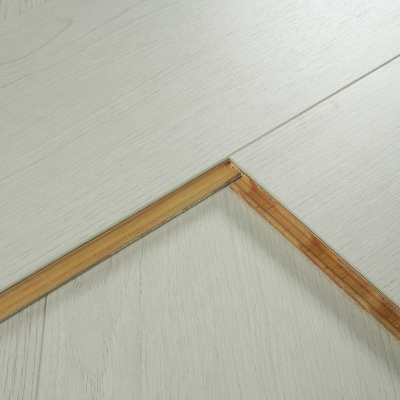
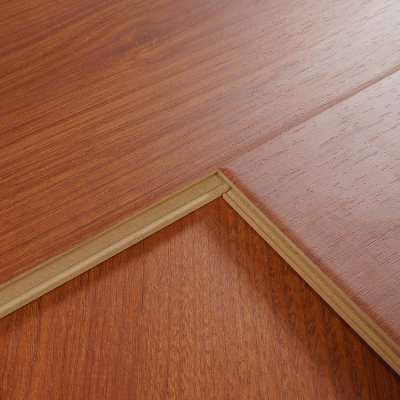
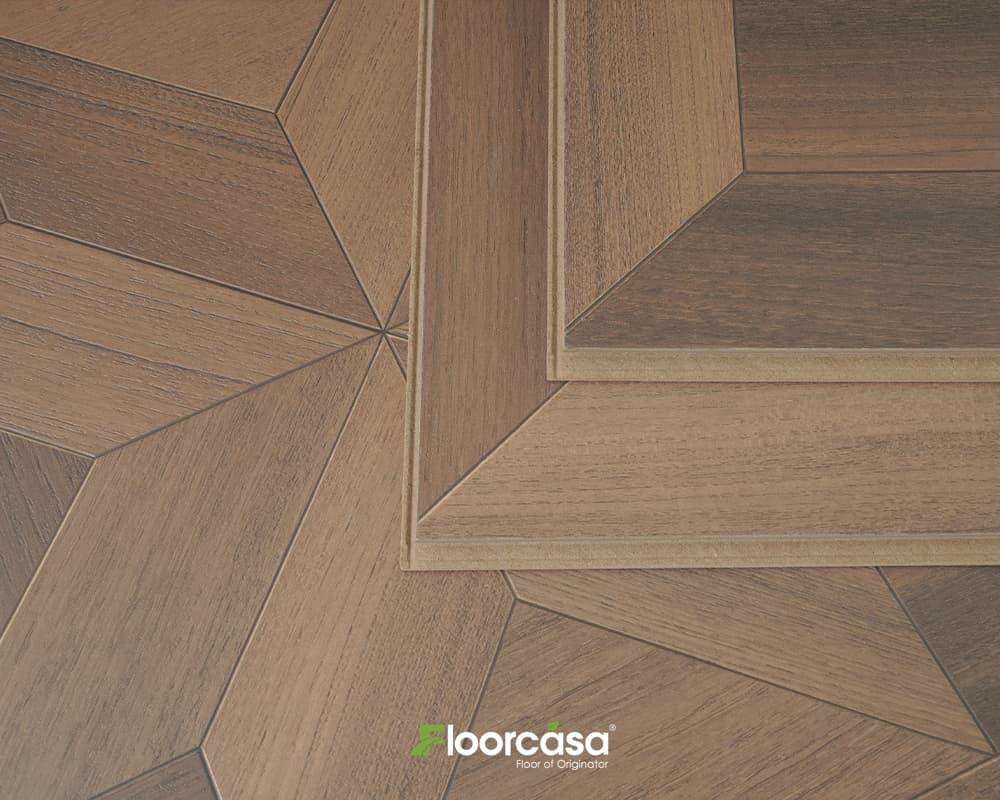
A complete 8mm HDF parquet floor is a multi-layer system. Above the core, a photorealistic decorative layer offers extensive design versatility. This is protected by a highly durable wear layer, usually composed of aluminum oxide, which provides excellent scratch and wear resistance. The back is sealed with a balancing layer to ensure long-term flatness.
International Buyer Preferences and Key Sourcing Considerations
For B2B buyers, sourcing HDF flooring involves evaluating technical specifications alongside supply chain and compliance factors.
Essential Procurement Criteria:
1. Certified Core Specifications: Verified HDF density (≥880 kg/m³) and formaldehyde emission certifications (E0, CARB Phase 2, EPA TSCA) are non-negotiable for quality and indoor air quality compliance.
2. Abrasion Class (AC) Rating: The wear layer's durability, rated from AC1 (light residential) to AC6 (heavy commercial), must match the project's traffic demands.
3. Locking System Integrity: The quality of the mechanical locking system (e.g., Unilin, Välinge) is critical for installation success and long-term floor integrity. Buyers should prioritize proven systems.
4. Regulatory Compliance: Documentation for safety (CE marking, fire ratings), sustainability (FSC/PEFC), and full chemical compliance is essential for market access and tender qualifications.
Common Sourcing Challenges and Pain Points:
Managing Moisture Sensitivity: While HDF offers good moisture resistance, it is not waterproof. Clarifying application limits with suppliers is vital; wet areas require fully waterproof alternatives like SPC.
Ensuring Quality Consistency: Variations in core density, locking precision, or surface finish can occur. Mitigation strategies include partnering with certified manufacturers, reviewing batch samples, and conducting pre-shipment inspections.
Navigating Price vs. Performance: The market offers segmented quality. Astute buyers focus on Total Cost of Ownership, valuing longevity and reduced maintenance over the lowest initial price, and seek trusted partners like Floorcasa for reliable quality.
Manufacturing Process and Quality Assurance
The production of quality HDF parquet flooring is a controlled, multi-stage process that ensures consistency
1. Fiber Preparation and Blending: Refined wood fibers are mixed with resins and additives.
2. Mat Formation and Pressing: The fiber blend is formed into a mat and pressed under high temperature and pressure to create dense HDF panels
3. Panel Conditioning and Sanding: Panels are conditioned to stabilize moisture content and sanded to achieve a perfectly smooth surface.
4. Layering and Lamination: The HDF core is fused with the decorative paper and protective overlay under heat and pressure.
5. Precision Milling and Grooving: The laminated board is precisely milled to create the click-lock profile and final plank dimensions.
6. Final Inspection and Packaging: Each batch undergoes quality checks for surface defects, locking function, and dimensional accuracy before packaging.
Future Trends: Innovation in HDF Flooring
The future of HDF flooring focuses on enhancing its core properties and sustainability:
Advanced Moisture Resistance: New resin technologies and treatments are improving the water-repellent properties of HDF cores.
Sustainable Production: Increased use of recycled fibers and development of bio-based binders are reducing environmental impact.
Enhanced Realism: Sophisticated surface textures, like embossed-in-register (EIR) that perfectly align with the grain pattern, continue to elevate the authentic appearance of HDF-based floors.
Frequently Asked Questions (FAQ) for B2B Buyers
Q1: What are the main application differences between 8mm and 12mm HDF flooring?
A1: For most residential and standard commercial applications (offices, retail), 8mm HDF flooring provides excellent stability and value. The 12mm option offers a more substantial underfoot feel and potentially better acoustic performance, making it suitable for premium residential projects or areas requiring superior sound reduction. The choice should be based on specific project requirements, not thickness alone.
Q2: Can 8mm HDF parquet be installed over underfloor heating?
A2: Yes, most quality 8mm HDF parquet products are compatible with hydronic (water-based) underfloor heating systems, thanks to the material's good thermal conductivity and stability. It is crucial to follow the manufacturer's specific guidelines regarding maximum surface temperature (typically 27°C/80°F) and proper installation procedures to ensure system integrity.
Q3: What documentation is essential when importing HDF flooring?
A3: Key documents include: CE Marking & Declaration of Performance (for EU), Formaldehyde Emission Certificates (CARB NAF, EPA TSCA, E0), Abrasion Class (AC) Test Reports, Full Material Safety Data Sheets (SDS), and proof of Sustainable Sourcing (FSC/PEFC) if required. A professional supplier will provide this documentation proactively.
Q4: How does HDF flooring compare to SPC flooring in terms of performance?
A4: HDF flooring excels in providing a warm, natural underfoot feel, superior acoustic dampening, and is generally cost-effective for dry areas. SPC (Stone Plastic Composite) flooring, with a mineral-based core, is 100% waterproof, more rigid, and ideal for wet areas (bathrooms, kitchens) or installations over problematic subfloors. The choice depends on the project's specific moisture exposure and performance needs.
In conclusion, HDF is not merely "good" for flooring; it is a precisely engineered, high-performance material that forms the reliable foundation of modern engineered wood floors. Its combination of density, stability, and versatility makes 8mm HDF Parquet Flooring a strategically sound choice for global B2B procurement.
Elevate your project specifications with confidence.
Floorcasa provides premium 8mm HDF Parquet Flooring that meets rigorous international standards for performance, safety, and design.
Contact our B2B team today to:
1. Request the full technical specification dossier for our product range.
2. Receive complimentary full-size samples for quality evaluation.
3. Obtain a detailed, competitive quotation tailored to your volume and market needs.
Partner with a supplier committed to quality, consistency, and professional support.