Defining the "Best" Laminate Flooring Brand: A Strategic Guide for Global Procurement
In the dynamic global flooring market, the question "Which brand of laminate flooring is the best?" is both common and complex. For professional B2B buyers—including importers, project developers, and construction wholesalers—the answer is not found in a single name, but in a clear understanding of how a brand's technical specifications, compliance capabilities, and supply chain reliability align with specific project demands and market requirements. The surging popularity of Oak Laminate Flooring, a timeless category within the segment, exemplifies the need for this discerning approach. This article provides a strategic framework to evaluate laminate flooring brands, focusing on the high-performance oak laminate flooring sector critical for international trade.
The global wood and laminate flooring market, valued at approximately USD 59.46 billion in 2024, is projected to grow steadily, reaching an estimated USD 90.56 billion by 2032. This growth is fueled by rising construction activity and a strong preference for aesthetic, durable solutions in both residential and commercial sectors. Within this expansion, Oak Laminate Flooring remains a perennial best-seller, prized for its versatile aesthetics that bridge traditional and contemporary design. For a brand to be considered among the best laminate flooring brands, it must excel not just in replicating the authentic visual of oak but in delivering the underlying performance that global contracts demand.
Market Landscape: Growth Drivers and Regional Dynamics
The laminate flooring industry is experiencing defined growth patterns and regional shifts that inform sourcing strategies. The global laminate flooring market specifically was valued at around RMB 1,385.2 billion (approx. USD 195 billion) in 2024, with a steady projected growth to about RMB 1,801.6 billion (approx. USD 254 billion) by 2031.
Regionally, North America held a dominant 38.24% share of the broader wood and laminate flooring market in 2024. This leadership is driven by robust residential renovation activity and the widespread adoption of modern interior design in commercial spaces. However, the Asia-Pacific region is anticipated to be the fastest-growing market, propelled by expanding construction, population growth, and increasing demand for cost-effective, eco-friendly flooring solutions.
Key trends shaping buyer preferences include a decisive shift toward sustainable and eco-friendly flooring. Demand is growing for products made with certified wood sources, low-emission adhesives, and recycled content, driven by green building standards like LEED and BREEAM. Furthermore, the market for specialized performance flooring, such as waterproof laminate wood flooring, is expanding rapidly, creating niches where technical innovation defines brand leadership.
Deconstructing Quality: The Four Pillars of a Superior Laminate Brand
For B2B buyers, assessing a brand transcends surface-level aesthetics. Evaluating a supplier of premium oak laminate flooring requires a systematic analysis across four core pillars.
1. Core Technical Specifications and Build Quality
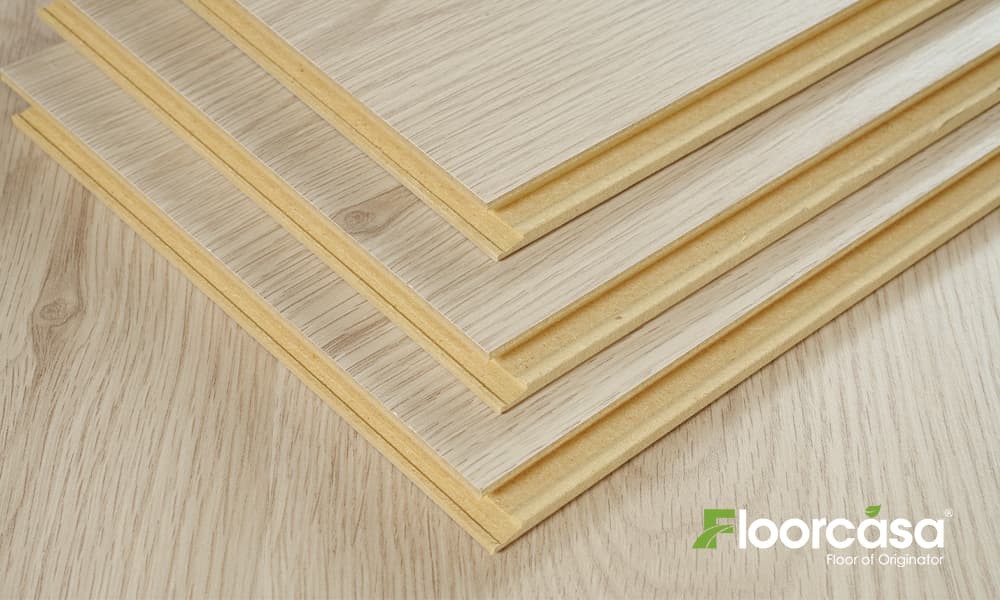
The performance of any laminate floor is rooted in its multi-layer construction, and leading brands are transparent about each component.
High-Density Fiberboard (HDF) Core: This is the engine of the floor. Top brands use HDF with a density exceeding 840 kg/m³, ensuring superior impact resistance, load-bearing capacity, and dimensional stability to prevent warping.
Wear Layer (Abrasion Class Rating): The aluminum-oxide coating's durability is classified by its Abrasion Class (AC) rating. For residential settings, AC3 is standard, while commercial-grade luxury vinyl plank flooring from leading manufacturers typically offers AC4 (general commercial) or AC5 (heavy commercial) ratings.
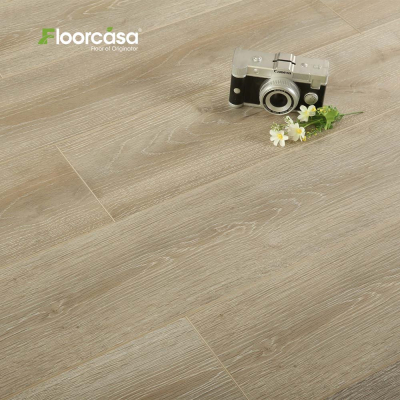
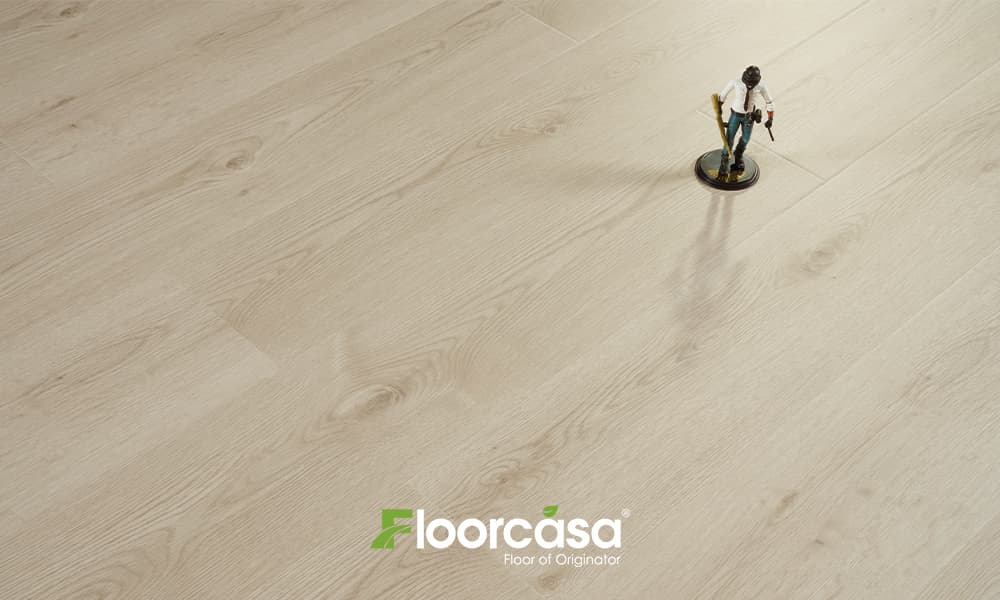
Authentic Aesthetic Realism: The best oak laminate flooring brands utilize high-definition printed decor papers and advanced embossed-in-register (EIR) textures. This technology aligns the surface texture precisely with the wood grain image, creating a deeply realistic feel that is indistinguishable from natural oak to the eye and touch.
Waterproof & Moisture-Resistant Technology: A key differentiator for modern brands is the integration of waterproof cores (like rigid SPC or advanced moisture-resistant HDF) and sealed locking systems, allowing Oak Laminate Flooring to be specified for kitchens, bathrooms, and basements.
2. Certifications and Environmental, Health & Safety (EHS) Compliance
Global market access depends on certified compliance. Trusted brands invest in securing and providing verifiable documentation for:
Formaldehyde Emissions: Certifications such as CARB NAF (North America), EPD (Europe), Japanese F★★★★ (F4 Star), and China's ENF level are non-negotiable for sensitive projects like healthcare and education.
Fire Safety: Products must meet regional fire reaction standards (e.g., Euroclass Bfl-s1, ASTM E84).
Sustainable Sourcing: Forest management certifications like FSC® or PEFC™ are increasingly required by environmentally conscious developers and corporate clients.
3. Supply Chain Resilience and Manufacturing Scale
The ability to fulfill large, multi-container orders on time is a hallmark of a top-tier brand. Buyers must assess:
Production Capacity: Brands with automated, large-scale manufacturing facilities ensure consistent quality and color-matching across batches.
Vertical Integration: Control over key production stages, from raw material processing to finishing, reduces supply chain vulnerabilities.
Global Logistics Network: Established brands have the experience and partnerships to navigate international shipping, customs, and delivery efficiently.
4. Brand Reputation and Value-Added Services
Market presence and post-sale support complete the picture.
Project Portfolio: A history of supplying successful commercial, residential, or institutional projects provides tangible proof of reliability.
Technical & Marketing Support: Leading brands offer comprehensive resources, including detailed CAD files, installation guides, sample programs, and marketing collateral to support distributors.
Warranty: Strong, transparent warranties covering wear, staining, and structural integrity reflect confidence in product longevity.
The B2B Buyer's Perspective: Preferences and Pain Points
International procurement involves balancing performance with practical commercial realities.
Key Procurement Drivers:
Total Cost of Ownership (TCO): Savvy buyers look beyond price-per-square-meter, considering installation efficiency, durability (reducing replacements), and maintenance costs.
Compliance for Target Market: A product must be pre-certified for the destination country to avoid costly delays or rejections at customs.
Consistency and Order Accuracy: Large projects require perfect color and lot consistency, with precise packaging and documentation.
Innovation and Design Relevance: Brands that consistently update their oak wood floor design catalog with trending hues (e.g., greige, whitewashed, smoked oak) help buyers stay competitive.
Common Sourcing Pain Points:
Inconsistent Quality Between Sample and Bulk Order: Receiving a container that doesn't match the approved sample's color, texture, or locking precision.
Incomplete or Unverifiable Documentation: Lack of authentic, up-to-date test reports and certificates from accredited laboratories.
Weak Locking Systems: Mechanisms that are difficult to install or prone to chipping, leading to high installation failure rates and callbacks.
Opacity in Communication and Problem-Solving: Unresponsive service when defects are discovered or logistical issues arise.
Floorcasa: Engineered for Global Partnership
At Floorcasa, we understand that being a partner to global B2B buyers means excelling across all evaluation pillars. Our premium oak laminate flooring is engineered with a super-dense HDF core and protected by a commercial-grade wear layer (AC4/AC5), ensuring it stands up to demanding environments. We prioritize sustainable and eco-friendly flooring practices, with full suites of CARB NAF and EPD certifications readily available. Our state-of-the-art, vertically integrated factory allows for strict quality control and scalable production to meet the largest orders, while our dedicated international trade team ensures seamless logistics and responsive support. We don't just sell flooring; we provide a reliable, high-performance solution backed by verifiable data and a commitment to partnership.
Frequently Asked Questions (FAQ) for B2B Buyers
Q1: We need laminate flooring for a hotel project. What AC rating is required, and why is core density important?
A1: For hotel corridors, lobbies, and guest rooms, an AC4 rating (general commercial) is the recommended minimum, with AC5 being ideal for high-traffic areas. This ensures the surface resists scratches from luggage and frequent cleaning. A high-density core (≥840 kg/m³) is equally critical, as it prevents indentation from heavy furniture and provides the structural stability needed for large, continuous installations, reducing the risk of joint issues over time.
Q2: What documentation package should we expect from a qualified supplier for the EU market?
A2: A professional supplier must provide a complete Declaration of Performance (DoP) under the EU Construction Products Regulation (CPR), which includes the relevant CE marking. This should be supported by underlying test reports for fire reaction (Euroclass), formaldehyde emissions (typically E1 or better), and slip resistance (R-value). Certificates of origin and material safety data sheets (SDS) are also standard.
Q3: How can we verify the waterproof claims for an oak laminate product?
A3: Request a specific water immersion test report. A credible waterproof laminate will have undergone a standardized test (e.g., samples submerged for 24-72 hours) with results showing negligible thickness swelling (commonly <8%). Also, inspect the locking system; quality waterproof products often feature a tight mechanical lock with an applied water-repellent coating or sealant on the joint.
Q4: What is the minimum order quantity (MOQ) for a container, and can we mix designs?
A4: Standard MOQ for a 20-foot container is typically between 250-300 square meters, depending on packaging. While mixing designs within a container is often possible, it is subject to the factory's production schedule and may involve slight adjustments to pricing. Planning mix-loads in advance with your supplier ensures efficient production and loading.
In the search for the best laminate flooring brand, the most strategic answer for a global B2B buyer is a brand that functions as a true partner: one that combines certified product excellence with reliable supply chain execution and transparent collaboration.
Are you ready to partner with a supplier engineered for global standards?
Contact Floorcasa today to transform your procurement strategy. Let us provide you with:
1. Comprehensive technical dossiers and third-party certification packages for our premium oak laminate flooring collections.
2. Full-size, A-grade samples so you can physically evaluate the authentic texture, locking precision, and color fidelity.
3. A detailed, competitive quotation and volume-based pricing tailored to your market and project pipeline.
Reach out to our B2B sales team to start a conversation and discover how our commitment to quality, consistency, and partnership can provide the reliable foundation your business needs.