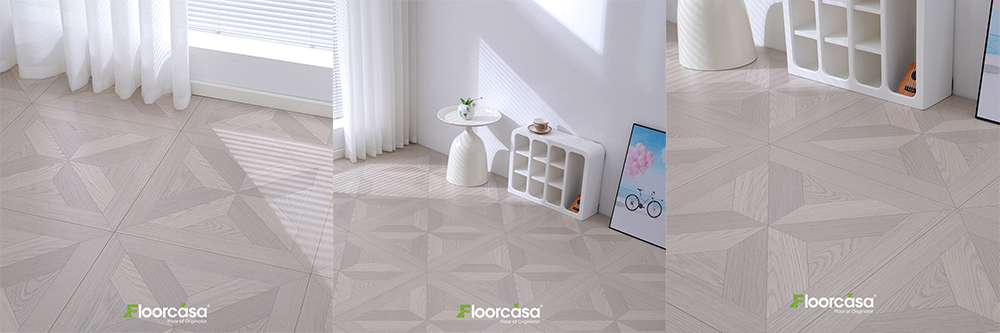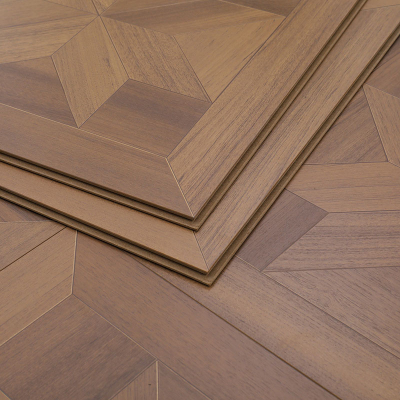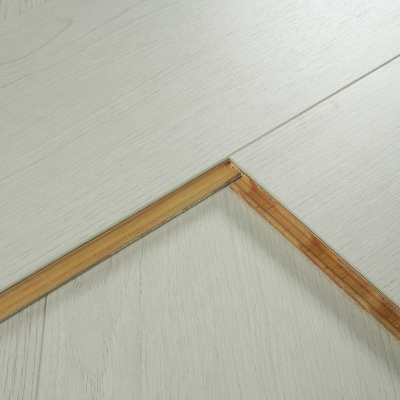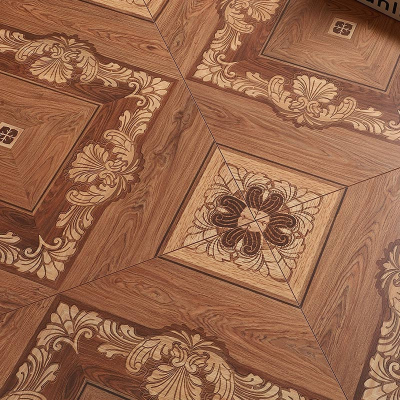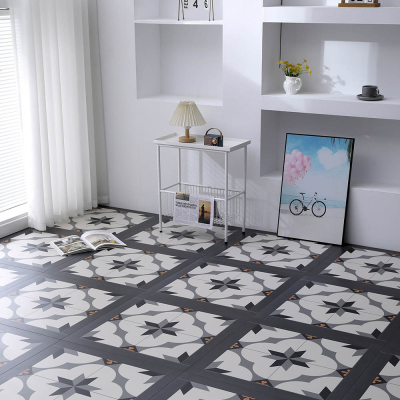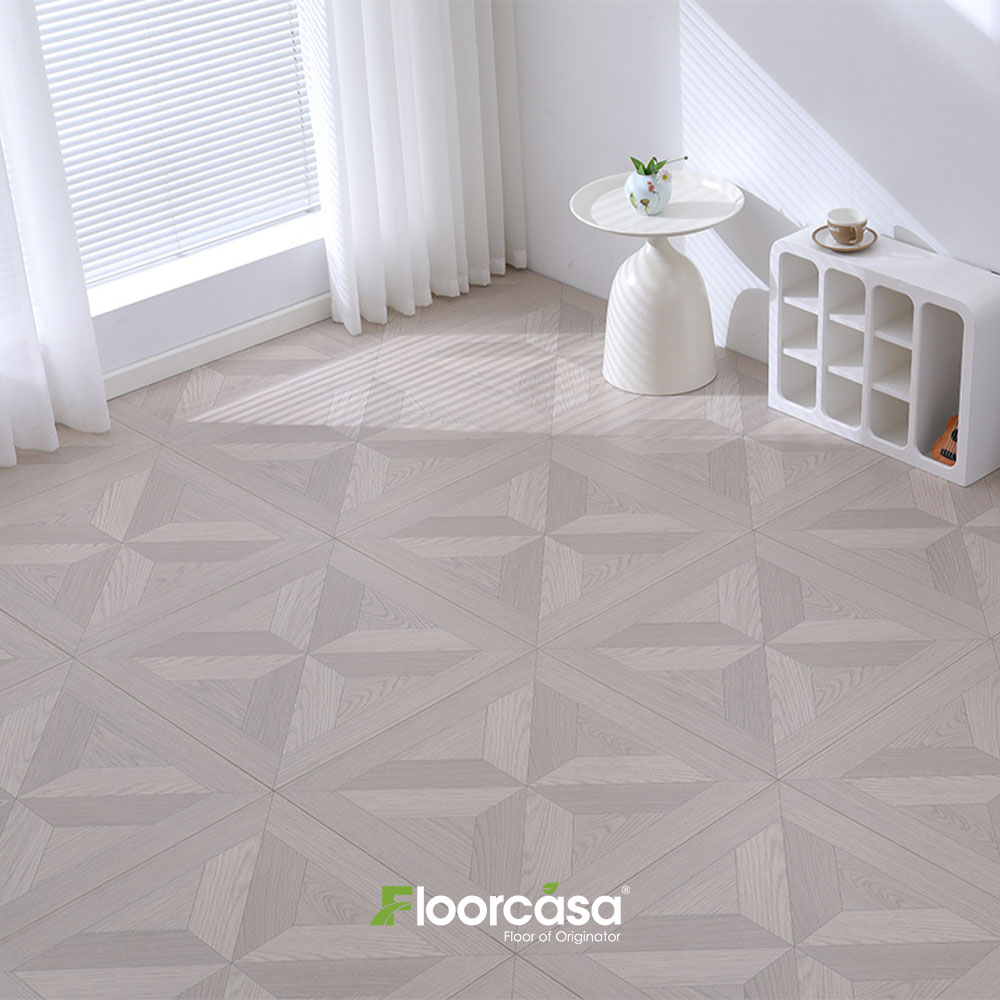

Parquet Laminate Flooring
Manufacturing Process
The manufacturing of Parquet Laminate Flooring follows standardized industrial procedures to ensure batch consistency and engineering reliability:
HDF board production using refined wood fibers under high pressure
Decor paper impregnation with melamine resin
Hot-press lamination under controlled temperature and pressure
Precision cutting into parquet-format panels
CNC profiling of locking systems
Surface inspection, grading, and packaging
Key equipment includes short-cycle hot presses, CNC profiling lines, and automated inspection systems.
Product Definition
Parquet Laminate Flooring is an engineered decorative laminate flooring system designed to replicate classic parquet patterns while delivering dimensional stability, cost efficiency, and scalable installation for commercial and residential construction projects.
Technical Parameters and Specifications
The following parameters represent commonly adopted, industry-verified ranges suitable for EPC projects, distribution, and large-scale procurement:
Total Thickness: 8 mm / 10 mm / 12 mm
Panel Dimensions: 600 × 100 mm, 800 × 100 mm, or modular parquet formats
Wear Layer: AC3–AC5 (EN 13329)
Surface Treatment: Melamine resin overlay with aluminum oxide
Density of Core (HDF): ≥ 850 kg/m³
Formaldehyde Emission: E1 / E0 compliant
Locking System: Unilin or equivalent angle-lock system
Dimensional Stability: ≤ 0.15% thickness swelling (24h water test)
Structure and Material Composition
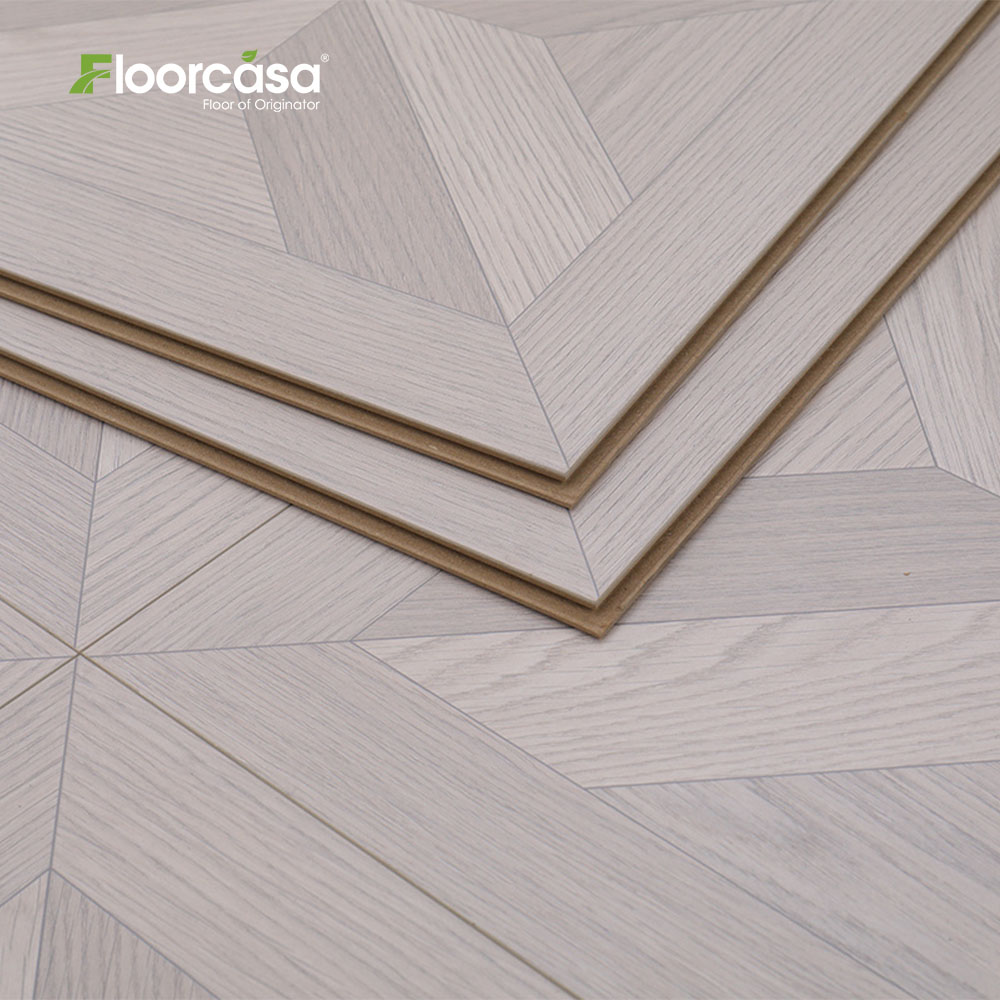
Parquet Laminate Flooring is a multi-layer engineered product optimized for structural balance and decorative performance:
Overlay Layer: Transparent wear-resistant layer protecting against abrasion and UV fading
Decor Paper: High-resolution parquet pattern printed with synchronized grain texture
HDF Core Board: High-density fiberboard providing load-bearing capacity
Balancing Layer: Moisture-resistant backing to prevent warping
Manufacturing Process
The manufacturing of Parquet Laminate Flooring follows standardized industrial procedures to ensure batch consistency and engineering reliability:
HDF board production using refined wood fibers under high pressure
Decor paper impregnation with melamine resin
Hot-press lamination under controlled temperature and pressure
Precision cutting into parquet-format panels
CNC profiling of locking systems
Surface inspection, grading, and packaging
Key equipment includes short-cycle hot presses, CNC profiling lines, and automated inspection systems.
Industry Comparison
| Criteria | Parquet Laminate Flooring | Engineered Wood Flooring | Solid Wood Parquet |
|---|---|---|---|
| Cost Control | High | Medium | Low |
| Dimensional Stability | Excellent | Good | Limited |
| Installation Speed | Fast (Floating) | Moderate | Slow (Glue/Nail) |
| Maintenance | Low | Medium | High |
Application Scenarios
Parquet Laminate Flooring is widely applied across:
Distributors: Standardized SKUs for retail and project channels
EPC Contractors: Hospitality, residential compounds, and offices
Engineering Firms: Interior specification for cost-sensitive developments
Importers & Wholesalers: Container-based international supply
Core Pain Points and Solutions
Pain Point: Warping due to humidity
Solution: High-density HDF core with balancing layerPain Point: Inconsistent parquet appearance
Solution: Digital decor alignment and batch controlPain Point: High installation cost of real parquet
Solution: Click-lock laminate systemPain Point: Wear resistance in commercial spaces
Solution: AC4–AC5 rated surface overlays
Risk Warnings and Mitigation
Key risks in Parquet Laminate Flooring projects include:
Subfloor moisture exceeding 2% – mitigate via moisture barriers
Incorrect expansion gaps – follow manufacturer installation guides
Low-density core materials – verify technical datasheets before procurement
Procurement and Selection Guide
Define project traffic class and wear layer requirement
Confirm panel size and parquet pattern compatibility
Request full technical datasheet and certifications
Evaluate locking system performance samples
Verify batch color consistency
Conduct moisture and subfloor compatibility checks
Confirm logistics packaging and pallet specifications
Engineering Application Case
In a mid-rise residential project (approx. 12,000 m²) in Southeast Asia, Parquet Laminate Flooring was specified to replace engineered wood parquet. The floating installation reduced labor time by 30%, while maintaining parquet aesthetics and meeting AC4 durability standards for shared spaces.
Frequently Asked Questions
Q1: Is Parquet Laminate Flooring suitable for commercial use?
Yes, AC4–AC5 grades are designed for commercial traffic.Q2: Can it be installed over underfloor heating?
Yes, within temperature limits specified by standards.Q3: Does it require glue?
No, standard installations use floating click systems.Q4: How does it compare to real parquet visually?
Modern decor printing offers high visual fidelity.Q5: What is the expected service life?
15–25 years depending on traffic class.Q6: Is it moisture resistant?
Resistant, but not waterproof.Q7: What certifications are common?
EN 13329, ISO 9001, E1 emission.Q8: Can damaged panels be replaced?
Yes, individual planks can be removed and replaced.Q9: Is color variation controlled?
Yes, via batch and decor paper management.Q10: Is OEM customization available?
Yes, for patterns, thickness, and packaging.
CTA: Commercial Inquiry
For project quotations, technical documentation, or engineered samples of Parquet Laminate Flooring, procurement teams are encouraged to submit detailed project requirements for evaluation.
E-E-A-T Author Credentials
This article is authored by a flooring industry technical consultant with over 15 years of experience in laminate flooring engineering, international standards compliance, and B2B project procurement advisory across residential and commercial construction sectors.