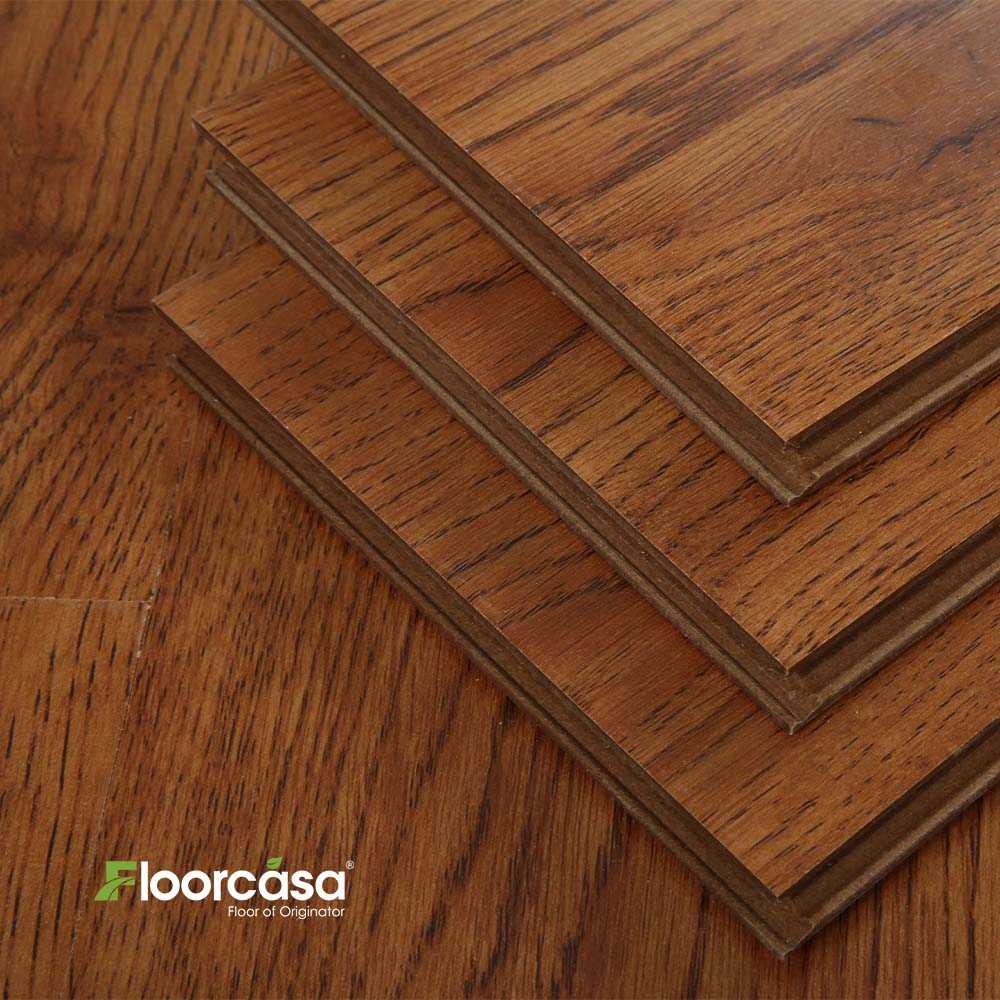
Dark Laminate Flooring
Manufacturing Process
The production of dark laminate flooring follows a controlled industrial process to ensure color consistency and mechanical stability.
Preparation of decor paper using impregnated melamine resins.
HDF core board pressing under high temperature and pressure.
Layer stacking of overlay, decor, core, and balancing sheets.
High-pressure lamination and curing.
Precision cutting and profiling of locking systems.
Surface inspection, color consistency control, and packaging.
Product Definition
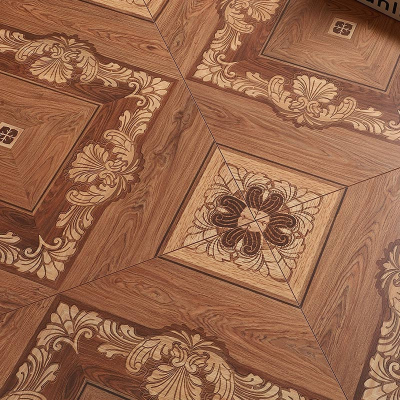
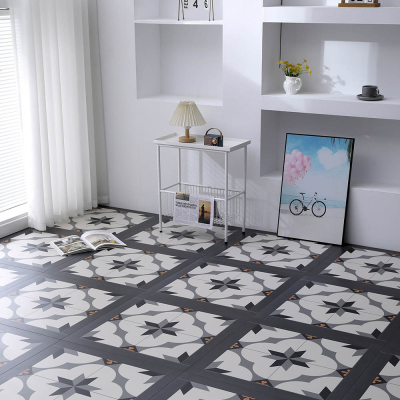
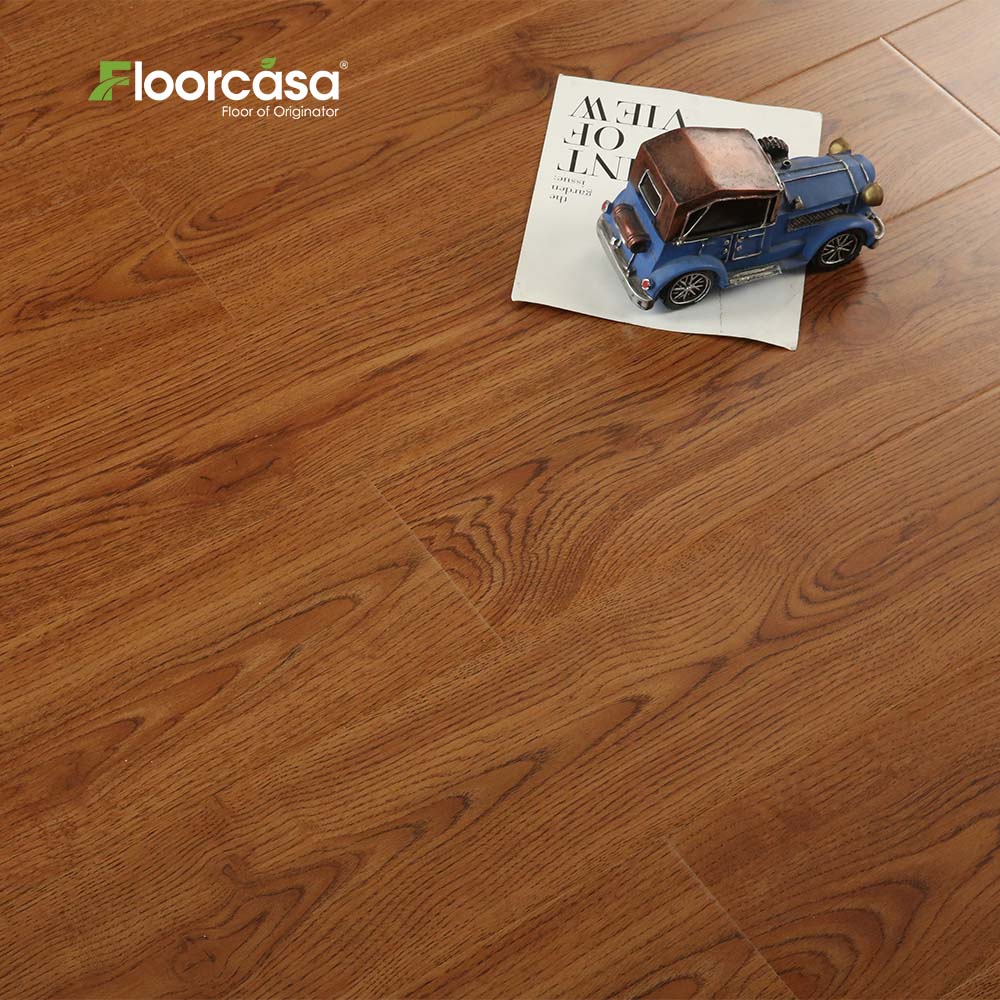
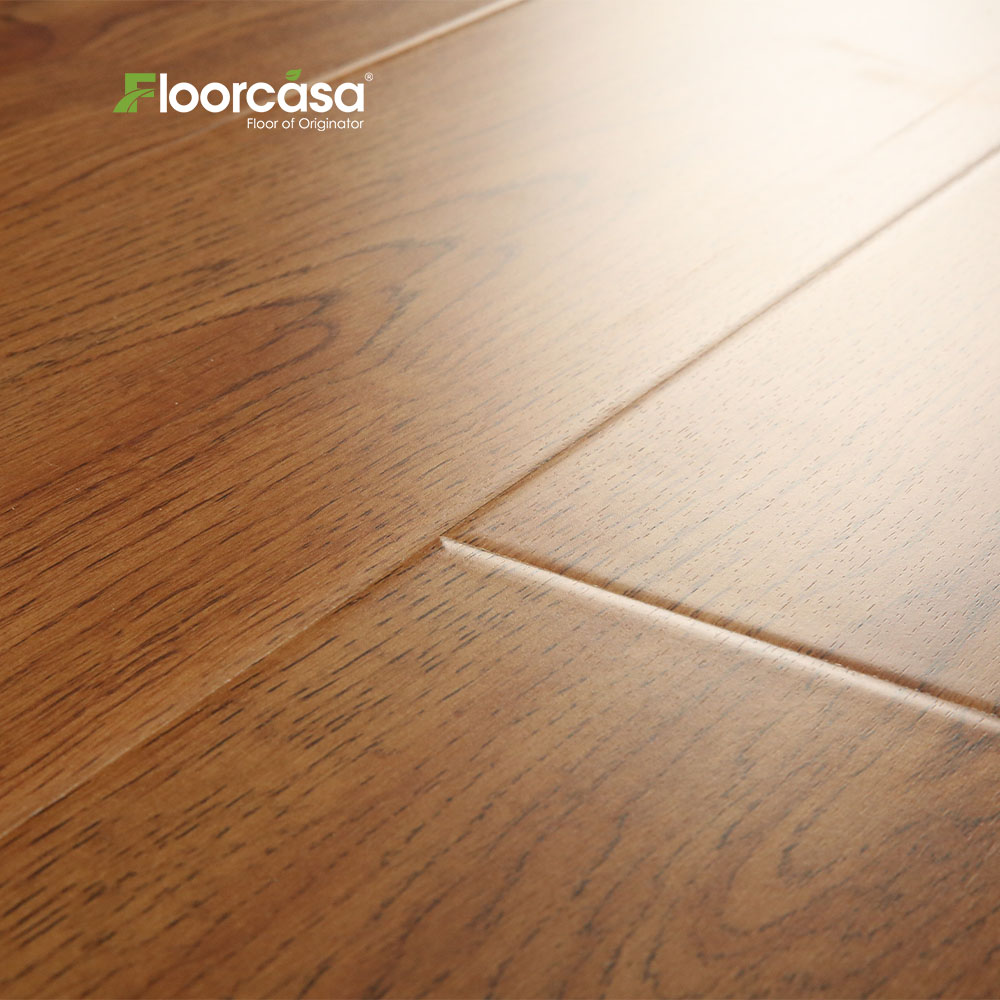
Dark Laminate Flooring refers to high-pressure laminate floor systems featuring deep-tone wood or stone aesthetics, engineered with a dense fiberboard core and wear-resistant surface layers, designed to deliver consistent appearance, cost efficiency, and durability for commercial and large-scale residential construction projects.
Technical Parameters and Specifications
Dark laminate flooring products are specified based on standardized mechanical, environmental, and surface performance indicators suitable for B2B procurement.
| Parameter | Typical Range |
|---|---|
| Total Thickness | 8 mm / 10 mm / 12 mm |
| AC Rating | AC3 / AC4 / AC5 |
| Surface Abrasion Resistance | ≥ 4,000–6,000 cycles |
| Core Density (HDF) | 820–880 kg/m³ |
| Formaldehyde Emission | E1 / E0 / ENF |
| Edge Treatment | Square edge / V-groove |
| Locking System | Angle-angle or drop-lock |
Structure and Material Composition
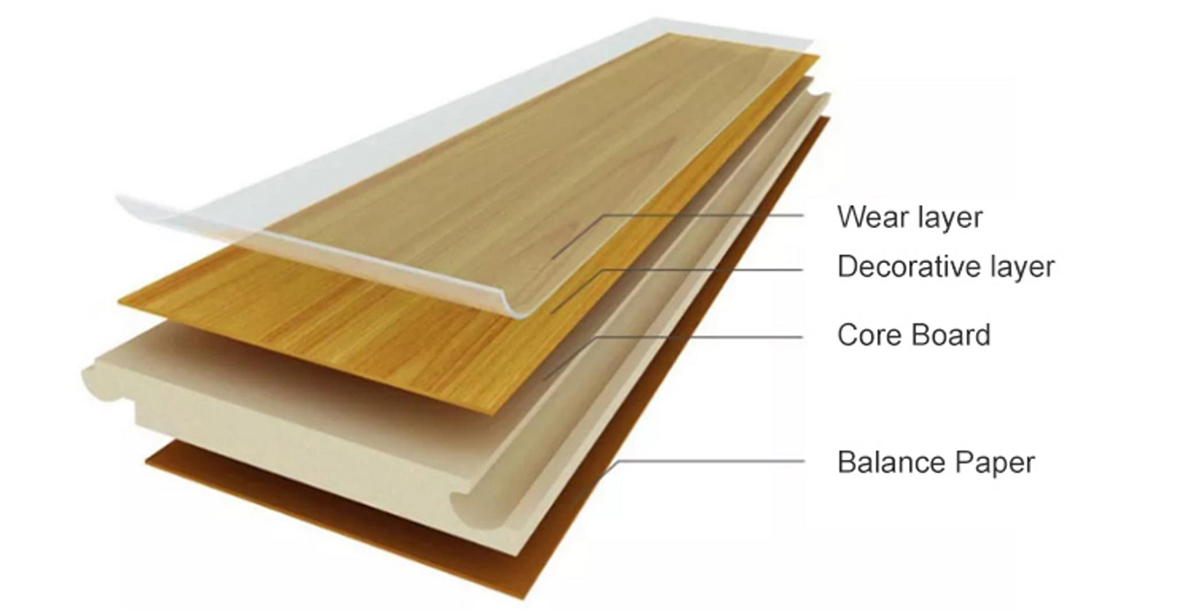
Dark laminate flooring consists of a multi-layer engineered structure optimized for wear resistance and visual depth.
Overlay Layer: Aluminum oxide–reinforced transparent layer for abrasion protection.
Decor Paper: Dark-tone wood or stone pattern with UV-stable pigments.
HDF Core Board: High-density fiberboard providing structural strength.
Balancing Layer: Moisture-resistant backing paper to control warping.
Edge Sealing (optional): Wax or resin treatment for improved moisture tolerance.
Manufacturing Process
The production of dark laminate flooring follows a controlled industrial process to ensure color consistency and mechanical stability.
Preparation of decor paper using impregnated melamine resins.
HDF core board pressing under high temperature and pressure.
Layer stacking of overlay, decor, core, and balancing sheets.
High-pressure lamination and curing.
Precision cutting and profiling of locking systems.
Surface inspection, color consistency control, and packaging.
Industry Comparison
| Flooring Type | Cost Efficiency | Moisture Resistance | Visual Consistency | Maintenance |
|---|---|---|---|---|
| Dark Laminate Flooring | High | Medium | High | Low |
| Engineered Wood Flooring | Medium | Low–Medium | Medium | Medium |
| SPC Flooring | Medium | High | High | Low |
| Solid Hardwood | Low | Low | Variable | High |
Application Scenarios
Dark laminate flooring is widely specified by:
Distributors serving residential renovation markets
EPC contractors for offices, schools, and retail spaces
Commercial interior fit-out companies
Real estate developers seeking cost-controlled finishes
Importers supplying regional building material networks
Core Pain Points and Solutions
Visible dust and scratches: Matte and embossed-in-register surfaces reduce visual contrast.
Color inconsistency between batches: Controlled decor paper sourcing and batch coding.
Moisture sensitivity: Waxed edges and balanced backing layers mitigate swelling.
High foot traffic wear: AC4–AC5 ratings address commercial usage demands.
Risk Warnings and Mitigation Recommendations
Avoid installation in continuously wet environments.
Ensure subfloor moisture content meets installation standards.
Verify abrasion class matches traffic load requirements.
Implement expansion gaps to prevent buckling.
Procurement and Selection Guide
Define end-use environment and traffic classification.
Select appropriate thickness and AC rating.
Confirm dark decor color consistency across batches.
Evaluate locking system reliability.
Request emission and compliance documentation.
Assess packaging, pallet stability, and logistics efficiency.
Engineering Application Example
In a commercial office renovation covering approximately 6,200 m², dark laminate flooring with AC4 rating was specified for workspaces and corridors. The project achieved uniform aesthetics, reduced maintenance costs, and met fire and emission compliance requirements under regional building codes.
Frequently Asked Questions (FAQ)
Is dark laminate flooring suitable for commercial use? Yes, when AC4 or AC5 rated.
Does dark color fade over time? Quality UV-stable decor papers minimize fading.
Is it waterproof? It is moisture resistant, not fully waterproof.
Can it be installed over existing floors? Yes, if the subfloor is flat and stable.
Is underlayment required? Typically recommended for acoustic and leveling purposes.
How is maintenance handled? Dry or damp mopping without abrasive cleaners.
Are dark floors harder to maintain? Visual dust may be more noticeable without matte finishes.
Can planks be replaced individually? Yes, with click-lock systems.
What fire rating is typical? Commonly Bfl-s1 depending on specification.
What certifications are expected? CE, ISO systems, and emission classifications.
Call to Action
For commercial quotations, technical documentation, or dark laminate flooring samples tailored to project requirements, procurement and engineering teams may submit formal inquiries for specification support.
E-E-A-T Author Credentials
This content is developed by a building materials technical consultant with extensive experience in laminate flooring manufacturing evaluation, international sourcing, and EPC project specification, ensuring reliable, engineering-focused guidance for B2B decision-makers.
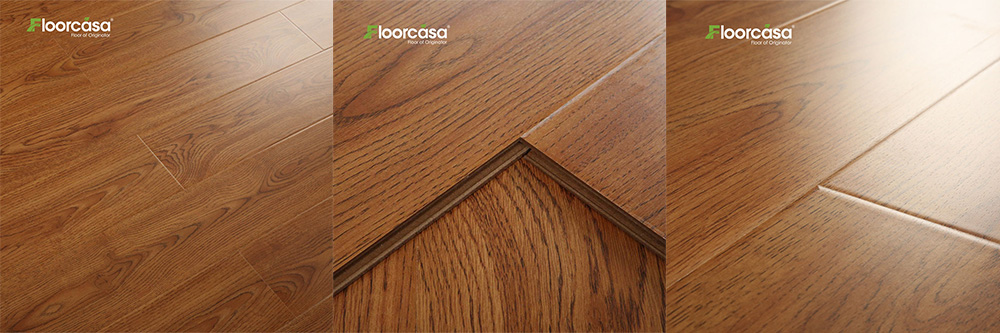
- Product structure -