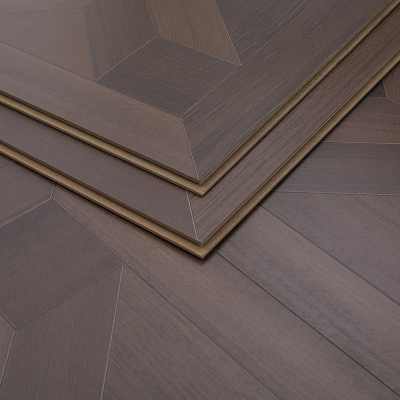
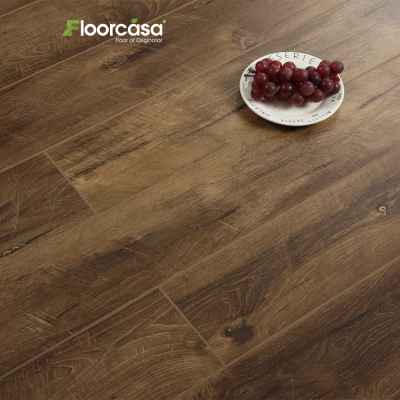
What is Laminate Flooring?
What Is Laminate Flooring? – Product Definition
Laminate flooring is a multi-layer engineered floor covering manufactured through high-pressure lamination, designed to deliver consistent appearance, wear resistance, and dimensional stability while offering a cost-effective alternative to natural wood or stone flooring in residential and commercial projects.
Technical Parameters and Specifications
The performance of laminate flooring is evaluated using standardized mechanical and physical indicators to ensure durability, safety, and long-term serviceability.
Total thickness: 7 mm, 8 mm, 10 mm, 12 mm
Wear resistance rating: AC3, AC4, AC5, AC6 (EN 13329)
Abrasion resistance: 2,000–8,500 Taber cycles
Core board density: 850–930 kg/m³ (HDF)
Surface hardness: ≥3H
Thickness swelling (24h): ≤18%
Locking joint tensile strength: ≥1,200 N/m
Slip resistance: R9–R10
Formaldehyde emission: E1 / E0
Fire performance: Bfl-s1 (typical)
Structure and Material Composition
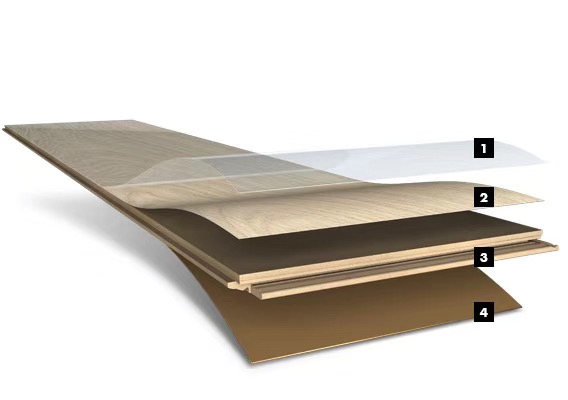
Laminate flooring consists of multiple functional layers bonded into a unified panel, each contributing to overall performance.
Overlay (wear layer): Melamine resin-infused transparent layer providing abrasion and scratch resistance
Decor paper: High-resolution printed layer simulating wood, stone, or tile textures
Core board: High-density fiberboard (HDF) providing structural strength and load capacity
Balancing layer: Backing paper ensuring dimensional stability and moisture balance
Locking profile: Precision-milled click system for floating installation
Manufacturing Process
Laminate flooring production is a highly standardized industrial process combining material engineering and automated manufacturing.
Wood fiber refining and HDF board formation
Impregnation of decor and overlay papers with melamine resin
High-pressure hot pressing to bond all layers
Cooling and stress relief conditioning
Panel sizing and cutting to specification
CNC profiling of locking systems
Surface inspection and quality control
Packing, labeling, and batch traceability
Industry Comparison
| Material Type | Durability | Moisture Resistance | Maintenance | Cost Level |
|---|---|---|---|---|
| Laminate Flooring | High | Moderate | Low | Medium |
| Solid Wood Flooring | Moderate | Low | High | High |
| Engineered Wood Flooring | High | Moderate | Medium | High |
| SPC / Vinyl Flooring | High | High | Low | Medium |
Application Scenarios
Laminate flooring is widely specified in projects where durability, appearance consistency, and installation efficiency are required.
Distributors and importers supplying retail flooring markets
EPC contractors for commercial buildings and offices
Residential developers and housing projects
Hotels, serviced apartments, and student housing
Public buildings such as schools and administrative facilities
Core Pain Points and Solutions
High foot traffic wear: AC-rated wear layers improve abrasion resistance
Cost sensitivity: Engineered structure reduces material and lifecycle costs
Installation time: Click-lock systems minimize labor requirements
Visual consistency: Controlled manufacturing ensures uniform appearance
Risk Warnings and Mitigation Advice
Improper product selection or installation can negatively affect laminate flooring performance.
Excess moisture exposure may cause swelling at joints
Uneven subfloors can lead to locking system failure
Low-density cores reduce load-bearing capacity
Insufficient expansion gaps may cause buckling
Procurement and Selection Guide
Define project usage class and traffic level
Select appropriate AC wear rating
Confirm thickness and HDF density
Verify emission and fire performance compliance
Assess locking system strength and tolerance
Evaluate moisture resistance requirements
Review supplier quality control and certifications
Engineering Case Application
A mixed-use commercial complex installed 10 mm AC5 laminate flooring across 18,000 m² of office and retail space. The system delivered rapid installation, reduced maintenance costs, and maintained surface integrity after four years of high pedestrian traffic.
FAQ
Q1: Is laminate flooring suitable for commercial projects? A: Yes, AC4 and above are commonly specified.
Q2: Can laminate flooring be installed over concrete? A: Yes, with a proper moisture barrier.
Q3: Is laminate flooring waterproof? A: It is moisture-resistant, not fully waterproof.
Q4: What is the typical lifespan? A: 10–25 years depending on usage class.
Q5: Can damaged planks be replaced? A: Yes, individual boards can be removed.
Q6: Does laminate flooring require underlayment? A: Yes, for acoustic and moisture control.
Q7: Is laminate flooring compatible with underfloor heating? A: Yes, within temperature limits.
Q8: How is laminate flooring maintained? A: Routine dry or damp cleaning.
Q9: Does sunlight affect laminate flooring? A: UV-resistant surfaces minimize fading.
Q10: Is laminate flooring environmentally compliant? A: Yes, when meeting E1 or E0 standards.
Call to Action
Procurement managers, contractors, and engineering consultants are encouraged to request technical datasheets, project samples, or pricing quotations to evaluate laminate flooring solutions for upcoming developments.
E-E-A-T Author Credentials
This content is prepared by a flooring materials engineering consultant with over 10 years of experience in laminate flooring production, project specification, and international B2B supply for commercial and residential construction sectors.