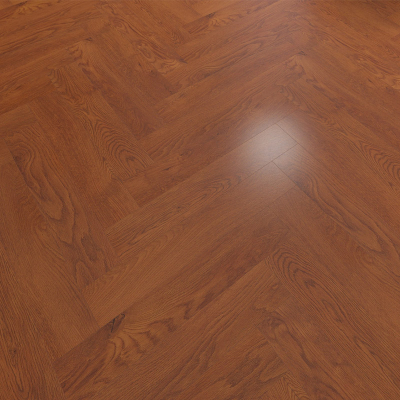
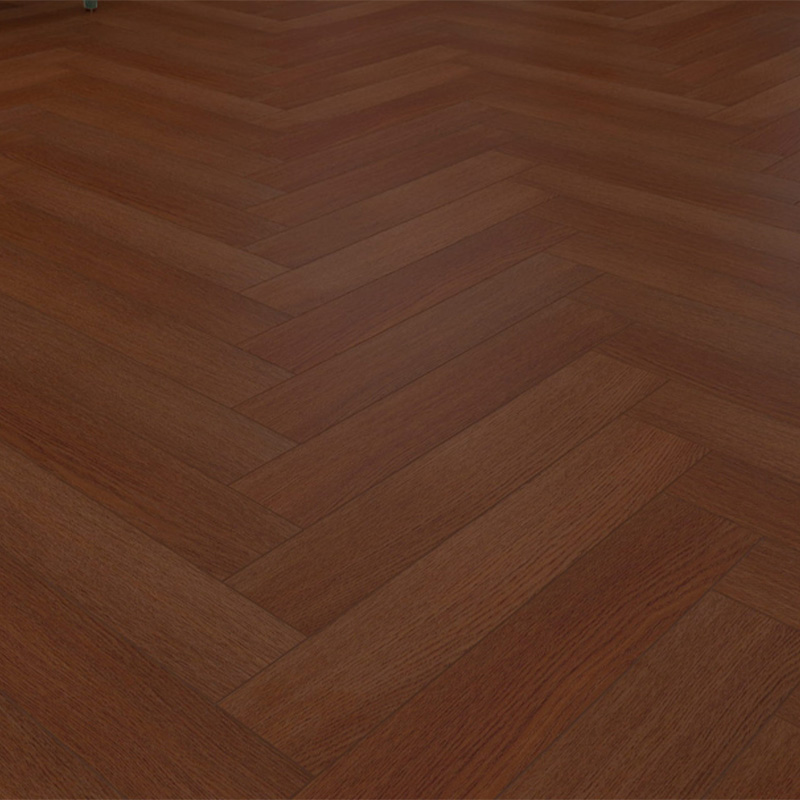
Dark Brown Herringbone Laminate Flooring
Manufacturing Process
The production of Dark Brown Herringbone Laminate Flooring follows controlled industrial processes to ensure consistency and performance:
HDF board production: Fiber refining, hot pressing, and conditioning
Decor paper impregnation: Melamine resin saturation and drying
Hot lamination: High-pressure pressing of overlay, décor, and core layers
Cooling and stabilization: Dimensional stress release
CNC profiling: Precision cutting for herringbone geometry
Click system milling: Locking profile formation
Surface finishing: EIR embossing and UV curing
Quality inspection: Thickness, abrasion, locking strength testing
Product Overview
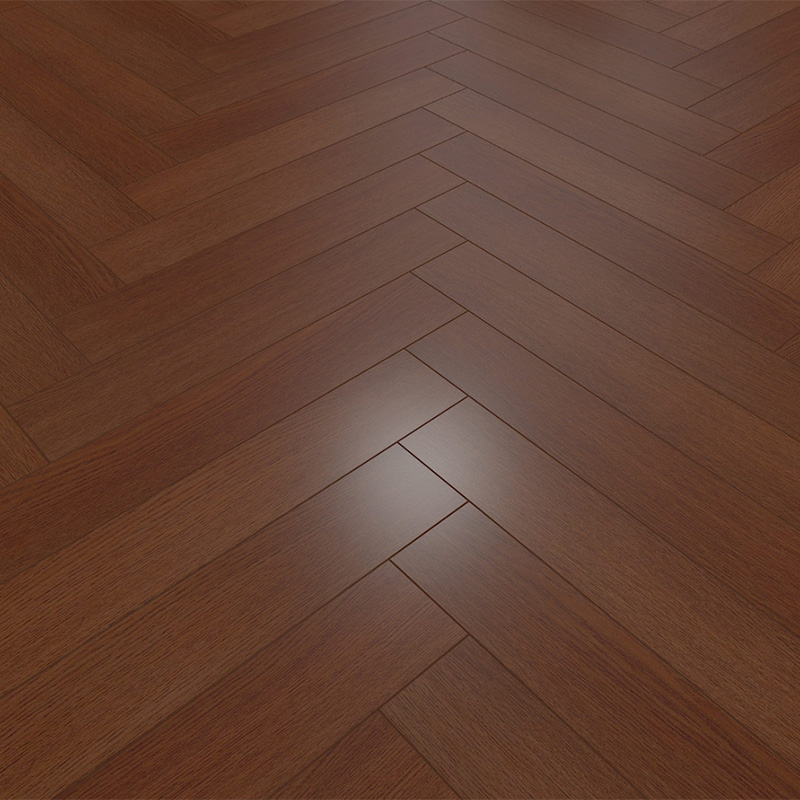
Dark brown herringbone laminate flooring is a decorative rigid-core floor covering produced with a high-density fiberboard (HDF) core, a dark brown wood-grain décor layer, and a herringbone layout. It combines the visual depth of dark brown wood with the geometric definition of a herringbone pattern, and is supplied with a click-lock system for floating installation.
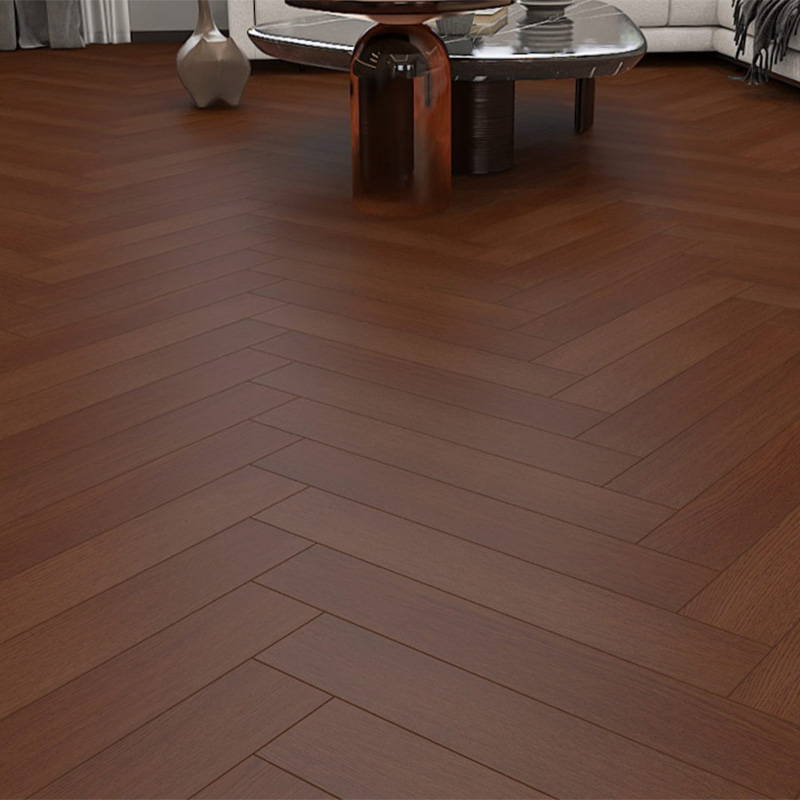
The dark brown tone gives the floor a rich, warm appearance that suits hospitality, residential, and premium commercial interiors. The herringbone pattern—planks laid at 90° to each other in a repeating V-shape—adds architectural definition and a sense of traditional craftsmanship.
This product is manufactured by Jining Floormaker Home Co., Ltd. and supplied to distributors, importers, EPC contractors, and project developers. Available options include AC3, AC4, and AC5 wear ratings, 8/10/12 mm thickness, EIR or matte surface, and OEM/ODM customization for colour, plank size, and packaging.
This page covers the product specifications, design options, product structure, applications, buying concerns, ordering process, and project case. For manufacturing process details, see the laminate flooring manufacturing page.
Product Specifications
The following table summarises the available options for dark brown herringbone laminate flooring. Verify the specific specification for your project before ordering.
| Specification | Available Options |
|---|---|
| Product | Dark Brown Herringbone Laminate Flooring |
| Pattern | Herringbone |
| Thickness | 8 / 10 / 12 mm |
| Plank Size | Customizable (typical herringbone: 600–750 × 100–130 mm) |
| HDF Density | ≥850 kg/m³ |
| Wear Rating | AC3 / AC4 / AC5 |
| Abrasion Resistance | AC3: ≥2,000 cycles; AC4: ≥4,000 cycles; AC5: ≥6,000 cycles (EN 13329) |
| Surface | EIR / Matte |
| Edge | Micro-beveled / Square |
| Locking System | Angle-click / Drop-lock |
| Formaldehyde | E1 / E0 |
| Dimensional Stability | ≤0.15% swelling |
| OEM | Available |
| Packaging | Customized |
Contact us for the complete technical datasheet, test reports, and OEM specifications. Technical values vary by production specification, and the appropriate specification depends on the project requirements. We provide test reports with each shipment.
Dark Brown Herringbone Design
The design of dark brown herringbone laminate flooring is defined by three elements: the dark brown wood tone, the herringbone pattern, and the surface texture.
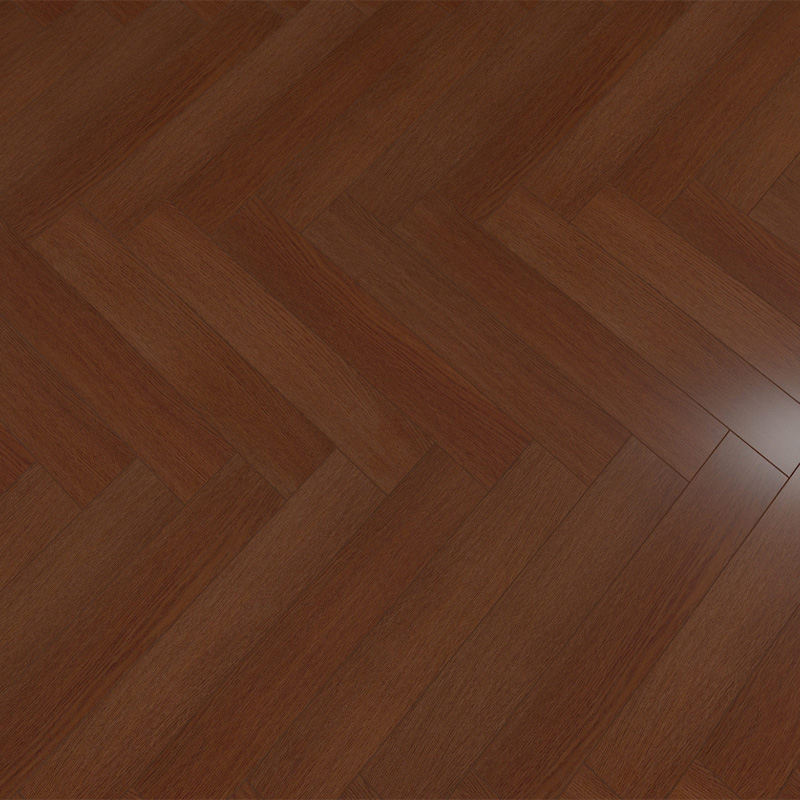
Dark brown wood tone. The dark brown décor provides a rich, warm appearance. The standard dark brown décor reproduces the appearance of dark oak. Walnut-inspired décors are available on request. The tone is deeper than medium brown or natural oak, and it works well in interiors where a warmer, more dramatic floor is desired.
Oak/walnut-inspired appearance. The standard dark brown décor reproduces the appearance of dark oak, with the characteristic grain lines and subtle variation of oak. Walnut-inspired décors, with a darker and more uniform appearance, are available on request. Verify the specific décor reference for your project.
Matte / EIR texture. The surface is available in matte or EIR (Embossed in Register) finishes. EIR synchronizes the embossing with the printed grain, so the texture follows the grain lines of the wood image. This creates a more realistic wood appearance than a standard embossed surface.
Traditional herringbone pattern. The herringbone pattern is formed by planks laid at 90° to each other in a repeating V-shape. The pattern creates strong directional lines and a sense of movement across the floor. It is a traditional pattern that has been used in European interiors for centuries, and it remains a popular choice for premium residential and hospitality projects.
Modern and classic interior styles. Dark brown herringbone works with both traditional and contemporary interiors. In traditional interiors, it provides a warm, classic appearance. In contemporary interiors, it adds warmth and texture to otherwise neutral or minimalist palettes.
Custom decor paper. Custom décor paper is available for OEM/ODM projects. Custom wood species, colour tones, and grain patterns can be produced to match a specific design reference.
Colour Options
The following colour directions are typically available. Availability depends on the current product range—contact us for the current options and samples.
Dark Brown. A deep, rich brown with subtle grain variation. Works well in larger spaces where the deeper tone adds richness without making the room feel smaller.
Medium Brown. A warmer, lighter brown with more visible grain. More versatile and suits a wider range of room sizes.
Walnut Brown. A dark brown with the characteristic appearance of walnut. Provides a distinct, warm appearance that suits traditional and transitional interiors.
Custom Brown. Custom colour matching for OEM/ODM projects.
Colour appearance can vary under different lighting conditions. Request physical samples and review them under the actual lighting conditions of the space before making a final decision.
Product images are available on request. Contact us for high-resolution images of the specific colour and pattern.
Product Structure
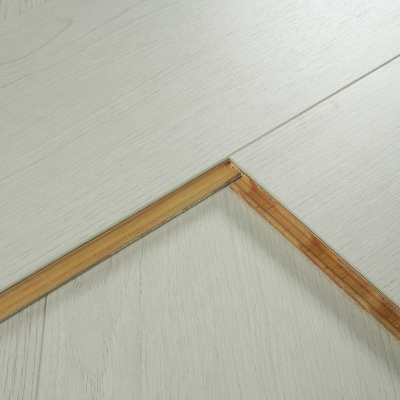
Dark brown herringbone laminate flooring is a layered composite product. Each layer performs a specific function.
Wear Layer. A transparent melamine overlay with aluminum oxide for abrasion resistance. The wear layer protects the decorative layer from surface wear.
Decorative Layer. A high-resolution printed film that provides the dark brown wood-grain appearance. The décor is aligned with the herringbone pattern.
HDF Core. A high-density fiberboard core that provides structural stability, load-bearing strength, and the material into which the locking profile is machined. Core density is ≥850 kg/m³.
Balancing Layer. A moisture-resistant backing paper that balances the tension in the panel and prevents warping.
For detailed manufacturing process information, see the laminate flooring manufacturing page.
Surface & Wear Options
The surface and wear layer options determine the appearance and durability of the product. The following options are available.
Surface finish. EIR (Embossed in Register) or matte. EIR provides a more realistic wood appearance; matte provides a subtle, low-glare surface.
Wear rating. AC3, AC4, or AC5. For residential bedrooms and living areas, AC3 is typically sufficient. For hotel guest rooms and general commercial areas, AC4 is recommended. For hotel corridors, retail, and heavy commercial areas, AC5 is recommended.
Edge profile. Micro-beveled or square. Micro-beveled edges add definition to the herringbone pattern; square edges provide a cleaner, more uniform look.
Locking system. Angle-click or drop-lock. Angle-click is standard for most installations; drop-lock is useful in confined spaces or where angling is difficult.
Where to Use Dark Brown Herringbone Laminate Flooring
Dark brown herringbone laminate flooring is suitable for a range of applications. The following sections explain why the colour and pattern work in each setting.
Hotels & Hospitality
Why it works: Dark brown herringbone provides a warm, premium appearance that suits hotel guest rooms, corridors, and public areas. The herringbone pattern adds a sense of craftsmanship and tradition, and the dark brown tone creates a rich, welcoming atmosphere.
Key considerations: Wear rating (AC4 or AC5 for high-traffic areas), acoustic performance (underlayment), and colour consistency across production batches.
Residential Projects
Why it works: Dark brown herringbone provides a dramatic, warm floor for residential living areas, bedrooms, and hallways. The herringbone pattern adds architectural definition, and the dark brown tone works well with both traditional and contemporary furniture.
Key considerations: Thickness (10–12 mm for a more substantial underfoot feel), surface finish (EIR for realism), and installation quality.
Office Interiors
Why it works: Dark brown herringbone provides a professional, premium appearance for office reception areas, meeting rooms, and executive offices. The herringbone pattern adds visual interest, and the dark brown tone supports a corporate design palette.
Key considerations: Wear rating (AC4 for general commercial), maintenance requirements, and acoustic performance.
Retail & Showrooms
Why it works: Dark brown herringbone provides a distinctive, design-led floor for retail and showroom environments. The herringbone pattern adds architectural interest, and the dark brown tone supports a premium brand image.
Key considerations: Wear rating (AC4 or AC5), cleaning regime, and colour consistency.
Apartment Developments
Why it works: Dark brown herringbone provides a premium appearance for apartment developments and renovation projects. The click-lock system allows fast installation, and the herringbone pattern adds value to the interior.
Key considerations: Thickness (8–10 mm for standard apartments), installation time, and cost balance.
Common Buying Concerns
The following concerns are commonly raised by buyers and specifiers. Each entry explains the concern and how it is addressed.
Colour consistency. Dark brown tones can vary between production batches. Addressed through batch-controlled production and approved samples.
Herringbone installation accuracy. The herringbone pattern requires precise alignment during installation. Addressed through left/right matched planks and precision profiling.
Wear resistance in high traffic. Dark brown surfaces can show wear more visibly than lighter tones, and high-traffic areas can cause surface wear. Addressed through AC4/AC5 wear rating options and appropriate maintenance.
Moisture sensitivity. Laminate flooring is moisture-resistant but not waterproof. Addressed through appropriate HDF specification and correct installation (vapour barrier, perimeter sealing).
Large project consistency. Large projects require consistent colour and quality across multiple batches. Addressed through production batch control and batch traceability.
Edge swelling risk. Moisture ingress at joints can cause edge swelling. Addressed through moisture-resistant core specification, gasket joints, and perimeter sealing.
How to Order Dark Brown Herringbone Laminate Flooring
The following steps describe the ordering process for dark brown herringbone laminate flooring.
Step 1: Confirm colour and décor. Select the colour direction and décor reference. Request physical samples for review.
Step 2: Choose thickness. Select 8 mm, 10 mm, or 12 mm based on the application and budget.
Step 3: Choose AC rating. Select AC3, AC4, or AC5 based on the expected traffic level.
Step 4: Confirm plank dimensions. Confirm the herringbone plank size (typical: 600–750 × 100–130 mm). Custom sizes are available for OEM/ODM projects.
Step 5: Confirm locking system. Select angle-click or drop-lock based on the installation requirements.
Step 6: Approve sample. Approve a physical sample before production. Custom orders require sample approval.
Step 7: Confirm packaging and private label. Confirm packaging specifications and private label requirements for OEM/ODM projects.
Step 8: Start production. Production begins after sample approval and order confirmation.
Payment and delivery terms. Payment terms and delivery terms are confirmed at the quotation stage. Typical terms are 30% deposit with the balance against shipping documents. Delivery terms are typically FOB, CIF, or as agreed.
For OEM/ODM inquiries, contact us with your project requirements. For pricing and lead times, submit a formal inquiry.
Dark Brown Herringbone Laminate Flooring Project
The following case illustrates a project using dark brown herringbone laminate flooring.
Project type: Hotel renovation.
Floor area: 4,500 m².
Product: Dark Brown Herringbone Laminate Flooring.
Thickness: 10 mm.
AC rating: AC5.
Installation pattern: Herringbone.
Why this colour and design were selected: The hotel required a warm, premium appearance for guest rooms and corridors. Dark brown herringbone was selected for its rich tone and architectural pattern, which suited the hotel's interior design direction.
Delivery: Delivered according to the agreed schedule, with batch codes recorded for traceability.
Result: The project achieved improved acoustic comfort (with underlayment), reduced installation time by 30% compared to solid wood, and met durability requirements for high guest turnover.
For reference projects in your market, contact us.
FAQ: Dark Brown Herringbone Laminate Flooring
1. What is dark brown herringbone laminate flooring?
Dark brown herringbone laminate flooring is a rigid-core floor covering with an HDF core, a dark brown wood-grain décor layer, and a herringbone layout. It is supplied with a click-lock system for floating installation.
2. What thicknesses are available?
8 mm, 10 mm, and 12 mm. 8–10 mm is common for residential and apartment projects; 10–12 mm is common for hotels, commercial, and premium projects.
3. Is dark brown herringbone laminate flooring available in AC4 and AC5?
Yes. AC3, AC4, and AC5 are available. AC4 is suitable for general commercial use; AC5 for heavy commercial use. For hotels and high-traffic areas, AC4 or AC5 is recommended.
4. What plank size is available for herringbone installation?
Typical herringbone plank size is 600–750 × 100–130 mm. Custom sizes are available for OEM/ODM projects.
5. Can the color and wood pattern be customized?
Yes. Custom décor paper, colour tones, and grain patterns are available for OEM/ODM projects. Contact us with your design reference.
6. Can I order OEM herringbone laminate flooring?
Yes. OEM services include custom colour, custom décor, custom plank size, custom packaging, and private label. Contact us for details.
7. Is it suitable for hotels and commercial projects?
Yes, with AC4 or AC5 wear rating. Dark brown herringbone laminate is commonly specified for hotel guest rooms, corridors, and commercial interiors. The appropriate specification depends on the traffic level and project requirements.
8. Can it be installed over underfloor heating?
Yes, when the system temperature is controlled within the specified limits. Verify the product's underfloor heating compatibility and follow the underfloor heating manufacturer's instructions.
9. How should herringbone laminate flooring be maintained?
Routine dry or damp cleaning. Avoid excess water, wax, or oil-based cleaners. Maintain indoor humidity within the recommended range.
10. What is the MOQ and lead time?
MOQ depends on the specific product and customization requirements. Typical MOQ for standard products is one 20ft container; for custom products, MOQ may be higher. Lead time for bulk orders is typically 20–35 days after sample approval. Contact us for current MOQ and lead times.
CTA
For technical datasheets, project quotations, or dark brown herringbone laminate flooring samples, please submit a formal inquiry for engineering and procurement evaluation.