Spc Flooring For Commercial Use
Product Definition
SPC flooring for commercial use is a rigid core vinyl flooring system manufactured with a stone-plastic composite core, engineered to provide high dimensional stability, wear resistance, and long-term performance under heavy foot traffic in commercial environments.
Technical Parameters and Specifications
The following specifications represent commonly accepted parameters for SPC flooring for commercial use in engineering and procurement practice.
Total Thickness: 4.0–6.5 mm (core + wear layer + backing)
Wear Layer Thickness: 0.3 / 0.5 / 0.7 mm
Core Density: 1900–2100 kg/m³
Surface Treatment: UV coating with ceramic bead reinforcement
Plank Size: 1220 × 180 mm (custom sizes available)
Locking System: Unilin or Valinge compatible click-lock
Fire Rating: Bfl-s1 (EN 13501-1)
Slip Resistance: R9–R10
Formaldehyde Emission: ≤0.05 mg/m³ (FloorScore compliant)
Structure and Material Composition
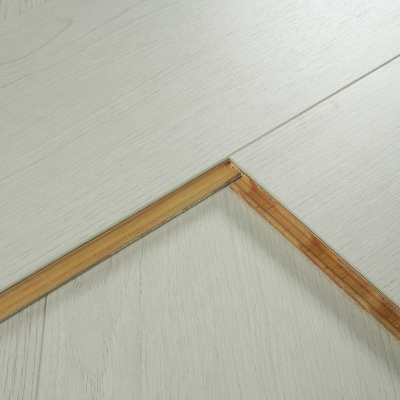
SPC flooring for commercial use adopts a multi-layer engineered structure designed for stability and durability.
UV Wear Layer: Transparent layer providing abrasion and stain resistance
Decor Film: High-definition printed film simulating wood or stone
SPC Core: Limestone powder + PVC compound for rigidity
Backing Layer: IXPE or EVA underlayment for sound absorption
Manufacturing Process
The production of SPC flooring for commercial use follows a continuous industrial process with strict quality control.
Raw Material Mixing: PVC resin, calcium carbonate, stabilizers blended
Extrusion: SPC core formed through twin-screw extruders
Hot Press Lamination: Decor film and wear layer bonded to core
Cooling and Calibration: Thickness and flatness control
Profiling: CNC milling for precision click-lock edges
Surface Coating: UV curing for wear and stain resistance
Inspection: Dimensional stability, abrasion, and locking tests
Industry Comparison
| Flooring Type | Dimensional Stability | Traffic Resistance | Maintenance | Commercial Suitability |
|---|---|---|---|---|
| SPC Flooring | Very High | High | Low | Excellent |
| LVT Flooring | High | Medium–High | Medium | Good |
| Laminate Flooring | Medium | Medium | Low | Limited |
| Ceramic Tile | Very High | Very High | Low | High |
Application Scenarios
SPC flooring for commercial use is widely adopted across multiple project types.
Distributors: Standardized commercial-grade SKUs with predictable performance
EPC Contractors: Fast installation and reduced subfloor preparation
Commercial Developers: Balanced lifecycle cost and aesthetics
Importers: Compliance with fire, slip, and emission regulations
Core Pain Points and Solutions
Subfloor movement: Rigid SPC core minimizes deformation
High foot traffic wear: Thick commercial wear layer with UV coating
Installation downtime: Click-lock system enables rapid deployment
Maintenance cost: Non-porous surface reduces cleaning frequency
Risk Warnings and Mitigation
Improper subfloor flatness, excessive point loads, and incorrect expansion gaps can lead to joint stress. These risks are mitigated by subfloor tolerance checks (≤2 mm/2 m), load distribution planning, and adherence to manufacturer installation guidelines.
Procurement and Selection Guide
Define commercial traffic class and wear layer thickness
Confirm fire and slip resistance requirements
Verify locking system compatibility
Request dimensional stability test reports
Evaluate acoustic performance if required
Review packaging, palletization, and logistics protection
Engineering Case Application
In a 6,500 m² retail renovation project, SPC flooring for commercial use with a 0.5 mm wear layer was installed across corridors and sales areas. Installation averaged 35 m² per installer per day, and post-installation joint movement remained within ±0.2 mm after six months of operation.
FAQ
Is SPC flooring suitable for heavy commercial traffic? Yes, with appropriate wear layer selection.
Can SPC be installed over existing tile? Yes, if flatness requirements are met.
Does SPC flooring require acclimation? 24–48 hours is recommended.
Is expansion gap necessary? Yes, typically 5–8 mm perimeter gap.
Can SPC be used in wet areas? Suitable for moisture-prone commercial zones.
What is the service life? 15–20 years under proper maintenance.
Is underfloor heating compatible? Yes, with temperature control.
How is slip resistance tested? According to DIN and ASTM standards.
Is OEM branding available? Available for volume orders.
What certifications are commonly required? Fire, slip, and emission compliance.
Call to Action
To obtain detailed technical documentation, commercial pricing, or engineering samples of SPC flooring for commercial use, please submit a formal request to the project support team.
E-E-A-T Author Credentials
This content is authored by a flooring systems engineer with over 15 years of experience in SPC and resilient flooring manufacturing, international standards evaluation, and commercial project material consulting for EPC contractors and distributors.