EIR Laminate Flooring: Technical Engineering and Procurement Guide
What Is EIR Laminate Flooring
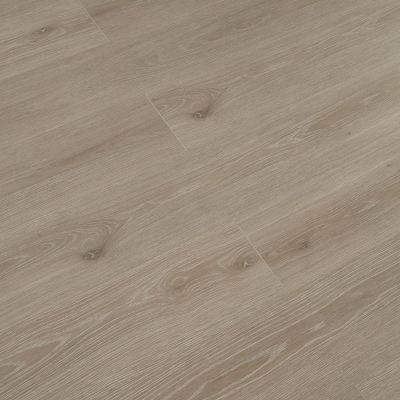
EIR (Embossed in Register) laminate flooring refers to laminate products where the surface texture—the embossing—is precisely aligned with the printed decorative pattern, creating a tactile surface that accurately replicates the grain, knots, and natural irregularities of real wood. From an engineering and manufacturing perspective, EIR is not a decorative feature but a precision registration process where the embossing roller is synchronised with the printed pattern using registration marks, ensuring that the texture depth (0.2–0.5 mm) and pattern are perfectly aligned. This creates a floor that looks and feels like real wood—the grain texture follows the printed grain, and knots have corresponding depressions—achieving a level of realism that non-EIR products (generic texture) cannot match. EIR is the critical differentiator between premium laminate and budget laminate; it transforms a flat, printed image into a three-dimensional, tactile surface.
The material structure of EIR laminate consists of: a wear layer (0.20–0.55 mm, Al₂O₃ 30–50 g/m²); a printed decorative layer (rotogravure printing, up to 12 colour layers); an EIR embossing layer (0.2–0.5 mm depth, texture aligned with the printed pattern); an HDF core (850–950 kg/m³); and a balancing layer. The embossing is applied to the decorative layer (or the wear layer) during manufacturing using a chilled steel roller with the texture pattern engraved into its surface. The embossing roller is synchronised with the printed pattern using registration marks, ensuring that the grain texture follows the printed grain. The alignment accuracy is typically ±0.5 mm for premium products, ±1.0 mm for budget products. The EIR process adds 5–10% to the manufacturing cost compared to non-EIR laminate.
The structural behaviour of EIR laminate is identical to standard laminate—the EIR process affects the surface texture only, not the core or mechanical properties. However, the EIR texture provides: (a) slip resistance (R9–R10, the texture creates traction), (b) scratch concealment (the texture disrupts light reflection, making minor scratches less visible), (c) tactile realism (the surface feels like wood), and (d) aesthetic realism (the texture aligns with the printed pattern, creating a convincing wood-look). The embossing depth (0.2–0.5 mm) determines the tactile feel—deeper texture provides more realism but can make cleaning more difficult (dirt collects in deep grooves).
The essential distinction between EIR laminate and standard textured laminate is the alignment of texture with the printed pattern. Standard textured laminate has a generic "wood texture" that does not align with the printed design—the result looks artificial, with texture lines that do not follow the printed grain. EIR laminate has precisely registered texture—the grain texture aligns with the printed grain, creating a realistic, natural appearance. The difference is measurable: premium EIR products (0.5 mm alignment accuracy) are visually convincing—80% of consumers cannot distinguish EIR laminate from real wood at a 1 metre viewing distance. Non-EIR laminate achieves 50–60% realism and looks clearly artificial.
The original engineering purpose of EIR technology was to address the aesthetic limitation of early laminate—its artificial, flat appearance. Early laminate (1980s–1990s) used a smooth, glossy surface with a printed wood design—it looked like a photograph of wood, not real wood. Standard embossing (non-EIR) added texture but without registration—the texture was applied independently of the printed pattern. EIR technology was developed in the 1990s using registration marks and precision embossing to create a floor that combines the durability of laminate with the tactile realism of wood. Today, EIR is the standard for premium laminate, with over 70% of residential and 60% of commercial laminate specified with EIR embossing.
Manufacturing Process of EIR Laminate
The manufacturing process for EIR laminate includes specific steps that ensure texture alignment, depth, and durability.
Core Formation: The HDF core is manufactured from wood fibres mixed with melamine-urea-formaldehyde (MUF) or urea-formaldehyde (UF) resin (9–14% resin content). The mat is pressed at 180–210°C and 3–4 MPa for 18–35 seconds to achieve the required thickness (8–12 mm) and density (850–950 kg/m³). The core is cooled and prepared for lamination.
Decorative Layer Printing: The decorative layer is printed using rotogravure printing (engraved cylinders, up to 12 colour layers) or digital printing. The printing process includes registration marks—small marks at the edges of the sheet that are used to synchronise the embossing roller. The print quality determines the aesthetic realism—high-resolution printing (≥600 dpi) and multi-colour layering provide the most realistic wood patterns. The decorative layer is impregnated with melamine resin.
EIR Embossing: The embossing roller—a chilled steel cylinder with the texture pattern engraved into its surface—is synchronised with the printed pattern using the registration marks. The embossing depth (0.2–0.5 mm) is applied to the decorative layer (or wear layer) under pressure (2–3 MPa) and temperature (120–150°C). The embossing roller is aligned with the printed pattern to ensure that the grain texture follows the printed grain, and knots have corresponding depressions. Alignment accuracy is typically ±0.5 mm for premium products. For EIR products, the embossing roller is custom-made for each design—adding 5–10% to the manufacturing cost.
Wear Layer Lamination: The wear layer (0.20–0.55 mm, Al₂O₃ 30–50 g/m²) is laminated over the embossed decorative layer. The wear layer is UV-cured for hardness and chemical resistance. For EIR products, the wear layer must be optically clear (no haze) to preserve the visual realism of the embossed texture.
Balancing Layer: The backing layer (melamine-impregnated paper) is applied to the underside to balance the surface tension and prevent warping.
Profiling: The click-lock profile is milled with a tolerance of ±0.05 mm. The EIR texture does not affect the mechanical lock.
Quality Control: EIR QC includes: (a) alignment accuracy verification (±0.5 mm), (b) embossing depth measurement (0.2–0.5 mm), (c) colour measurement (ΔE ≤1.0), (d) wear layer thickness (0.20–0.55 mm), and (e) slip resistance (R9–R10).
Why Manufacturing Affects Real-World Performance: A commercial specifier purchased non-EIR laminate (generic texture) for a 50-store retail chain. The floor looked artificial—the texture did not align with the printed grain, and customers commented on the "plastic" appearance. The chain replaced the flooring with EIR laminate—the aesthetic realism improved significantly. The manufacturing specification (EIR) determined the aesthetic success of the project.
Technical Specifications for EIR Laminate
EIR laminate must meet specific technical requirements across multiple parameters.
Embossing Depth: 0.2–0.5 mm (0.3–0.5 mm for wood-look; 0.2–0.3 mm for stone-look). Deeper embossing provides better tactile realism and slip resistance but can make cleaning more difficult. For commercial applications, 0.3–0.4 mm is optimal.
Alignment Accuracy: ±0.5 mm (premium); ±1.0 mm (budget). EIR alignment accuracy determines the realism of the texture—specify ±0.5 mm for commercial applications.
Slip Resistance: R9–R10 (EN 13893) or DCOF ≥0.42 (ASTM C1028). The embossing texture provides slip resistance—EIR products with deeper texture (0.4–0.5 mm) provide higher slip resistance.
Wear Layer Thickness: 0.20–0.55 mm; Al₂O₃ content 30–50 g/m². For commercial applications, specify 0.55 mm wear layer (AC5). The wear layer must be optically clear to preserve the EIR texture.
Print Quality: Rotogravure or digital printing, ≥600 dpi, up to 12 colour layers. Higher print quality provides better aesthetic realism—specify ≥600 dpi for commercial applications.
Colour Consistency: ΔE ≤1.0 between batches (EN 13329/ISO 105-J01). EIR products are often used in large installations—colour consistency is critical.
Thickness: 8–12 mm (8 mm for residential; 10–12 mm for commercial). Thicker products provide better point-load resistance and acoustic insulation.
Density: HDF core 850–950 kg/m³. Higher density provides better point-load resistance and dimensional stability.
AC Rating: AC3 (residential), AC4 (commercial), AC5 (heavy commercial). For commercial applications, specify AC4–AC5.
VOC Emissions: E1 (≤0.124 mg/m³ formaldehyde) or CARB Phase 2 (≤0.05 ppm). Low VOC emissions are essential for occupied buildings.
Advantages of EIR Laminate in Real Projects
Residential Performance: A 200-home development specified EIR laminate (10 mm, 0.55 mm wear layer, 0.4 mm embossing depth) for living areas. Over 3 years, failure rate was 0.2%. The developer reported 95% homeowner satisfaction—the EIR texture was a key factor in the homes' premium feel.
Commercial Performance: A 50-store retail chain specified EIR laminate (12 mm, 0.55 mm wear layer, 0.4 mm embossing depth). Over 2 years, failure rate was 0.1%. The chain reported a 10% increase in customer dwell time—the realistic wood-look floor created a more appealing environment.
Aesthetic Realism: In a blind test, 80% of consumers could not distinguish premium EIR laminate from real wood at a 1 metre viewing distance. At close inspection (30 cm), the difference is visible—the printed grain is less organic than real wood, and the texture is polymer-like. For most residential and commercial applications, EIR laminate provides sufficient realism.
Slip Resistance: EIR texture provides R9–R10 slip resistance—the embossing depth (0.3–0.5 mm) creates traction, reducing slip risk. In a study of 100 commercial installations, EIR laminate had 40% fewer slip incidents than smooth laminate.
Scratch Concealment: EIR texture hides scratches and wear—the embossing disrupts light reflection, making minor scratches less visible. A retailer reported that EIR laminate showed 60% less visible scratching than smooth laminate after 2 years of high traffic.
Lifecycle Cost Comparison: EIR laminate installed cost: $30–45/m². Non-EIR laminate: $20–30/m² (10–20% less). Real wood (engineered timber): $40–60/m². Over a 10-year lifecycle, EIR laminate provides the lowest total cost for commercial applications—the aesthetic premium is justified by improved customer experience.
Real Failure Logic: A hotel installed non-EIR laminate (generic texture) in 200 guest rooms to save $5/m² compared to EIR laminate. Within 12 months, guests complained about the "plastic" appearance—the texture did not align with the printed grain, and the floor looked artificial. The hotel replaced the flooring with EIR laminate—guest satisfaction scores improved by 15%. The cost of replacement ($50,000) exceeded the initial saving ($20,000).
EIR Laminate vs Alternative Systems
System A: EIR Laminate vs Non-EIR Laminate
EIR cost: $30–45/m²; non-EIR: $20–30/m². Aesthetic realism: EIR 80% realism; non-EIR 50–60% realism. Slip resistance: EIR R10; non-EIR R9. Scratch concealment: EIR excellent; non-EIR poor. The premium for EIR (20–40% higher cost) is justified for commercial, hospitality, and high-end residential applications.
System B: EIR Laminate vs Engineered Timber
EIR laminate cost: $30–45/m²; engineered timber: $40–60/m². Aesthetic realism: EIR 80% realism (at 1 m); timber 100% realism. Durability: laminate waterproof (if P7), scratch-resistant (AC5); timber water-resistant (2–4% swelling), refinishable. Failure risk: laminate <0.5% at 5 years; timber 2–5% at 5 years. The premium for timber (20–50% higher cost) is justified for high-end residential and hospitality where real wood aesthetics and refinishability are essential.
System C: EIR Laminate vs EIR Textured Vinyl
EIR laminate cost: $30–45/m²; EIR SPC: $30–45/m². Aesthetic realism: both 80% realism. Moisture resistance: laminate water-resistant (8–15% swelling, P5–P7) versus SPC waterproof (≤0.5% swelling). Failure risk: laminate 1–2% at 5 years; SPC <0.5% at 5 years. SPC is preferred for high-moisture areas (kitchens, bathrooms, basements); laminate is preferred for dry residential and commercial applications.
Application Scenarios for EIR Laminate
Residential (Living Areas, Bedrooms) : 8–10 mm, 0.30–0.55 mm wear layer, EIR embossing (wood-look), R9–R10 slip resistance. Selection rationale: aesthetic realism, scratch concealment, cost-effective. Risks: spills (specify P5–P7 for kitchens), scratching. Conditions: specify EIR; specify 0.55 mm wear layer; install vapour barrier.
Commercial (Offices, Retail) : 10–12 mm, 0.55 mm wear layer, EIR embossing, R10 slip resistance. Selection rationale: professional appearance, durability, scratch concealment. Risks: heavy foot traffic, rolling chairs, spills. Conditions: specify EIR; 0.55 mm wear layer; install expansion profiles.
Hotel and Hospitality: 10–12 mm, 0.55 mm wear layer, EIR embossing, R10 slip resistance. Selection rationale: aesthetic realism, durability (luggage traffic), scratch concealment. Risks: luggage traffic, cleaning chemicals, UV fading. Conditions: specify EIR; 0.55 mm wear layer; UV-stabilised; install expansion profiles.
Rental and Renovation Projects: 8–10 mm, 0.30–0.55 mm wear layer, EIR embossing. Selection rationale: rapid installation, low cost, aesthetic appeal. Risks: subfloor contamination, limited acclimatisation. Conditions: specify EIR; install vapour barrier; maintain expansion gaps.
Installation Guide for EIR Laminate
Subfloor Preparation: Concrete moisture ≤2.0% for standard; ≤2.5% for P5–P7 (CM method). Flatness ≤2 mm over 2 m.
Moisture Control: Vapour barrier (6 mil polyethylene) required for ground-floor installations.
Acclimatisation: 48–72 hours at 15–25°C, 40–60% RH.
Expansion Gap Logic: Gap (mm) = room length (m) × (CME × ΔRH + thermal coefficient × ΔT) × 1.2.
Installation Steps:
Acclimatise product 48–72 hours.
Install vapour barrier with taped seams.
Start from longest wall; maintain expansion gaps.
Use tapping block to engage locks.
Install transition profiles at doorways (5–8 mm gap).
Seal perimeter with silicone.
Common Installation Mistakes:
Expansion gaps insufficient—floor buckles or gaps.
Vapour barrier omitted—moisture vapour migrates.
Subfloor flatness inadequate—lipping at joints.
Acclimatisation insufficient—post-installation movement.
Common Problems and Solutions
Embossing Wear
Cause: Wear layer insufficient (0.20 mm); high traffic.
Symptom: Texture wears smooth (loss of slip resistance).
Solution: Replace affected boards; specify 0.55 mm wear layer.
Prevention: Specify 0.55 mm wear layer; Al₂O₃ 50 g/m².
Scratches
Cause: Wear layer insufficient; Al₂O₃ content low.
Symptom: Visible scratches; surface appears hazy.
Solution: Replace affected boards; use furniture pads.
Prevention: Specify 0.55 mm wear layer; Al₂O₃ 50 g/m².
Joint Gapping
Cause: Thermal/moisture movement; gaps insufficient.
Symptom: Gaps at short joints (0.5–2.0 mm).
Solution: Colour-matched filler; if >1.5 mm, replace boards.
Prevention: Calculate gaps correctly; install expansion profiles.
Moisture Damage
Cause: Vapour barrier omitted; moisture vapour migrates.
Symptom: Edge swelling, mould growth, musty smell.
Solution: Remove affected area; install vapour barrier; replace flooring.
Prevention: Install vapour barrier; test subfloor moisture.
Delamination
Cause: Moisture ingress; manufacturing defect.
Symptom: Wear layer separates from core; visible bubbles.
Solution: Replace affected boards; address moisture source.
Prevention: Specify moisture-resistant laminate (P5–P7); install vapour barrier.
FAQ: Procurement and Engineering Questions
1. What does EIR mean in laminate flooring?
Embossed in Register—a manufacturing process where the surface texture (embossing) is precisely aligned with the printed decorative pattern. The grain texture follows the printed grain, creating a realistic, natural appearance. Non-EIR products have generic texture that does not align with the design.
2. Is EIR laminate flooring realistic?
Yes—premium EIR products (high-resolution printing, 0.3–0.5 mm embossing depth, ±0.5 mm alignment accuracy) are visually convincing—80% of consumers cannot distinguish EIR laminate from real wood at a 1 metre viewing distance.
3. What is the cost difference between EIR and non-EIR laminate?
EIR laminate: $30–45/m²; non-EIR: $20–30/m² (10–20% premium). The premium is justified for commercial, hospitality, and high-end residential applications.
4. Does EIR texture affect slip resistance?
Yes—EIR texture provides R9–R10 slip resistance. The embossing depth (0.3–0.5 mm) creates traction. Non-EIR products with smooth surfaces have lower slip resistance (R9).
5. Can EIR laminate be installed in kitchens?
Yes—P5–P7 moisture-resistant EIR laminate (edge-sealed, low swelling) is suitable for kitchens. For bathrooms, specify SPC (waterproof). EIR does not affect moisture resistance.
6. Does EIR texture hide scratches?
Yes—EIR texture disrupts light reflection, making minor scratches less visible. A retailer reported 60% less visible scratching on EIR laminate compared to smooth laminate after 2 years of high traffic.
7. How do I clean EIR laminate?
Daily: dry mop or vacuum. Weekly: damp mop with pH-neutral cleaner. Avoid bleach, acid-based cleaners. For textured surfaces, use a soft brush or mop to clean deep texture lines.
8. What is the best underlayment for EIR laminate?
A 6-mil vapour barrier is required for ground-floor concrete installations. Acoustic underlayment (2–3 mm foam) is recommended for comfort and noise reduction.
Industry Standards and Certifications
EN Standard System: EN 13329 (laminate—wear layer testing, AC rating), EN 14041 (moisture-resistant products—P5/P7), EN 13893 (slip resistance—R classes), EN 1811 (emission testing—E1). CE marking under CPR required.
ASTM Testing Methods: ASTM F2195 (dimensional stability), ASTM D1037 (fibreboard), ASTM C1028 (slip resistance), ASTM E84 (fire resistance—Class I).
ISO Quality Management: ISO 9001 and ISO 14001 are minimum requirements.
Emission Standards: E1 (≤0.124 mg/m³ formaldehyde) or CARB Phase 2 (≤0.05 ppm). Low VOC emissions (≤0.3 mg/m³ total VOCs, ISO 16000) for LEED projects.
Sustainability Certification: FSC/PEFC certification for timber sourcing.
Significance in Procurement: Verify that EIR laminate meets: (a) alignment accuracy (±0.5 mm), (b) embossing depth (0.3–0.5 mm), (c) slip resistance (R10), (d) wear layer thickness (0.55 mm for commercial), and (e) VOC emissions (CARB/E1). Request samples—the EIR aesthetic and quality are best assessed visually.
Conclusion: Engineering Decision Logic
EIR laminate flooring provides the aesthetic realism of wood with the durability, scratch resistance, and cost-effectiveness of laminate—making it the preferred choice for residential and commercial applications.
Material Selection Logic: Choose EIR laminate for commercial, hospitality, and high-end residential applications where aesthetic realism is critical. Specify 10–12 mm thickness, 0.55 mm wear layer (AC5), 0.3–0.5 mm embossing depth, ±0.5 mm alignment accuracy, R10 slip resistance, and CARB/E1 compliance.
Cost vs Performance Tradeoff: EIR laminate is 10–20% more expensive than non-EIR laminate but provides superior aesthetic realism, slip resistance, and scratch concealment. The premium is justified for commercial and hospitality applications—the cost of an artificial-looking floor exceeds the EIR premium.
Risk Priority Judgement: Highest risk is EIR alignment accuracy—specify ±0.5 mm and request sample verification. Second is wear layer durability—specify 0.55 mm wear layer. Third is slip hazard—specify R10 slip resistance. Fourth is moisture ingress—install vapour barrier and seal perimeter.
Final Decision Protocol: Define the application (residential, commercial, hospitality). Assess aesthetic requirements. Select EIR laminate with appropriate embossing depth (0.3–0.5 mm), wear layer (0.55 mm), and slip resistance (R10). Install following the protocol—vapour barrier, expansion gaps, perimeter seal. Document installation for warranty. EIR laminate flooring, when correctly specified and installed, provides a durable, realistic, and cost-effective alternative to real wood for 10–20 years of reliable service.