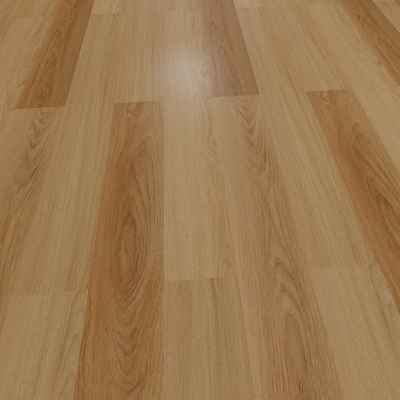
What Will Ruin Laminate Flooring? 7 Common Mistakes to Avoid
Product Definition
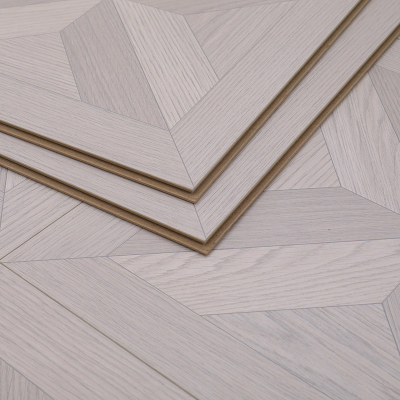
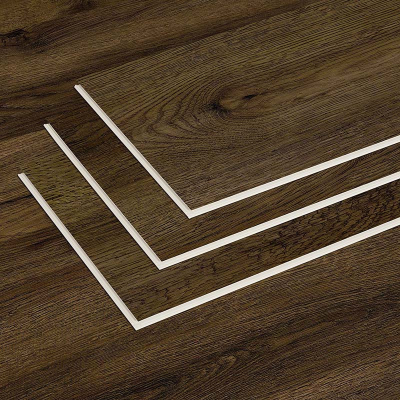
Laminate flooring is a multi-layer engineered floor system consisting of a high-density fiberboard (HDF) core, decorative layer, and protective wear surface. It is widely used in residential and commercial projects due to cost efficiency, dimensional stability, and standardized installation systems.
Technical Parameters & Specifications
| Parameter | Typical Range |
|---|---|
| Total Thickness | 7–12 mm |
| AC Wear Rating | AC3–AC5 |
| Core Density | 820–950 kg/m³ (HDF) |
| Moisture Swelling Rate | ≤18% (EN 13329) |
| Locking System Strength | ≥1,000 N pull resistance |
| Formaldehyde Emission | E1 / CARB Phase 2 compliant |
Structure & Material Composition
Overlay Layer: Aluminum oxide-infused wear surface for abrasion resistance
Decor Paper: High-resolution printed wood or stone visuals
HDF Core: Structural load-bearing layer providing dimensional stability
Balancing Layer: Moisture-resistant backing to control warping
Manufacturing Process
Wood fiber refining and resin blending
High-pressure hot pressing to form HDF boards
Surface lamination with decor and wear layers
Precision profiling of click-lock systems
Quality inspection: swelling, abrasion, impact tests
Controlled packaging and moisture conditioning
Industry Comparison
| Flooring Type | Moisture Resistance | Durability | Maintenance Risk |
|---|---|---|---|
| Laminate Flooring | Moderate | High (AC4–AC5) | Medium |
| SPC Flooring | Very High | Very High | Low |
| Engineered Wood | Low–Moderate | Medium | High |
| Ceramic Tile | Very High | Very High | Low |
Application Scenarios
Laminate flooring is commonly specified by distributors, EPC contractors, and developers for apartments, offices, hotels, and retail spaces where controlled indoor environments and cost efficiency are priorities.
Core Pain Points & Solutions
1. Excessive Moisture Exposure
Standing water penetrates joints and causes HDF core swelling.
Solution: Use moisture barriers, edge sealing, and avoid wet-area installation.
2. Improper Subfloor Preparation
Uneven subfloors create stress points leading to joint failure.
Solution: Enforce flatness tolerance ≤3 mm / 2 m.
3. No Expansion Gaps
Thermal expansion without clearance causes buckling.
Solution: Maintain 8–12 mm perimeter expansion gaps.
4. Heavy Furniture Without Protection
Point loads damage locking systems.
Solution: Use felt pads and load distribution plates.
Risk Warnings & Mitigation
Avoid installation in bathrooms or wet zones unless certified waterproof laminate is specified
Control indoor humidity between 40–60%
Never wet-mop standard laminate flooring
Ensure acclimation for at least 48 hours before installation
Procurement & Selection Guide
Confirm application environment moisture level
Select AC rating based on traffic class
Verify HDF density and swelling test data
Check locking system patent and test reports
Require third-party emission certifications
Specify installation manuals and warranty scope
Engineering Case Application
In a 12,000 m² mixed-use commercial project, improper moisture barriers led to joint swelling within six months. After replacement with AC4 laminate plus PE vapor barriers and humidity control, performance stabilized with zero claims over 36 months.
FAQ
Q1: Can water permanently ruin laminate flooring?
A: Yes, prolonged exposure causes irreversible core swelling.Q2: Is laminate suitable for kitchens?
A: Only with strict moisture control and spill management.Q3: What humidity level is safe?
A: 40–60% indoor relative humidity.Q4: Does AC rating affect lifespan?
A: Higher AC ratings improve abrasion resistance.Q5: Can damaged laminate be repaired?
A: Local plank replacement is possible, refinishing is not.Q6: Does underlayment prevent moisture damage?
A: It reduces risk but does not make laminate waterproof.Q7: How long does laminate last commercially?
A: Typically 10–20 years depending on traffic.Q8: Are locking systems failure-prone?
A: Only if installed on uneven substrates.Q9: Can sunlight damage laminate?
A: Prolonged UV exposure may fade decor layers.Q10: Is laminate recyclable?
A: Partially, depending on regional facilities.
CTA
For technical datasheets, project specifications, or bulk procurement inquiries, please request detailed documentation or engineering samples through your sourcing channel.
E-E-A-T Author Credentials
This article is authored by a flooring systems engineering team with over 15 years of experience in laminate and resilient flooring manufacturing, EN/ISO testing compliance, and international EPC project consulting.