Resilient Flooring: Types, Benefits, Costs and How to Choose
What Is Resilient Flooring?
Resilient flooring is a category of hard-surface flooring that has some degree of flexibility or resilience under load and can recover from minor compression. Unlike ceramic tile or stone—which are rigid and brittle—resilient flooring materials compress slightly under foot traffic, furniture, and impact, then return to their original shape. This resilience provides comfort underfoot, acoustic benefits, and resistance to cracking or breaking under normal use.
The term "resilient" does not mean "soft" like carpet. Resilient flooring is a hard-surface category—it is dimensionally stable, easy to clean, and suitable for high-traffic areas. The resilience refers to the material's behaviour under load: it flexes slightly rather than fracturing, and it recovers from compression rather than deforming permanently.
Common resilient flooring types include:
Vinyl flooring (including LVT, LVP, SPC, WPC, and sheet vinyl)
Linoleum (natural materials: linseed oil, cork dust, wood flour, jute)
Rubber flooring (recycled rubber or virgin rubber)
Cork flooring (natural cork with a protective wear layer)
Each type has different performance characteristics—some are waterproof, some are water-resistant; some are rigid, some are flexible; some are suitable for commercial use, some are residential-only. Understanding these differences is essential for selecting the right resilient flooring for a specific application.
Types of Resilient Flooring
The following table compares the main types of resilient flooring across key performance parameters:
| Type | Core Material | Water Resistance | Durability | Comfort | Typical Uses |
|---|---|---|---|---|---|
| LVT/LVP | PVC/vinyl | High | High | Medium | Homes, retail, offices |
| SPC | Stone + PVC | Excellent (100% waterproof) | High | Medium | Residential, commercial, wet areas |
| WPC | Wood flour + PVC | High | Medium–High | High | Residential, acoustic-sensitive areas |
| Sheet Vinyl | PVC | Excellent | Medium–High | High | Healthcare, homes, commercial |
| Linoleum | Natural materials | Medium | High | High | Schools, healthcare, offices |
| Rubber | Rubber | High | Very High | Very High | Gyms, healthcare, commercial |
| Cork | Cork | Medium | Medium | Very High | Residential, offices |
LVT/LVP (Luxury Vinyl Tile/Plank) : Flexible vinyl flooring with a printed decorative layer and wear layer. Available in tile and plank formats. Suitable for homes, retail, and offices. Not recommended for wet areas unless specified with waterproof core.
SPC (Stone Plastic Composite) : Rigid core flooring made from PVC resin and calcium carbonate (limestone). 100% waterproof, dimensionally stable, and resistant to indentation. Suitable for residential, commercial, and wet areas (bathrooms, kitchens, basements).
WPC (Wood Plastic Composite) : Rigid core flooring with wood flour and PVC. Softer and warmer underfoot than SPC—better acoustic performance. Suitable for residential and acoustic-sensitive areas. Less moisture-resistant than SPC.
Sheet Vinyl : Seamless vinyl flooring in sheet form (not planks or tiles). Heat-welded seams create a continuous, waterproof surface. Suitable for healthcare, commercial kitchens, and residential applications.
Linoleum : Natural flooring made from linseed oil, cork dust, wood flour, and jute. Durable, antimicrobial, and sustainable. Suitable for schools, healthcare, and offices. Requires periodic sealing and polishing.
Rubber : Durable, slip-resistant, and comfortable flooring made from recycled or virgin rubber. Suitable for gyms, healthcare, and high-traffic commercial areas. Higher initial cost but long lifespan.
Cork : Natural cork flooring with a protective wear layer. Comfortable, warm, and acoustic. Suitable for residential and office applications. Requires sealing and moisture management.
Resilient Flooring vs Hardwood vs Tile vs Laminate
The following table compares resilient flooring with other common flooring categories:
| Feature | Resilient Flooring | Hardwood | Tile | Laminate |
|---|---|---|---|---|
| Water resistance | High | Low–Medium | Excellent | Medium |
| Comfort | High | Medium | Low | Medium |
| Maintenance | Easy | Medium | Easy | Easy |
| Installation | Easy–Moderate | Moderate | Difficult | Easy |
| Design options | High | High | Very High | High |
| Repair | Easy–Moderate | Moderate | Difficult | Moderate |
| Cost (installed) | $20–50/m² | $40–80/m² | $30–60/m² | $20–35/m² |
Resilient flooring vs hardwood: Resilient flooring is more water-resistant, more comfortable, and easier to maintain. Hardwood offers superior aesthetics and refinishability but requires more maintenance and is vulnerable to moisture.
Resilient flooring vs tile: Resilient flooring is more comfortable, warmer underfoot, and easier to install. Tile is more durable, more scratch-resistant, and better for wet areas (showers, exteriors).
Resilient flooring vs laminate: Resilient flooring is more water-resistant and more comfortable. Laminate is cost-effective for dry areas but fails in wet environments.
Pros and Cons of Resilient Flooring
Pros
Water resistance: Many resilient flooring types (SPC, sheet vinyl, rubber) are waterproof or highly water-resistant—suitable for kitchens, bathrooms, and basements.
Easy maintenance: Most resilient flooring requires only dry mopping and occasional damp mopping—no waxing, no sealing, no refinishing.
Comfortable underfoot: Resilient flooring is warmer and softer than tile or stone—more comfortable for standing.
Wide design range: Available in wood-look, stone-look, and abstract designs—suitable for any interior style.
Good durability: Commercial-grade resilient flooring (0.55 mm wear layer, AC5) lasts 10–20 years in high-traffic applications.
Faster installation: Click-lock and glue-down systems install faster than tile or hardwood—reducing labour cost and project downtime.
Lower maintenance than many traditional materials: No grout cleaning (tile), no refinishing (hardwood), no sealing (stone).
Cons
Quality varies significantly: Cheap resilient flooring may have lower density, thinner wear layer, and inconsistent thickness tolerance—leading to premature failure.
Some products can dent: Flexible LVT and WPC can indent under heavy point loads (furniture legs, trolley wheels). SPC is more resistant.
UV exposure can affect some products: Vinyl flooring may fade or yellow under prolonged direct sunlight—UV-stabilised products are available.
Subfloor preparation matters: Resilient flooring requires flat, clean, dry subfloors—uneven subfloors cause lipping, gapping, or telegraphing.
Some products cannot be refinished like hardwood: Resilient flooring has a finite wear layer—when it wears through, the floor must be replaced (not refinished).
PVC-based products have different environmental considerations: Vinyl flooring is petroleum-based—recycled content and phthalate-free plasticisers are available but not universal.
Important distinction: Resilient flooring is not defined by waterproofness. Some resilient flooring types are waterproof (SPC, sheet vinyl); others are water-resistant (linoleum, cork); others are not recommended for wet areas (standard LVT). The term "resilient" refers to the material's behaviour under load—not its water resistance.
How to Choose Resilient Flooring
Selecting the right resilient flooring depends on the application, traffic level, moisture exposure, and maintenance resources.
Residential
Priorities: Comfort, waterproofing, maintenance, appearance.
Recommended options: SPC for wet areas (kitchens, bathrooms, basements); WPC for living areas (acoustic performance, comfort); LVT for design flexibility; cork for warmth and comfort.
Key specifications: 4–5.5 mm thickness; 0.30–0.55 mm wear layer; AC3–AC4; R10 slip resistance; CARB Phase 2 or E1.
Retail
Priorities: Wear layer, traffic resistance, scratch resistance, maintenance.
Recommended options: SPC (6.5 mm, 0.55 mm wear layer, AC5) for high-traffic areas; LVT for design flexibility (moderate traffic).
Key specifications: 5.5–6.5 mm thickness; 0.55 mm wear layer; AC5; R10 slip resistance; density ≥1.9 g/cm³.
Healthcare
Priorities: Hygiene, seamless installation, slip resistance, chemical resistance.
Recommended options: Sheet vinyl (heat-welded seams) for operating theatres and ICUs; SPC with antimicrobial additives and gasket joints for patient rooms and corridors.
Key specifications: 2.5–6.5 mm thickness; 0.55 mm wear layer; R11 slip resistance; antimicrobial additives; chemical-resistant topcoat; CARB Phase 2.
Hotel
Priorities: Aesthetics, acoustic performance, durability, installation efficiency.
Recommended options: SPC with cork backing (acoustic performance) for guest rooms; LVT for design flexibility; carpet tile for corridors (acoustic absorption).
Key specifications: 5.5–6.5 mm thickness; 0.55 mm wear layer; AC5; R10 slip resistance; cork backing (15–22 dB impact noise reduction).
Office
Priorities: Appearance, acoustic performance, maintenance, lifecycle cost.
Recommended options: SPC for corridors and high-traffic areas; LVT for private offices; carpet tile for acoustic-sensitive areas.
Key specifications: 5.5 mm thickness; 0.55 mm wear layer; AC4–AC5; R10 slip resistance; acoustic underlayment (2–3 mm foam).
Where Does SPC Flooring Fit Within Resilient Flooring?
SPC is one type of rigid-core resilient flooring. It sits within the vinyl flooring category, which itself is a subset of resilient flooring:
Resilient Flooring
↓
Vinyl Flooring
↓
Rigid-Core Vinyl
↓
SPC
SPC is distinguished from other resilient flooring by its rigid core (flexural modulus 1,200–2,000 MPa), high density (1.8–2.2 g/cm³), and 100% waterproofness (≤0.5% swelling). Within the SPC category, different formats exist—straight plank, herringbone, chevron—each with specific installation requirements.
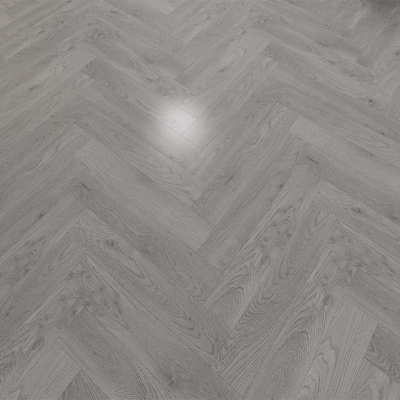
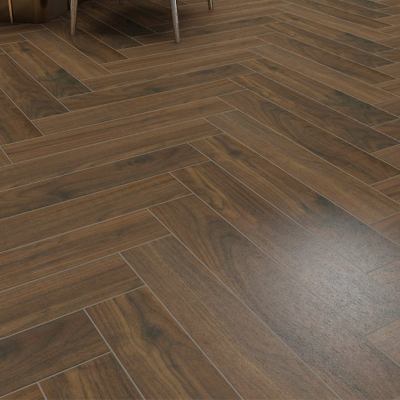
Herringbone SPC is one design/application format of SPC flooring. It uses the same rigid core and wear layer as straight plank SPC but is cut into shorter, narrower planks and installed in a herringbone pattern. For a complete guide to herringbone SPC flooring—including technical specifications, installation, and applications—see our Herringbone SPC Flooring Guide.
FAQ: Resilient Flooring
1. What does resilient flooring mean?
Resilient flooring is a category of hard-surface flooring that has some degree of flexibility or resilience under load and can recover from minor compression. It is not soft like carpet—it is a hard-surface category that flexes slightly rather than fracturing.
2. What are the main types of resilient flooring?
Vinyl flooring (LVT, LVP, SPC, WPC, sheet vinyl), linoleum, rubber flooring, and cork flooring. Each type has different performance characteristics.
3. Is vinyl flooring resilient flooring?
Yes—vinyl flooring is the largest category of resilient flooring. It includes LVT, LVP, SPC, WPC, and sheet vinyl.
4. Is SPC flooring resilient flooring?
Yes—SPC is a type of rigid-core resilient flooring within the vinyl flooring category. It is distinguished by its rigid core, high density, and 100% waterproofness.
5. Is LVT a resilient flooring?
Yes—LVT (Luxury Vinyl Tile) is a type of resilient flooring. It is flexible vinyl flooring with a printed decorative layer and wear layer.
6. What is the difference between resilient flooring and laminate?
Resilient flooring is more water-resistant and more comfortable underfoot. Laminate is cost-effective for dry areas but fails in wet environments. Resilient flooring (especially SPC and sheet vinyl) is waterproof; laminate is water-resistant (8–15% swelling).
7. Is resilient flooring waterproof?
Not all resilient flooring is waterproof. SPC and sheet vinyl are 100% waterproof. LVT and WPC are water-resistant. Linoleum and cork are water-resistant but not waterproof. The term "resilient" refers to the material's behaviour under load—not its water resistance.
8. Is resilient flooring good for commercial buildings?
Yes—commercial-grade resilient flooring (SPC, sheet vinyl, rubber) is suitable for retail, healthcare, hospitality, offices, and other commercial applications. Specify appropriate wear layer (0.55 mm, AC4–AC5) and density (≥1.9 g/cm³ for SPC).
9. What is the most durable type of resilient flooring?
Rubber flooring is the most durable resilient flooring—it has the highest wear resistance and longest lifespan (15–25 years). SPC is the most durable vinyl flooring (10–20 years). Sheet vinyl is durable but less resistant to indentation.
10. Is resilient flooring suitable for hospitals?
Yes—sheet vinyl (heat-welded seams) and SPC with antimicrobial additives and gasket joints are suitable for hospitals. Specify chemical resistance, R11 slip resistance, and low VOC emissions.
11. Is resilient flooring suitable for high-traffic areas?
Yes—commercial-grade SPC (0.55 mm wear layer, AC5) and rubber flooring are suitable for high-traffic areas (1,000+ persons/day). Specify density ≥1.9 g/cm³ and wear layer 0.55 mm.
12. How long does resilient flooring last?
Residential: 10–15 years (SPC, LVT) or 15–25 years (rubber, linoleum). Commercial: 8–15 years (SPC, sheet vinyl) or 15–25 years (rubber). The lifespan depends on traffic, cleaning, and maintenance.
Industry Standards and Certifications
EN Standard System: EN 13329 (laminate—referenced for SPC wear layer testing), EN 14041 (moisture-resistant products—P5/P7), EN 16511 (modular multilayer flooring—SPC and LVT), EN 13893 (slip resistance—R classes), EN 1811 (emission testing—E1). CE marking under CPR required for European markets.
ASTM Testing Methods: ASTM F2195 (dimensional stability), ASTM F964 (chemical resistance), ASTM C1028 (slip resistance—DCOF), ASTM E84 (fire resistance—Class I), ASTM D1308 (chemical resistance).
ISO Quality Management: ISO 9001 (quality management) and ISO 14001 (environmental management) are minimum requirements for credible manufacturers.
Emission Standards: CARB Phase 2 (≤0.05 ppm formaldehyde) or E1 (≤0.124 mg/m³). Phthalate-free plasticisers (DOTP or DINCH) required for vinyl products.
Sustainability Certification: FSC/PEFC for cork and linoleum; recycled content certification (Global Recycled Standard, UL 2799) for rubber and SPC. LEED credits achievable with FSC-certified products, recycled content, and low VOC emissions.
Significance in Procurement: Verify that the resilient flooring meets the relevant standards for its type and application. Request test reports for wear layer, dimensional stability, slip resistance, and VOC emissions. Without documentation, performance claims are unverified.
Conclusion: How to Choose Resilient Flooring
Resilient flooring is a broad category of hard-surface flooring that includes vinyl (LVT, SPC, WPC, sheet vinyl), linoleum, rubber, and cork. Each type has different performance characteristics—some are waterproof, some are water-resistant; some are rigid, some are flexible; some are suitable for commercial use, some are residential-only.
To choose the right resilient flooring:
Define the application — Residential, retail, healthcare, hotel, or office.
Assess the environment — Moisture exposure, traffic level, acoustic requirements, chemical exposure.
Select the material type — SPC for wet areas and high loads; WPC for comfort and acoustics; sheet vinyl for healthcare; rubber for gyms and high-traffic; linoleum for sustainability; cork for warmth.
Specify the product — Thickness, wear layer (0.55 mm for commercial), AC rating (AC4–AC5 for commercial), slip resistance (R10–R11), and VOC emissions (CARB Phase 2).
Verify documentation — Request test reports, certifications, and installation instructions.
Install correctly — Follow manufacturer's subfloor preparation, acclimation, expansion, and installation requirements.
Maintain according to specifications — Follow manufacturer's cleaning and maintenance guidelines.
For commercial and residential projects, resilient flooring provides a durable, water-resistant, and low-maintenance solution. Floorcasa provides SPC flooring solutions for projects where durability, waterproofness, and lifecycle value are priorities. For a complete guide to herringbone SPC flooring—including technical specifications, installation, and applications—see our Herringbone SPC Flooring Guide.