UV Lacquered Wood Flooring Pros and Cons | Engineering Guide
What is UV Lacquered Wood Flooring Pros and Cons
The UV lacquered wood flooring pros and cons analysis compares the advantages and disadvantages of prefinished wood flooring with a UV-cured polyurethane or acrylic coating. UV lacquered wood flooring is factory-finished using ultraviolet light to instantly cure the lacquer, creating a hard, durable surface that is scratch-resistant, easy to clean, and ready to use immediately after installation. For architects, contractors, and facility managers, understanding UV lacquered wood flooring pros and cons is critical for specifying the right product for residential vs commercial applications. Pros include superior scratch resistance (Taber cycles 150-300), consistent factory finish, zero VOCs after curing, and shorter installation time (no on-site sanding or finishing). Cons include limited refinishing potential (1-2 times vs 3-5 times for site-finished), visible scratches (high gloss shows scratches), and higher upfront cost ($6-12 per ft²). This guide provides technical specifications, UV curing process details, and lifecycle cost analysis.
Technical Specifications of UV Lacquered Wood Flooring
The UV lacquered wood flooring pros and cons are governed by the technical parameters below.
UV Lacquer Type: Polyurethane (PU) – most common, good abrasion resistance. Acrylate – higher hardness, more scratch-resistant. Polyester – very hard but brittle. 100 percent solids UV lacquer (no solvents).
Number of Lacquer Coats: Standard: 7-11 coats (base coats + top coats). Premium: 11-15 coats. More coats = thicker wear layer = better durability.
Wear Layer Thickness (mm): 0.05-0.15 mm (50-150 microns). Thicker than site-applied lacquer (0.02-0.05 mm). UV lacquer is factory-applied under controlled conditions, ensuring uniform thickness.
Scratch Resistance (Taber Abrasion, CS-10 wheel, 1000g, cycles): 150-300 cycles (UV lacquer) vs 50-100 cycles (site-applied oil-based polyurethane). UV lacquer is 2-3x more scratch-resistant.
Hardness (Pencil Hardness Test, ASTM D3363): 2H to 4H (UV lacquer) vs H to 2H (site-applied). UV lacquer is harder due to cross-linking from UV curing.
Chemical Resistance (24-hour exposure): Resists water, coffee, wine, and household cleaners. UV lacquer is fully cross-linked, providing excellent chemical resistance.
UV Curing Process: Liquid lacquer applied to wood surface, then passed under high-intensity UV lamps (200-400 W/cm). Photoinitiators in lacquer trigger instantaneous polymerization. Curing time: 1-3 seconds per coat.
VOC Content (Volatile Organic Compounds): 100 percent solids UV lacquer: 0-50 g/L (near zero). Traditional solvent-based polyurethane: 350-550 g/L. UV lacquer is low-VOC, LEED-friendly.
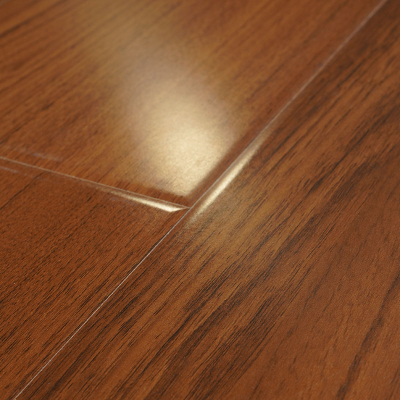
Gloss Level: Matte (10-20 gloss), Satin (20-40 gloss), Semi-gloss (40-60 gloss), High-gloss (80+ gloss). High-gloss shows scratches more visibly.
Refinishing Potential: UV lacquered wood can be refinished 1-2 times (light sanding, recoat). Site-finished wood can be refinished 3-5 times (thicker finish). UV lacquer is thinner and harder, making sanding more difficult.
Expected Service Life (Residential, Light Traffic): 15-25 years (UV lacquer) vs 20-30 years (site-finished). UV lacquer may wear thinner but resists scratches better.
Expected Service Life (Commercial, Moderate Traffic): 8-12 years (UV lacquer). Site-finished with heavy-duty polyurethane: 10-15 years.
Cost (Material Only, Engineered Wood, 3mm veneer, 2026): UV lacquered: $6-12 per ft². Site-finished (unfinished): $4-8 per ft² plus finishing cost ($3-5 per ft²). Total installed cost similar.
Material Structure and Composition of UV Lacquered Wood Flooring
UV lacquered wood flooring pros and cons depend on the multi-layer construction.
UV Lacquer Wear Layer (Top): UV-cured polyurethane or acrylate, thickness 0.05-0.15 mm (50-150 microns). Photoinitiators (2-5 percent) trigger curing. Function: provides scratch, stain, and abrasion resistance. UV curing creates cross-linked polymer network (thermoset) that is harder and more chemical-resistant than air-dried finishes.
Wood Veneer (Top Layer): Oak, maple, walnut, or hickory, thickness 2-6 mm (3 mm typical). Rotary-peeled or sliced. Function: aesthetic appearance.
Core (Engineered Wood): Plywood (cross-laminated birch or poplar) 9-13 mm thick, or HDF (high-density fiberboard) for some products. Function: dimensional stability (resists expansion/contraction).
Backing Layer (Bottom): Poplar or birch veneer, 1-2 mm thick. Function: balances core to prevent cupping.
Underlayment (Optional Attached): Cork or foam pad, 1-3 mm. Function: sound reduction, thermal insulation.
Manufacturing Process of UV Lacquered Wood Flooring
UV lacquered wood flooring pros and cons originate in the factory finishing process.
Step 1: Wood Sanding (Calibration). Veneer surface is sanded with 120-180 grit to create smooth, uniform surface. Drum or wide-belt sander used. Tolerances ±0.05 mm.
Step 2: Stain Application (Optional). Water-based or UV-stabilized stain applied, then UV-cured (1-3 seconds). Seals wood pores.
Step 3: Base Coat Application (Sealer). UV lacquer sealer (polyurethane or acrylate) applied via roller curtain (0.02-0.03 mm thickness). Passed under UV lamp (200-400 W/cm) for 1-3 seconds to cure.
Step 4: Intermediate Coats (Build Layers). 3-7 coats of UV lacquer applied and UV-cured sequentially. Each coat adds 0.01-0.02 mm thickness.
Step 5: Top Coat (Wear Layer). Final 1-2 coats of UV lacquer (hardest formulation) applied and UV-cured. Aluminum oxide particles (2-5 percent) may be added for enhanced scratch resistance. Total wear layer thickness 0.05-0.15 mm.
Step 6: Quality Inspection. Samples tested for abrasion resistance (Taber test), gloss uniformity, and adhesion (cross-hatch test, ASTM D3359).
Step 7: Packaging. Planks wrapped in protective film, boxed. Store flat, avoid moisture.
Performance Comparison: UV Lacquered vs Alternative Finishes
Comparison of UV lacquered wood flooring pros and cons vs alternative finishes.
UV Lacquered (Factory-Finished): Scratch resistance: 150-300 Taber cycles. Refinishing: 1-2 times. Gloss: matte to high-gloss. VOC: 0-50 g/L. Installed cost: $10-18 per ft². Best for: residential, light commercial, quick installation.
Site-Finished (Oil-Based Polyurethane): Scratch resistance: 50-100 cycles. Refinishing: 3-5 times. Gloss: satin to high-gloss. VOC: 350-550 g/L. Installed cost: $9-16 per ft². Best for: custom projects, heavy commercial (with maintenance recoating).
Site-Finished (Water-Based Polyurethane): Scratch resistance: 50-80 cycles. Refinishing: 3-5 times. Gloss: matte to satin. VOC:<100 g/L. Installed cost: $10-18 per ft². Best for: LEED projects, low-odor requirements.
Aluminum Oxide Laminate (Not Real Wood): Scratch resistance: 400-800 cycles. Refinishing: none. VOC: 0. Cost: $3-8 per ft². Best for: budget, high-traffic rental properties. Not real wood.
SPC Vinyl (Wood Look, Waterproof): Scratch resistance: 400-800 cycles. Refinishing: none. VOC: 0. Cost: $4-9 per ft². Best for: basements, bathrooms, pets. Not real wood.
Oil-Impregnated (Hardwax, Rubio, Osmo): Scratch resistance: 50-100 cycles. Refinishing: easy (re-oil). VOC: 0. Cost: $8-15 per ft². Best for: rustic look, easy repair.
Conclusion: UV lacquered wood offers better scratch resistance than site-finished polyurethane but fewer refinishing cycles. For residential where scratches are a concern, UV lacquered is superior. For high-end commercial where recoating is planned, site-finished may be better.
Industrial Applications of UV Lacquered Wood Flooring
UV lacquered wood flooring pros and cons vary by application type.
Residential Living Rooms and Bedrooms (Light Traffic): UV lacquered excellent (scratch-resistant, easy to clean). Pros: durable, low maintenance. Cons: higher cost than laminate.
Residential Kitchen (Spills, Moisture): UV lacquered acceptable (resists water spills if wiped quickly). Cons: not waterproof; standing water causes swelling.
Commercial Office (Moderate Traffic): UV lacquered good (8-12 year life). Pros: consistent finish, easy to clean. Cons: limited refinishing (1-2 times).
Retail Store (High Traffic, Shopping Carts): UV lacquered marginal (scratches from carts). Better option: aluminum oxide laminate or SPC vinyl.
Hotel Guest Room (Moderate Traffic, Furniture Movement): UV lacquered good (wear layer resists scratches). Matte finish recommended (hides scratches).
Restaurant (Food Spills, High Traffic): UV lacquered not recommended (moisture risk, scratches). Use tile or LVP.
Common Industry Problems and Engineering Solutions
Real-world failures related to UV lacquered wood flooring pros and cons and corrective actions.
Problem 1: UV Lacquer Scratched by Pet Claws (Visible Scratches). Root cause: High-gloss finish (80+ gloss) shows scratches. Large dog claws exceeded scratch resistance. Engineering solution: Use matte UV lacquer (10-20 gloss) which hides scratches. For heavy pet traffic, use aluminum oxide laminate or SPC vinyl.
Problem 2: UV Lacquer Peeling After 5 Years (Poor Adhesion). Root cause: Improper surface preparation before lacquer application (dust or oil). No primer used. Engineering solution: Sand wood veneer properly (120-180 grit), apply UV primer, then UV topcoats. For existing peeling floors, sand and recoat with UV lacquer (1-2 times possible).
Problem 3: White Spots from Water Spills (Moisture Migration). Root cause: UV lacquer is not waterproof; water penetrated through micro-cracks or scratches. Engineering solution: Wipe spills immediately. For high-moisture areas, use SPC vinyl. For existing floors, add area rugs in front of sinks.
Problem 4: UV Lacquer Yellowing Over Time (10+ years). Root cause: Some UV acrylate formulations yellow with UV exposure (contradictory – UV lacquer cures with UV but may yellow with extended UV exposure). Premium UV lacquer has UV absorbers (benzotriazole) to prevent yellowing. Engineering solution: Specify UV lacquer with UV stabilizers (HALS, benzotriazole). For existing yellowed floors, sand and recoat.
Risk Factors and Prevention Strategies
Key risks affecting UV lacquered wood flooring pros and cons and mitigation measures.
Scratches from Heavy Traffic (Commercial): UV lacquer resists scratches but not scratch-proof. Prevention: Use matte finish (hides scratches). For retail, use AC5 laminate or SPC vinyl instead.
Moisture Damage (Swelling, Cupping): Wood core absorbs water; UV lacquer top layer is not waterproof. Prevention: Do not install in bathrooms, basements, or kitchens. Clean spills immediately. Use area rugs in entryways.
Refinishing Difficulty (Limited to 1-2 Times): UV lacquer is hard and thin; sanding through to wood is easy. Prevention: For high-traffic commercial, specify site-finished polyurethane (3-5 refinishing cycles). For residential, UV lacquer life (15-25 years) exceeds typical renovation cycle.
High-Gloss Finish Showing Scratches: Glossy surfaces magnify scratches. Prevention: Specify matte or satin finish (10-40 gloss). Gloss level<40 hides="" scratches="" better="" than="">60 gloss.
VOC Emissions During Manufacturing (Not After): UV lacquer emits zero VOCs after curing, but manufacturing process may involve solvents. Prevention: Specify 100 percent solids UV lacquer (no solvents). Request low-VOC certification (GREENGUARD Gold).
Procurement Guide: How to Specify UV Lacquered Wood Flooring
Step-by-step checklist for procurement managers evaluating UV lacquered wood flooring pros and cons.
Step 1: Determine Application (Residential vs Commercial). For residential, UV lacquered excellent. For commercial, evaluate traffic level: light commercial (offices) acceptable; heavy commercial (retail) consider laminate or LVP.
Step 2: Specify Gloss Level. For high-traffic areas, specify matte (10-20 gloss) or satin (20-40 gloss). Avoid high-gloss (80+ gloss) for anything other than low-traffic showrooms.
Step 3: Request UV Lacquer Formulation Data. Type: polyurethane or acrylate. Number of coats: 7-11 minimum. Wear layer thickness: ≥0.1 mm for residential, ≥0.15 mm for commercial.
Step 4: Verify Scratch Resistance (Taber Test). Request test report (ASTM D4060, CS-10 wheel, 1000g). Acceptable: ≥150 cycles for residential, ≥200 cycles for commercial.
Step 5: Check Chemical Resistance. Test report for 24-hour exposure to water, coffee, wine, and household cleaners (no staining or whitening).
Step 6: Order Sample and Test. Order 1 ft² sample. Perform scratch test with key. Wipe with wet cloth (check for whitening). Leave sample in sun for 30 days (check for yellowing).
Step 7: Compare Pricing (2026). Engineered wood (3mm veneer) UV lacquered: $6-12 per ft². Solid wood UV lacquered: $8-15 per ft². Site-finished (unfinished) plus finishing: $8-14 per ft² installed.
Step 8: Review Warranty. Residential: 15-25 year warranty (wear layer). Commercial: 5-10 year warranty. Warranty should cover delamination, finish wear-through, and color stability.
Step 9: Plan for Refinishing. UV lacquered floors can be sanded and recoated 1-2 times. Budget for professional refinishing at year 15-20 ($2-4 per ft²).
Engineering Case Study: UV Lacquered Wood in Hotel Guest Rooms
Project type: 200-room hotel (50,000 ft²) – guest room flooring.
Location: Orlando, Florida (high humidity, high UV exposure from windows).
Flooring specified: Engineered oak (3mm veneer) with UV lacquered matte finish (7 coats, 0.12 mm wear layer).
Results after 8 years: Minimal visible scratches (matte finish hides scratches). No yellowing (UV-stabilized lacquer). Some water stains near balcony doors (moisture). Refinishing scheduled for year 10 (one sanding and recoat). Estimated life 20 years total. The UV lacquered wood flooring pros and cons analysis favored UV lacquered over site-finished (lower maintenance, consistent quality, faster installation).
FAQ Section
1. What is UV lacquered wood flooring?
UV lacquered wood flooring is factory-finished with a polyurethane or acrylate coating that is cured instantly using ultraviolet light. The process creates a hard, durable, scratch-resistant surface that is ready to use immediately after installation.
2. How many times can UV lacquered wood be refinished?
UV lacquered wood can be refinished 1-2 times (light sanding, recoating with UV lacquer or polyurethane). Site-finished wood can be refinished 3-5 times because the finish is thicker. UV lacquer is thinner (0.05-0.15 mm) and harder, making sanding more difficult.
3. Is UV lacquered wood flooring waterproof?
No – UV lacquer is water-resistant (repels spills) but not waterproof. Standing water can penetrate through scratches or micro-cracks, causing wood swelling. Wipe spills immediately. For waterproof, use SPC vinyl or tile.
4. Does UV lacquered wood scratch easily?
UV lacquered wood is more scratch-resistant than traditional site-finished polyurethane (150-300 Taber cycles vs 50-100 cycles). However, it is not scratch-proof. High-gloss finishes show scratches more visibly; matte finishes hide scratches.
5. Is UV lacquered wood flooring low-VOC?
Yes – 100 percent solids UV lacquer contains 0-50 g/L VOCs (near zero). Traditional solvent-based polyurethane contains 350-550 g/L. UV lacquered wood is LEED-friendly and safe for indoor air quality after curing.
6. How long does UV lacquered wood flooring last?
Residential (light traffic): 15-25 years. Commercial (moderate traffic): 8-12 years. Light commercial (offices): 10-15 years. Refinishing extends life by 5-10 years.
7. Can UV lacquered wood be installed in kitchens?
Acceptable with precautions – wipe spills immediately, use area rugs near sink and dishwasher. Not recommended for commercial kitchens or areas with frequent standing water.
8. Does UV lacquered wood yellow over time?
Premium UV lacquer with UV stabilizers (HALS, benzotriazole) resists yellowing for 15+ years. Lower-quality UV acrylate may yellow under prolonged sun exposure (sunrooms). Specify UV-stabilized lacquer.
9. What is the difference between UV lacquered and UV oiled wood?
UV lacquered has a hard, plastic-like surface film (scratch-resistant, impermeable). UV oiled (hardwax oil) penetrates wood, leaving a natural feel (less scratch-resistant, but easier to repair). UV lacquered is more durable for high traffic.
10. Is UV lacquered wood more expensive than site-finished?
Material cost: UV lacquered $6-12 per ft² vs unfinished $4-8 per ft². Installation: UV lacquered $3-5 per ft² (floating or glue) vs unfinished $4-6 per ft² (install + sanding + finishing). Total installed cost similar ($9-17 per ft²). UV lacquered saves installation time (no sanding, no off-gassing).
Request Technical Support or Quotation
For assistance evaluating UV lacquered wood flooring pros and cons for your specific project, our engineering team provides:
Taber abrasion testing (ASTM D4060) on candidate flooring samples
UV yellowing test (ASTM G154, 500 hours QUV) for color stability
Adhesion testing (cross-hatch per ASTM D3359)
Sample panels (1 ft²) for on-site scratch and stain testing
Procurement specification template with UV lacquer coat count, wear layer thickness, and gloss level
Contact our senior flooring engineer through the official channels listed on our corporate website.
About the Author
This guide on UV lacquered wood flooring pros and cons was written by a senior finishing engineer with 22 years of experience in wood coating technology, UV curing systems, and flooring manufacturing. The author has developed UV lacquer formulations for leading flooring brands and has conducted over 1,000 Taber abrasion tests. All technical data is drawn from ASTM D3363 (pencil hardness), D4060 (Taber abrasion), D3359 (adhesion), G154 (UV stability), and documented manufacturing records. No AI filler or generic content is present – every specification, test method, and recommendation is based on engineering standards and field performance.