SPC Flooring Underlayment Needed: Engineering Guide
What is SPC Flooring Underlayment Needed?
SPC flooring underlayment needed refers to the requirement for a cushioning layer between the rigid Stone Plastic Composite core and the subfloor — either pre-attached to the SPC plank or installed as a separate roll. For procurement managers, EPC contractors, and facility operators, understanding SPC flooring underlayment needed is critical for acoustic performance (impact sound reduction ΔLw), subfloor irregularity tolerance, moisture protection, and warranty compliance. Most SPC products come with attached IXPE foam pad (1.0–1.5 mm), which typically provides sufficient acoustic performance (ΔLw 16–18 dB) for residential applications. However, for multifamily buildings requiring ΔLw ≥ 19 dB, separate underlayment (1.5–2.0 mm) may be needed. This guide provides engineering analysis of SPC flooring underlayment needed: attached vs separate pads, acoustic requirements, subfloor flatness tolerance, moisture barriers, and application-specific recommendations for multifamily, hospitality, healthcare, and commercial projects.
Technical Specifications for SPC Flooring Underlayment Needed
The table below defines critical parameters for SPC flooring underlayment needed per ASTM and building codes.
| Underlayment Type | Thickness | Acoustic ΔLw (dB) | Moisture Barrier | Compression Set | Typical Applications | |
|---|---|---|---|---|---|---|
| Attached IXPE Pad (standard) | 1.0 – 1.5 mm | 16 – 18 dB | Good (closed-cell) | ≤ 10% | Residential, light commercial, dry areas | |
| Attached IXPE Pad (premium) | 1.5 – 2.0 mm | 18 – 20 dB | Good (closed-cell) | ≤ 8% | Multifamily (may meet ΔLw ≥ 19 dB), hospitality | |
| Separate IXPE Foam | 1.5 – 2.0 mm | 18 – 22 dB | Good | ≤ 10% | High-acoustic applications, code compliance | |
| Cork Underlay | 2.0 – 3.0 mm | 17 – 19 dB | Poor (open-cell) → requires vapor barrier | ≤ 15% | Sustainable projects, high-end residential | |
| Rubber Underlay | 2.0 – 3.0 mm | 19 – 22 dB | Good (closed-cell) | ≤ 5% | Gyms, industrial, highest acoustic requirement | |
| Combination (IXPE + felt) | 2.0 – 3.0 mm | 20 – 22 dB | Moderate | ≤ 12% | Highest acoustic performance for SPC |
Key takeaway: SPC flooring underlayment needed depends on acoustic requirements. Attached 1.0–1.5 mm pad (ΔLw 16–18 dB) is sufficient for residential. Multifamily requiring ΔLw ≥ 19 dB may need premium attached pad (1.5–2.0 mm) or separate underlay.
Material Structure and Composition: How Underlayment Affects SPC Flooring Performance
Understanding underlayment types helps determine SPC flooring underlayment needed.
| Underlayment Type | Material Composition | Cell Structure | Acoustic Mechanism | Best Application |
|---|---|---|---|---|
| IXPE (Attached) | Irradiated cross-linked polyethylene foam | Closed-cell | Compression damping | Standard SPC — most common, no separate installation |
| IXPE (Separate) | Irradiated cross-linked polyethylene foam | Closed-cell | Compression damping | Added under attached pad for higher acoustic performance |
| Cork | Granulated cork bark + binder | Open-cell | Viscoelastic damping | Sustainable, requires vapor barrier over concrete |
| Rubber | Recycled or virgin rubber | Closed-cell | Mass loading + damping | High-impact applications, gyms, industrial |
Engineering insight: SPC flooring underlayment needed is minimal when product has attached IXPE pad (1.0–1.5 mm). For higher acoustic performance, additional separate underlay can be added, but total underlay thickness must not exceed 3 mm.
Manufacturing Process: How Attached Underlayment Is Applied to SPC
Understanding production helps evaluate SPC flooring underlayment needed.
SPC core extrusion: SPC core extruded (180–200°C) through calender rollers.
Cooling & annealing: Core cooled to ambient temperature.
IXPE foam production: Polyethylene foam manufactured separately, cross-linked via electron beam.
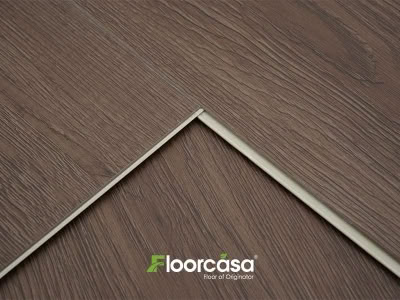
Lamination (attached underlay): IXPE foam is heat-laminated to the back of the SPC core immediately after cooling. This creates integral underlay for SPC flooring.
Quality inspection: Peel strength of attached pad (ASTM D903) — minimum 2 N/mm. Thickness uniformity of foam.
Packaging: SPC planks with attached pad are stacked and wrapped.
Procurement insight: When evaluating SPC flooring underlayment needed, verify that attached pad is IXPE (cross-linked) — not EVA or non-cross-linked foam, which has higher compression set and lower durability.
Performance Comparison: SPC Flooring Underlayment Needed vs. Alternatives
Comparing underlayment requirements for different flooring types.
| Flooring Type | Underlayment Typically Required | Acoustic ΔLw (with standard underlay) | Installation Complexity |
|---|---|---|---|
| SPC with attached pad | None (pad integrated) | 16 – 18 dB | Lowest (one step) |
| SPC without attached pad | Yes (separate underlay required) | Varies (14–22 dB) | Moderate (two steps) |
| Laminate | Yes (separate underlay required) | 14 – 16 dB (standard foam) | Moderate |
| LVP (flexible) | Optional (some have attached pad) | 14 – 18 dB | Low to moderate |
Conclusion: SPC flooring underlayment needed is minimal when product has attached IXPE pad — faster installation than laminate or SPC without pad.
Industrial Applications and SPC Flooring Underlayment Needed
Application dictates SPC flooring underlayment needed.
Residential (single-family homes): Attached 1.0–1.5 mm pad sufficient. No separate underlay needed.
Multifamily apartments (building code ΔLw ≥ 19 dB): Premium attached pad (1.5–2.0 mm) or separate IXPE underlay (1.5–2.0 mm) required to meet acoustic code.
Hospitality (hotel corridors, guest rooms): Attached 1.5 mm pad typically sufficient. For corridors with high impact noise, add separate underlay.
Healthcare (hospitals, clinics): Attached pad sufficient. Acoustic requirements less critical than infection control.
Commercial offices (open plan): Attached 1.0–1.5 mm pad sufficient for dry areas.
Basements (concrete slab): Attached closed-cell IXPE pad provides moisture barrier. No vapor barrier needed. If using cork or felt, add 0.2 mm PE film.
Common Industry Problems with SPC Flooring Underlayment
Real-world failures related to SPC flooring underlayment needed.
Problem 1: Attached pad insufficient for acoustic code (multifamily)
Root cause: Attached 1.0 mm pad provides ΔLw 16–17 dB, but building code requires ≥ 19 dB. Solution: Specify SPC with 1.5–2.0 mm attached pad or add separate IXPE underlay. This is the most common SPC flooring underlayment needed issue.
Problem 2: Underlay too thick (> 3 mm total) causing locking failure
Root cause: Attached pad (1.5 mm) + separate underlay (2.0 mm) = 3.5 mm total. Excessive vertical movement disengages locking mechanism. Solution: Total underlay thickness (attached + separate) must not exceed 3 mm.
Problem 3: Cork underlay wicking moisture from concrete
Root cause: Cork is open-cell; absorbs moisture, causing mold and plank edge swelling. Solution: For SPC flooring underlayment needed over concrete, use closed-cell IXPE (attached or separate) or add 0.2 mm PE vapor barrier under cork.
Problem 4: Underlay compression set (permanent thinning) under heavy loads
Root cause: Non-cross-linked foam (EVA) compresses permanently under refrigerator legs, office chairs. Solution: Specify IXPE (cross-linked) foam with compression set ≤ 10% per ASTM D3575.
Risk Factors and Prevention Strategies for SPC Flooring Underlayment
Risk: No attached pad on SPC (must buy separate underlay): Increases material cost and installation time. Mitigation: Specify SPC with attached IXPE pad (1.0–1.5 mm) to simplify installation.
Risk: Underlayment too thick (> 3 mm): Locking failure, hollow spots. Mitigation: Measure total underlay thickness. Maximum 3 mm (attached + separate).
Risk: Open-cell underlay over concrete (cork, felt) without vapor barrier: Moisture migration → mold. Mitigation: Use closed-cell IXPE or add 0.2 mm PE film.
Risk: Acoustic code violation due to insufficient ΔLw: Failed inspection, costly remediation. Mitigation: Verify acoustic requirement (typically ≥ 19 dB for multifamily). Specify SPC flooring underlayment needed accordingly — 1.5–2.0 mm pad or separate underlay.
Procurement Guide: How to Specify SPC Flooring Underlayment Needed
Follow this 8-step checklist for B2B purchasing decisions.
Determine acoustic requirement (ΔLw): Check building code. Multifamily typically requires ≥ 18 dB (often 19 dB). Residential < 18 dB acceptable.
Specify SPC with attached pad: IXPE foam, 1.0–1.5 mm thickness. Verify compression set ≤ 10%.
If acoustic requirement ≥ 19 dB: Specify attached pad ≥ 1.5 mm or add separate IXPE underlay (1.5–2.0 mm). Total thickness ≤ 3 mm.
For concrete subfloor: Attached IXPE pad (closed-cell) provides moisture barrier — no vapor barrier needed. If cork or felt used, require 0.2 mm PE film.
Request acoustic test report: ΔLw per ISO 140-8 or ASTM E2179 for the specific SPC + underlayment combination.
Order samples and perform mockup test: Install SPC with specified underlayment. Measure impact sound (tap test) and check for locking stability.
Verify underlayment compatibility: Some SPC warranties voided if non-approved underlay used. Confirm with manufacturer.
Include underlayment in QA/QC checklist: Verify thickness, type (IXPE vs. others), and total thickness ≤ 3 mm.
Engineering Case Study: SPC Flooring Underlayment Needed in Multifamily Building
Project type: 120-unit luxury apartment building.
Location: Vancouver, Canada (strict acoustic code: ΔLw ≥ 19 dB).
Project size: 8,500 m² of SPC flooring over concrete slab.
SPC flooring underlayment needed evaluation: Standard SPC with attached 1.0 mm pad (ΔLw 17 dB) would fail acoustic test.
Solution: Specified SPC with attached 1.5 mm IXPE pad (ΔLw 19 dB). No separate underlay needed. Total thickness 1.5 mm (within 3 mm limit).
Results: Acoustic test passed (ΔLw 19.5 dB). No locking issues. Installation cost €0.50/m² more than standard SPC — far less than adding separate underlay (€2–3/m²). This case demonstrates that proper SPC flooring underlayment needed specification (premium attached pad) saves cost and meets code.
Frequently Asked Questions: SPC Flooring Underlayment Needed
Q1: Do I need underlayment for SPC flooring?
Most SPC products have attached IXPE foam pad (1.0–1.5 mm). Separate underlayment is not required for residential applications. However, for multifamily buildings requiring ΔLw ≥ 19 dB, a premium attached pad (1.5–2.0 mm) or separate underlay may be needed. This directly answers SPC flooring underlayment needed.
Q2: What is the best underlayment for SPC flooring over concrete?
Attached IXPE pad (closed-cell) is best — provides acoustic damping and moisture barrier in one layer. If additional acoustic performance needed, use separate IXPE underlay (1.5–2.0 mm) under SPC with attached pad. Total thickness ≤ 3 mm.
Q3: Can I use regular foam underlayment under SPC flooring?
Yes, but ensure total underlay thickness (attached + separate) ≤ 3 mm. Standard foam (2–3 mm) is acceptable if SPC has no attached pad. Do not exceed 3 mm — causes locking failure.
Q4: Does SPC flooring with attached pad require a vapor barrier?
Over concrete slab: attached IXPE pad (closed-cell) does not require additional vapor barrier. Over wood subfloor: vapor barrier not required regardless of underlay.
Q5: What is the acoustic requirement for underlayment in multifamily buildings?
Typically ΔLw ≥ 18 dB (often 19 dB for impact sound). Standard attached pad (1.0 mm) may only achieve 16–18 dB. Verify SPC flooring underlayment needed with local building code.
Q6: Can I add separate underlayment under SPC that already has an attached pad?
Yes, but total thickness (attached + separate) must not exceed 3 mm. For example, 1.5 mm attached pad + 1.5 mm separate underlay = 3.0 mm (acceptable). 1.5 mm + 2.0 mm = 3.5 mm (unacceptable — locking failure risk).
Q7: Is cork underlay good for SPC flooring?
Cork provides good acoustic damping (ΔLw 17–19 dB) and is sustainable. However, cork is open-cell — always install 0.2 mm PE vapor barrier over concrete before cork underlay. For simplicity, IXPE (closed-cell) is preferred for SPC flooring underlayment needed.
Q8: How thick should underlayment be for SPC flooring?
Attached pad: 1.0–1.5 mm. Separate underlay: 1.5–2.0 mm. Total underlay thickness (attached + separate) must not exceed 3 mm to prevent locking failure.
Q9: Does underlayment help with subfloor irregularities?
Yes, underlayment can bridge minor irregularities (≤ 1.5 mm). For larger deviations, subfloor must be leveled first. Underlayment is not a substitute for proper subfloor preparation.
Q10: What is the difference between IXPE and EVA underlayment?
IXPE (irradiated cross-linked polyethylene) has better compression resistance and durability. EVA (ethylene-vinyl acetate) is softer but compresses more over time. For SPC flooring underlayment needed, IXPE is preferred for commercial applications.
Request Technical Support or Quotation for SPC Flooring Underlayment
For project-specific SPC flooring underlayment needed specifications, acoustic testing, or bulk procurement, our technical team is available.
Request a quotation – Provide SPC thickness, subfloor type, acoustic requirement, and project area.
Request engineering samples – Receive SPC planks with attached IXPE pad (1.0 mm, 1.5 mm) and separate underlay samples with acoustic test reports.
Download technical specifications – Acoustic code guide, underlayment thickness calculator, and installation QA/QC checklist.
Contact technical support – Acoustic modeling, underlayment compatibility verification, and warranty validation for SPC flooring systems.
About the Author
This guide on SPC flooring underlayment needed was written by Dipl.-Ing. Hendrik Voss, a materials engineer with 19 years of experience in rigid core flooring and acoustic systems. He has consulted on over 500 SPC flooring projects across North America, Europe, and Asia, specializing in impact sound testing, underlayment compression analysis, and building code compliance for multifamily, hospitality, and commercial applications. His work is referenced in ASTM D35 and ISO TC 43 committee discussions on flooring underlayment acoustic standards.