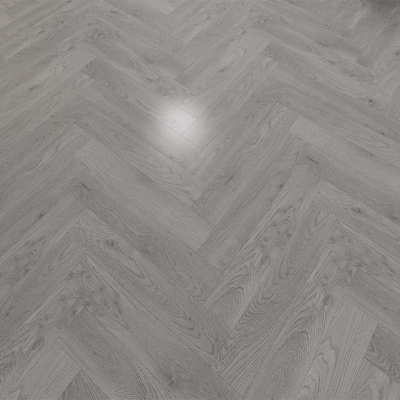
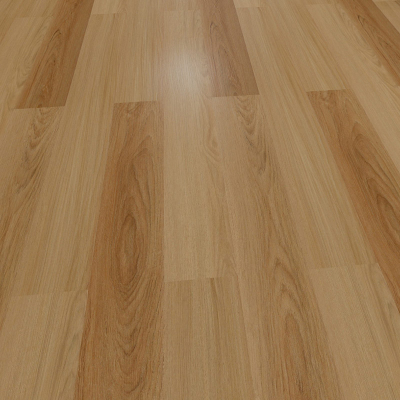
Laminate Flooring Wear Resistance
Laminate flooring wear resistance refers to the material’s engineered ability to withstand abrasion, impact, and surface friction over long-term use. It is primarily determined by the overlay layer performance, abrasion class rating, and structural stability under repeated mechanical stress.
Technical Parameters and Specifications
Wear resistance in laminate flooring is measured through standardized mechanical and surface durability indicators used globally in commercial and residential projects.
Abrasion Class (AC Rating): AC3, AC4, AC5, AC6 (EN 13329)
Taber Abrasion Value: 2,000–8,500 cycles (overlay dependent)
Overlay Thickness: 0.3–0.6 mm aluminum oxide reinforced layer
Impact Resistance: ≥ 1,200 mm (large ball test)
Surface Hardness: ≥ 3H (pencil hardness reference)
Static Load Resistance: ≥ 800 kg (no permanent deformation)
Dimensional Stability: ≤ 0.15% (length/width variation)
Service Life Expectancy: 10–25 years depending on AC class
Structure and Material Composition
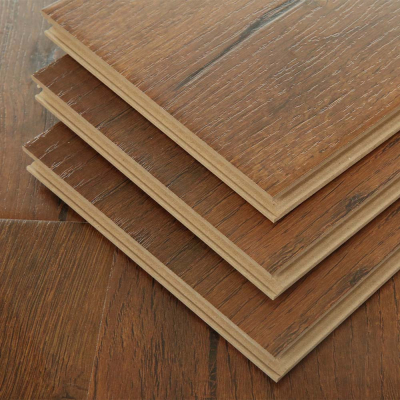
Laminate flooring wear resistance is achieved through a multi-layer composite structure, with each layer contributing to surface durability and load distribution.
Overlay Layer: Melamine resin with aluminum oxide particles for abrasion resistance
Decor Paper: Printed layer protected by overlay, no direct wear exposure
Core Board (HDF): High-density fiberboard (density 830–900 kg/m³)
Balancing Layer: Stabilizing backing to prevent warping
Surface Treatment: Optional embossed-in-register (EIR) texture
Manufacturing Process
The wear resistance of laminate flooring is established during controlled industrial manufacturing stages rather than post-processing.
Overlay Resin Preparation: Melamine resin mixed with aluminum oxide
Paper Impregnation: Overlay and decor paper saturated and pre-cured
Hot Press Lamination: Multi-daylight press at 180–210°C and high pressure
Cooling & Conditioning: Stabilization to reduce internal stress
Profiling: Precision milling for locking systems
Surface Inspection: Abrasion, scratch, and gloss consistency checks
Packing & Traceability: Batch coding for quality control
Industry Comparison: Wear Resistance by Flooring Type
| Flooring Type | Wear Resistance | Scratch Performance | Maintenance Needs | Typical Use |
|---|---|---|---|---|
| Laminate Flooring | High (AC4–AC6) | Good | Low | Residential & commercial |
| Engineered Wood | Medium | Moderate | Medium | Residential |
| SPC Flooring | High | Very Good | Low | Commercial |
| Solid Wood | Low–Medium | Low | High | Premium residential |
Application Scenarios
Distributors & Wholesalers: Stocking AC4–AC5 products for mixed markets
EPC Contractors: Office buildings, schools, retail projects
Developers: High-traffic residential developments
Commercial Renovation: Hotels, serviced apartments, clinics
Importers: Markets with cost-performance focus
Core Pain Points and Engineering Solutions
Premature Surface Wear: Specify AC rating based on actual traffic load
Scratch Complaints: Use higher aluminum oxide concentration overlays
Gloss Loss Over Time: Select stable matte or low-gloss finishes
Edge Chipping: Ensure sufficient HDF density and precision profiling
Risk Warnings and Mitigation Strategies
Incorrect assumptions about laminate flooring wear resistance can lead to project failures.
Avoid using AC3 flooring in commercial environments
Do not rely solely on marketing labels without test reports
Ensure subfloor flatness to reduce point load damage
Control indoor humidity to maintain core board integrity
Procurement and Selection Guide
Define traffic intensity and usage classification
Confirm required AC rating per project standards
Review Taber abrasion and impact test reports
Check core density and moisture resistance
Evaluate locking system durability
Request physical samples for wear testing
Assess long-term supply consistency
Engineering Application Case
In a mid-scale office renovation project, AC5 laminate flooring with an enhanced overlay layer was installed across open office areas and corridors. After simulated rolling chair testing and abrasion validation, the flooring demonstrated minimal surface wear after equivalent five-year traffic exposure.
Frequently Asked Questions (FAQ)
Q1: What determines laminate flooring wear resistance?
Overlay composition and AC rating.Q2: Is AC5 suitable for commercial use?
Yes, for medium to heavy traffic.Q3: Does thickness improve wear resistance?
Indirectly; overlay quality is more critical.Q4: How is wear resistance tested?
Taber abrasion and impact tests.Q5: Can laminate be refinished?
No, surface wear is not repairable.Q6: Does texture affect durability?
Texture affects appearance, not core wear.Q7: How long does AC4 flooring last?
Typically 10–15 years in residential use.Q8: Is laminate scratch-proof?
No, but high AC ratings reduce scratching.Q9: Does UV exposure affect wear resistance?
Minimal impact indoors.Q10: Can laminate handle rolling loads?
Yes, with appropriate AC rating.
Call to Action
For project-specific recommendations, detailed wear resistance test reports, or commercial quotations, please submit a formal request for technical documentation or product samples.
E-E-A-T Author Credentials
This article is authored by a flooring engineering and quality control team with extensive experience in laminate flooring manufacturing, EN standard testing, and international commercial project supply, ensuring technically accurate and procurement-oriented guidance.