Laminate Flooring Suitable for Radiant Heating
Laminate flooring suitable for radiant heating is engineered multi-layer flooring designed to efficiently conduct heat while maintaining dimensional stability and durability. It provides a balance of thermal conductivity, wear resistance, and moisture control for residential and commercial underfloor heating systems.
Technical Parameters and Specifications
Key specifications affecting compatibility with radiant heating include:
| Parameter | Typical Value | Relevance |
|---|---|---|
| Thickness | 7–12 mm | Heat transfer efficiency and durability |
| Density | 750–900 kg/m³ | Structural stability under thermal cycles |
| Thermal Conductivity | 0.10–0.15 W/m·K | Effective heat transfer from radiant system |
| Expansion Gap | 8–12 mm around perimeter | Prevents warping under temperature changes |
| Wear Layer | 0.3–0.7 mm | Resistance to abrasion and surface impact |
Structure and Material Composition
Overlay Layer: Melamine resin coating for wear resistance and UV protection.
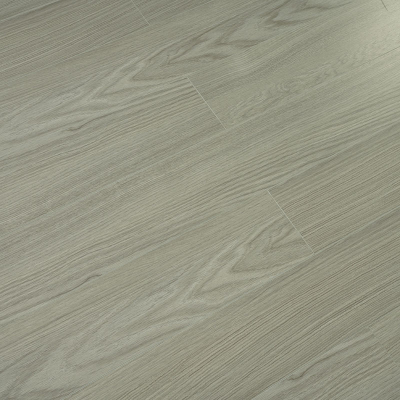
Decorative Layer: High-resolution printed paper providing wood, stone, or tile aesthetics.
Core Layer: HDF or MDF engineered for heat conductivity and dimensional stability.
Backing Layer: Moisture-resistant layer ensuring stability and support for underfloor heating.
Manufacturing Process
Raw Material Preparation: Selection of HDF/MDF, resin, and decorative paper suitable for thermal expansion control.
High-Pressure Lamination: Overlay, decorative, and core layers laminated under 120–150°C and 8–12 MPa pressure.
Cooling and Stabilization: Gradual cooling to reduce internal stresses.
Plank Cutting: CNC or guillotine cutting to precise dimensions with click-lock edges.
Surface Treatment: UV coating and embossing for texture and durability.
Quality Inspection: Checks for thickness, thermal expansion, and surface integrity.
Packaging: Planks stacked with protective film and shrink-wrapped for shipment.
Industry Comparison
| Flooring Type | Radiant Heating Compatibility | Durability | Cost Range (USD/m²) | Typical Use |
|---|---|---|---|---|
| Laminate Flooring (Radiant-Compatible) | Yes | High | 15–30 | Residential, Commercial |
| SPC Flooring | Yes, moderate | Very High | 20–35 | Commercial, Wet Areas |
| LVP (Luxury Vinyl Plank) | Yes | Medium | 12–25 | Residential, Light Commercial |
| Engineered Hardwood | Yes, select species | High | 25–50 | Residential Premium |
Application Scenarios
Residential underfloor heating systems
Commercial office spaces with radiant heat
Hotels and hospitality projects
EPC contractor flooring supply for heated areas
Renovation projects requiring thermal efficiency
Core Pain Points and Solutions
1. Thermal Expansion and Contraction
Maintain manufacturer-recommended expansion gaps to prevent buckling and warping.
2. Reduced Heat Transfer
Select laminate with thin wear layers and high-density core for better conductivity.
3. Moisture Sensitivity
Use moisture-resistant core and backing layers to prevent swelling under radiant heating.
4. Surface Damage
Apply protective UV coating and ensure proper installation to resist scratches.
Risk Warnings and Mitigation
Avoid installing over uneven subfloors which can stress planks under thermal load.
Do not exceed recommended surface temperature (usually ≤29°C) to prevent delamination.
Use proper underlay compatible with radiant heating.
Monitor humidity levels to avoid core swelling.
Follow EPC specifications for commercial projects.
Procurement and Selection Guide
Confirm compatibility with specified radiant heating system.
Check thermal conductivity and HDF/MDF core quality.
Evaluate wear layer thickness for expected traffic.
Inspect supplier certifications (ISO, ASTM, CE) for quality assurance.
Request technical datasheets and installation guidelines.
Obtain samples for heat test and tactile evaluation.
Negotiate factory-direct pricing for bulk EPC or distribution projects.
Engineering Case Study
Residential Heating Installation – Nordic Region
Project area: 2,800 m²
Laminate thickness: 8 mm, high-density HDF core
Wear layer: 0.5 mm UV-cured melamine
Installation method: Floating with expansion gaps
Result: Even heat distribution, zero plank deformation, project completed in 3 weeks
FAQ – Laminate Flooring Suitable for Radiant Heating
1. Can all laminate floors be used with radiant heating?
No, only laminate specifically rated for radiant heating is suitable.
2. What is the recommended maximum surface temperature?
Typically ≤29°C to prevent core expansion and surface damage.
3. Does thickness affect heat transfer?
Yes, thicker planks reduce heat transfer efficiency; select according to manufacturer guidance.
4. Are underlays required?
Yes, use underlays compatible with radiant heating for insulation and stability.
5. Can it be used in wet areas?
Limited; only laminate with moisture-resistant core can be used in bathrooms.
6. How to maintain durability?
Use protective coatings and avoid heavy point loads or dragging furniture.
7. Can installation be done by general contractors?
Trained installers familiar with radiant heating are recommended.
8. How to verify supplier reliability?
Check ISO/ASTM certifications, past project references, and export documentation.
9. Does laminate affect radiant heating efficiency?
Yes, thermal conductivity of the laminate influences heat transfer; choose rated products.
10. Are samples available for pre-installation testing?
Yes, request samples to evaluate thermal performance and surface quality.
Request Technical Information or Quotation
For procurement, bulk orders, and technical consultation on laminate flooring suitable for radiant heating, contact our team for:
Technical datasheets and thermal performance reports
Installation guidelines for EPC and commercial projects
Factory-direct bulk pricing options
Engineering sample provision for evaluation
Author Expertise (E-E-A-T)
This guide is authored by a flooring and radiant heating specialist with over 12 years of experience in laminate, SPC, and engineered flooring applications. All data is verified based on ISO, ASTM, and EPC project standards to ensure reliability and technical accuracy.