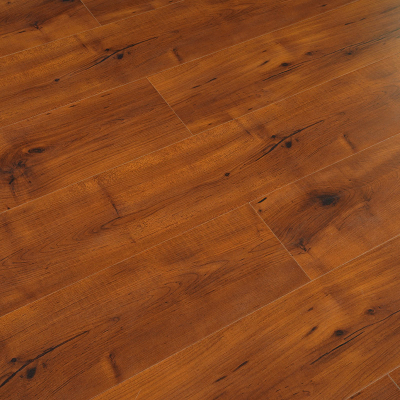
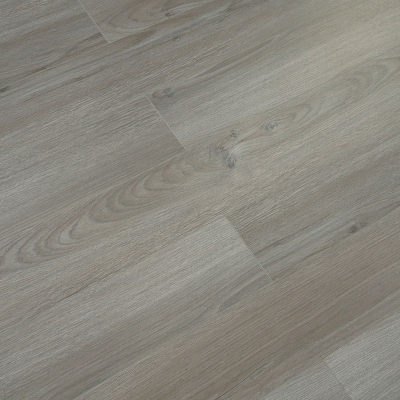
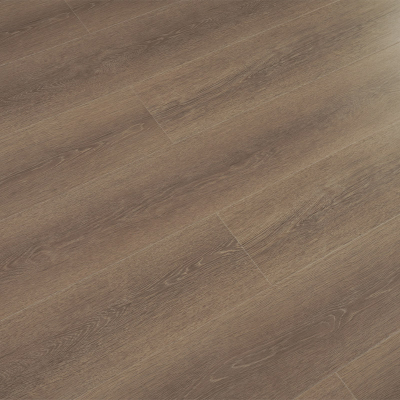
SPC Flooring Installation Guide
The SPC Flooring Installation Guide explains the engineering procedures and technical considerations required to correctly install Stone Plastic Composite flooring in residential, commercial, and large-scale construction projects. SPC flooring combines rigid mineral core technology with waterproof vinyl layers, providing durable, dimensionally stable flooring systems suitable for high-traffic environments.
Technical Parameters and Specifications
Understanding key specifications is essential before following any SPC Flooring Installation Guide. Contractors and procurement teams should confirm the following parameters before installation.
| Parameter | Typical Specification | Industry Reference |
|---|---|---|
| Total Thickness | 4.0 mm – 8.0 mm | Commercial flooring standard |
| Wear Layer | 0.3 mm – 0.7 mm | EN 16511 |
| Core Material | Stone Plastic Composite (Calcium Carbonate + PVC) | Rigid core technology |
| Plank Size | 1220 × 180 mm / 1524 × 228 mm | Industry common sizes |
| Locking System | Click-lock / Unilin / Valinge | Floating installation |
| Water Resistance | 100% waterproof | Suitable for wet areas |
| Impact Resistance | High | Commercial use |
These parameters directly affect installation stability, acoustic performance, and long-term durability.
Structure and Material Composition
Understanding the layered structure is critical when following a professional SPC Flooring Installation Guide. Typical SPC flooring consists of multiple engineered layers.
UV Coating Layer
Protects the surface from scratches, stains, and daily wear.Wear Layer
Transparent PVC layer providing abrasion resistance.Decorative Film
High-resolution wood or stone pattern layer.Rigid SPC Core
Calcium carbonate and PVC composite core providing structural stability.Underlayment (Optional)
IXPE or EVA backing for acoustic and moisture control.
Manufacturing Process
The performance of flooring used in an SPC Flooring Installation Guide depends heavily on manufacturing quality. The standard production process includes:
Raw Material Preparation
PVC resin, stabilizers, and calcium carbonate are precisely measured.High-Speed Mixing
Materials are blended to ensure uniform composition.Extrusion Process
Rigid SPC core boards are produced using twin-screw extrusion lines.Calendering and Cooling
Boards pass through rollers to achieve precise thickness.Decorative Film Lamination
Printed films are bonded under high pressure.UV Coating Treatment
Multiple UV layers improve scratch resistance.Click Lock Milling
CNC profiling machines create precision locking systems.Quality Inspection
Each batch undergoes dimensional stability and wear testing.
Industry Flooring Comparison
| Material | Water Resistance | Durability | Installation Method | Typical Use |
|---|---|---|---|---|
| SPC Flooring | Excellent | High | Click Floating | Residential & Commercial |
| Laminate Flooring | Moderate | Medium | Click Floating | Residential |
| WPC Flooring | Excellent | Medium | Floating | Residential |
| Ceramic Tile | Excellent | Very High | Adhesive | Bathrooms / Kitchens |
Application Scenarios
The SPC Flooring Installation Guide applies to multiple building environments where durability, moisture resistance, and fast installation are required.
Residential apartments
Commercial retail spaces
Hotels and hospitality projects
Office buildings
Healthcare facilities
Education buildings
Because of its rigid core structure, SPC flooring performs well in environments with heavy foot traffic and variable temperatures.
Core Installation Challenges and Solutions
1. Uneven Subfloor
Problem: Subfloor irregularities can cause plank separation.
Solution: Ensure subfloor flatness within ±2 mm over 2 meters before installation.
2. Thermal Expansion
Problem: Flooring may expand in high temperature conditions.
Solution: Leave expansion gaps of 6–10 mm around walls.
3. Locking System Damage
Problem: Incorrect installation angle can damage click joints.
Solution: Install planks at a 20–30° angle when connecting.
4. Moisture in Subfloor
Problem: Excess moisture can weaken structural stability.
Solution: Use vapor barriers for concrete substrates.
Risk Warnings and Prevention
Do not install SPC flooring on highly uneven surfaces.
Avoid direct installation on soft carpet underlays.
Ensure acclimatization for at least 24 hours before installation.
Maintain room temperature between 15–30°C during installation.
Procurement and Product Selection Guide
When sourcing materials for projects following this SPC Flooring Installation Guide, procurement teams should follow these steps:
Define application environment and traffic level.
Select appropriate wear layer thickness.
Confirm locking system compatibility.
Verify supplier manufacturing standards.
Review product certifications and test reports.
Request physical samples before bulk purchasing.
Evaluate logistics and packaging for export projects.
Engineering Application Case
A commercial office renovation project in Southeast Asia required rapid installation with minimal downtime. Contractors selected SPC flooring based on the SPC Flooring Installation Guide specifications.
Project details:
Total flooring area: 6,500 m²
Product thickness: 5.0 mm SPC flooring
Wear layer: 0.5 mm
Installation method: click-lock floating system
Installation time: 7 working days
The project achieved rapid installation without adhesive curing time, allowing immediate occupancy after completion.
FAQ
1. What tools are required for SPC flooring installation?
Common tools include rubber mallets, spacers, tapping blocks, and cutting knives.
2. Can SPC flooring be installed over existing tiles?
Yes, if the tile surface is level and stable.
3. Is underlayment necessary?
Some SPC flooring includes integrated underlayment, while others require separate layers.
4. What expansion gap is recommended?
Typically 6–10 mm around walls and fixed objects.
5. Can SPC flooring be used in bathrooms?
Yes, due to its waterproof structure.
6. What is the expected service life?
Commercial-grade SPC flooring can last 15–25 years.
7. Can SPC flooring be installed on heated floors?
Yes, if the temperature does not exceed manufacturer limits.
8. How should SPC flooring be cleaned?
Use damp mops and non-abrasive cleaners.
9. Does SPC flooring require adhesive?
No, most SPC flooring uses floating click-lock systems.
10. How long should flooring acclimate before installation?
At least 24 hours in the installation environment.
Request Technical Documentation or Quotation
If you are planning a flooring project or sourcing products based on this SPC Flooring Installation Guide, technical documentation and product samples are recommended before large-scale procurement.
Detailed installation manuals
Engineering specifications
Physical product samples
Commercial quotations for bulk orders
Professional manufacturers can support project planning with installation training, technical consultation, and logistics coordination.
Author Expertise (E-E-A-T)
This installation guide was prepared by flooring industry professionals with more than 10 years of experience in SPC flooring manufacturing, international project supply, and construction consulting. The information reflects commonly accepted installation standards used by contractors, architects, and global building material distributors.