How to Choose the Right Flooring: Laminate, SPC, or Ceramic Tile?
Product Definition
How to Choose the Right Flooring: Laminate, SPC, or Ceramic Tile? is a technical decision framework for selecting flooring systems based on engineering performance, installation constraints, lifecycle cost, and procurement scalability for residential and light-commercial construction projects.
Technical Parameters and Specifications
Selecting the right flooring requires comparing measurable parameters across laminate, SPC, and ceramic tile.
Thickness: Laminate 7–12 mm; SPC 4–6 mm; Ceramic tile 8–12 mm
Wear resistance: Laminate AC3–AC5; SPC 0.3–0.55 mm wear layer; Tile PEI III–V
Density: Laminate HDF 830–900 kg/m³; SPC ≥2,000 kg/m³; Tile ≥2,200 kg/m³
Moisture resistance: Laminate moderate; SPC high; Tile very high
Installation tolerance: Laminate ±3 mm/2 m; SPC ±4 mm/2 m; Tile ±2 mm/2 m
Thermal resistance: Laminate ≤0.15 m²K/W; SPC ≤0.10 m²K/W; Tile ≤0.05 m²K/W
Emission standard: Laminate E1/CARB; SPC FloorScore/E1; Tile inert material
Structure and Material Composition
Understanding structure clarifies why performance differs when choosing laminate, SPC, or ceramic tile.
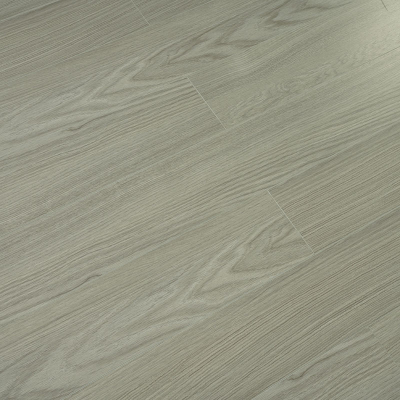
Overlay: Aluminum oxide reinforced melamine
Decor layer: Printed paper
Core: High-density fiberboard (HDF)
Backing: Moisture-resistant paper
UV coating and transparent wear layer
Decor film
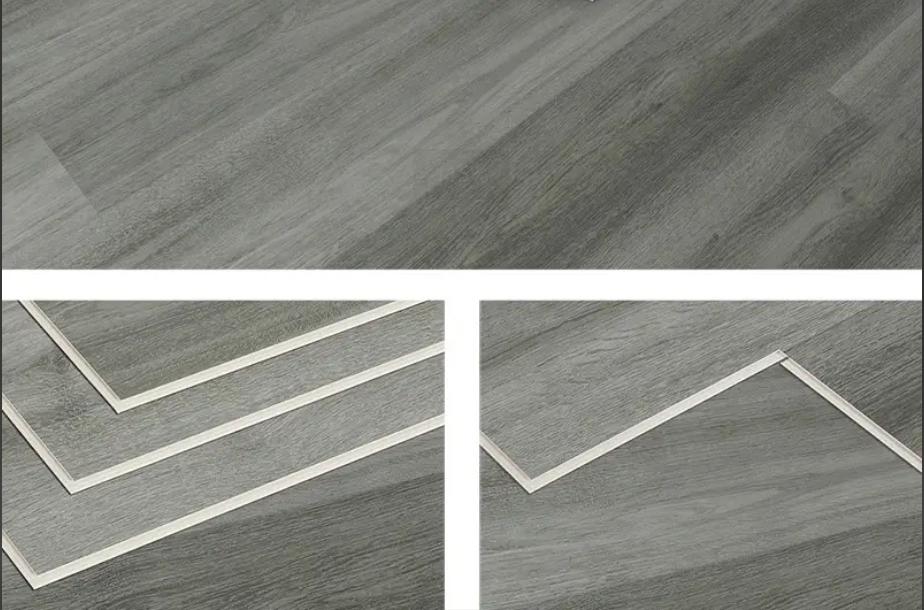
Core: Stone-plastic composite (PVC + calcium carbonate)
IXPE or EVA underlayment (optional)
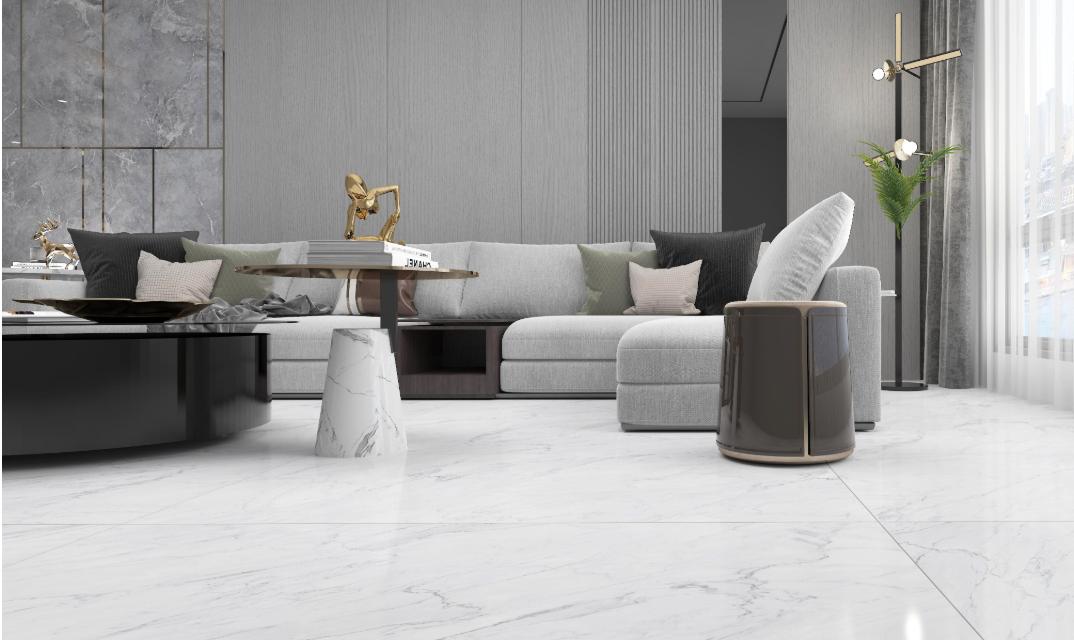
Ceramic Tile
Glazed or through-body ceramic surface
Fired clay and mineral body
Manufacturing Process
Manufacturing methods define cost structure and performance reliability when selecting the right flooring.
Laminate: Wood fiber refining → HDF pressing → Decor impregnation → Hot pressing (180–200°C) → CNC click profiling
SPC: PVC compounding → Extrusion → Calendering → UV coating → Click-lock milling
Ceramic Tile: Raw material mixing → Press forming → Kiln firing (≥1,100°C) → Glazing → Sorting
Industry Comparison
| Criteria | Laminate | SPC | Ceramic Tile |
|---|---|---|---|
| Installation Speed | Fast | Fast | Slow |
| Moisture Resistance | Moderate | High | Very High |
| Comfort Underfoot | Good | Good | Low |
| Cost Control | Strong | Moderate | Limited |
| Maintenance | Low | Low | Very Low |
Application Scenarios
Choosing the right flooring varies by professional user group.
Distributors: Laminate for volume SKUs, SPC for moisture-prone regions
EPC contractors: SPC or laminate for fast-track housing projects
Developers: Ceramic tile for wet areas, laminate for living spaces
Engineering consultants: Specification-driven selection by zone
Core Pain Points and Engineering Solutions
Moisture damage: Specify SPC or tile in kitchens and bathrooms
Installation time overruns: Use click-lock laminate or SPC systems
Cost escalation: Apply mixed-material zoning strategies
Subfloor irregularities: Use leveling compounds before installation
Risk Warnings and Mitigation
Incorrect flooring selection can introduce operational and maintenance risks.
Avoid laminate in continuously wet environments
Verify SPC dimensional stability under temperature changes
Ensure ceramic tile substrates meet strict flatness criteria
Confirm emission and safety certifications for occupied buildings
Procurement and Selection Guide
Define functional zones and moisture exposure
Set budget and lifecycle cost targets
Assess installation labor availability
Review subfloor conditions across project areas
Compare logistics weight and handling costs
Request full technical and test documentation
Conduct pilot installation or mock-up testing
Engineering Case Application
In a 15,000 m² residential complex, consultants applied a zoning approach when choosing the right flooring. SPC was specified for kitchens and bathrooms, laminate for bedrooms and living areas, and ceramic tile for balconies. This strategy reduced total flooring cost by 27% while maintaining performance compliance.
FAQ
Q1: Which flooring is best for wet areas? A: SPC or ceramic tile.
Q2: Is laminate suitable for apartments? A: Yes, for dry areas.
Q3: Which installs fastest? A: Laminate and SPC.
Q4: Which is most durable? A: Ceramic tile.
Q5: Can SPC replace tile? A: In many residential applications.
Q6: Is laminate cost-effective? A: Yes, for large areas.
Q7: What about underfloor heating? A: All three are compatible with limits.
Q8: Which has better comfort? A: Laminate and SPC.
Q9: Are emissions regulated? A: Yes, for laminate and SPC.
Q10: Can materials be mixed? A: Yes, zoning is common practice.
Call to Action
For technical datasheets, engineering samples, or project-based quotations related to choosing laminate, SPC, or ceramic tile flooring, procurement and engineering teams are encouraged to request detailed technical documentation.
E-E-A-T Author Credentials
This article is prepared by a building materials engineering consultant with over 15 years of experience in flooring systems selection, construction standards compliance, and B2B procurement support for residential and commercial developments.