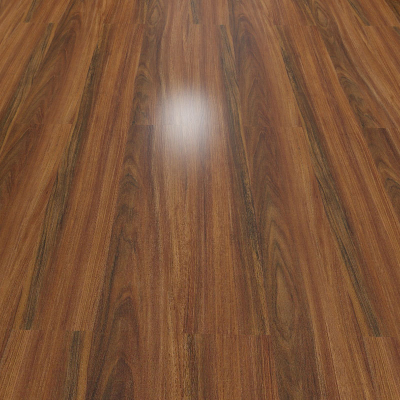
Hardwood Flooring vs Laminate Flooring: Key Differences
Hardwood flooring is made from natural wood, while laminate flooring uses a decorative layer over an HDF core. The two differ in material, moisture behavior, refinishing, installation, maintenance, cost, and expected service life.
Which one is appropriate depends on room conditions, project budget, desired appearance, maintenance expectations, and installation requirements. This page compares the two across the factors that matter most in specification and procurement.
Hardwood vs Laminate Flooring at a Glance
| Factor | Hardwood Flooring | Laminate Flooring |
|---|---|---|
| Material | Natural wood | HDF + decorative layer |
| Appearance | Natural wood grain | Printed wood design |
| Refinishing | Yes | Generally no |
| Moisture resistance | Lower | Moderate |
| Scratch resistance | Depends on finish | Depends on AC rating |
| Installation | Nail/glue/floating depending on product | Usually click-floating |
| Maintenance | Higher | Lower |
| Initial cost | Higher (material + installation + finishing) | Lower (material + underlayment + installation) |
| Design consistency | Natural variation | More consistent |
| Replacement | Individual boards may be repaired/refinished | Damaged planks can be replaced |
| Suitable projects | Premium interiors | Residential/commercial |
This table provides a high-level comparison. The following sections explain each factor in more detail.
What Is the Difference in Construction?
Hardwood Flooring
Hardwood flooring is made from natural wood. Two main types are available:
Solid hardwood. A single piece of solid wood, typically 14–20 mm thick. The surface can be sanded and refinished multiple times.
Engineered hardwood. A real wood veneer (typically 2–4 mm) bonded to a plywood or HDF core. The surface can be refinished, but the number of times depends on the veneer thickness.
The surface layer is natural wood, with natural grain, knots, and colour variation. The appearance is determined by the wood species and the finish applied.
Laminate Flooring
Laminate flooring is a multi-layer engineered product:
Wear layer. A transparent melamine overlay with aluminum oxide for abrasion resistance.
Decorative layer. A printed paper that reproduces the wood or stone appearance.
HDF core. A high-density fiberboard core that provides structural stability.
Balancing layer. A moisture-resistant backing paper that prevents warping.
Click profile. A precision-milled locking system for floating installation.
The surface layer is printed, not natural wood. The appearance is determined by the print resolution and the surface embossing (standard embossed, EIR, or matte). For EIR surface technology, see the EIR laminate flooring page.
Construction comparison:
| Type | Surface | Core | Refinishing |
|---|---|---|---|
| Solid Hardwood | Solid wood (14–20 mm) | Solid wood | Multiple times |
| Engineered Hardwood | Real wood veneer (2–4 mm) | Plywood or HDF | Limited by veneer thickness |
| Laminate | Printed décor + wear layer | HDF | Not possible |
Important note: This section explains what the two products are made of. For manufacturing process details, see the laminate flooring manufacturing page.
Hardwood vs Laminate Appearance
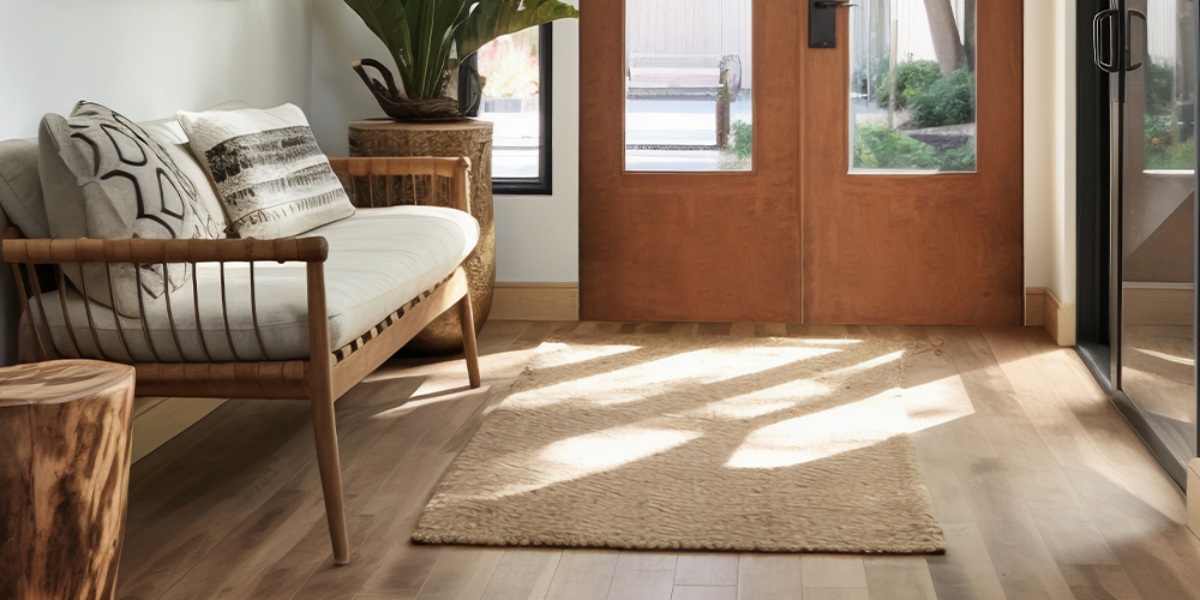
Hardwood. Hardwood flooring has natural grain, knots, and colour variation. Each board is different, which creates a natural, organic appearance. The colour deepens over time with exposure to light. Hardwood can be sanded and refinished, which restores the surface and allows the colour to be changed.
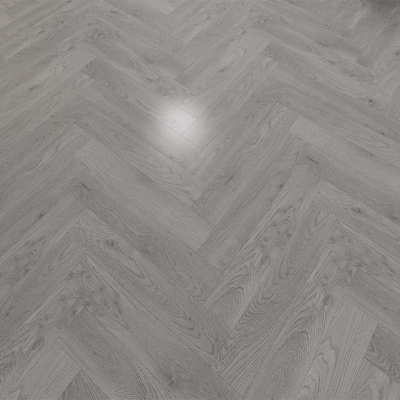
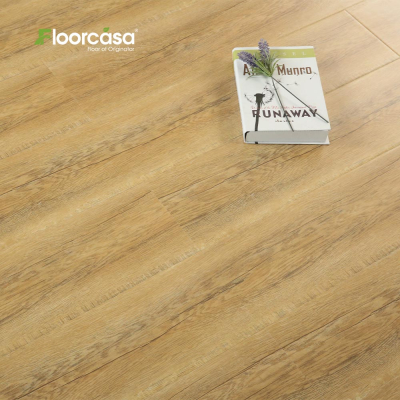
Laminate. Laminate flooring has a printed wood design. The appearance is consistent across boards and batches, which is an advantage for large projects. The visual realism depends on the print resolution and the surface embossing. EIR (Embossed-in-Register) laminate provides higher surface realism by synchronizing the embossing with the printed grain. For EIR-specific products, see the EIR laminate flooring page.
Key difference. Hardwood provides natural variation; laminate provides consistency. Hardwood can be refinished to change the appearance; laminate cannot.
Durability and Scratch Resistance
Hardwood. Durability depends on the wood species and the surface finish. Harder species (such as oak and maple) resist dents better than softer species. The surface finish (oil, lacquer, or UV-cured coating) determines scratch resistance. Hardwood can be sanded and refinished to restore the surface.
Laminate. Durability depends on the AC rating (AC3, AC4, AC5), the wear layer, the HDF core, and the locking system. Higher AC ratings provide better abrasion resistance. The aluminum oxide overlay provides good scratch resistance. Laminate cannot be sanded and refinished—damaged planks must be replaced.
Key difference. Hardwood can be refinished; laminate cannot. Laminate typically provides better surface scratch resistance than softer hardwood species; hardwood typically provides better long-term durability because it can be refinished.
Moisture Resistance
Hardwood. Hardwood is moisture-sensitive. It expands and contracts with humidity changes, which can cause gapping, cupping, or warping. Solid hardwood is more moisture-sensitive than engineered hardwood. Hardwood is not recommended for areas with high moisture exposure, such as bathrooms or basements. Avoid standing water on hardwood floors.
Laminate. Laminate is moisture-resistant but not waterproof. The HDF core can swell if moisture penetrates the joints or edges. Moisture-resistant grades and waterproof laminate options are available—verify the product's moisture performance for the intended application. Laminate is not suitable for continuous standing water.
Moisture resistance levels:
Moisture-resistant laminate: standard laminate with enhanced moisture resistance.
Waterproof laminate: products with a waterproof core or sealed joints.
Waterproof SPC flooring: a separate product category with a waterproof core, suitable for wet areas.
Waterproof laminate is not the same as waterproof SPC flooring. Verify the product's performance for the intended application.
Key difference. Both are moisture-sensitive, but laminate provides moderate moisture resistance for typical residential and commercial use. Neither is suitable for wet areas such as bathrooms or basements without specific moisture-control measures. For wet areas, consider waterproof SPC flooring.
For more on laminate in moisture-prone areas, see the laminate flooring in bathroom page and the laminate flooring on concrete page.
Maintenance and Cleaning
Hardwood. Hardwood requires regular cleaning and periodic refinishing. Cleaning typically involves dry mopping and occasional damp mopping with a wood-safe cleaner. Refinishing is required every 7–10 years, depending on traffic and finish condition. Scratches can be repaired with wood filler or refinishing.
Laminate. Laminate requires routine dry and damp cleaning with a pH-neutral cleaner. No refinishing is required. Damaged planks can be replaced individually (with partial disassembly), but the surface cannot be repaired like hardwood.
Key difference. Laminate requires less routine maintenance than hardwood. Hardwood requires periodic refinishing, which laminate does not. Laminate has lower maintenance cost over time, but hardwood can be restored rather than replaced.
Installation Differences
Hardwood. Installation method depends on the product. Solid hardwood is typically nailed or glued down. Engineered hardwood can be nailed, glued, or installed as a floating floor, depending on the product. Installation is generally slower and requires more skill.
Laminate. Laminate is typically installed as a floating floor using a click-lock system. Underlayment is installed beneath the laminate, and expansion gaps are maintained at the perimeter. Installation is generally faster and can be done by DIY installers.
Installation speed: laminate click-lock is generally faster than hardwood nail or glue installation. The difference depends on the product and the installation crew.
Key difference. Laminate installation is faster and simpler. Hardwood installation requires more skill and time. For full laminate installation instructions, see the how to install laminate flooring page.
Hardwood vs Laminate Flooring Cost
Hardwood cost. The cost of hardwood flooring includes:
Material cost (varies by species and grade)
Installation cost (nail, glue, or floating)
Finishing cost (sanding and coating, if unfinished)
Maintenance and refinishing cost over time
Laminate cost. The cost of laminate flooring includes:
Material cost (varies by AC rating, thickness, and surface finish)
Underlayment cost
Installation cost (click-lock floating installation)
Replacement cost (damaged planks)
Cost structure comparison:
| Cost Component | Hardwood | Laminate |
|---|---|---|
| Material | Higher | Lower |
| Installation | Higher (nail/glue) | Lower (click-lock) |
| Finishing | Required if unfinished | Not required |
| Maintenance | Periodic refinishing | Routine cleaning |
| Replacement | Individual boards (repair/refinish) | Individual planks (replace) |
Key difference. Hardwood has a higher initial cost but can be refinished, which extends its service life. Laminate has a lower initial cost but cannot be refinished—damaged planks must be replaced. The appropriate choice depends on the budget, expected service life, and maintenance expectations.
Note: Specific costs vary by product, region, and project conditions. Obtain project-specific quotations and compare lifecycle cost rather than initial cost alone.
How Long Does Hardwood vs Laminate Last?
Hardwood lifespan. The lifespan of hardwood depends on the wood species, finish, maintenance, and refinishing. With proper maintenance and periodic refinishing, hardwood can last decades. The number of times hardwood can be refinished depends on the thickness of the wear layer (solid wood) or veneer (engineered hardwood).
Laminate lifespan. The lifespan of laminate depends on the AC rating, traffic level, HDF quality, installation quality, and moisture exposure. With appropriate specification and maintenance, laminate is commonly specified for 10–20 years in residential use and 5–15 years in commercial use.
Factors affecting hardwood lifespan:
Wood species
Finish type
Maintenance regime
Refinishing frequency
Moisture exposure
Traffic level
Factors affecting laminate lifespan:
AC rating
HDF density
Locking system quality
Installation quality
Moisture exposure
Traffic level
Maintenance regime
Key difference. Hardwood can be refinished to extend its service life; laminate cannot. Laminate lifespan is more dependent on the initial specification (AC rating, HDF quality, wear layer).
Lifecycle Cost Comparison
Over a 20-year period, hardwood may have a higher initial cost but a lower replacement cost because it can be refinished. Laminate may have a lower initial cost but may require replacement within the period.
The appropriate comparison depends on the expected service life, maintenance regime, and project requirements. Conduct a lifecycle cost analysis during the design stage, considering:
Initial material and installation cost
Maintenance and refinishing cost over the service life
Replacement cost (if applicable)
Expected service life
For large projects, a lifecycle cost analysis can identify the most cost-effective option for the specific application.
Which Is Better for Different Rooms?
| Room | Main Considerations |
|---|---|
| Bedroom | Appearance, comfort |
| Living Room | Wear resistance, design |
| Kitchen | Moisture exposure |
| Home Office | Rolling loads, scratch resistance |
| Hotel | Traffic, maintenance |
| Retail | Wear resistance, replacement |
| Rental Property | Cost, maintenance |
Bedroom. If your priority is a natural wood appearance and long-term value, consider hardwood. If your priority is cost control and easy maintenance, consider laminate.
Living Room. If your priority is design flexibility and natural appearance, consider hardwood. If your priority is wear resistance and consistent appearance, consider laminate.
Kitchen. If your priority is moisture resistance, consider laminate with moisture protection or waterproof SPC flooring. Hardwood is generally not recommended for kitchens without strict moisture control.
Home Office. If your priority is scratch resistance and durability under rolling loads, consider laminate with AC4 or higher. Hardwood with a hard finish is also suitable.
Hotel. If your priority is maintenance efficiency and consistent appearance, consider laminate. If your priority is a premium natural appearance, consider hardwood (engineered hardwood for better dimensional stability).
Retail. If your priority is wear resistance and easy replacement, consider laminate with AC4 or AC5. Hardwood is typically not recommended for high-traffic retail unless the design intent requires it.
Rental Property. If your priority is cost control and low maintenance, consider laminate. Hardwood may be preferred for premium rental properties where long-term value is a priority.
Which Flooring Should You Choose?
The choice between hardwood and laminate depends on the project requirements. The following guidance is intended to help match the product to the requirement.
Choose Hardwood When:
Natural wood appearance is essential.
Refinishing capability is important for long-term value.
Premium appearance is the priority.
Long-term renovation is expected.
The project budget supports higher initial cost.
Consider Laminate When:
Lower upfront cost matters.
Fast installation matters.
Consistent design across rooms or units is preferred.
Low maintenance is important.
Commercial replacement is a concern.
The project requires a large quantity with consistent appearance.
FAQ: Hardwood vs Laminate Flooring
1. What is the main difference between hardwood and laminate flooring?
Hardwood flooring is made from natural wood. Laminate flooring uses a printed decorative layer over an HDF core. The two differ in material, moisture behavior, refinishing, installation, maintenance, and cost.
2. Is laminate flooring real wood?
No. Laminate flooring is an engineered product with a printed wood décor. It is not solid wood and does not contain a real wood veneer.
3. Is hardwood more durable than laminate?
It depends on what you mean by durable. If durability means long-term service life with refinishing, hardwood may be more durable. If durability means scratch resistance and dimensional stability without refinishing, laminate may be more durable. The appropriate choice depends on the application.
4. Which is more scratch resistant?
Laminate with a high AC rating (AC4 or AC5) typically provides better surface scratch resistance than softer hardwood species. Harder hardwood species (such as oak or maple) provide better scratch resistance than softer species.
5. Which is more water resistant?
Laminate is typically more moisture-resistant than hardwood, but neither is waterproof. Hardwood is more moisture-sensitive and can warp or cup. Laminate can swell at the edges if moisture penetrates the joints. For wet areas, consider waterproof SPC flooring.
6. Which costs more?
Hardwood typically has a higher initial cost than laminate. However, hardwood can be refinished, which extends its service life. Laminate has a lower initial cost but cannot be refinished—damaged planks must be replaced. Compare lifecycle cost rather than initial cost alone.
7. Which is easier to install?
Laminate is generally easier and faster to install, using a click-lock floating system. Hardwood installation requires more skill and time, and the method depends on the product (nail, glue, or floating).
8. Can laminate flooring be refinished?
No. Laminate flooring cannot be sanded and refinished. Damaged planks must be replaced.
9. Can hardwood flooring be refinished?
Yes. Solid hardwood can typically be refinished multiple times. Engineered hardwood can be refinished, but the number of times depends on the veneer thickness.
10. Which is easier to maintain?
Laminate requires less routine maintenance. Hardwood requires periodic refinishing, which laminate does not. Laminate has lower maintenance cost over time, but hardwood can be restored rather than replaced.
11. Which is better for rental properties?
Laminate is commonly specified for rental properties because of its lower initial cost and lower maintenance requirements. Hardwood may be preferred for premium rental properties where long-term value is a priority.
12. Which is better for commercial projects?
Laminate with AC4 or AC5 is commonly specified for commercial projects because of its wear resistance, consistent appearance, and easy replacement. Hardwood may be specified for premium commercial interiors where a natural wood appearance is required.
13. Which is better for bedrooms?
Both are suitable for bedrooms. If your priority is natural appearance, consider hardwood. If your priority is cost control and easy maintenance, consider laminate.
14. Can laminate look like real hardwood?
Yes, laminate can reproduce the appearance of real hardwood. EIR (Embossed-in-Register) laminate provides higher surface realism by synchronizing the embossing with the printed grain. However, laminate does not have the natural variation of real wood.
15. How long does laminate flooring last?
Laminate lifespan depends on the AC rating, traffic level, HDF quality, installation quality, and moisture exposure. With appropriate specification and maintenance, laminate is commonly specified for 10–20 years in residential use and 5–15 years in commercial use.
16. How long does hardwood flooring last?
Hardwood lifespan depends on the wood species, finish, maintenance, and refinishing. With proper maintenance and periodic refinishing, hardwood can last decades. The number of times hardwood can be refinished depends on the thickness of the wear layer or veneer.
CTA
For technical datasheets, material samples, or project-based quotations related to hardwood flooring vs laminate flooring, procurement and engineering teams are encouraged to request detailed specifications for evaluation.