Wood Flooring Sizes & Square Footage: Your Essential Guide
Wood flooring sizes and square footage refer to the standardized dimensional formats and area calculation methods used to specify, procure, and install solid wood and engineered wood flooring. Accurate sizing directly affects material yield, installation efficiency, cost control, and long-term performance in commercial and residential construction projects.
Standard Wood Flooring Sizes and Technical Specifications
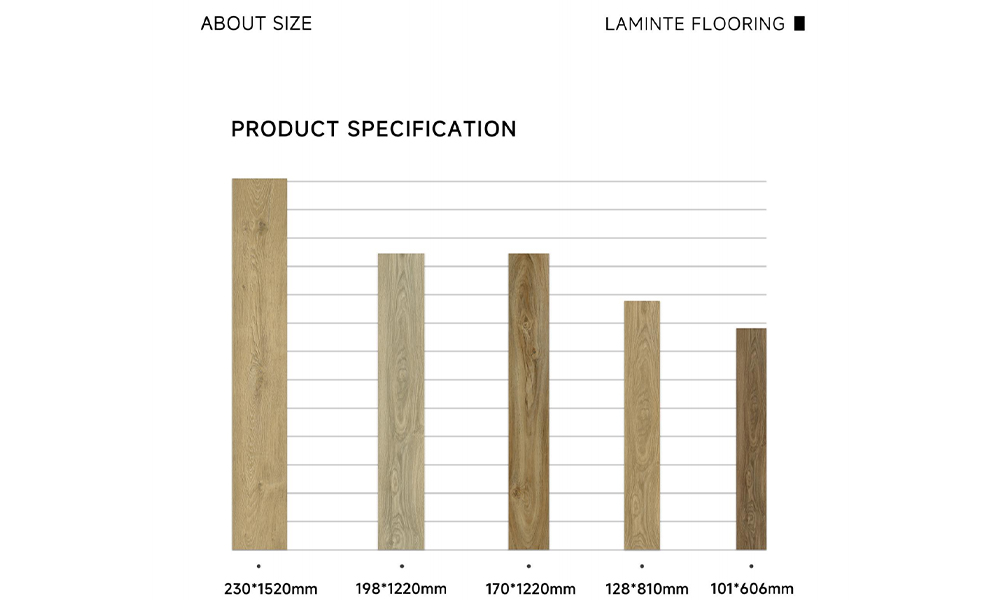
Understanding wood flooring sizes and square footage begins with standardized dimensions defined by manufacturing capability, installation method, and international building practices.
| Parameter | Common Range | Engineering Notes |
|---|---|---|
| Board Length | 300–2200 mm | Random or fixed length, affects yield rate |
| Board Width | 90–220 mm | Wide planks require stricter moisture control |
| Total Thickness | 12–20 mm | Load-bearing and acoustic performance |
| Top Wear Layer (Engineered) | 2–6 mm | Determines sanding lifecycle |
| Moisture Content | 6–9% | Factory-conditioned for indoor use |
Square Footage Calculation Standards
Square footage is the primary commercial unit for wood flooring procurement. Accurate calculation reduces waste, disputes, and project delays.
Nominal Area: Net board coverage excluding tongue-and-groove
Gross Area: Includes machining allowance
Overage Allowance: Typically 5–8% for straight layouts, up to 12% for diagonal patterns
Structure and Material Composition
Wood flooring sizes and square footage must be evaluated alongside structural composition.
Single-species hardwood core
Uniform thickness throughout
Engineered Wood Flooring
Hardwood veneer surface
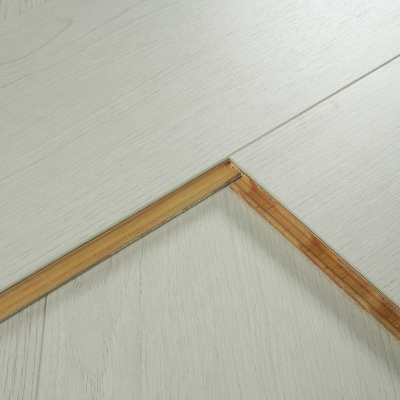
Cross-laminated plywood or HDF core
Stabilizing back layer
Manufacturing Process and Dimensional Control
Manufacturing precision directly determines usable square footage per batch.
Log Selection and Grading – Diameter and fiber consistency
Sawing and Drying – Kiln drying to target moisture range
Planing and Profiling – CNC molding for thickness tolerance
Lamination (Engineered) – Hot press bonding under controlled pressure
Calibration Sanding – Thickness uniformity within ±0.2 mm
Cut-to-Length Optimization – Yield-maximizing algorithms
Final Inspection – Dimensional and visual QA
Industry Comparison: Wood Flooring vs Alternatives
| Criteria | Solid Wood | Engineered Wood | Laminate | SPC Flooring |
|---|---|---|---|---|
| Size Flexibility | Limited | High | Moderate | High |
| Square Foot Yield | Lower | Higher | Very High | Very High |
| Moisture Stability | Low | Good | Moderate | Excellent |
| Refinishing Capability | Multiple Times | Limited | None | None |
Application Scenarios
Wood flooring sizes and square footage planning vary by professional role:
Distributors – SKU standardization and pallet optimization
EPC Contractors – Accurate BOQ and installation sequencing
Developers – Cost forecasting and material utilization
Commercial Projects – Offices, hospitality, mixed-use buildings
Core Pain Points and Engineering Solutions
Pain Point: Excessive material waste
Solution: Optimize plank length mix and cutting patternsPain Point: Inconsistent square footage per carton
Solution: Enforce calibration tolerance controlPain Point: Installation delays due to size mismatch
Solution: Pre-install layout simulationPain Point: Dimensional movement post-installation
Solution: Moisture-balanced engineered construction
Risk Warnings and Mitigation Strategies
Incorrect interpretation of wood flooring sizes and square footage may result in under-ordering, budget overruns, or joint failure. Mitigation measures include moisture testing, carton-level verification, and mock-up installations.
Procurement and Selection Guide
Confirm project net install area
Select board width based on humidity range
Define acceptable length distribution
Specify square footage per carton
Set overage percentage by layout type
Request dimensional inspection reports
Engineering Case Example
In a 9,500 ft² mixed-use office project, engineered wood flooring with mixed-length planks (600–1800 mm) achieved a measured waste rate of 6.2%, compared to 11.5% with fixed-length boards, improving material utilization and installation speed.
FAQ – Wood Flooring Sizes & Square Footage
Q1: What is the standard unit for ordering wood flooring?
A: Square feet or square meters.Q2: Does plank width affect square footage?
A: Yes, it affects layout efficiency.Q3: How much overage is recommended?
A: Typically 5–10%.Q4: Are lengths fixed or random?
A: Both are used depending on SKU.Q5: Can cartons vary in coverage?
A: Yes, within defined tolerances.Q6: Is square footage net or gross?
A: Usually net coverage.Q7: Does thickness affect area calculation?
A: No, but affects performance.Q8: Are wider planks harder to install?
A: They require stricter subfloor control.Q9: Is engineered wood more size-stable?
A: Yes, due to cross-layer construction.Q10: Should measurements be verified on-site?
A: Always recommended.
Call to Action
For detailed wood flooring size specifications, square footage calculations, or project-based quotations, please submit your technical requirements for professional review and documentation support.
E-E-A-T Author Credentials
This guide is authored by a building materials engineer with over 15 years of experience in wood flooring manufacturing, dimensional optimization, and large-scale commercial flooring procurement across global markets.