Waterproof Flooring Explained
Waterproof Flooring Explained: Product Definition
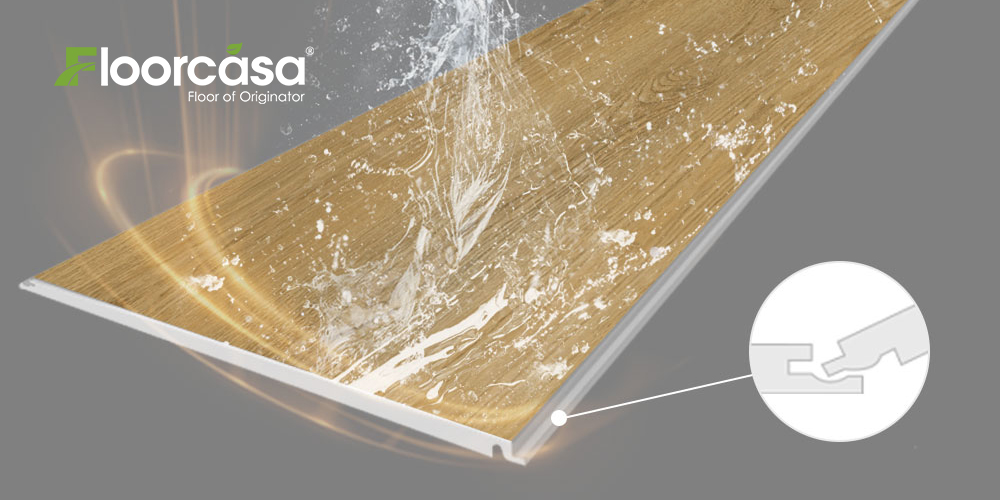
Waterproof flooring refers to engineered floor covering systems designed to resist water penetration, dimensional swelling, and structural degradation under long-term moisture exposure. It is widely used in commercial, residential, and industrial projects where moisture control and durability are critical performance requirements.
Technical Parameters and Specifications
| Parameter | Typical Range | Notes |
|---|---|---|
| Total Thickness | 4–8 mm | Depends on application and traffic load |
| Core Density | 1800–2100 kg/m³ | SPC and mineral cores |
| Water Absorption | ≤0.1% | 24-hour immersion test |
| Wear Layer Thickness | 0.3–0.7 mm | Commercial-grade recommended ≥0.5 mm |
| Dimensional Stability | ≤0.15% | EN 434 / ASTM F2199 |
| Slip Resistance | R9–R11 | Dry and wet conditions |
| Fire Rating | Bfl-s1 | Project-dependent requirement |
Structure and Material Composition
Surface Coating Layer: UV-cured coating for stain and abrasion resistance
Wear Layer: Transparent PVC layer protecting decorative surface
Decor Film: Printed wood, stone, or concrete visuals
Waterproof Core: SPC, WPC, or polymer composite core
Stabilizing Base Layer: Enhances flatness and impact resistance
Manufacturing Process
Material Preparation: PVC resin, mineral fillers, stabilizers mixed using high-speed mixers
Extrusion or Hot Pressing: Core layer formed via twin-screw extruders or compression presses
Lamination: Wear layer and decor film bonded under heat and pressure
Surface Coating: UV coating applied in multiple passes
Profiling: CNC machines cut click-lock or square-edge profiles
Quality Control: Water immersion, locking strength, and dimensional tests
Industry Comparison
| Flooring Type | Water Resistance | Stability | Installation | Commercial Suitability |
|---|---|---|---|---|
| Waterproof Vinyl (SPC/WPC) | Excellent | Very High | Click / Glue | High |
| Laminate | Low | Medium | Click | Low |
| Engineered Wood | Moderate | Low | Glue / Nail | Medium |
| Ceramic Tile | Excellent | Very High | Adhesive | High |
Application Scenarios
From a project execution perspective, waterproof flooring is commonly specified by:
Distributors supplying residential renovation markets
EPC contractors for hotels, offices, and retail spaces
Developers of multi-family housing and mixed-use buildings
Healthcare and education facility operators
Property management companies for refurbishment projects
Core Pain Points and Engineering Solutions
Moisture-Induced Deformation: Rigid waterproof cores prevent swelling and warping
Subfloor Moisture Migration: Vapor-resistant cores reduce moisture transfer
Maintenance Complexity: Non-porous surfaces simplify cleaning protocols
Installation Downtime: Click systems shorten installation cycles
Risk Warnings and Mitigation Strategies
Avoid installation on structurally unstable substrates
Ensure moisture testing of concrete subfloors before installation
Maintain expansion gaps to accommodate thermal movement
Verify batch consistency for large-area installations
Procurement and Selection Guide
Define usage class and expected traffic load
Confirm waterproof core type (SPC, WPC, polymer composite)
Check compliance with local fire and emission standards
Review wear layer thickness for lifecycle cost control
Request third-party test reports
Conduct on-site mock-up or sample testing
Engineering Application Case
In a 9,500 m² hospitality renovation project, waterproof flooring replaced traditional laminate in guest rooms and corridors. The rigid core system allowed installation over existing substrates, reducing project duration by approximately 25% while eliminating moisture-related warranty claims during the first two years of operation.
FAQ
Is waterproof flooring fully impervious to water? It resists penetration but is not designed for permanent submersion.
Can it be used in bathrooms? Yes, with proper perimeter sealing.
Does waterproof mean mold-proof? It reduces risk but does not replace proper ventilation.
Is underfloor heating compatible? Generally yes, up to 27°C surface temperature.
Can it be installed over old tiles? Yes, if surface flatness meets tolerance.
What is the expected service life? 15–25 years depending on wear layer.
Is acoustic backing required? Optional, based on sound control requirements.
Does it require sealing? Typically no, except at edges in wet zones.
How is slip resistance rated? According to DIN and EN standards.
Is it recyclable? Partially recyclable depending on formulation.
Call to Action
For technical datasheets, engineering samples, or project-based pricing related to waterproof flooring systems, please submit your application requirements and estimated quantities for professional evaluation.
E-E-A-T Author Credentials
This content is authored by a flooring industry technical specialist with over a decade of experience in resilient flooring manufacturing, EPC project consulting, and international standard compliance for commercial construction projects.