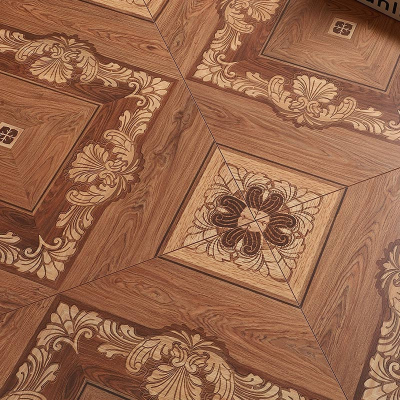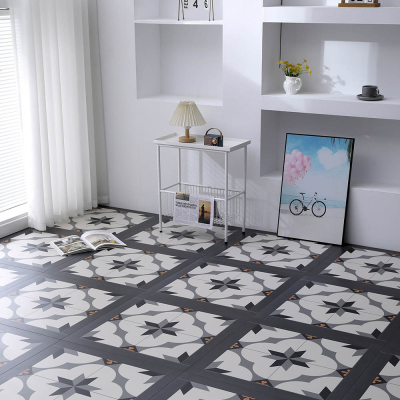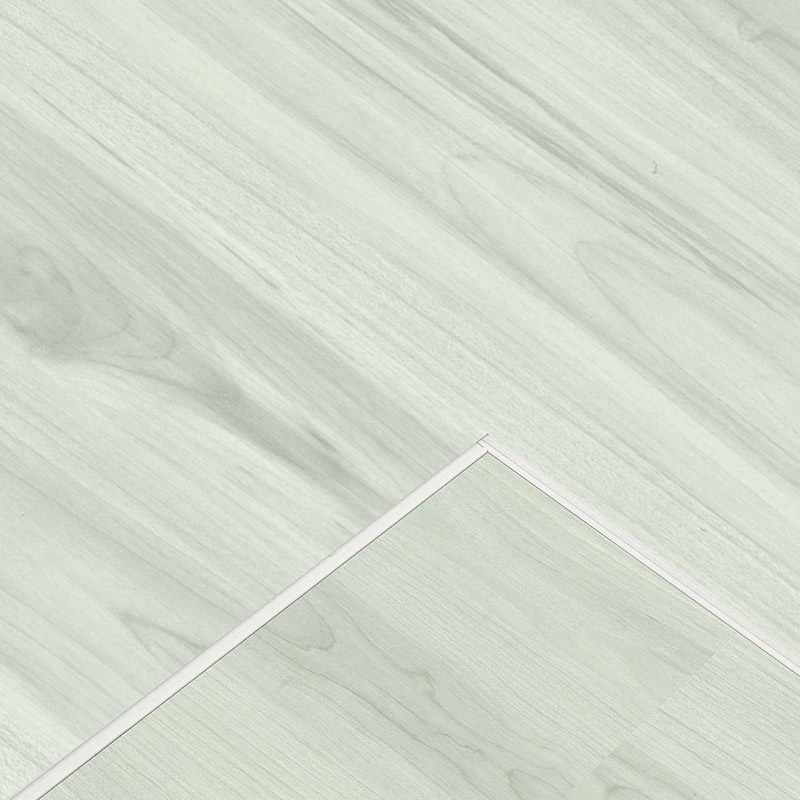
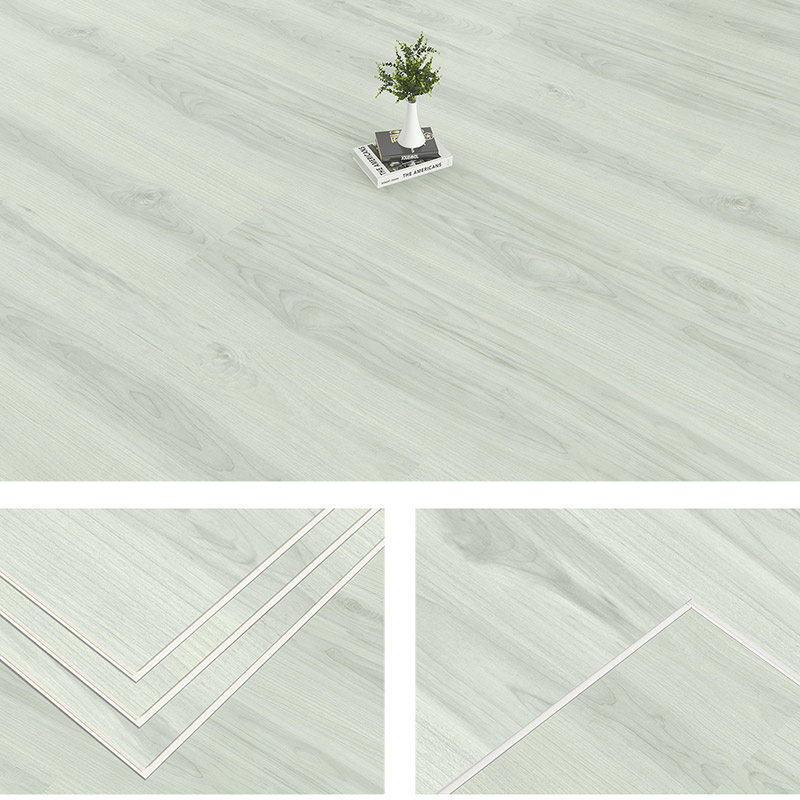
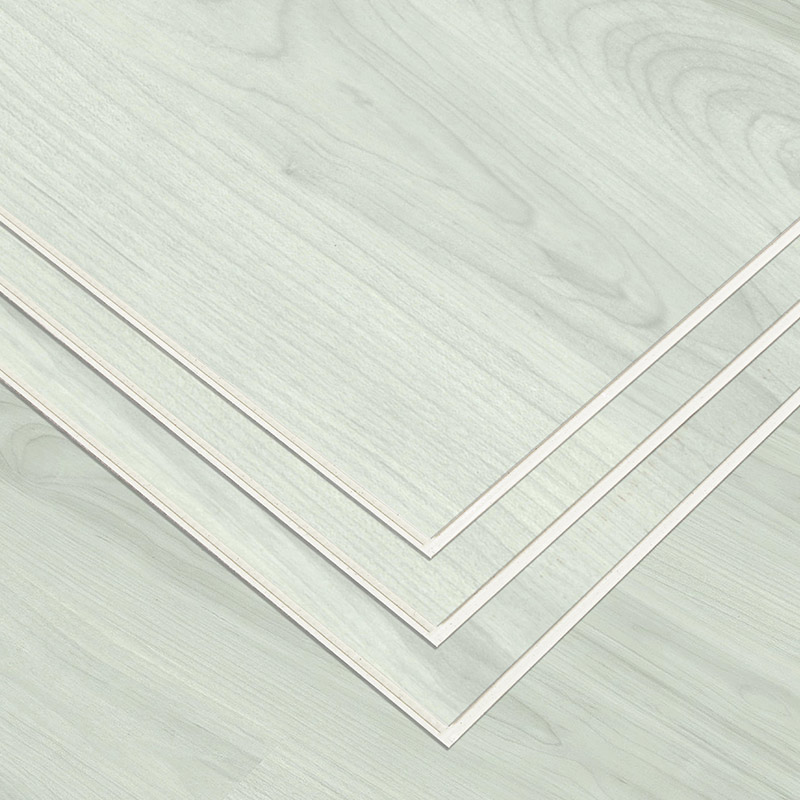
3.5mm T Groove Vinyl SPC Flooring
Manufacturing Process
The production of 3.5mm T Groove Vinyl SPC Flooring follows a continuous and controlled industrial process:
Raw material batching of PVC resin, calcium carbonate, and stabilizers
High-speed mixing to achieve uniform compound dispersion
Extrusion forming of SPC core sheets
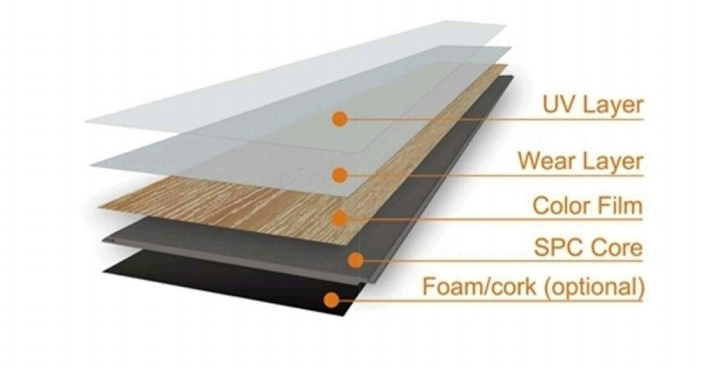
Hot lamination of decor film and wear layer
UV surface coating and curing
Precision cutting to specified plank dimensions
T-groove profiling via CNC edge milling
Quality inspection including thickness, density, and locking tolerance
Key equipment includes twin-screw extruders, calendering lines, UV coating systems, and CNC profiling machines.
Product Definition
3.5mm T Groove Vinyl SPC Flooring is a rigid core flooring system based on stone plastic composite technology, featuring a 3.5 mm total thickness and a traditional T-groove installation profile, engineered for cost-efficient projects requiring dimensional stability, fast installation, and consistent performance.
What Is T Groove SPC Flooring?
3.5mm T Groove SPC flooring is a thin rigid-core vinyl flooring system machined with a T-groove edge profile for project-specific installation applications.
The name describes three things:
3.5mm is the total thickness of the plank. The thin profile is designed for projects where floor buildup height is limited—renovation projects, refurbishments, and installations where doors and skirting must be retained.
SPC is the core material—Stone Plastic Composite, a rigid composite of calcium carbonate and PVC.
T Groove is the edge profile. A T-groove is a machined groove along the edge of the plank, designed for glue-down or project-specific installation rather than floating click-lock.
T Groove SPC is different from standard click-lock SPC. Click-lock SPC uses a machined locking profile that connects the planks without adhesive, in a floating installation. T Groove SPC uses a groove profile and is installed with adhesive (glue-down) or as a loose-lay system with adhesive. The T-groove edge can also be used to create a visual line between planks, depending on the design.
Engineering and procurement teams select T Groove SPC for projects where floor height must be minimized, where the installation method must be controlled (glue-down rather than floating), or where a specific edge appearance is required.
What Does T Groove Mean?
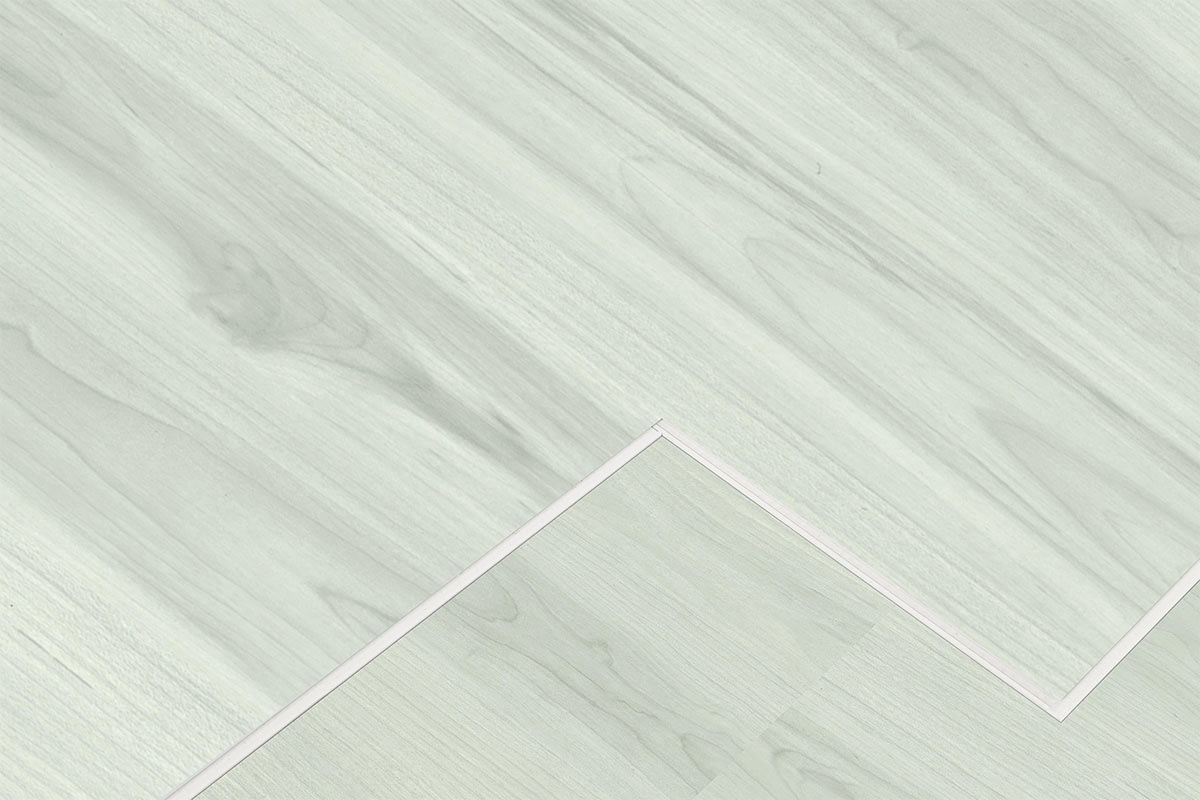
A T-groove is a machined profile along the edge of the plank. The profile is cut into the edge using CNC milling, and the groove dimensions and tolerance are controlled during production. When the planks are installed, the T-groove edges meet to form a T-shaped joint line. The joint may be visible as a decorative line, or it may be filled with adhesive during installation.
The T-groove profile is not a locking system. It does not mechanically connect the planks. Instead, the planks are connected by adhesive applied to the subfloor (glue-down) or by a loose-lay system with adhesive at the joints.
T Groove vs Click-Lock SPC
| Feature | T Groove SPC | Click-Lock SPC |
|---|---|---|
| Edge profile | T-groove | Click-lock |
| Installation | Glue-down / project-specific | Floating click |
| Floor buildup | Low (3.5 mm) | Usually higher (4–6.5 mm) |
| Replacement | Requires adhesive and groove rework; project dependent | Individual plank can be replaced if locking profile is intact |
| Adhesive | Required (glue-down) | Not required (floating) |
| Subfloor | Requires controlled flatness | Requires controlled flatness |
| Typical use | Renovation / project flooring | Residential / commercial |
Important note: T Groove SPC and click-lock SPC are different products with different installation methods. The appropriate choice depends on the project requirements—floor height, installation method, replacement needs, and subfloor condition.
T Groove Edge Profile and Construction
T Groove Edge Profile
The T-groove is machined into the edge of the SPC plank. The groove is cut along the length of the plank, and the profile is designed so that adjacent planks meet to form a T-shaped joint. The groove dimensions—width, depth, and position—are controlled during production.
Groove position. The T-groove is positioned along the edge of the plank. Depending on the product design, the groove may be centred on the edge or offset. The position affects how the planks meet and how the joint appears after installation. Verify the groove position with the manufacturer.
Groove dimensions and tolerance. Groove dimensions and tolerance are product-specific. Contact us for the specific groove specifications for your project.
Edge precision. The precision of the groove machining determines how the planks meet and how the joint appears. Groove tolerance is typically controlled within a narrow range to ensure consistent joint appearance and adhesive performance.
Connection and installation principle. The T-groove does not mechanically connect the planks. The planks are connected by adhesive applied to the subfloor (glue-down) or by a loose-lay system with adhesive at the joints. The groove provides a defined joint line and helps conceal minor height variation between planks.
T Groove vs Square Edge
A square edge is a straight, 90-degree edge with no groove. Square-edge planks butt against each other with a visible seam. A T-groove edge has a machined groove that creates a defined joint line. The T-groove provides more visual definition than a square edge and can help conceal minor height variation between planks.
T Groove vs Click-Lock Edge
A click-lock edge has a machined locking profile that mechanically connects the planks. A T-groove edge has a machined groove that does not mechanically connect the planks. Click-lock edges are used for floating installation; T-groove edges are used for glue-down or project-specific installation.
CNC Groove Machining
The T-groove is machined using CNC (computer numerical control) equipment. The precision of the machining determines the groove dimensions and tolerance. Groove tolerance is typically controlled within a narrow range to ensure consistent joint appearance and adhesive performance. Cutting tools are inspected and replaced at defined intervals to maintain groove precision.
A comparison diagram showing T-groove, square edge, and click-lock edge profiles is available on request. Contact us for the technical documentation package.
Groove dimensions and tolerance are product-specific. Contact us for the specific groove specifications for your project.
3.5mm T Groove SPC Technical Specifications
| Parameter | Specification |
|---|---|
| Total thickness | 3.5 mm |
| Groove type | T Groove |
| Groove dimensions | Product-specific; typical T-groove depth and width available on request |
| Groove tolerance | Product-specific; typical tolerance available on request |
| Wear layer | 0.3 mm / 0.5 mm (optional) |
| Core type | SPC (Stone Plastic Composite) |
| Core density | 1,900–2,100 kg/m³ |
| Plank size | 1,220 × 180 mm (common engineering size) |
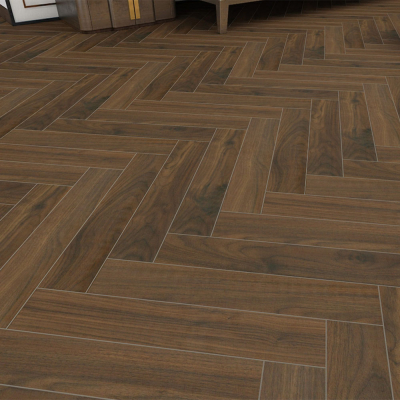
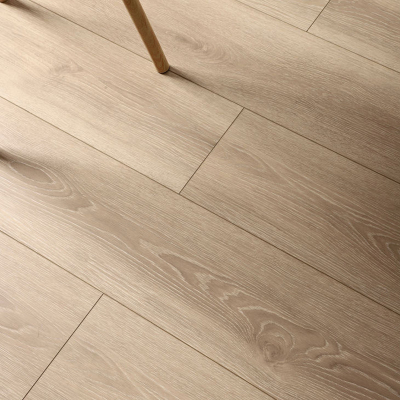
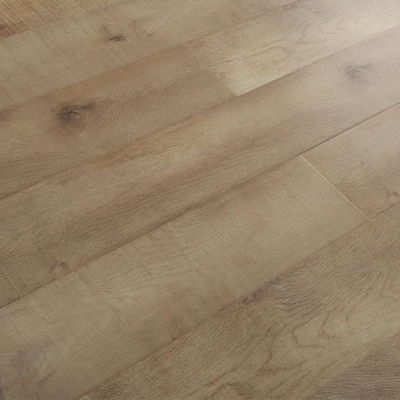
| Surface | Wood grain / EIR / Stone / Customized |
| Edge machining | CNC |
| Installation | Glue-down / project-specific |
| Slip resistance | R9–R10 (DIN 51130) |
| Fire rating | Bfl-s1 (EN 13501-1) |
| Formaldehyde emission | Not detected |
| Dimensional stability | ≤ 0.05% |
| Residual indentation | ≤ 0.1 mm |
Contact us for the complete technical datasheet, groove specifications, and test reports. Technical values vary by production specification, and the appropriate specification depends on the project requirements. We provide test reports with each shipment.
How Is T Groove SPC Flooring Manufactured?
T Groove SPC flooring is manufactured using the standard SPC production process, with additional steps for the T-groove edge profile.
SPC Core Production
PVC resin and calcium carbonate are compounded and extruded into a rigid core. The core is cooled, stabilised, and cut to size.
Surface Lamination
The decorative film and wear layer are laminated onto the core. The surface is coated with a UV coating for abrasion and chemical resistance.
CNC T Groove Milling
The T-groove profile is machined into the plank edges using CNC equipment. The groove dimensions and tolerance are controlled during milling. Cutting tools are inspected and replaced at defined intervals.
Groove Inspection
The finished groove is inspected for dimensions, tolerance, and edge quality. Groove inspection is a critical quality control step for T Groove SPC flooring.
Surface Inspection
The finished surface is inspected for colour consistency, embossing alignment, and surface quality.
Packaging
The finished product is packed into cartons, stacked on pallets, and prepared for shipment.
For the complete SPC manufacturing process, see the SPC flooring manufacturing page.
T Groove SPC vs Click SPC vs Glue-Down LVT
| Feature | T Groove SPC | Click SPC | Glue-Down LVT |
|---|---|---|---|
| Edge profile | T-groove | Click-lock | Square or bevelled edge |
| Installation | Glue-down / project-specific | Floating click | Full glue-down |
| Floor height | Low (3.5 mm) | Higher (4–6.5 mm) | Low (2–3 mm) |
| Replacement | Project dependent | Individual plank possible | Project dependent |
| Adhesive requirement | Yes (glue-down) | No | Yes |
| Subfloor preparation | Controlled flatness required | Controlled flatness required | High flatness required |
| Project suitability | Renovation, low-height projects, projects requiring specific edge appearance | Residential, general commercial | Commercial, healthcare, seamless appearance required |
Important note: The appropriate product depends on the project requirements. T Groove SPC is suitable for projects where floor height must be minimized or where a specific edge appearance is required. Click SPC is suitable for standard residential and commercial installations. Glue-down LVT is suitable for commercial and healthcare applications where a seamless appearance is preferred.
Where Is 3.5mm T Groove SPC Flooring Used?
Renovation Projects With Low Floor Height
Why T Groove SPC works here: The 3.5 mm thickness minimizes floor buildup, allowing doors and skirting to be retained. This reduces demolition cost and installation time in renovation projects.
Why not click-lock: Click-lock SPC requires a floating installation, which has a higher floor buildup (4–6.5 mm). In projects where floor height is limited, T Groove SPC is preferred.
Key considerations: Subfloor flatness, adhesive selection, groove dimensions.
Commercial Interior Projects
Why T Groove SPC works here: The glue-down installation provides a stable, durable floor for commercial interiors. The T-groove edge provides visual definition and can help conceal minor height variation.
Why not click-lock: Glue-down installation reduces movement and provides a more stable floor under commercial traffic. T Groove SPC is preferred where a fixed, stable floor is required.
Key considerations: Adhesive compatibility, subfloor preparation, wear layer selection.
Apartment Renovation
Why T Groove SPC works here: The thin profile is suitable for apartment renovation where floor height is limited. Glue-down installation reduces movement and provides a stable floor.
Why not click-lock: In apartments with limited floor height or where a quieter floor is preferred, glue-down T Groove SPC may be specified.
Key considerations: Subfloor flatness, adhesive selection, acclimation.
Projects Requiring Project-Specific Edge Profiles
Why T Groove SPC works here: The T-groove edge can be customized for specific project requirements. Custom groove dimensions and tolerance are available for OEM/ODM projects.
Why not click-lock: When a specific edge appearance or joint line is required, T Groove SPC provides more design control than standard click-lock profiles.
Key considerations: Groove dimensions, tolerance, sample approval.
Distributor and OEM Programs
Why T Groove SPC works here: The product is suitable for distributors and OEM programs where a specific edge profile or plank specification is required. Custom décor, plank size, and packaging are available.
Why not click-lock: OEM programs may require a specific edge profile that is not available in standard click-lock products.
Key considerations: OEM scope, MOQ, lead time, sample approval.
For product-specific recommendations, contact us with your project requirements.
Common T Groove SPC Flooring Problems
The following problems are specific to T Groove SPC flooring. The most common problem in T Groove SPC installations is groove dimension inconsistency, followed by edge machining damage, poor groove engagement, adhesive incompatibility, uneven subfloor causing edge stress, and incorrect installation sequence.
Groove dimension inconsistency. Cause: worn cutting tools or insufficient CNC tolerance control. Solution: replace cutting tools, verify groove dimensions against specification. Prevention: regular tool inspection and groove inspection during production.
Edge machining damage. Cause: tool wear, incorrect feed rate, or handling damage. Solution: replace damaged planks. Prevention: tool maintenance and careful handling.
Poor groove engagement. Cause: groove dimensions out of tolerance, or uneven subfloor causing edge stress. Solution: verify groove dimensions, address subfloor flatness. Prevention: groove inspection and subfloor preparation.
Adhesive incompatibility. Cause: incorrect adhesive type or application method. Solution: specify SPC-approved pressure-sensitive adhesives. Prevention: request adhesive compatibility documentation from the manufacturer.
Uneven subfloor causing edge stress. Cause: subfloor flatness beyond tolerance. Solution: level the subfloor with self-levelling compound before installation. Prevention: verify subfloor flatness before installation.
Incorrect installation sequence. Cause: incorrect adhesive application, incorrect acclimation, or incorrect groove alignment. Solution: follow the manufacturer's installation instructions. Prevention: training and installation guidelines.
T Groove SPC Flooring Installation Requirements
T Groove SPC flooring is installed using glue-down or loose-lay methods with adhesive. The following requirements apply.
Subfloor flatness. The subfloor must be flat within tolerance. Verify flatness before installation.
Subfloor cleanliness. The subfloor must be clean, dry, and free of debris, oil, and grease.
Moisture condition. Verify subfloor moisture content before installation. Install a vapour barrier where required.
Adhesive selection. Specify SPC-approved pressure-sensitive or acrylic adhesives. Verify adhesive compatibility with the specific product.
Acclimation. Acclimate the product in the installation area before installation. Follow the manufacturer's instructions.
Expansion gaps. Maintain expansion gaps at the perimeter and at intermediate intervals, as required by the product and project conditions.
Groove alignment. Align the T-groove edges during installation to ensure consistent joint appearance.
Perimeter sealing. Seal the perimeter where required to prevent moisture ingress.
Installation sequence (glue-down):
Prepare and level the subfloor.
Verify moisture and flatness.
Acclimate the product.
Apply adhesive according to the adhesive manufacturer's instructions.
Install the planks, aligning the T-groove edges.
Maintain expansion gaps.
Roll the floor to ensure full adhesive contact.
Seal the perimeter where required.
Inspect the finished floor.
For detailed installation instructions, contact us for the installation manual for your specific product.
T Groove SPC Engineering Case
The following case illustrates a project using 3.5mm T Groove SPC flooring.
Project type: Mixed-use residential renovation.
Floor area: Approximately 6,800 m².
Original flooring: Existing concrete slabs.
Reason for selecting 3.5mm T Groove SPC: The project required a thin-profile floor that could be installed over existing concrete slabs without major demolition. The 3.5 mm thickness minimized floor buildup, allowing doors and skirting to be retained.
Installation method: Glue-down installation over the existing concrete slabs.
Flooring specification: 3.5 mm T Groove SPC, 0.5 mm wear layer, T-groove edge profile.
Problem solved by T Groove: The thin profile and glue-down installation allowed the project to avoid demolition and reduce installation time.
Final result: The project achieved the required floor height, met durability and fire safety requirements, and reduced demolition costs compared to the original specification.
The case above is based on a project delivered by Jining Floormaker. Project-specific details are available on request. For reference projects in your market, contact us.
Price positioning. T Groove SPC is generally positioned at a similar or slightly lower price point than click-lock SPC, because it uses less material (3.5 mm versus 4–6.5 mm) and does not require a click-lock profile. However, the total installed cost includes adhesive, which adds to the project cost. Compare total installed cost, not material cost alone.
FAQ: T Groove SPC Flooring
1. What is T Groove SPC flooring?
T Groove SPC flooring is a thin rigid-core vinyl flooring system machined with a T-groove edge profile. It is designed for glue-down or project-specific installation rather than floating click-lock.
2. How does T Groove SPC differ from click-lock SPC?
T Groove SPC uses a machined groove profile and is installed with adhesive (glue-down). Click-lock SPC uses a machined locking profile and is installed as a floating floor without adhesive.
3. How is a T Groove profile manufactured?
The T-groove profile is machined into the plank edges using CNC equipment. The groove dimensions and tolerance are controlled during milling.
4. What adhesive should be used for T Groove SPC flooring?
Specify SPC-approved pressure-sensitive or acrylic adhesives. Verify adhesive compatibility with the specific product. Request adhesive compatibility documentation from the manufacturer.
5. Can T Groove SPC be used for renovation projects?
Yes. The 3.5 mm thickness minimizes floor buildup, allowing doors and skirting to be retained. This makes T Groove SPC suitable for renovation projects where floor height is limited.
6. Does T Groove SPC require a level subfloor?
Yes. Like all SPC flooring, T Groove SPC requires a flat, sound subfloor. Verify flatness before installation.
7. Can the T Groove profile be customized?
Yes. Custom groove dimensions and tolerance are available for OEM/ODM projects. Contact us with your requirements.
8. What T Groove dimensions are available?
Groove dimensions are product-specific. Contact us for the specific groove specifications for your project.
9. Can 3.5mm T Groove SPC be used in commercial projects?
Yes, with an appropriate wear layer. 0.5 mm wear layer is commonly specified for commercial use. Verify the wear layer against the expected traffic level.
10. What wear layer should I choose for T Groove SPC?
0.3 mm wear layer is suitable for residential use. 0.5 mm wear layer is suitable for commercial use. Verify the wear layer against the expected traffic level.
11. Can T Groove SPC be produced with OEM colors?
Yes. Custom decor, colour matching, and surface finishes are available for OEM/ODM projects.
12. Can T Groove SPC be manufactured to custom plank sizes?
Yes. Custom plank dimensions are available for OEM/ODM projects. Contact us with your requirements.
OEM and Custom T Groove SPC Flooring
For distributors, importers, and project suppliers, OEM and ODM services allow the product to be customized to the market or brand requirements.
Custom groove dimensions. Custom T-groove dimensions and tolerance for specific project requirements.
Custom decor. Custom wood grain, stone, or abstract designs.
Custom color. Custom colour matching to a specific design reference.
Custom plank size. Custom plank dimensions.
Custom surface. Wood grain, EIR, stone, or customized surface finishes.
Private label. Custom branding on packaging and product.
Custom packaging. Custom packaging specifications, including carton design, pallet configuration, and labelling.
Sample approval. Custom orders typically require sample approval before production.
MOQ. MOQ depends on the customization scope. Contact us for details.
Lead time. Lead time for OEM orders is typically 20–35 days after sample approval, depending on the customization scope and order volume.
For OEM/ODM inquiries, contact us with your project requirements.
CTA
For pricing, technical datasheets, groove specifications, compliance documents, or engineering samples of 3.5mm T Groove SPC flooring, procurement and project teams are encouraged to submit detailed project requirements for evaluation.
| Specification |
Name | 3.5mm T Groove Vinyl SPC Flooring | |
Brand | Floormaker | |
Place of Origin | Shandong, China | |
Fireproof | B1 | |
Click System | Unilin, Valinge or as required | |
Surface | WOOD GRAIN ,EIR ,Stone or Customized | |
Packaging | 6PCS/CTN ,8PCS/CTN 10PCS/CTN, 12PCS/CTN | |
Wear Resistance | 0.1mm-0.5mm | |
Color | We have several hundreds of color for your choice.There are wood patterns, stone patterns, and carpet patterns respectively | |
Thickness | 3.5mm | |
Length | 1220x182/184mm | |
Mute pad | EVA、IXPE | |
OEM | Free design box and logo,Logo painted on back |
| Product Structure |