Spc flooring vs lvp
Choosing between SPC flooring vs LVP is a common evaluation process for flooring distributors, contractors, developers, and engineering consultants involved in residential and commercial construction projects. Both materials belong to the luxury vinyl flooring category and provide waterproof performance, wood-like aesthetics, and relatively simple installation systems.
However, the differences between SPC flooring vs LVP are primarily related to structural rigidity, core material composition, installation tolerance, and long-term dimensional stability. These factors directly influence product suitability for commercial environments, high-traffic areas, and large-scale construction projects.
This technical guide analyzes SPC flooring vs LVP from an engineering and procurement perspective, covering structural design, technical parameters, manufacturing processes, installation performance, and procurement considerations relevant to B2B buyers.
Product Definition
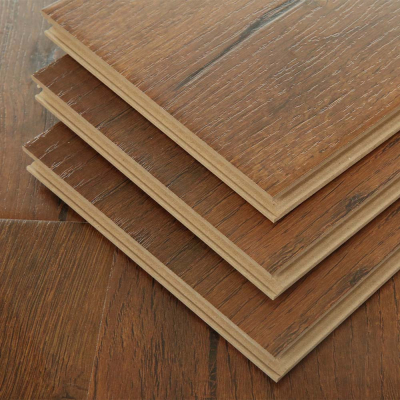
SPC Flooring (Stone Plastic Composite) is a rigid core luxury vinyl flooring composed of limestone powder, PVC resin, and stabilizers. The high-density mineral composite core provides superior dimensional stability, indentation resistance, and waterproof performance for commercial environments.
LVP (Luxury Vinyl Plank) is a flexible vinyl flooring product constructed primarily from PVC layers with a flexible core. It replicates wood plank aesthetics while offering moderate durability and waterproof performance.
The primary distinction in SPC flooring vs LVP lies in the rigidity and mineral composition of the core layer.
Technical Specifications
| Parameter | SPC Flooring | LVP Flooring |
|---|---|---|
| Total Thickness | 4.0 – 8.0 mm | 2.0 – 5.0 mm |
| Wear Layer | 0.3 – 0.7 mm | 0.15 – 0.5 mm |
| Core Density | 1.9 – 2.2 g/cm³ | 1.5 – 1.8 g/cm³ |
| Dimensional Stability | ≤0.10% | ≤0.25% |
| Water Resistance | Fully Waterproof | Fully Waterproof |
| Installation Type | Click-lock floating | Glue-down / Click |
| Typical Service Life | 15 – 25 years | 10 – 20 years |
Structure and Material Composition
Understanding the structural layers helps explain the performance differences in SPC flooring vs LVP.
SPC Flooring Layer Structure
UV Coating – Scratch and stain resistance
Wear Layer – Transparent PVC abrasion layer
Decor Film – Printed wood or stone design
SPC Core – Limestone powder + PVC composite
Acoustic Underlayment (optional) – IXPE or EVA foam
LVP Flooring Layer Structure
UV Protective Coating
PVC Wear Layer
Decorative Print Film
Flexible Vinyl Core
Backing Layer
The rigid mineral core is the key differentiating factor when evaluating SPC flooring vs LVP.
Manufacturing Process
SPC Flooring Manufacturing
Raw Material Preparation
PVC resin, calcium carbonate powder, stabilizers, and additives are precisely weighed and mixed.Core Extrusion
Twin-screw extruders produce rigid SPC core boards at temperatures of 180–200°C.Lamination Process
Decorative film and wear layer are laminated using high-pressure hot presses.UV Surface Treatment
Multiple UV coatings improve scratch and abrasion resistance.Click Profile Milling
CNC milling machines cut precision locking systems such as Unilin or Valinge.Quality Inspection
Dimensional stability, locking strength, and wear resistance are tested.
LVP Manufacturing
PVC sheet calendering
Decor film lamination
Wear layer bonding
Board cutting and shaping
Surface coating and curing
Final inspection and packaging
Industry Comparison
| Flooring Type | Water Resistance | Structural Rigidity | Installation Complexity | Typical Use |
|---|---|---|---|---|
| SPC Flooring | Excellent | Very High | Easy | Commercial & Residential |
| LVP Flooring | Excellent | Moderate | Moderate | Residential |
| Laminate Flooring | Moderate | High | Moderate | Residential |
| Ceramic Tile | Excellent | Very High | Complex | Commercial |
Application Scenarios
Selecting between SPC flooring vs LVP often depends on project requirements and traffic conditions.
SPC Flooring Applications
Hotels and hospitality buildings
Retail spaces
Office buildings
Healthcare facilities
Educational campuses
LVP Flooring Applications
Residential housing
Apartment renovations
Rental properties
Low-traffic retail environments
Common Industry Pain Points and Solutions
1. Floor Indentation from Heavy Loads
Rigid SPC cores provide higher resistance to indentation from furniture or equipment.
2. Subfloor Imperfections
SPC flooring performs better on slightly uneven substrates compared with flexible LVP.
3. Installation Efficiency in Large Projects
Click-lock SPC flooring allows faster installation across large commercial spaces.
4. Thermal Expansion
SPC flooring offers improved dimensional stability under temperature changes.
Risk Warnings and Mitigation Strategies
Low-density SPC cores may lead to structural weakness.
Poor click-lock machining can cause joint separation during installation.
Excessive calcium carbonate ratios may reduce flexibility and durability.
Improper subfloor preparation can cause long-term installation issues.
Procurement and Selection Guide
Define the project environment (residential or commercial).
Select appropriate thickness based on traffic levels.
Verify wear layer thickness for durability requirements.
Confirm click-lock system certification.
Review supplier quality management certifications.
Request product samples and installation testing.
Evaluate acoustic and thermal performance if required.
Engineering Case Example
A 9,000 m² hotel renovation project required waterproof flooring capable of handling heavy guest traffic and frequent cleaning.
After evaluating SPC flooring vs LVP, the engineering team selected 5.5 mm SPC flooring with a 0.5 mm wear layer due to its rigid core structure and improved dimensional stability.
Installation efficiency improved by approximately 25%, and the floor demonstrated superior resistance to indentation from hotel furniture and cleaning equipment.
FAQ
1. Is SPC flooring stronger than LVP?
Yes. SPC flooring has a rigid mineral core that provides greater strength.
2. Are both SPC and LVP waterproof?
Yes, both materials provide waterproof performance.
3. Which flooring is better for commercial projects?
SPC flooring is generally preferred due to its structural rigidity.
4. Can LVP be installed using glue?
Yes, many LVP products support glue-down installation.
5. What wear layer thickness is recommended for commercial use?
0.5 mm or higher wear layers are recommended.
6. Does SPC flooring require underlayment?
Many SPC products include integrated IXPE backing.
7. Can SPC flooring be installed over existing floors?
Yes, provided the subfloor is flat and structurally sound.
8. What locking systems are commonly used?
Unilin and Valinge click systems are widely used.
9. Does LVP expand under temperature changes?
Flexible vinyl cores may expand more than SPC cores.
10. What certifications should buyers verify?
ISO manufacturing standards, CE marking, and VOC emission certifications.
Request Technical Information or Quotation
For wholesale procurement, project engineering consultation, or technical documentation related to SPC flooring systems, please contact our technical sales team.
Engineering samples
Technical specification sheets
OEM / private label manufacturing
Project consultation for large-scale flooring installations
Submit your project specifications to receive a formal quotation and technical documentation package.
Author Expertise (E-E-A-T)
This article was prepared by flooring industry specialists with over a decade of experience in resilient flooring manufacturing, product development, and international construction project supply.
The engineering insights and technical comparisons presented here are based on current industry standards, manufacturing practices, and global flooring procurement requirements.