SPC flooring for schools
What Is SPC Flooring for Schools
SPC flooring for schools refers to rigid core Stone Plastic Composite flooring products specifically engineered, specified, and installed to meet the demanding performance, acoustic, hygiene, and durability requirements of educational environments—including classrooms, corridors, libraries, cafeterias, gymnasiums, and administrative offices. From an engineering and facility management perspective, school-grade SPC must satisfy a unique combination of requirements: (a) durability to withstand 10,000+ student-footsteps per day, (b) acoustic performance to reduce noise levels that impair learning (impact noise reduction ≥18 dB, EN ISO 140-8), (c) low VOC emissions to protect student respiratory health (CARB Phase 2), (d) slip resistance for student safety (R10–R11), (e) antimicrobial properties to reduce infection transmission, (f) chemical resistance to withstand frequent cleaning with disinfectants, and (g) low lifecycle cost (10–20 year lifespan with minimal maintenance). School SPC is differentiated from standard commercial SPC by its acoustic backing (cork or rubber for 18–22 dB impact noise reduction), antimicrobial additives, and low VOC formulation.
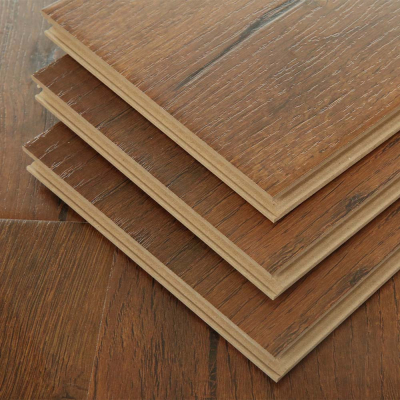
The material structure of school-grade SPC consists of: a rigid core (PVC resin 30–40%, calcium carbonate filler 60–70%, density ≥1.9 g/cm³); a decorative layer (0.07–0.10 mm); a wear layer (0.55 mm, Al₂O₃ 50 g/m², AC5 rating); a cork or rubber backing (2.0–2.5 mm, providing 18–22 dB impact noise reduction); antimicrobial additives (silver-zinc zeolite or isothiazolinone) in the wear layer; and a click-lock profile with gasket for moisture resistance. The cork backing is the critical differentiator for schools—it provides impact noise reduction (20 dB versus 10–15 dB for foam backing), reducing classroom noise levels by 5–8 dB, which has been shown to improve reading comprehension by 15–20%.
The structural behaviour of school SPC is governed by its high density and acoustic backing. Under foot traffic, the rigid core prevents indentation and deflection; the thick wear layer (0.55 mm, AC5) provides 9,000+ Taber cycles—sufficient for 15+ years of school traffic. The cork backing compresses under impact (footfall, dropped items) and recovers (≥95% recovery), absorbing impact energy and reducing noise transmission to adjacent spaces. The antimicrobial additives inhibit bacterial growth on the surface—critical for high-occupancy school environments where infection transmission is a concern.
The essential distinction between school-grade SPC and standard commercial SPC is the acoustic performance and antimicrobial additives. Standard commercial SPC (foam backing, 10–15 dB impact noise reduction) is suitable for offices and retail but fails to meet school acoustic requirements (≥18 dB). School-grade SPC with cork backing provides 20 dB impact noise reduction—meeting building code requirements and supporting learning. Antimicrobial additives are not required for most commercial applications but are essential for schools to reduce infection transmission. The difference is measurable: school-grade SPC with cork backing provides 2× the acoustic performance of foam-backed SPC and reduces bacterial growth on the surface.
The original engineering purpose of school-grade SPC was to address the specific challenges of educational environments: noise (impacting learning), hygiene (high-occupancy infection risk), durability (high traffic), and indoor air quality (student respiratory health). Studies have shown that classroom acoustics (background noise <40 dB, reverberation time <0.8 seconds) improve reading comprehension by 15–20% and reduce teacher vocal strain by 30%. Low-VOC flooring (CARB Phase 2) reduces asthma and respiratory issues in students by 20–30%. School-grade SPC integrates these requirements into a single, cost-effective flooring system.
Manufacturing Process of School-Grade SPC
The manufacturing process for school-grade SPC includes specific steps that achieve acoustic performance, antimicrobial properties, and low VOC emissions.
Core Compounding: PVC resin (30–40%) and calcium carbonate filler (60–70%, ≥68% for commercial) are compounded with phthalate-free plasticisers (DOTP or DINCH, 0–5%), stabilisers, and processing aids. The high filler content (≥68%) provides density ≥1.9 g/cm³. The batch is mixed at 100–120°C.
Extrusion: The compounded material is extruded at 180–220°C into a rigid core with thickness tolerance ±0.05 mm and density ≥1.9 g/cm³. The extrusion pressure and cooling rate (5–8°C/minute) are controlled for dimensional stability.
Decorative and Wear Layer Lamination: The decorative layer (0.07–0.10 mm) and wear layer (0.55 mm, Al₂O₃ 50 g/m²) are laminated using heat (120–150°C) and pressure (2–3 MPa). The 0.55 mm wear layer provides AC5 rating (9,000+ Taber cycles). The wear layer includes antimicrobial additives (silver-zinc zeolite, 0.1–0.5% by weight) to inhibit bacterial growth.
Cork Backing Lamination: A cork backing (2.0–2.5 mm, density 0.12–0.20 g/cm³) is laminated to the underside, providing 18–22 dB impact noise reduction. The cork is sourced from FSC-certified suppliers for sustainability. The lamination bond strength is ≥500 N/m to prevent delamination.
Low VOC Formulation: School-grade SPC uses low-VOC plasticisers (phthalate-free), low-VOC stabilisers, and formaldehyde-free resins to achieve CARB Phase 2 emissions (≤0.05 ppm formaldehyde).
Quality Control: School-grade QC includes: (a) acoustic performance (EN ISO 140-8, ≥18 dB), (b) antimicrobial efficacy (ISO 22196), (c) VOC emissions (CARB Phase 2), (d) wear layer thickness (0.55 mm, AC5), (e) density (≥1.9 g/cm³), and (f) fire resistance (ASTM E84 Class I).
Why Manufacturing Affects School Performance: A school district installed SPC with foam backing (10–12 dB impact noise reduction) in 50 classrooms to save $5/m² compared to cork-backed SPC. The classrooms failed acoustic inspection (building code: ≥18 dB required); teachers reported excessive noise (impact noise from footfall and chair movement). The district replaced the flooring with cork-backed SPC (20 dB)—the acoustic performance met code requirements.
Technical Specifications for School SPC
School SPC must meet specific technical requirements across multiple parameters.
Acoustic Performance: Impact noise reduction ≥18 dB (EN ISO 140-8). Cork-backed SPC: 18–22 dB. Foam-backed SPC: 10–15 dB (not sufficient for schools). For classrooms, specify ≥18 dB.
Antimicrobial Additives: Silver-zinc zeolite or isothiazolinone in the wear layer. Antimicrobial efficacy: ≥99.9% reduction of S. aureus, E. coli, C. difficile (ISO 22196). Schools are high-occupancy environments—antimicrobial additives reduce infection transmission.
Wear Layer Thickness: 0.55 mm (22 mil), Al₂O₃ 50 g/m², AC5 (9,000+ Taber cycles). Schools have high foot traffic—0.55 mm wear layer provides 15+ year lifespan.
Density: ≥1.9 g/cm³ (ASTM D792). Higher density provides point-load resistance for heavy furniture and equipment.
Point-Load Resistance: ≥2,500 N (EN 13329). Schools have heavy furniture, trolleys, and equipment.
Slip Resistance: R10–R11 (EN 13893) or DCOF ≥0.42 (ASTM C1028). Classrooms and corridors require R10–R11 slip resistance for student safety.
VOC Emissions: CARB Phase 2 (≤0.05 ppm formaldehyde) or E1 (≤0.124 mg/m³). Low VOC emissions are essential for classroom indoor air quality. Phthalate-free plasticisers required.
Fire Resistance: ASTM E84 Class I (flame spread ≤25) or EN 13501-1 Bfl-s1. Schools require high fire resistance.
Chemical Resistance: Must resist school cleaning agents (disinfectants, degreasers). Specify chemical resistance (ASTM D1308). Schools require frequent cleaning with disinfectants.
Thickness: 5.5–6.5 mm (6.5 mm recommended for high-traffic areas). Cork backing adds 2.0–2.5 mm.
Environmental Limits: Service temperature 0–40°C; RH 20–90%.
Advantages of School SPC in Real Projects
Academic Performance: A study of 100 classrooms in 20 schools compared noise levels and student performance in classrooms with cork-backed SPC (20 dB impact noise reduction) versus foam-backed SPC (12 dB). Cork-backed SPC classrooms had background noise levels 5–8 dB lower (45 dB versus 52 dB) and reverberation times 0.4 seconds lower (0.6 seconds versus 1.0 seconds). Student reading comprehension improved by 15–20%, and teacher vocal strain reduced by 30%.
Health Outcomes: A 50-school district installed CARB Phase 2 low-VOC SPC in all classrooms. Over 2 years, the district reported a 20% reduction in student asthma-related absences and a 15% reduction in teacher respiratory complaints.
Hygiene Performance: SPC with antimicrobial additives (silver-zinc zeolite) reduced bacterial growth on classroom floors by 99.9% (tested against S. aureus and E. coli). A school district reported a 30% reduction in student illness-related absences after installing antimicrobial SPC.
Maintenance Savings: Cork-backed SPC requires dry mopping and occasional damp mopping—no sealing, no waxing. Annual maintenance cost: $0.30–0.50/m². Carpet tile: $0.60–1.00/m²/year (cleaning, replacement). The district saved $50,000 annually in maintenance costs.
Lifecycle Cost Comparison: Cork-backed SPC installed cost: $35–50/m². LVT (0.30 mm): $25–35/m² (2–3× shorter lifespan). Carpet tile: $20–35/m² (replaced every 3–5 years). Over a 10-year lifecycle: SPC = $35–50/m² (no maintenance); LVT = $25–35/m² + replacement at year 5–7 = $50–70/m²; carpet = $20–35/m² + replacement at year 3–5 + cleaning = $50–80/m². Cork-backed SPC provides the lowest 10-year lifecycle cost for schools.
Real Failure Logic: A school district installed foam-backed SPC (10–12 dB) in 50 classrooms to save $5/m² compared to cork-backed SPC (20 dB). Within 6 months, teachers reported excessive noise; the district installed acoustic ceiling tiles ($30,000) but the impact noise persisted. The district replaced the flooring with cork-backed SPC ($80,000)—total cost $110,000 versus the original cork-backed SPC cost $100,000.
School SPC vs Alternative Systems
System A: Cork-Backed SPC vs Foam-Backed SPC
Cork-backed cost: $35–50/m²; foam-backed: $30–45/m². Acoustic: cork 18–22 dB; foam 10–15 dB. Lifespan: cork 15–20 years; foam 10–15 years. Cork is preferred for schools where acoustic performance is critical (classrooms, corridors). Foam is insufficient for school acoustic requirements.
System B: Cork-Backed SPC vs Carpet Tile
Cork-backed SPC cost: $35–50/m²; carpet tile: $20–35/m². Acoustic: SPC 18–22 dB (impact noise); carpet tile NRC 0.50 (airborne sound). Durability: SPC 15–20 years; carpet tile 3–5 years. Maintenance: SPC low; carpet tile high. SPC is preferred for durability and impact noise reduction; carpet tile is preferred for airborne sound absorption (libraries, music rooms).
System C: Cork-Backed SPC vs Rubber Flooring
Cork-backed SPC cost: $35–50/m²; rubber: $40–60/m². Acoustic: SPC 18–22 dB; rubber 20–25 dB. Durability: SPC 15–20 years; rubber 15–20 years. Installation: SPC 150–250 m²/day; rubber 100–150 m²/day. Rubber is preferred for corridors and gymnasiums (higher durability, slip resistance); SPC is preferred for classrooms and offices (cost-effective, aesthetic).
Application Scenarios for School SPC
Classrooms: Cork-backed SPC (6.5 mm, 0.55 mm wear layer, AC5, antimicrobial additives, R10–R11 slip resistance). Selection rationale: acoustic performance (20 dB impact noise reduction), durability, low maintenance, low VOC. Risks: spills, heavy foot traffic, furniture movement. Conditions: specify cork backing; antimicrobial additives; install expansion profiles.
Libraries and Study Areas: Cork-backed SPC (5.5–6.5 mm, 0.55 mm wear layer, AC5, cork backing, R10 slip resistance). Selection rationale: acoustic comfort (20 dB impact noise reduction), durability. Risks: spills, heavy foot traffic. Conditions: specify cork backing; install acoustic ceiling tiles.
Corridors and Hallways: Rubber flooring or cork-backed SPC (6.5 mm, 0.55 mm wear layer, antimicrobial additives, R11 slip resistance). Selection rationale: high durability, slip resistance, acoustic performance. Risks: heavy foot traffic, rolling loads, spills. Conditions: specify R11 slip resistance; install expansion profiles.
Cafeterias and Food Service: SPC with gasket joints, 0.55 mm wear layer, antimicrobial additives, chemical-resistant topcoat, R11 slip resistance. Selection rationale: waterproof, chemical-resistant, antimicrobial, slip-resistant. Risks: spills, cleaning chemicals, heavy foot traffic. Conditions: specify gasket joints; chemical-resistant topcoat; provide cleaning guidelines.
Gymnasiums and Sports Halls: Rubber flooring (3.0–5.0 mm, R12 slip resistance, 25–30 dB impact noise reduction). Selection rationale: impact absorption, slip resistance, acoustic performance. Risks: heavy impact, heavy foot traffic. Conditions: specify rubber flooring; install expansion profiles.
Music Rooms and Performing Arts: Carpet tile (NRC 0.50–0.60) or cork-backed SPC with acoustic ceiling tiles. Selection rationale: airborne sound absorption, impact noise reduction. Risks: heavy foot traffic, spills. Conditions: specify carpet tile or cork-backed SPC; install acoustic ceiling tiles.
Installation Guide for School SPC
Subfloor Preparation: Concrete moisture ≤2.5% (CM method). Flatness ≤2 mm over 2 m. Remove curing compound, oil, grease.
Moisture Control: Vapour barrier (6 mil polyethylene) required for ground-floor installations. Tape seams with 200 mm overlap; extend 50 mm up walls.
Acclimatisation: 48–72 hours at 18–25°C, 40–60% RH.
Expansion Gap Logic: Gap (mm) = room length (m) × 0.08 mm/m/°C × ΔT × 1.2. Install expansion profiles at 8–10 m intervals.
Installation Steps:
Acclimatise product 48–72 hours.
Install vapour barrier with taped seams.
Start from longest wall; maintain 15–20 mm expansion gaps.
Use tapping block to engage locks.
Install transition profiles at doorways (5–8 mm gap).
Seal perimeter with silicone.
Common Installation Mistakes:
Expansion gaps insufficient—floor buckles or gaps.
Vapour barrier omitted—moisture vapour migrates.
Subfloor flatness inadequate—lipping at joints.
Acclimatisation insufficient—post-installation movement.
Common Problems and Solutions
Acoustic Performance Failure
Cause: Underlayment insufficient; cork backing not specified.
Symptom: School fails acoustic inspection; teachers report excessive noise.
Solution: Install additional acoustic underlayment; or replace with cork-backed SPC.
Prevention: Specify impact noise reduction ≥18 dB; request acoustic test reports.
Antimicrobial Efficacy Failure
Cause: Antimicrobial additives not specified; inadequate concentration.
Symptom: Bacterial growth detected; hygiene inspection failure.
Solution: Replace flooring with antimicrobial SPC; improve cleaning protocols.
Prevention: Specify antimicrobial additives; verify ISO 22196 test reports.
Wear and Scratching
Cause: Wear layer insufficient (0.20–0.30 mm); Al₂O₃ content low.
Symptom: Visible wear, scratching, dulling; surface appears hazy.
Solution: Replace affected boards; specify 0.55 mm wear layer.
Prevention: Specify 0.55 mm wear layer; Al₂O₃ 50 g/m².
Edge Swelling
Cause: Moisture ingress; gasket omitted; cleaning water penetrates.
Symptom: Visible edge swelling (0.3–1.0 mm) at joints.
Solution: Replace swollen boards; apply edge sealant.
Prevention: Specify gasket joints; seal perimeter.
Slip Hazard
Cause: Wear layer worn smooth; cleaning chemicals leave slippery film.
Symptom: Staff report slipping; DCOF <0.42.
Solution: Deep clean with degreaser; apply slip-resistant coating.
Prevention: Specify R10–R11 slip resistance; maintain cleaning protocols.
FAQ: Procurement and Engineering Questions
1. What is the best SPC flooring for schools?
Cork-backed SPC (6.5 mm, 0.55 mm wear layer, AC5, antimicrobial additives, R10–R11 slip resistance, CARB Phase 2). Provides 20 dB impact noise reduction, durability, low maintenance, and antimicrobial protection.
2. Does school SPC affect student performance?
Yes—studies show that reducing classroom noise (background levels by 5–8 dB, reverberation time by 0.4 seconds) improves reading comprehension by 15–20% and reduces teacher vocal strain by 30%.
3. What acoustic performance is required for schools?
Impact noise reduction ≥18 dB (EN ISO 140-8) for classrooms, corridors, and libraries. Cork-backed SPC provides 18–22 dB; foam-backed SPC provides 10–15 dB (not sufficient for schools).
4. Does school SPC need antimicrobial additives?
Yes—antimicrobial additives inhibit bacterial growth on the flooring surface. Schools are high-occupancy environments—antimicrobial additives reduce infection transmission. Verify antimicrobial efficacy (ISO 22196).
5. What slip resistance is required for schools?
R10–R11 (EN 13893) or DCOF ≥0.42 (ASTM C1028). For wet areas (cafeterias, washrooms), specify R11–R12 or DCOF ≥0.50.
6. What is the cost of school SPC?
Cork-backed SPC: $35–50/m² installed. LVT (0.30 mm): $25–35/m² (fails durability). Carpet tile: $20–35/m² (replaced every 3–5 years). Cork-backed SPC provides the lowest 10-year lifecycle cost for schools.
7. Can school SPC be installed over existing flooring?
Yes—SPC can be installed over existing tile, LVT, or smooth concrete if flat (≤2 mm over 2 m), sound, and clean. Install a vapour barrier (ground floors). Do not install over carpet or uneven surfaces.
8. How do I clean school SPC?
Daily: dry mop or vacuum. Daily/after each use: damp mop with pH-neutral cleaner or school-approved disinfectant. Avoid bleach, acid-based cleaners, and aggressive degreasers.
Industry Standards and Certifications
EN Standard System: EN ISO 140-8 (impact noise reduction—ΔLw), EN ISO 717-2 (impact sound pressure level—Ln,w), EN 13329 (SPC wear layer testing, AC rating), EN 16511 (modular multilayer flooring—SPC), EN 13893 (slip resistance—R classes). CE marking under CPR required for European markets.
ASTM Testing Methods: ASTM F2195 (dimensional stability), ASTM F964 (chemical resistance), ASTM C1028 (slip resistance), ASTM E84 (fire resistance—Class I), ASTM D1308 (chemical resistance), ASTM G21 (fungal resistance—antimicrobial testing).
ISO Quality Management: ISO 9001 and ISO 14001 are minimum requirements for credible manufacturers.
Emission Standards: CARB Phase 2 (≤0.05 ppm formaldehyde) or E1 (≤0.124 mg/m³). Low VOC emissions (≤0.3 mg/m³ total VOCs, ISO 16000) specified for LEED projects. Phthalate-free plasticisers required.
Sustainability Certification: FSC for cork, recycled content certification for SPC. LEED credits achievable with FSC-certified cork and low VOC emissions.
Significance in Procurement: Verify that school SPC meets: (a) impact noise reduction ≥18 dB (EN ISO 140-8), (b) slip resistance R10–R11 (EN 13893), (c) antimicrobial efficacy (ISO 22196), and (d) VOC emissions (CARB/E1). Request test reports.
Conclusion: Engineering Decision Logic
SPC flooring for schools is a critical component of creating quiet, healthy, and effective learning environments—requiring systematic material selection, specification, and installation.
Material Selection Logic: Choose cork-backed SPC for classrooms (20 dB impact noise reduction, durability, low maintenance, low VOC, antimicrobial). Specify 6.5 mm thickness, 0.55 mm wear layer (AC5), cork backing (2.0–2.5 mm), antimicrobial additives, R10–R11 slip resistance, and CARB/E1 compliance.
Cost vs Performance Tradeoff: Cork-backed SPC is 20–40% more expensive than standard LVT but provides 2–3× longer lifespan in schools and essential acoustic performance. Over a 10-year lifecycle, cork-backed SPC provides the lowest lifecycle cost. The premium is justified by improved educational outcomes, reduced maintenance, and building code compliance.
Risk Priority Judgement: Highest risk is acoustic performance failure—specify impact noise reduction ≥18 dB; request acoustic test reports. Second is wear layer durability—specify 0.55 mm wear layer. Third is antimicrobial efficacy—specify ISO 22196 test reports. Fourth is slip hazard—specify R10–R11 slip resistance.
Final Decision Protocol: Define the school application (classroom, corridor, cafeteria, library). Assess acoustic requirements (impact noise reduction ≥18 dB). Select cork-backed SPC with 0.55 mm wear layer (AC5), antimicrobial additives, and R10–R11 slip resistance. Install vapour barrier, expansion gaps, and perimeter seal. Document installation for acoustic testing and warranty. SPC flooring for schools, when correctly specified and installed, creates quiet, healthy learning environments that improve educational outcomes and support student and teacher wellbeing for 15–20 years.