SPC Flooring with IXPE Backing: Benefits, Thickness and Comparison
What Is IXPE Backing in SPC Flooring?
What Is IXPE Foam?
IXPE stands for irradiation cross-linked polyethylene foam. Polyethylene is cross-linked, which changes the structure of the foam: the polymer chains are linked to each other rather than lying loosely, and this gives the foam a more stable cell structure and a more consistent behaviour under repeated load than an uncross-linked foam of the same density. Cross-linking can be produced by irradiation or by chemical means, and the two processes can give the foam different cell structures and different behaviour under load; the practical difference between two products depends on how the foam was made, its density and its thickness, and it should be confirmed from the product's technical documentation rather than assumed from the material name. The foam is closed-cell, and its properties depend on its density, its thickness and the way it is produced.
How Is IXPE Attached to SPC Flooring?
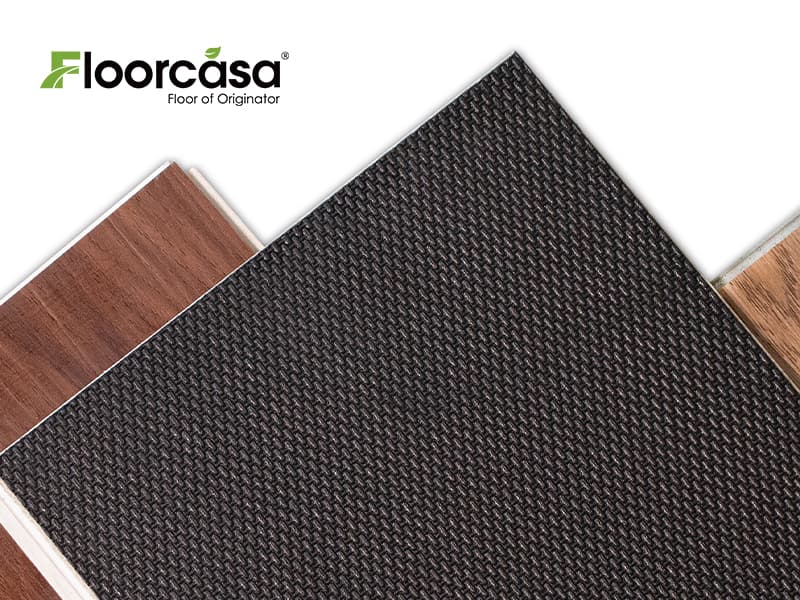
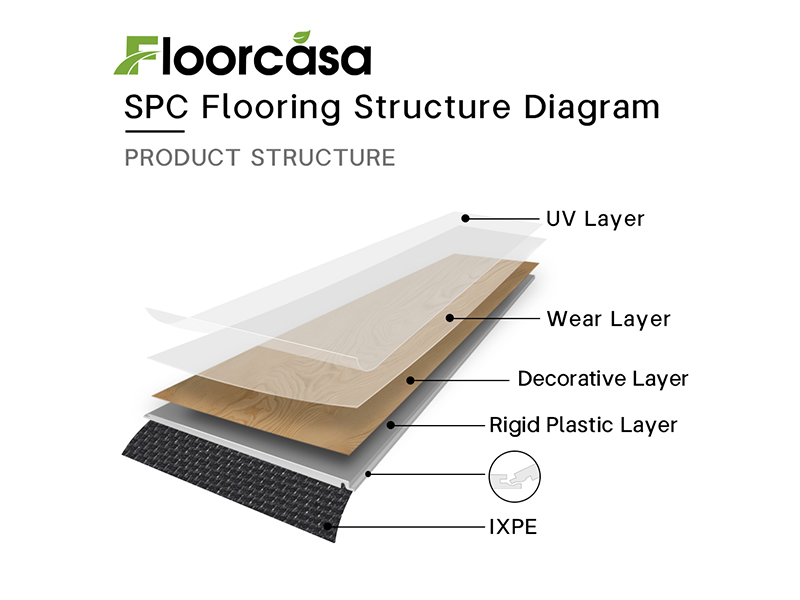
The IXPE layer is laminated to the underside of the SPC plank at the factory, usually with a hot-melt process. The bond between the backing and the plank is part of the product: it should be continuous and strong enough to stay attached in handling, installation and use. Because the backing is factory-laminated, it is not designed to be removed, and the product is sold as an integrated system rather than as a plank and a separate underlay. Where the backing sits in the overall layer build-up is shown on the SPC flooring structure page; this section stays with how the backing is attached.
What Is the Purpose of Integrated IXPE Backing?
The backing has three roles. It adds a small amount of cushioning, which changes the feel underfoot; it reduces some of the impact sound that would otherwise be transmitted through the floor assembly; and it means the plank can be installed as a floating floor without a separate underlay in many cases. It does not turn the floor into a soundproof assembly, and it does not replace a proper subfloor or an acoustic design for the building.
Benefits of SPC Flooring with IXPE Backing
Improved Underfoot Comfort
A rigid SPC plank on a hard subfloor feels firm, and the IXPE layer adds a thin cushion under the plank. The effect is modest but noticeable, and it depends on the thickness and the density of the foam.
Impact Sound Reduction
The backing reduces some of the impact sound produced when the floor is walked on, which is the sound that travels through the floor structure to the room below. The extent depends on the whole assembly, including the plank, the backing, the subfloor and the structure beneath, and it should be confirmed from the test data for the complete system rather than from the backing alone.
What the backing does not do is reduce airborne sound, such as speech or television, in any meaningful way, and it does not guarantee that the room below will not hear footsteps. Impact sound and airborne sound are different transmission paths and are measured differently; a backing that improves one does not necessarily improve the other. The test report should also state which acoustic indicator was measured, because indicators from different test methods describe different things and should not be compared directly. Where the project has an acoustic requirement, the floor assembly and the building structure should be assessed together. The way impact sound behaves in a floating floor is covered in more detail on the laminate flooring noise reduction page; this section stays with what the IXPE backing contributes.
Additional Cushioning
The cushioning effect also reduces the small point loads and vibration that a rigid plank would otherwise transmit to the subfloor, which can help where the floor is laid over a sound subfloor with minor surface variation. It has a limited effect on the hollow or tapping sound that comes from a gap between the plank and the subfloor: that sound points to a subfloor or installation problem, and a backing does not correct it. It is not a repair for an uneven or unstable subfloor.
Easier Installation with Integrated Underlayment
Where the backing is integrated, the plank can often be installed as a floating floor without a separate underlay, which simplifies handling on site. Whether an additional underlay is permitted is a separate question, covered below.
IXPE vs. EVA Backing for SPC Flooring
| Comparison item | IXPE | EVA |
|---|---|---|
| Material | Cross-linked polyethylene | Ethylene-vinyl acetate |
| Structure | Cross-linked closed-cell foam | Closed-cell foam, produced in different grades |
| Flexibility | Depends on formulation and density | Depends on formulation and density |
| Compression performance | Depends on the foam structure and density | Depends on the foam structure and density |
| Acoustic performance | Requires testing of the complete floor system | Requires testing of the complete floor system |
| Main selection factors | Density, thickness, compression behaviour and bonding | Density, thickness, compression behaviour and bonding |
Material and Structure
IXPE is a cross-linked polyethylene foam, and EVA is an ethylene-vinyl acetate foam. Both are closed-cell foams, and both are used as backings for rigid core flooring. The cross-linking in IXPE changes the cell structure and the way the foam behaves under repeated load, but the practical difference between two products depends on their density, thickness and formulation rather than on the material name alone.
Density and Compression Performance
The density and the compression behaviour of the foam decide how much it cushions and how well it recovers after loading. A denser foam generally resists compression better, and a softer foam gives more cushioning but may compress more over time. Both IXPE and EVA are produced in a range of densities, so the material name does not by itself tell you which will perform better in a given product.
Acoustic Performance
The acoustic performance of either backing should be confirmed from test data for the complete floor assembly. A backing that performs well in one assembly may perform differently in another, because the plank, the subfloor and the structure all contribute.
Durability and Long-Term Performance
The long-term behaviour of the backing depends on its density, its compression set and the load it carries. A backing that compresses permanently will reduce the cushioning and can affect the joint, because the plank above it moves differently once the backing under it has flattened.
How to Choose Between IXPE and EVA
The choice should be based on the product's test data, the compression behaviour, the thickness, the acoustic requirement of the project and the locking system the backing has to work with. Neither material is automatically better, and the comparison should be made between specific products.
What IXPE Backing Thickness Should You Choose?
1.0 mm IXPE Backing
A thinner backing adds a small amount of cushioning and has less effect on the installed height. The points to check are the feel underfoot, the compression behaviour and the compatibility with the locking system, because a thin backing gives less margin for subfloor variation.
1.5 mm IXPE Backing
A mid-range backing is a common choice where a balance is wanted between comfort, acoustic performance and the load carried by the locking system. It should be checked against the product's own specification, because the suitable thickness depends on the plank and the joint as well as on the backing.
2.0 mm IXPE Backing
A thicker backing gives more cushioning, but it also compresses more under load and changes the way the joint behaves. The points to check are the compression set, the long-term load behaviour and the locking system's compatibility with the thicker backing.
How Thickness Affects Comfort, Compression and Locking Performance
Thickness is not the only selection criterion, and a thicker backing is not automatically better for acoustic performance. The acoustic result depends on the density, the compression behaviour, the dynamic load and the complete floor assembly, and it should be confirmed from test data rather than assumed from the thickness. A thicker, softer backing can also allow more movement at the joint, which is why the locking system's compatibility has to be checked with the backing that is actually supplied. The thickness options and how they relate to the total plank thickness are covered on the SPC flooring thickness guide.
Key Technical Specifications of IXPE Backing
The parameters below are the ones a buyer should check for the backing. Each should be stated in the product's technical documentation with its test method, and no figure should be assumed from the material type.
Density
The density of the foam affects its cushioning, its compression behaviour and its weight. It should be stated for the backing being supplied.
Compression Stress
Compression stress describes how the foam responds to a load at a stated compression. It indicates how firm the backing is under the floor.
Compression Set
Compression set describes how much the foam fails to recover after a load is removed. A high compression set means the backing flattens over time, which reduces cushioning and can affect the joint.
Thickness Tolerance
The thickness tolerance states how much the backing thickness varies. It matters because the installed height and the joint behaviour depend on a consistent backing thickness.
Water Absorption
The water absorption of the foam indicates how it behaves if water reaches it. It is relevant where the floor is used in wet areas and where the backing is exposed at the edges.
Bonding Strength
Bonding strength describes how well the backing is attached to the plank. A weak bond can allow the backing to separate at the edges or in handling.
Acoustic Test Performance
The acoustic test performance should be stated for the complete floor assembly, with the test standard, the assembly tested, the acoustic indicator measured and the result. A figure for the foam alone does not describe the performance of the installed floor.
Does SPC Flooring with IXPE Need Additional Underlayment?
When Integrated IXPE Is Sufficient
Where the backing is integrated and the subfloor is flat and dry within the product's tolerance, the floor can often be installed without a separate underlay. This is the common case for a floating installation on a prepared subfloor.
When Additional Underlayment Is Not Recommended
An additional underlay can change the behaviour of the locking system, so whether one is permitted depends on the product. Some manufacturers do not permit an additional underlay over an integrated backing, because it can increase joint movement and affect the warranty. The installation instructions state whether an additional underlay is allowed. The selection of separate underlays for different flooring types is covered on the laminate flooring underlayment page; this section stays with integrated SPC backings.
Subfloor Preparation and Installation
The subfloor should be flat within the tolerance stated in the installation instructions, sound and dry, and the installation method, the expansion gaps and the perimeter fixing should follow those instructions. The detailed requirements are covered on the SPC flooring installation guide; this section states only that the backing does not relax the subfloor requirements and that the warranty may depend on them.
Where Is SPC Flooring with IXPE Backing Suitable?
Residential Apartments
In apartments, the backing is often chosen for comfort and for reducing impact sound to the unit below, subject to the building's acoustic requirements and the product's test data. The floor assembly and the building structure should be assessed together where an acoustic requirement applies.
Hotels and Guest Rooms
In hotels, the backing is one part of the acoustic design of the room, and the floor, the subfloor and the ceiling assembly all contribute. The acoustic requirement for the project usually comes from the building regulations or the project specification, and the product's test data should be checked against it, together with the traffic level and the cleaning routine.
Offices
In offices, the backing contributes to comfort and impact sound, while the wear layer and the traffic level decide the surface performance. The acoustic requirement of the space, where one applies, usually comes from the building regulations or the project specification, and the floor assembly should be confirmed against it with the project's acoustic consultant.
Retail Spaces
In retail spaces, the floor is subject to frequent cleaning and to trolley and foot traffic. The wear layer, the joint quality and the cleaning compatibility matter, and the backing's contribution is secondary to the surface performance.
Renovation Projects
In renovation, the installed height matters, and a thicker backing increases it. The door clearance and the transition details should be planned with the installed height in mind, and the subfloor condition should be checked before the product is specified.
How to Choose SPC Flooring with IXPE Backing
Check the IXPE thickness and density, and confirm both for the product being supplied.
Review the compression performance, including compression set, because a backing that flattens over time affects the joint.
Verify the acoustic test reports, and check whether they cover the complete floor assembly, which acoustic indicator was measured and what the result was.
Inspect the bonding quality between the backing and the plank, on a physical sample.
Confirm the locking system compatibility with the backing, and whether an additional underlay is permitted.
Check the underfloor heating requirements, including the permitted surface temperature and the installation conditions, from the product's instructions and the heating system's requirements.
Confirm the warranty terms, including any conditions on the underlay and the installation method.
The SPC flooring product series pages list the products with integrated IXPE backing, the total thickness, the backing thickness and the wear layer for each product.
How Is SPC Flooring with IXPE Backing Produced?
The production of the backing and its attachment to the plank is summarised here, because the quality of the backing and the bond affects the performance described above. The foam is produced and cross-linked, then slit or sheeted to the required thickness with a stated tolerance; the backing is laminated to the underside of the plank under controlled heat and pressure; and the finished plank is inspected for bonding, thickness and flatness. The production process and equipment are described on the SPC flooring manufacturing page; this section stays with the points that affect the product a buyer receives.
Frequently Asked Questions
1. What is IXPE backing in SPC flooring?
IXPE is a cross-linked polyethylene foam laminated to the underside of the SPC plank. It adds cushioning, reduces some impact sound, and allows a floating installation without a separate underlay in many cases.
2. Is IXPE backing better than EVA?
Neither is automatically better. Both are closed-cell foams, and their performance depends on density, thickness, compression behaviour and the complete floor assembly. The comparison should be made between specific products using their test data.
3. What is the best IXPE thickness for SPC flooring?
There is no single best thickness. A thinner backing adds less cushioning and has less effect on installed height, while a thicker backing gives more cushioning but compresses more and changes the joint behaviour. The thickness section above sets out what to check at 1.0 mm, 1.5 mm and 2.0 mm.
4. Does IXPE backing reduce footstep noise?
It reduces some impact sound from footsteps, and the extent depends on the complete floor assembly. It does not reduce airborne sound and does not guarantee that the room below will not hear footsteps; the test report should state which acoustic indicator was measured, and the result should be confirmed for the assembly.
5. Does SPC flooring with IXPE need additional underlayment?
Often not, where the backing is integrated and the subfloor is prepared to the product's tolerance. Whether an additional underlay is permitted depends on the product's installation instructions, because an additional underlay can affect the locking system and the warranty.
6. Can SPC flooring with IXPE backing be used with underfloor heating?
It depends on the product and the heating system. The permitted surface temperature and the installation conditions should be confirmed from the product's installation instructions and from the heating system's requirements; a general statement that the floor is compatible is not a substitute for those limits.
7. Does IXPE backing affect the durability of SPC flooring?
The backing affects comfort and impact sound rather than the surface wear performance, which is determined by the wear layer. A backing with poor compression set can affect the joint over time, so its compression behaviour should be checked.
8. Can IXPE backing become compressed over time?
Yes, any foam backing can compress under sustained load, and the extent depends on its density and compression set. A backing that compresses permanently reduces cushioning and can affect the joint, which is why the compression set is one of the parameters to check.