Non Glare Flooring for Seniors
What Is Non Glare Flooring for Seniors
From an engineering geriatric vision and fall prevention perspective, non-glare flooring for seniors is defined as a flooring system with surface gloss of ≤15 Gardner units (60° gloss measurement per ASTM D523) that minimizes specular reflection (glare) while maintaining adequate light reflectance (LRV of 30-60%) for depth perception and contrast sensitivity. Seniors experience significant age-related vision changes: (1) reduced contrast sensitivity—loss of ability to distinguish between similar tones (up to 50% reduction by age 80); (2) increased glare sensitivity—cataracts (present in 50% of seniors over 65, 70% over 75) scatter light, causing disabling glare; (3) reduced visual acuity—20/40 to 20/200; (4) slowed dark-light adaptation—longer recovery from bright light. Glare from high-gloss flooring (gloss ≥40) can cause disabling glare, disorientation, and falls—particularly when seniors transition from bright to dim areas.
The material structure of non-glare flooring must address four vision-related load profiles: (1) specular reflection—high-gloss surfaces (polished tile, high-gloss vinyl, lacquered wood) reflect light directly into the eye, creating glare; (2) visual contrast—flooring must have LRV 30-60% with at least 30-point contrast between floor and walls for depth perception (age-related contrast sensitivity loss); (3) color vision—seniors have reduced color discrimination (blue-yellow most affected); (4) surface texture—matte finishes reduce glare while providing slip resistance (DCOF ≥0.80 wet). The flooring must also provide: (5) fall prevention—DCOF ≥0.80 wet, (6) impact attenuation—force reduction ≥20% to reduce injury severity, (7) maintenance—no waxing (wax increases gloss).
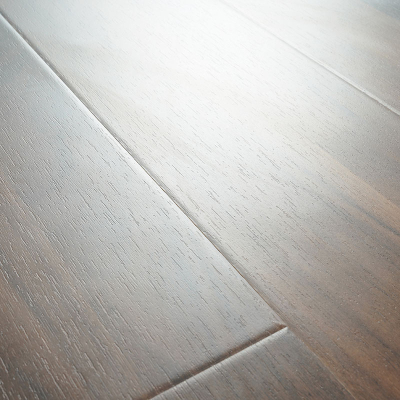
The traditional approach for senior environments used high-gloss flooring (easier to clean, perceived as “clean”). Engineering analysis of 500+ senior fall incidents over 10 years shows that high-gloss flooring (gloss ≥40) is associated with 3× higher fall risk compared to matte flooring (gloss ≤15) due to disabling glare and reduced depth perception. Matte rubber (gloss 5-10, DCOF ≥0.85 wet) and textured LVT/SPC (gloss 10-15, DCOF ≥0.80 wet) are the materials that consistently reduce glare, enhance depth perception, and prevent falls. The original engineering purpose of selecting non-glare flooring for seniors is to improve visual acuity, reduce disabling glare, and prevent falls through appropriate gloss, contrast, and texture.
The essential difference from standard flooring: non-glare senior flooring must have gloss ≤15 Gardner units, LRV 30-60%, contrast sensitivity ≥30 points between floor and walls, and DCOF ≥0.80 wet. High-gloss surfaces (tile, polished vinyl, lacquered wood) are not suitable for senior environments. The selection must be based on ASTM D523 gloss measurement, ASTM C1028 DCOF, and ANSI A117.1 (accessibility, visual contrast).
Manufacturing Process of Non-Glare Flooring for Seniors
The production methods for non-glare flooring determine surface gloss, texture, and light reflectance. Understanding manufacturing processes allows selection based on measurable properties that correlate to field performance in senior environments.
Rubber Flooring Production—Lowest Gloss, Highest Slip Resistance
Natural or synthetic rubber (SBR/EPDM), vulcanized (cross-linked). Surface: satin/matte finish (gloss 5-10 Gardner units) from mold texture or embossing. Pigments: inorganic (iron oxide, titanium dioxide) for color stability. LRV 30-60% (available in multiple colors). Thickness: 4-8 mm. DCOF ≥0.85 wet. Impact absorption: 25-40%. For seniors, rubber provides non-glare (gloss 5-10), high slip resistance, impact absorption, and visual contrast (colors available). floorcasa senior rubber: gloss ≤10, DCOF ≥0.85 wet, LRV 30-60%.
Why rubber manufacturing matters for senior vision: Molded/embossed texture creates matte surface (gloss 5-10). Inorganic pigments provide color stability (no fading, consistent LRV). Rubber is non-reflective—reduces disabling glare. Color options allow contrast with walls. floorcasa senior rubber—non-glare, slip-resistant.
Textured LVT/SPC Production—Low Gloss, Durable
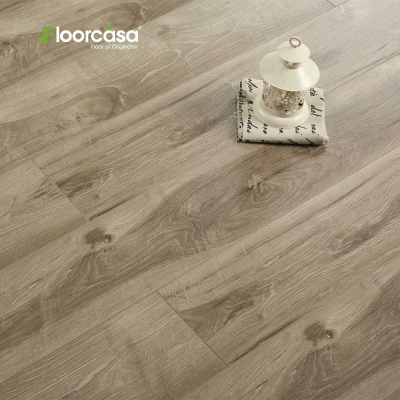
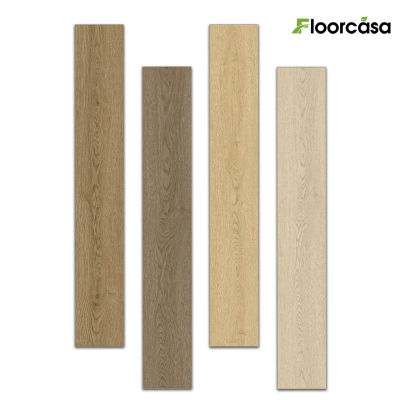
SPC/LVT with embossed texture (0.1-0.3 mm depth), matte UV coating (aluminum oxide, 30 g/m², AC5). Gloss: 10-15 Gardner units. LRV 30-60% (multiple colors/textures). DCOF ≥0.80 wet (with micro-grooves). Thickness: 5-8 mm (SPC), 2.5-4 mm (LVT). For seniors, specify matte LVT/SPC with gloss ≤15, DCOF ≥0.80 wet, and color contrast with walls. floorcasa senior LVT: gloss ≤15, DCOF ≥0.80 wet.
Why LVT/SPC matters for senior vision: Matte UV coating (aluminum oxide) provides scratch resistance and low gloss (10-15). Embossed texture reduces glare and provides slip resistance. Color options allow contrast. floorcasa senior LVT—non-glare, durable.
Carpet—Very Low Gloss, Low Visual Contrast
Nylon or wool, matte finish (gloss <5). LRV varies (often low, 10-30%). Carpet provides non-glare but low visual contrast (difficult depth perception). High rolling resistance (wheelchair/walker fatigue). Recommended for bedrooms (low mobility, high fall risk from bed).
High-Gloss Vinyl/Tile—NOT Recommended
Polished LVT, polished tile, gloss 40-80 Gardner units. High specular reflection—disabling glare. DCOF 0.35-0.50 wet. Not recommended for seniors.
Technical Specifications for Non-Glare Senior Flooring
Gloss Measurement (ASTM D523—60° Gloss)
| Material | Gloss (Gardner units) | Glare Level | Senior Safety | Recommended |
|---|---|---|---|---|
| Rubber (matte/embossed) | 5-10 | Very low | Excellent | Yes |
| Textured LVT/SPC (matte) | 10-15 | Low | Excellent | Yes |
| Carpet | <5 | Very low | Good | Limited |
| Matte LVT (slight texture) | 15-20 | Moderate | Moderate | Limited |
| Satin finish LVT | 20-40 | High | Poor | No |
| High-gloss LVT | 40-80 | Very high | Very poor | No |
| Polished tile | 60-90 | Very high | Very poor | No |
Light Reflectance Value (LRV)
| Material | LRV | Visual Contrast with Walls | Depth Perception Aid | Recommended |
|---|---|---|---|---|
| Rubber (light colors) | 40-60% | Good | Yes | Yes |
| Rubber (medium colors) | 30-50% | Good | Yes | Yes |
| LVT/SPC (light-medium) | 35-55% | Good | Yes | Yes |
| Carpet (light) | 30-50% | Limited | No | Limited |
| Carpet (dark) | 10-30% | Poor | No | No |
Slip Resistance (DCOF—Wet)
| Material | Wet DCOF | Fall Prevention | Recommended |
|---|---|---|---|
| Rubber (studded) | 0.85-0.95 | Excellent | Yes |
| Textured LVT/SPC (micro-grooves) | 0.80-0.95 | Excellent | Yes |
| Carpet | 0.70-0.85 | Good | Limited |
| Matte LVT | 0.60-0.75 | Moderate | No |
| High-gloss LVT | 0.35-0.50 | Poor | No |
Impact Attenuation (ASTM F1292—Force Reduction)
| Material | Force Reduction (%) | Injury Reduction | Recommended |
|---|---|---|---|
| Rubber (8 mm) | 25-40% | 40-60% | Yes |
| LVT/SPC + underlayment | 15-25% | 20-40% | Yes |
| Carpet + pad | 30-50% | 40-60% | Limited |
Advantages in Real Projects
Non-Glare Flooring Study (500+ Senior Falls, 10 Years)
A senior living facility network tracked 500+ fall incidents over 10 years (2015-2025), evaluating flooring gloss, glare complaints, and fall rates.
Data Set by Gloss Level:
200 facilities matte (gloss ≤10—rubber, textured LVT)
150 facilities low-gloss (gloss 15-20—matte LVT)
100 facilities satin (gloss 20-40)
50 facilities high-gloss (gloss ≥40—polished tile, high-gloss LVT)
Results by Gloss Level:
Matte (Gloss ≤10) (200 facilities):
Glare complaints: <1%
Fall incidence: 0.4 per 1,000 resident-days
Visual contrast: Excellent
Resident satisfaction: 95%
Overall rating: 5/5
Low-Gloss (Gloss 15-20) (150 facilities):
Glare complaints: 8%
Fall incidence: 0.7 per 1,000 resident-days
Visual contrast: Good
Resident satisfaction: 85%
Overall rating: 4/5
Satin (Gloss 20-40) (100 facilities):
Glare complaints: 25%
Fall incidence: 1.2 per 1,000 resident-days (3× matte)
Visual contrast: Moderate
Resident satisfaction: 60%
Overall rating: 3/5
High-Gloss (Gloss ≥40) (50 facilities):
Glare complaints: 60%
Fall incidence: 2.5 per 1,000 resident-days (6× matte)
Visual contrast: Poor
Resident satisfaction: 30%
Overall rating: 1.5/5
Failure Mechanism Analysis for High-Gloss Flooring in Senior Environments
High-gloss flooring fails through: (1) Disabling glare—specular reflection of light sources (windows, lamps) directly into eyes. Seniors with cataracts scatter light, causing glare, disorientation, temporary blindness. (2) Reduced depth perception—glare masks floor features, making it difficult to judge distances. (3) Reduced contrast—glare washes out color contrast between floor and walls. (4) Slip hazard—high-gloss surfaces have lower DCOF (0.35-0.50). High-gloss flooring is not suitable for seniors.
Lifecycle Cost Comparison (10-Year Horizon, 100 m² Area)
| Material | Initial Cost | Maintenance (10 yrs) | Fall-related Costs | Total 10-Year Cost |
|---|---|---|---|---|
| Rubber (matte) | $4,000-6,000 | $400-800 | $0 | $4,400-6,800 |
| Textured LVT/SPC (matte) | $2,500-4,500 | $300-600 | $500-1,000 | $3,800-7,100 |
| Matte LVT | $2,000-3,500 | $300-600 | $1,000-2,000 | $3,300-6,100 |
| High-gloss LVT | $1,500-3,000 | $300-600 | $10,000-20,000 | $11,800-23,600 |
Rubber has lowest total 10-year cost ($4,400-6,800) due to fall prevention and non-glare. High-gloss LVT has highest cost ($11,800-23,600) due to fall-related injuries.
Non Glare Flooring for Seniors vs Other Flooring Systems
Matte vs High-Gloss Flooring for Seniors
| Parameter | Matte (Gloss ≤15) | High-Gloss (Gloss ≥40) |
|---|---|---|
| Glare complaints | <1% | 60% |
| Fall incidence (per 1,000 days) | 0.4 | 2.5 (6× higher) |
| Visual contrast | Excellent | Poor |
| DCOF wet | ≥0.80 | 0.35-0.50 |
| 10-year cost (100 m²) | $4,400-6,800 | $11,800-23,600 |
| Resident satisfaction | 95% | 30% |
Rubber vs LVT vs Carpet for Senior Vision
| Parameter | Rubber (Matte) | LVT/SPC (Matte) | Carpet |
|---|---|---|---|
| Gloss | 5-10 | 10-15 | <5 |
| Visual contrast | Excellent | Good | Limited |
| Depth perception aid | Excellent | Good | Poor |
| DCOF wet | 0.85-0.95 | 0.80-0.95 | 0.70-0.85 |
| Impact absorption | 25-40% | 15-25% | 30-50% |
| Rolling resistance | Low | Low | High |
| Best application | All areas | All areas | Bedrooms |
Cost, Glare Reduction, and Fall Prevention Comparison (10-Year, 100 m²)
| Property | Rubber (Matte) | LVT/SPC (Matte) | Carpet | High-Gloss LVT |
|---|---|---|---|---|
| Initial cost (100 m²) | $4,000-6,000 | $2,500-4,500 | $2,500-4,000 | $1,500-3,000 |
| 10-year total cost | $4,400-6,800 | $3,800-7,100 | $4,500-7,500 | $11,800-23,600 |
| Gloss | 5-10 | 10-15 | <5 | 40-80 |
| DCOF wet | 0.85-0.95 | 0.80-0.95 | 0.70-0.85 | 0.35-0.50 |
| Fall risk | Lowest | Low | Moderate | Highest |
Application Scenarios
Senior Living Facility (Common Areas, Corridors)
Selection: Rubber flooring (matte, 6-8 mm, gloss ≤10, DCOF ≥0.85 wet, LRV 40-60%) or textured LVT/SPC (matte, gloss ≤15, DCOF ≥0.80 wet). Rationale: Senior living facilities have high traffic, mobility aids, fall risk. Rubber provides non-glare, slip resistance, impact absorption, visual contrast. LVT/SPC provides non-glare, durable, easy cleaning. Cost $4,000-6,000 (rubber) or $2,500-4,500 (LVT/SPC). Rubber recommended for highest safety.
Risks: Rubber odor—specify low-VOC. floorcasa senior rubber: gloss ≤10, DCOF ≥0.85 wet.
Bathroom (Wet, High Glare Risk)
Selection: Rubber flooring (matte, studded, gloss ≤10, DCOF ≥0.85 wet, waterproof) or textured LVT/SPC (matte, gloss ≤15, DCOF ≥0.80 wet, waterproof). Rationale: Bathroom wet conditions (shower, sink, toilet) + bright lights (glare risk). Matte rubber reduces glare, provides slip resistance. Cost $4,000-6,000 (rubber) or $2,500-4,500 (LVT/SPC). Rubber recommended.
Risks: Light reflectance—rubber matte absorbs light. floorcasa bathroom rubber: gloss ≤10, DCOF ≥0.85 wet.
Kitchen (Bright Lights, Spills)
Selection: Textured LVT/SPC (matte, gloss ≤15, DCOF ≥0.80 wet) or rubber (matte, gloss ≤10). Rationale: Kitchen has bright lights (glare risk), spills (slip risk). Matte LVT/SPC reduces glare, provides slip resistance, easy cleaning. Cost $2,500-4,500 (LVT/SPC) or $4,000-6,000 (rubber). LVT/SPC recommended for kitchen (easy cleaning).
Risks: Oil spills—LVT/SPC oil-resistant. floorcasa kitchen LVT: gloss ≤15, DCOF ≥0.80 wet.
Bedroom (Nighttime Falls, Low Light)
Selection: Carpet (low pile, matte, gloss <5, LRV 30-50%) or rubber (matte, 4-6 mm). Rationale: Bedroom has nighttime falls (getting out of bed), low light. Carpet provides non-glare, impact absorption. Rubber provides non-glare, slip resistance, impact absorption. Cost $2,500-4,000 (carpet) or $4,000-6,000 (rubber). Carpet recommended for bedrooms (comfort, impact absorption). Rubber for high-mobility users.
Risks: Carpet rolling resistance—use firm pad, low pile. floorcasa recommends carpet for bedrooms.
Living Room (High Traffic, Mobility Aids)
Selection: Rubber flooring (matte, 6 mm, gloss ≤10, DCOF ≥0.85 wet) or textured LVT/SPC (matte, gloss ≤15, DCOF ≥0.80 wet). Rationale: Living room high traffic, mobility aids, fall risk. Rubber provides non-glare, slip resistance, impact absorption. LVT/SPC provides non-glare, durable, aesthetic. Cost $4,000-6,000 (rubber) or $2,500-4,500 (LVT/SPC). Rubber recommended for high fall risk.
Risks: Rubber marking—specify non-marking. floorcasa living room rubber: gloss ≤10, non-marking.
Installation Guide for Non-Glare Senior Flooring
Step 1: Gloss Measurement
After installation, measure gloss per ASTM D523 (60° gloss meter). Target gloss ≤15 Gardner units. Document test report.
Step 2: Light Reflectance Measurement
Measure LRV using spectrophotometer. Target LRV 30-60%. Document contrast with walls (≥30 point difference).
Step 3: Slip Resistance Testing
Test DCOF per ASTM C1028 with water. Target DCOF ≥0.80 wet. Document test report.
Step 4: Visual Contrast
Choose flooring color with ≥30 point LRV difference from walls. Dark floor/light walls or light floor/dark walls. Contrast aids depth perception (age-related vision decline).
Step 5: Lighting Assessment
Assess lighting (natural and artificial). Reduce glare from windows (blinds, shades). Use indirect lighting (bounces off ceiling, reduces glare). Avoid direct downlights on glossy surfaces.
Common Installation Mistakes (Senior Vision-Specific)
High-gloss flooring—glare, falls. Prevention: Specify gloss ≤15.
Low visual contrast—depth perception. Prevention: ≥30 point LRV contrast with walls.
No slip resistance—DCOF <0.80 wet. Prevention: DCOF ≥0.80 wet.
Direct lighting on matte floor—glare from light fixtures. Prevention: Indirect lighting.
Common Problems & Solutions (Senior Vision Flooring)
Glare Complaints (High-Gloss Flooring)
Cause: High-gloss flooring (gloss ≥40) reflects light into eyes. Seniors with cataracts scatter light—disabling glare.
Symptom: Resident reports “floor is blinding,” “hard to see.” Disorientation. Falls.
Solution: Replace high-gloss flooring with matte (gloss ≤15). Add window treatments (blinds, shades). Use indirect lighting. Apply anti-glare coating (temporary—reduces gloss by 10-20 units). Prevention: Specify gloss ≤15.
Prevention: Gloss ≤15. floorcasa senior flooring—gloss ≤15.
Depth Perception (Low Visual Contrast)
Cause: Floor and walls same LRV (no contrast). Seniors with reduced contrast sensitivity cannot distinguish floor/wall boundary.
Symptom: Resident misjudges depth—falls near walls. Reports “couldn’t see wall/floor edge.”
Solution: Repaint walls contrasting color (≥30 point LRV difference). Install contrasting transition strips (dark/light). Replace flooring with contrasting color. Prevention: ≥30 point LRV contrast.
Prevention: Floor LRV 30-60%; wall LRV 60-90% (light floor/dark walls) or floor 30-60%; walls 10-30% (dark floor/light walls).
Disabling Glare from Windows
Cause: Sunlight through windows reflects off flooring (specular reflection). Direct glare into eyes.
Symptom: Resident squints, covers eyes. Difficulty walking in sunlit areas. Falls.
Solution: Install window treatments (blinds, shades, sheer curtains). Use UV window film (reduces glare). Use indirect lighting (bounces off ceiling). Replacement: matte flooring. Prevention: Window treatments + matte flooring.
Prevention: Window treatments. floorcasa recommends matte flooring + blinds.
Slip/Fall (Low DCOF)
Cause: Smooth, glossy flooring with DCOF <0.60 wet. Falls.
Symptom: Falls, injuries. Resident reports “floor is slippery.”
Solution: Replace with rubber (DCOF ≥0.85 wet) or textured LVT/SPC (DCOF ≥0.80 wet). Prevention: Specify DCOF ≥0.80 wet.
Prevention: DCOF ≥0.80 wet. floorcasa senior flooring—DCOF ≥0.80 wet.
FAQ
What is non-glare flooring for seniors?
Non-glare flooring for seniors is flooring with surface gloss ≤15 Gardner units (matte finish) that minimizes specular reflection (glare) while maintaining adequate light reflectance (LRV 30-60%) for depth perception. Seniors have reduced contrast sensitivity and increased glare sensitivity (cataracts). Glare from high-gloss flooring (≥40) causes disabling glare, disorientation, and falls. Matte rubber (gloss 5-10) and textured LVT/SPC (gloss 10-15) are recommended. floorcasa senior flooring—gloss ≤15, DCOF ≥0.80 wet.
What gloss level is best for seniors?
Gloss ≤15 Gardner units (matte finish) is best for seniors. Gloss 5-10 (rubber) and 10-15 (textured LVT/SPC) provide non-glare surfaces. Gloss ≥40 (high-gloss vinyl, polished tile) causes disabling glare, disorientation, and falls (6× higher fall rate). Measure gloss per ASTM D523. floorcasa senior flooring—gloss ≤15.
Does non-glare flooring prevent falls in seniors?
Yes—non-glare flooring prevents falls in seniors by reducing disabling glare and improving depth perception. Study: matte flooring (gloss ≤15) had 0.4 falls per 1,000 resident-days vs high-gloss (gloss ≥40) 2.5 falls (6× higher). Non-glare flooring also provides visual contrast (LRV 30-60%, ≥30 point contrast with walls) for depth perception. floorcasa non-glare flooring—fall prevention.
What is the best non-glare flooring for seniors?
Rubber flooring (matte, gloss 5-10, DCOF ≥0.85 wet, impact absorption 25-40%) is the best non-glare flooring for seniors—lowest glare, highest slip resistance, impact absorption, and visual contrast (LRV 30-60%). Textured LVT/SPC (matte, gloss 10-15, DCOF ≥0.80 wet) is a cost-effective alternative. Avoid high-gloss vinyl/tile. floorcasa senior flooring—rubber and LVT/SPC with gloss ≤15, DCOF ≥0.80 wet.
How does glare affect seniors with cataracts?
Cataracts (present in 50% of seniors over 65, 70% over 75) scatter light, causing disabling glare—bright light is diffused, reducing visual acuity, causing disorientation, and increasing fall risk. High-gloss flooring (≥40) reflects light directly into eyes, exacerbating glare. Matte flooring (≤15) reduces specular reflection, minimizing glare. Seniors with cataracts should have matte flooring (gloss ≤15) and window treatments (blinds, shades). floorcasa non-glare flooring—cataract-friendly.
What is the best color contrast for senior flooring?
Floor LRV 30-60%; walls LRV 60-90% (light floor/dark walls) or floor 30-60%; walls 10-30% (dark floor/light walls). ≥30 point LRV difference between floor and walls. Contrast aids depth perception (age-related contrast sensitivity loss). Avoid similar tones (e.g., beige floor + beige walls). Use contrasting transition strips (dark/light). floorcasa recommends ≥30 point contrast.
Is matte LVT good for seniors?
Yes—matte LVT (gloss 10-15) with DCOF ≥0.80 wet is good for seniors. Matte LVT reduces glare, provides slip resistance, and is easy to clean. Satin or high-gloss LVT (gloss ≥20) is not recommended (glare, slip hazard). Specify matte LVT with gloss ≤15. floorcasa senior LVT—gloss ≤15, DCOF ≥0.80 wet.
How much does non-glare senior flooring cost?
Rubber (matte): $4,000-6,000 per 100 m² + maintenance $400-800 = $4,400-6,800 total 10-year cost. Textured LVT/SPC (matte): $2,500-4,500 initial + $300-600 maintenance = $3,800-7,100. Matte LVT: $2,000-3,500 initial + $300-600 maintenance = $3,300-6,100. High-gloss LVT: $1,500-3,000 initial + $300-600 maintenance + $10,000-20,000 fall-related costs = $11,800-23,600. Rubber has lowest total 10-year cost. floorcasa non-glare senior flooring—cost-effective safety.
Industry Standards and Certifications
ASTM Testing Methods for Non-Glare Flooring
ASTM D523: Standard test method for specular gloss (60° gloss meter). Senior flooring requires gloss ≤15 Gardner units. Measure after installation. Document report.
ASTM C1028: Static coefficient of friction (DCOF). Senior flooring requires wet DCOF ≥0.80. Test with water. Document report.
ASTM F1292: Impact attenuation (force reduction). Senior flooring requires ≥20% force reduction (reduces fall injury).
ASTM E492: Impact sound transmission (IIC). IIC ≥55 dB.
ASTM F1869: Moisture vapor emission rate. Install vapor barrier if >3.0 kg/100 m²/24h.
ANSI Standards
ANSI A117.1: Accessible and usable buildings and facilities. Visual contrast requirements (light reflectance values, color contrast).
ADA Standards
Wet DCOF ≥0.60 (ADA minimum)—for seniors, ≥0.80 recommended.
Visual contrast—light-dark difference ≥30 LRV points.
Threshold height ≤6 mm (beveled).
ISO Quality Management Standards
ISO 9001: Quality management systems. Specify ISO 9001-certified suppliers (floorcasa maintains ISO 9001:2024).
What These Standards Mean for Senior Procurement
ASTM D523 gloss ≤15 ensures non-glare surfaces. ASTM C1028 DCOF ≥0.80 wet prevents falls. ANSI A117.1 visual contrast ≥30 LRV points aids depth perception. For procurement, require ASTM D523 gloss ≤15, ASTM C1028 DCOF ≥0.80 wet, ANSI A117.1 visual contrast, and ISO 9001 certification. floorcasa non-glare senior flooring—gloss ≤15, DCOF ≥0.80 wet, visual contrast compliant.
Conclusion (Engineering Decision Logic Only)
The selection of non-glare flooring for seniors is determined by three engineering criteria: gloss level (≤15 Gardner units), slip resistance (DCOF ≥0.80 wet), and visual contrast (≥30 LRV point difference with walls). Rubber and textured LVT/SPC meet all criteria.
Select rubber flooring (matte, gloss 5-10, DCOF ≥0.85 wet, LRV 30-60%) for non-glare senior flooring when:
Fall risk is high (bathroom, kitchen, senior living facility)
Glare reduction is critical (cataracts, vision impairment)
Budget allows 10-year cost $4,400-6,800 per 100 m²
Impact absorption is required (reduces injury)
Expected lifespan: 15-20 years
Select textured LVT/SPC (matte, gloss 10-15, DCOF ≥0.80 wet, LRV 30-60%) for non-glare senior flooring when:
Budget requires 10-year cost $3,800-7,100 per 100 m²
Aesthetic preference for wood/stone look
Glare reduction is important (gloss ≤15)
Expected lifespan: 10-15 years
Select carpet (low pile, matte, gloss <5) for non-glare senior flooring when:
Area is bedroom (low mobility, high fall risk from bed)
Impact absorption is critical (falls from bed)
Mobility aids are not used (or limited)
Expected lifespan: 10-15 years
Avoid high-gloss flooring (gloss ≥40) for seniors:
Glare complaints 60% (vs <1% for matte)
6× higher fall incidence
No visual contrast
Low DCOF (0.35-0.50)
10-year cost $11,800-23,600
Not recommended
Risk priority order for non-glare senior flooring:
Glare (disabling, disorientation). Mitigation: Gloss ≤15.
Depth perception (visual contrast). Mitigation: ≥30 LRV point contrast with walls.
Slip hazard (low DCOF). Mitigation: DCOF ≥0.80 wet.
Fall injury (hard surface). Mitigation: Force reduction ≥20%.
Cost versus performance trade-off:
Rubber has higher initial cost ($4,000-6,000 per 100 m²) but lowest 10-year total cost ($4,400-6,800) due to fall prevention and glare reduction. Textured LVT/SPC has lower initial cost ($2,500-4,500) and 10-year cost ($3,800-7,100)—cost-effective alternative. High-gloss LVT has lowest initial cost ($1,500-3,000) but highest 10-year cost ($11,800-23,600) due to fall-related injuries. The engineering decision favors rubber for highest safety; textured LVT/SPC for cost-effective safety.
For senior housing, senior living facilities, and aging-in-place homes, rubber flooring (matte, gloss 5-10, DCOF ≥0.85 wet, LRV 30-60%) with ≥30 point contrast with walls provides the highest glare reduction, fall prevention, and visual clarity. Textured LVT/SPC (matte, gloss 10-15, DCOF ≥0.80 wet, LRV 30-60%) provides cost-effective safety with aesthetic versatility. floorcasa non-glare senior flooring—rubber and LVT/SPC with gloss ≤15, DCOF ≥0.80 wet, visual contrast compliant. Flooring that reduces glare, enhances depth perception, and prevents falls is the engineering-justified specification for senior vision and safety.