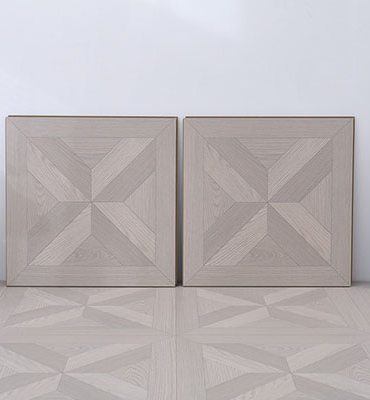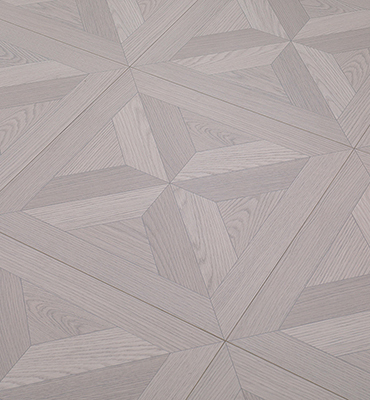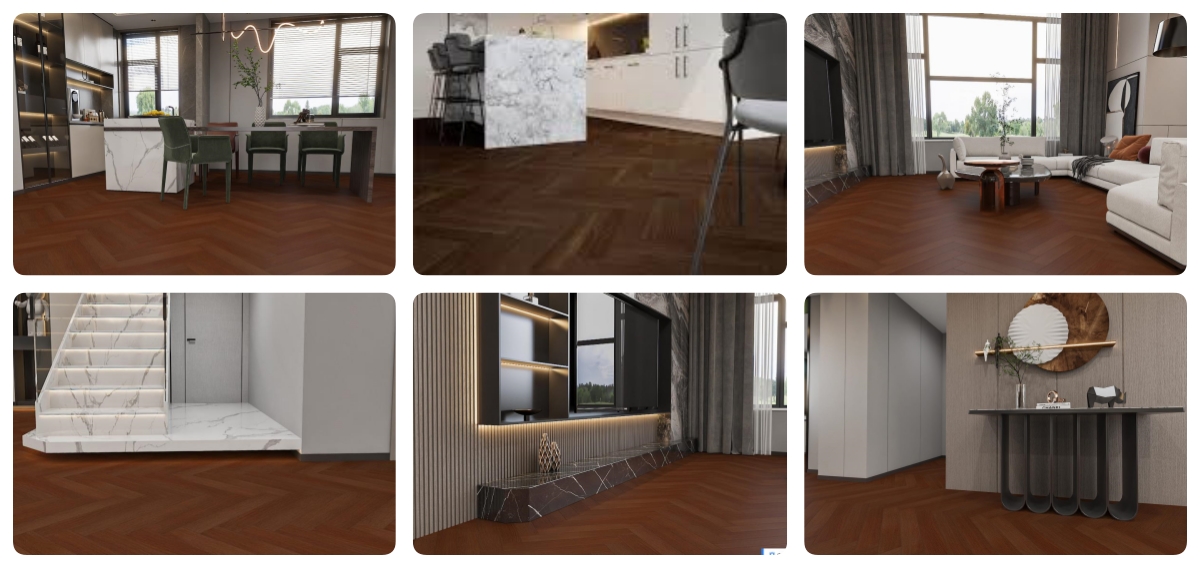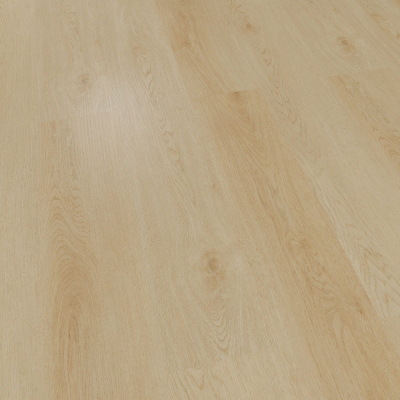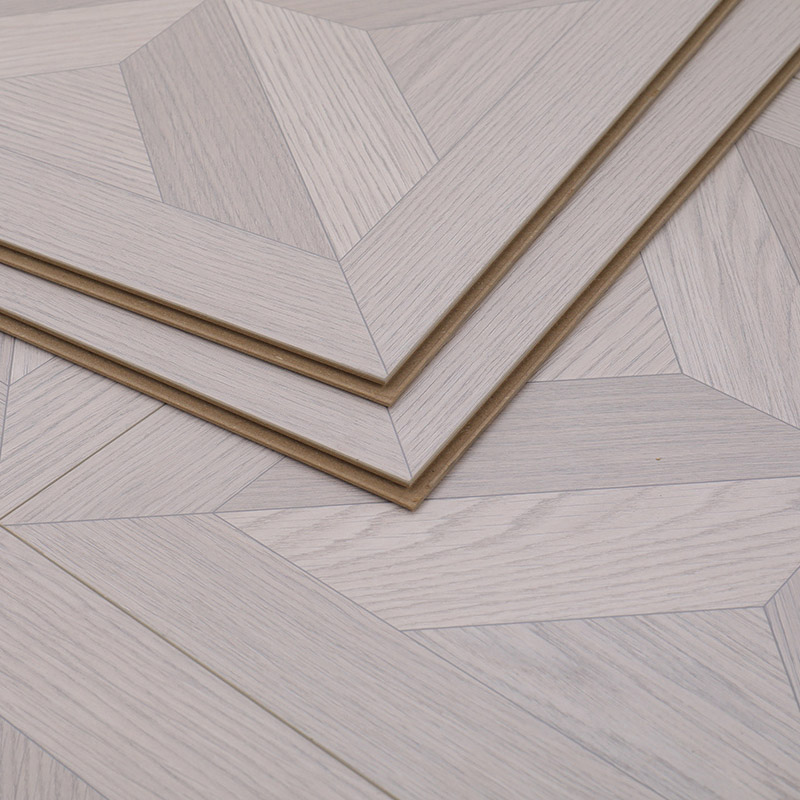
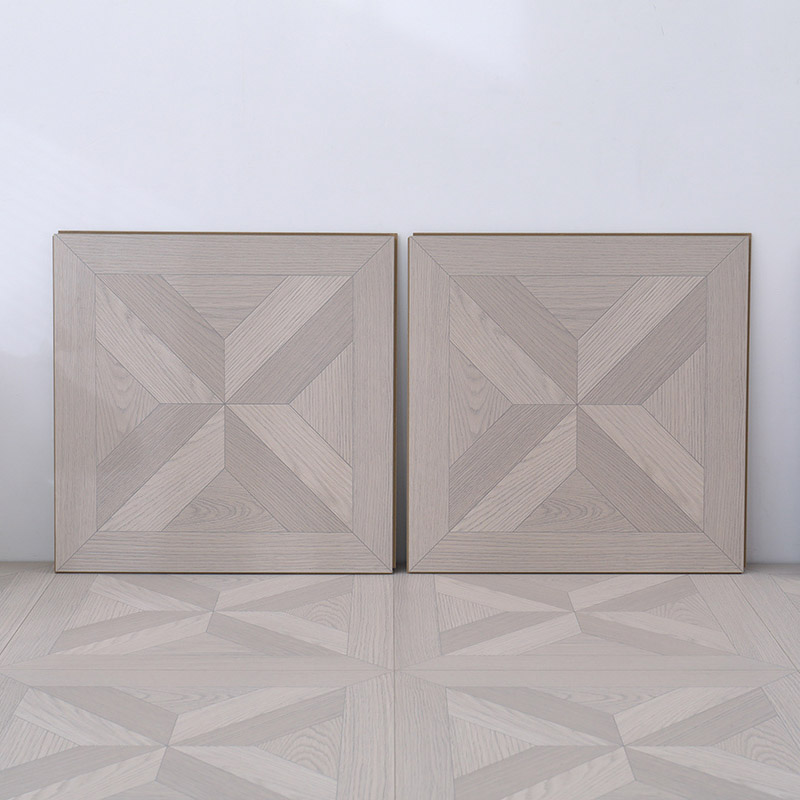
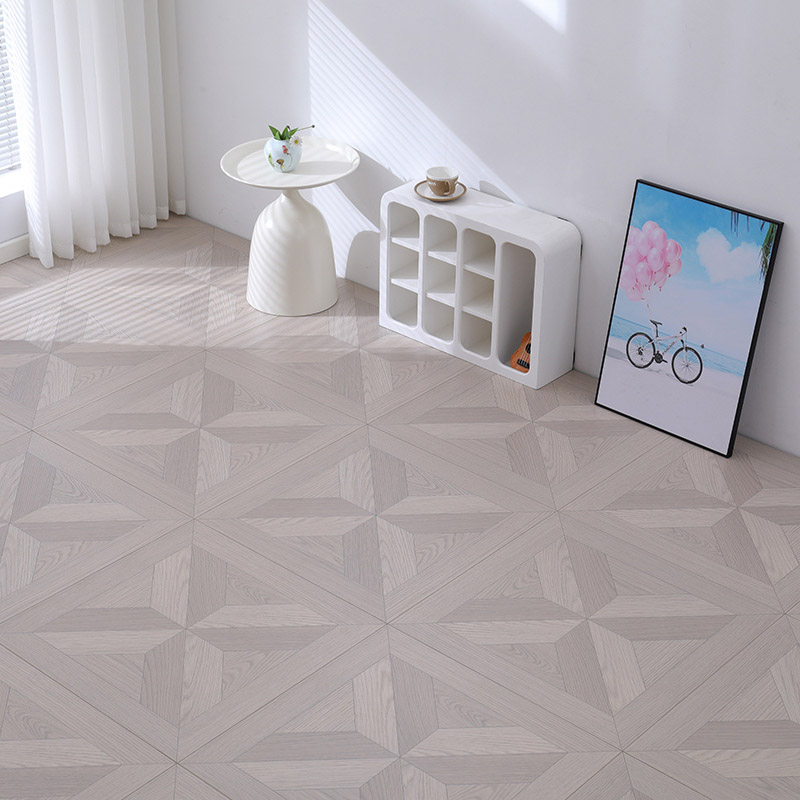
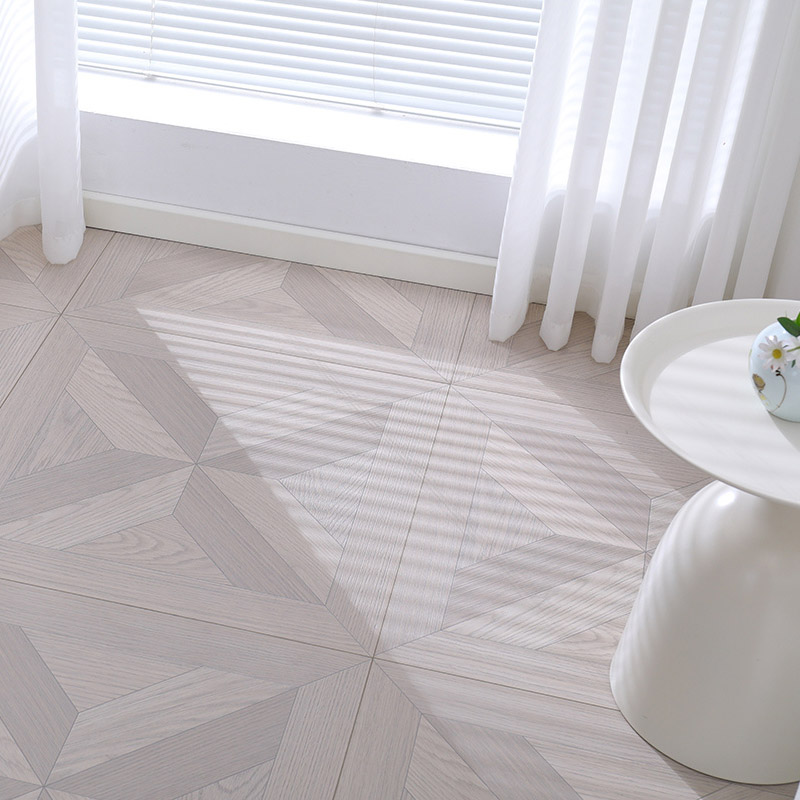
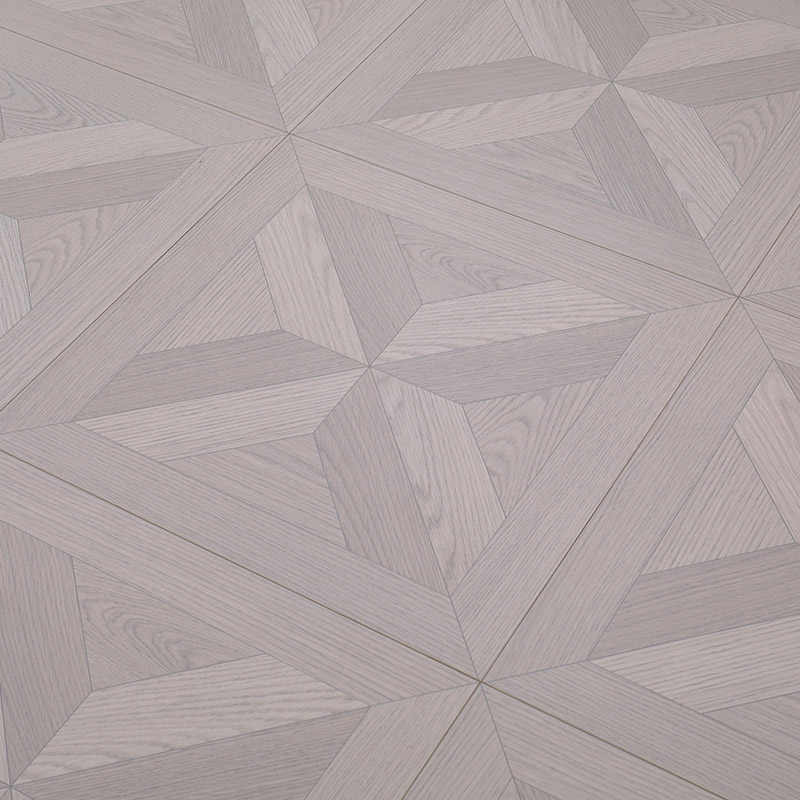
8mm HDF Waterproof Parquet Flooring
Manufacturing Process and Engineering Control
Process Flow
Wood fiber refining and drying
High-pressure HDF board pressing
Precision sanding and thickness calibration
Decor paper impregnation with melamine resin
Hot pressing and lamination
Parquet pattern cutting and profiling
Click-lock milling and edge waterproof treatment
Quality inspection and packaging
Key Production Equipment
Continuous hot-press lines
CNC profiling and locking machines
Automated wax sealing systems
Abrasion resistance testing devices
Moisture and density inspection instruments
Product Definition: 8mm HDF Waterproof Parquet Flooring
8mm HDF waterproof parquet flooring is an engineered laminate flooring system manufactured with a high-density fiberboard core and enhanced moisture-resistant technology. Designed for commercial and residential interiors, it combines parquet aesthetics with dimensional stability, wear resistance, and controlled water absorption suitable for engineered flooring projects.
What Is 8mm HDF Waterproof Parquet Flooring?
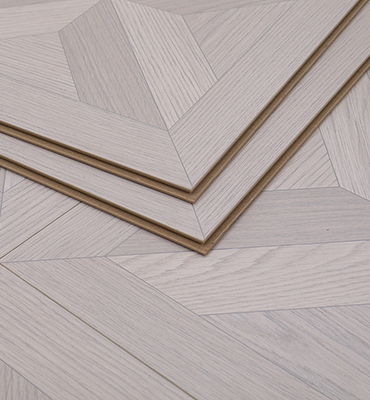
8mm HDF waterproof parquet flooring is an engineered laminate flooring system manufactured with a high-density fiberboard (HDF) core and enhanced moisture-resistant technology. The product combines a parquet pattern—herringbone, chevron, or other geometric layouts—with the dimensional stability and wear resistance of laminate flooring.
The "8mm" refers to the total thickness of the plank. The "HDF" refers to the core material—high-density fiberboard. The "waterproof" refers to the enhanced moisture-resistant treatment applied to the core and edges. The "parquet" refers to the visual pattern—a geometric arrangement of planks that reproduces the appearance of traditional parquet flooring.
Terminology note: The term "waterproof" in the product name refers to the enhanced moisture-resistant treatment applied to the core and edges. In technical terms, the product is water-resistant—it resists moisture ingress but is not designed for permanent water immersion. The product is not intended for continuously wet rooms.
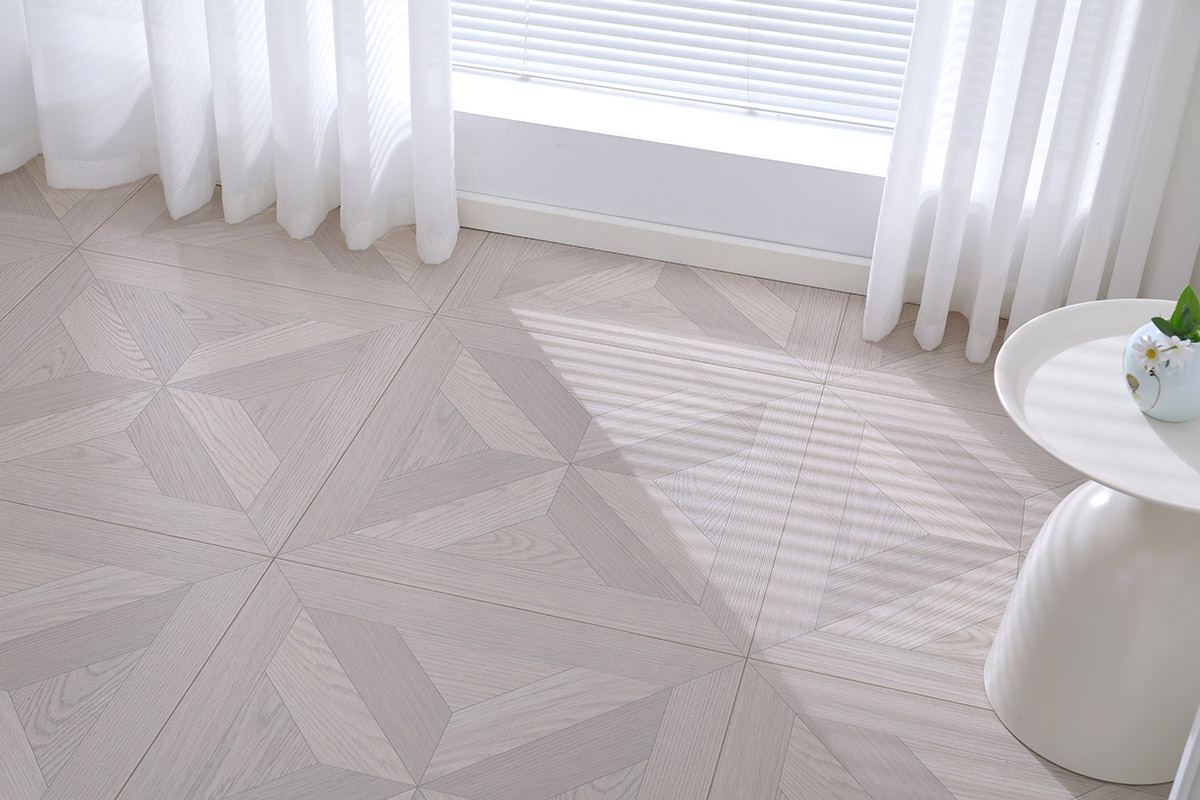
This product is suitable for residential and commercial interiors where a parquet appearance, dimensional stability, and enhanced moisture resistance are required.
How Does Waterproof HDF Parquet Flooring Resist Moisture?
The moisture resistance of HDF parquet flooring comes from several elements working together. Understanding each element helps specifiers evaluate the product's suitability for a given application.
HDF Core Density
The HDF core is made from refined wood fibres bonded with resin under heat and pressure. Higher core density improves the core's resistance to moisture absorption and dimensional change. Core density also affects load-bearing strength, joint strength, and indentation resistance.
Key point: Core density is one factor in moisture resistance, but it does not make the core waterproof. The HDF core remains moisture-sensitive—it can absorb water if moisture penetrates the edges or joints.
Edge Sealing
The edges of the plank are the most vulnerable area for moisture ingress. Edge sealing treatments—such as wax, paraffin, or hydrophobic additives—are applied to the edges and the click-lock profile to reduce moisture penetration.
The click-lock profile is typically treated with the same edge sealing material as the plank edges. Some products apply additional sealing to the locking profile to reduce moisture ingress at the joints.
Key point: Edge sealing reduces moisture ingress but does not eliminate it. If water reaches the exposed HDF edge, the core can still absorb moisture. Edge sealing is a protective measure, not a waterproof barrier.
Surface Protection
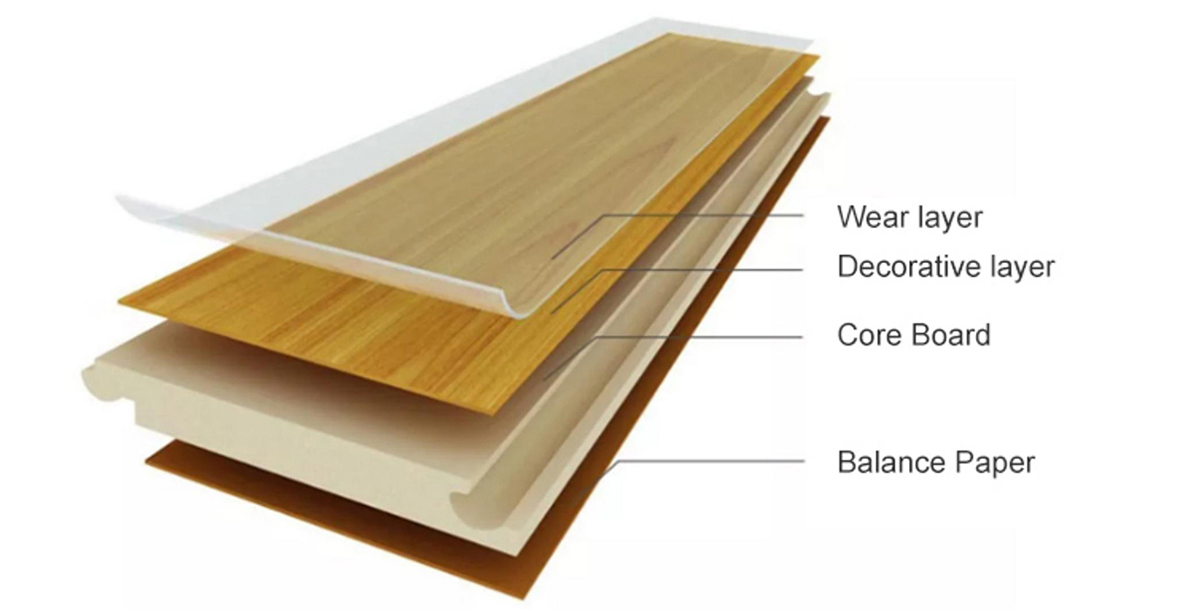
The wear layer and decorative layer protect the surface from water penetration. The melamine resin-impregnated overlay and the printed décor layer are resistant to surface moisture. However, surface protection does not protect the core if water reaches the edges or joints.
Key point: Surface protection keeps water out of the surface layers, but it does not make the entire product waterproof. Water can still enter through the edges and joints.
Joint and Locking System
The locking system—click-lock or other profile—is designed to connect the planks and, in some products, to resist moisture ingress. The precision of the locking profile and the presence of edge sealing affect how well the joint resists water.
Key point: Moisture resistance is not only about the board surface. The joints, edges, and locking system also affect the product's moisture performance. A product with a moisture-resistant core and sealed edges will perform better than a product without these treatments.
8mm Waterproof HDF Parquet Technical Specifications
| Parameter | Actual Specification |
|---|---|
| Thickness | 8 mm ± 0.2 mm |
| HDF Density | 850–900 kg/m³* |
| Water Absorption | ≤ 8%* |
| Edge Treatment | Wax / hydrophobic sealing |
| Wear Class | AC3 / AC4 |
| Locking System | Unilin or Valinge compatible click system |
| Moisture Swelling | Actual test value |
| Formaldehyde | E1 / CARB P2 |
| Parquet Pattern | Actual available patterns |
| Design Service Life | 10–15 years (commercial use) |
*Values marked with an asterisk are typical industry ranges. The actual specification must be verified against the product test report for the specific product.
Contact us for the complete technical datasheet, test reports, and OEM specifications. Technical values vary by production specification, and the appropriate specification depends on the project requirements. We provide test reports with each shipment.
How to verify the actual specification: Request the product test report and datasheet. The test report provides the actual values for thickness, density, water absorption, and other parameters. Compare the actual values against the project requirements.
Important note on "waterproof": This product is water-resistant HDF laminate/parquet flooring with enhanced moisture protection. It is not intended for permanent water immersion or continuously wet rooms.
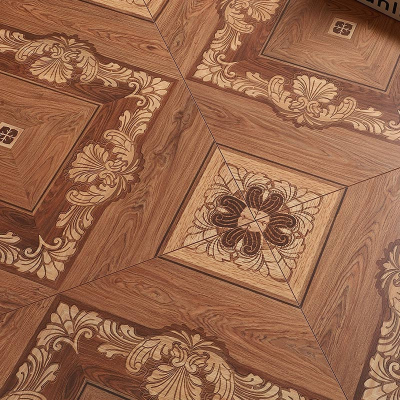
Parquet Pattern Options
The parquet pattern is one of the defining features of this product. The following pattern options are commonly available. Availability depends on the specific product range—contact us for current options.
Herringbone
Description: Planks laid at 90° to each other in a repeating V-shape.
Visual effect: Strong directional lines; sense of movement and craftsmanship.
Suitable for: Large spaces and statement floors. The angled planks create a sense of movement and architectural definition.
Considerations: Pattern repeat, installation direction, cutting waste, visual alignment.
Chevron
Description: Angled planks forming a continuous V-pattern, with cut ends.
Visual effect: More uniform and refined than herringbone.
Suitable for: Contemporary and luxury interiors. The continuous V-pattern creates a refined, elegant appearance.
Considerations: Pattern repeat, installation direction, cutting waste, visual alignment.
Mosaic and Other Patterns
Description: Other geometric arrangements, such as basket weave, block pattern, or mosaic.
Visual effect: Grid-like or mosaic appearance.
Suitable for: Traditional and transitional interiors. The grid-like pattern provides a classic, structured appearance.
Considerations: Pattern repeat, installation direction, cutting waste, visual alignment.
Key considerations for all parquet patterns:
Plank dimensions. Parquet patterns require specific plank dimensions. Verify the available plank sizes for the pattern.
Pattern repeat. The pattern repeat determines how often the design repeats. Longer repeats reduce visible repetition.
Installation direction. Parquet patterns have a defined installation direction. Verify the recommended direction for the pattern.
Cutting waste. Parquet patterns typically generate more cutting waste than standard plank layouts. See the waste section below.
Visual alignment. Parquet patterns require precise alignment during installation. Verify the installation guidelines for the pattern.
Batch colour consistency. For large projects, batch colour consistency is important. Verify batch control procedures and request batch test reports.
Choosing the right pattern: The appropriate pattern depends on the design intent, room dimensions, and installation budget. Herringbone and chevron suit larger spaces and statement floors; mosaic and other patterns suit traditional and transitional interiors.
How Is 8mm Waterproof HDF Parquet Flooring Manufactured?
The manufacturing process for 8mm waterproof HDF parquet flooring includes the following steps.
HDF Core Preparation
Wood fibres are refined, dried, and pressed into HDF board. The board is sanded and calibrated to the required thickness.
Decorative Layer Lamination
The decorative paper—printed with the parquet pattern—is impregnated with melamine resin and laminated onto the HDF core under heat and pressure.
Parquet Pattern Cutting
The laminated panels are cut into the plank dimensions required for the parquet pattern. The cutting is controlled to ensure pattern alignment and consistency.
Click Profile Machining
The click-lock profile is machined into the plank edges using CNC equipment. The precision of the profile determines joint engagement and locking performance.
Edge Waterproof Treatment
The edges and click-lock profile are treated with wax, paraffin, or hydrophobic additives to reduce moisture penetration.
Quality Testing
The finished product is tested for thickness, density, water absorption, abrasion resistance, locking strength, and moisture swelling. Test reports are generated for each batch.
For the general laminate manufacturing process, see the laminate flooring manufacturing page.
Waterproof HDF Parquet vs Solid Wood vs SPC
| Factor | Waterproof HDF Parquet | Solid Wood Parquet | SPC |
|---|---|---|---|
| Core | HDF | Natural wood | Rigid composite |
| Water resistance | Enhanced (moisture-resistant treatment) | Lower (moisture-sensitive natural wood) | High (waterproof core) |
| Parquet appearance | High | Natural | Product dependent |
| Installation | Click/floating | Glue/nail/floating | Click/glue |
| Pattern consistency | Factory controlled | Natural variation | Factory controlled |
| Cost control | Higher | Lower | Medium |
| Maintenance | Moderate | Higher | Lower |
Important note: The appropriate product depends on the project requirements. Waterproof HDF parquet provides a parquet appearance with enhanced moisture resistance and factory-controlled pattern consistency. Solid wood parquet provides a natural wood appearance with natural variation. SPC provides high water resistance with a printed pattern. Verify product test reports before specification.
Where Is 8mm Waterproof HDF Parquet Flooring Used?
8mm waterproof HDF parquet flooring is suitable for a range of applications where a parquet appearance and enhanced moisture resistance are required. The following sections explain the considerations for each application.
Residential Living Areas
Why it works here: Parquet provides a distinctive, design-led appearance for living areas. The 8mm thickness is suitable for standard residential use, and the enhanced moisture resistance provides additional protection against spills and humidity.
Why not solid wood: Solid wood parquet provides a natural appearance but is moisture-sensitive and requires more maintenance. Waterproof HDF parquet provides a similar appearance with enhanced moisture resistance.
Key considerations: Subfloor flatness, moisture control, pattern selection.
Hotel Rooms
Why it works here: Parquet provides a premium appearance for hotel guest rooms. The 8mm thickness and AC3/AC4 wear class are suitable for hotel traffic, and the enhanced moisture resistance provides protection against spills.
Why not SPC: SPC provides high water resistance but has a printed pattern rather than a natural wood appearance. Waterproof HDF parquet provides a more authentic parquet appearance.
Key considerations: Wear class, acoustic performance, colour consistency.
Serviced Apartments
Why it works here: Parquet provides a durable, design-led appearance for serviced apartments. The click-lock system allows fast installation, and the enhanced moisture resistance provides protection against moisture in kitchen and bathroom-adjacent areas.
Why not solid wood: Solid wood parquet is moisture-sensitive and requires more maintenance in serviced apartment environments.
Key considerations: Thickness, wear class, installation speed.
Retail and Showrooms
Why it works here: Parquet provides a premium, design-led floor for retail and showroom environments. The enhanced moisture resistance provides protection against cleaning and spills.
Why not SPC: SPC provides high water resistance but may not provide the parquet appearance required for a premium retail environment.
Key considerations: Wear class, maintenance requirements, colour consistency.
Renovation Projects
Why it works here: The 8mm thickness minimizes floor buildup, and the click-lock system allows fast installation over suitable existing floors. The enhanced moisture resistance provides protection in renovation projects where moisture conditions may vary.
Why not solid wood: Solid wood parquet typically requires a thicker floor buildup and more installation time.
Key considerations: Subfloor flatness, existing floor condition, moisture control.
For product-specific recommendations, contact us with your project requirements.
Common Waterproof HDF Parquet Flooring Problems
The following problems are specific to waterproof HDF parquet flooring. The most common problem in waterproof HDF parquet installations is edge swelling, followed by joint moisture ingress, pattern misalignment, uneven subfloor, excessive cutting waste, and colour variation between batches.
Edge swelling. Cause: moisture enters exposed HDF edges. Solution: replace affected planks, address the moisture source. Prevention: specify edge sealing, install vapour barrier, clean up spills promptly.
Joint moisture ingress. Cause: water enters the joints through the locking profile. Solution: address the moisture source, replace affected planks if necessary. Prevention: specify edge sealing, maintain joint engagement, seal the perimeter.
Pattern misalignment. Cause: incorrect installation, inaccurate pattern cutting, or mixed batches. Solution: disassemble and reinstall the affected area. Prevention: verify pattern alignment and batch consistency before installation.
Uneven subfloor. Cause: subfloor flatness beyond tolerance. Solution: level the subfloor with self-levelling compound before installation. Prevention: verify subfloor flatness before installation.
Excessive cutting waste. Cause: complex parquet patterns, incorrect layout planning, or room dimensions that do not align with the pattern. Solution: plan the layout carefully, order additional material. Prevention: calculate waste before ordering (see below).
Color variation between batches. Cause: batch variation in the decorative paper. Solution: verify batch consistency and plan installations from a single batch where possible. Prevention: specify batch control procedures and request batch test reports.
Parquet Flooring Waste and Installation Considerations
Parquet flooring typically generates more cutting waste than standard plank layouts, because of pattern alignment and cutting requirements. The actual waste depends on:
Pattern type (herringbone, chevron, mosaic)
Room dimensions and shape
Installation direction
Layout planning
Typical waste ranges (verify with your installer):
Standard plank layout: Lower waste
Herringbone: Higher waste
Chevron: Higher waste
Complex parquet: Highest waste
Example: For a herringbone pattern in a 50 m² room with standard dimensions, the waste rate is typically higher than for a standard plank layout. The exact waste depends on the room dimensions, pattern, and installation plan. Calculate the expected waste based on the specific project, and order additional material to cover waste and future repairs.
Important note: Waste percentages vary by project. There is no universal "standard waste rate." Calculate the expected waste based on the specific pattern, room dimensions, and installation plan. Order additional material to cover waste and future repairs.
Installation considerations:
Subfloor flatness. Verify flatness before installation.
Moisture control. Install a vapour barrier where required.
Expansion gaps. Maintain expansion gaps at the perimeter and at intermediate intervals.
Pattern alignment. Verify pattern alignment during installation.
Acclimation. Acclimate the product before installation.
For detailed installation instructions, contact us for the installation manual for your specific product.
Engineering Case
The following case illustrates a project using 8mm waterproof HDF parquet flooring.
Project type: Mixed-use residential project.
Floor area: Approximately 4,500 m².
Project background: The project required a parquet appearance with enhanced moisture resistance for a mixed-use residential development. The 8mm HDF waterproof parquet was selected over solid wood parquet for its dimensional stability and moisture resistance.
Flooring specification: 8mm HDF waterproof parquet flooring, floating installation.
Installation method: Floating click system.
Result: Post-installation monitoring showed stable dimensional performance under seasonal humidity changes.
Note: Project-specific details are available on request. For reference projects in your market, contact us. Cost comparisons and performance data should be verified against project-specific quotations and monitoring data.
Price positioning. Waterproof HDF parquet is generally positioned at a higher price point than standard laminate, because of the enhanced moisture-resistant treatment. It is generally positioned at a lower price point than solid wood parquet. Compare total installed cost, including installation, maintenance, and replacement over the service life. For pricing information, contact us with your project requirements.
FAQ: 8mm HDF Waterproof Parquet Flooring
1. Is 8mm HDF parquet flooring waterproof?
It is water-resistant HDF laminate/parquet flooring with enhanced moisture protection. It is not intended for permanent water immersion or continuously wet rooms. The term "waterproof" in the product name refers to the enhanced moisture-resistant treatment, not to full waterproofing.
2. How does waterproof HDF parquet resist moisture?
Moisture resistance comes from several elements: HDF core density, edge sealing (wax, paraffin, or hydrophobic additives), surface protection (wear layer and decorative layer), and the joint and locking system. These elements work together to reduce moisture ingress.
3. Is waterproof HDF suitable for bathrooms?
Waterproof HDF parquet is not recommended for bathrooms or continuously wet rooms. It is water-resistant but not designed for permanent water immersion. For bathrooms, consider waterproof SPC flooring.
4. What moisture-control measures are required for kitchen installations?
For kitchen installations, clean up spills promptly, use a vapour barrier where required, and maintain joint engagement. For areas with high moisture exposure, consider waterproof SPC flooring.
5. What happens if water reaches the HDF edge?
If water reaches the exposed HDF edge, the core can absorb moisture and swell. Edge sealing reduces the risk, but it does not eliminate it. Clean up spills promptly and maintain moisture control.
6. Does edge sealing improve water resistance?
Yes. Edge sealing—wax, paraffin, or hydrophobic additives—reduces moisture penetration at the edges and joints. It is a protective measure, not a waterproof barrier.
7. What HDF density is suitable for waterproof parquet?
HDF density typically ranges from 850–900 kg/m³ for this product category. Higher density improves moisture resistance and dimensional stability. Verify the specific product's density against the test report.
8. What is the water absorption rate?
The water absorption rate is product-specific. For this product category, water absorption is typically ≤8% (24-hour test). Verify the specific product's test result.
9. Is 8mm thick enough for commercial projects?
8mm thickness with AC3 or AC4 wear class is suitable for light to medium commercial traffic. For heavy commercial traffic, consider a thicker product or a higher wear class. Verify the wear class against the expected traffic level.
10. Can waterproof HDF parquet be installed over concrete?
Yes, with a vapour barrier. The concrete must be dry, flat, and clean. Verify moisture content before installation.
11. Can it be used with underfloor heating?
Yes, within specified temperature limits. Verify the product's underfloor heating compatibility and follow the underfloor heating manufacturer's instructions.
12. What parquet patterns are available?
Common patterns include herringbone, chevron, and mosaic/other patterns. Availability depends on the product range. Contact us for current options.
13. How much installation waste should be expected?
Waste depends on the pattern type, room dimensions, installation direction, and layout planning. Parquet patterns typically generate more waste than standard plank layouts. Calculate the expected waste based on the specific project and order additional material.
14. Can the parquet dimensions be customized?
Yes. Custom plank dimensions are available for OEM/ODM projects. Contact us with your requirements.
15. Can Floorcasa provide waterproof test reports?
Yes. Contact us for the technical datasheet, test reports, and product documentation for the specific product.
OEM and Custom Waterproof HDF Parquet Flooring
For distributors, importers, and project suppliers, OEM and ODM services allow the product to be customized to the market or brand requirements.
Custom parquet pattern. Custom herringbone, chevron, mosaic, or other patterns.
Custom decor. Custom wood grain, colour, and surface finishes.
Custom plank size. Custom plank dimensions for the specific pattern.
Custom edge treatment. Custom edge sealing formulations for specific moisture requirements.
Private label. Custom branding on packaging and product.
Custom packaging. Custom packaging specifications, including carton design, pallet configuration, and labelling.
Sample approval. Custom orders typically require sample approval before production.
MOQ. MOQ depends on the customization scope. Contact us for details.
Lead time. Lead time for OEM orders is typically 20–35 days after sample approval, depending on the customization scope and order volume.
For OEM/ODM inquiries, contact us with your project requirements.
CTA
For technical datasheets, waterproof test reports, parquet layout drawings, samples, or project-based quotations for 8mm HDF waterproof parquet flooring, procurement teams, distributors, and EPC contractors are encouraged to submit detailed project requirements for evaluation.
E-E-A-T: Authoritative Technical Background
This article is prepared by professionals with long-term experience in engineered flooring manufacturing, quality control, and international project supply, ensuring reliable technical guidance for B2B buyers and engineering decision-makers.
|  |
|