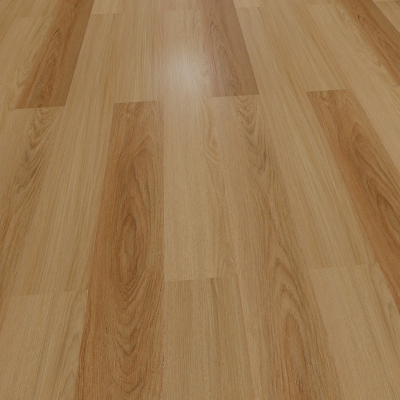
Glossy vs. Matte Flooring: Which Finish Should You Choose?
Glossy vs. Matte Flooring: Which Finish Should You Choose?
Choosing between glossy and matte flooring comes down to the look you want, the lighting in your room, and how you use the space. Glossy floors create a more reflective appearance, while matte finishes offer a softer, lower-sheen look. Satin finishes provide a middle ground for homeowners who want some sheen without a highly reflective surface.
However, floor finish alone does not determine scratch resistance, slip resistance, or water resistance. These properties depend on the flooring material, surface texture, protective coating, product construction, and verified performance data.
In this guide, we compare glossy, matte, and satin flooring finishes, explain their advantages and drawbacks, and show you what to check before choosing a finish for laminate, SPC, or parquet flooring.
Glossy vs. Matte Flooring: What's the Difference?
The table compares the three finishes on the dimensions that affect daily experience. Performance properties are not included in the table because they depend on the specific product rather than on the finish.
| Aspect | Glossy | Matte | Satin |
|---|---|---|---|
| Sheen level | High-shine, reflective surface | Low-luster, non-reflective | Gentle sheen, between glossy and matte |
| Light interaction | Reflects light and can make a room feel brighter | Softens light and reduces glare | Diffuses light with a moderate reflection |
| Visible dust and footprints | High visibility, especially under direct light | Lower visibility under most lighting | Moderate visibility |
| Visible scratches and wear | Reflection tends to make fine marks more noticeable | Lower reflection tends to make fine marks less noticeable, depending on color and texture | Between the two |
| Common design associations | Formal, modern, high-impact | Natural, relaxed, rustic or contemporary | Versatile, suits most interior styles |
| Cleaning note | Frequent dusting keeps the reflective surface clear | Surface texture can hold dust depending on the embossing; follow the care instructions | Similar to matte, with a moderate sheen |
For any of the three finishes, the performance items to verify before ordering are the same: the wear layer and its abrasion class, the slip resistance test data, the water resistance of the product and its installation requirements, and the care instructions for the surface. These are not properties of the finish and should be checked on the specification sheet for the product.
Pros and Cons of Glossy Flooring
Advantages:
The reflective surface can make a room feel brighter and more open.
A glossy finish suits formal dining rooms, entryways and spaces where a high-impact look is wanted.
The smooth surface is straightforward to wipe clean, and spills can be removed from the surface.
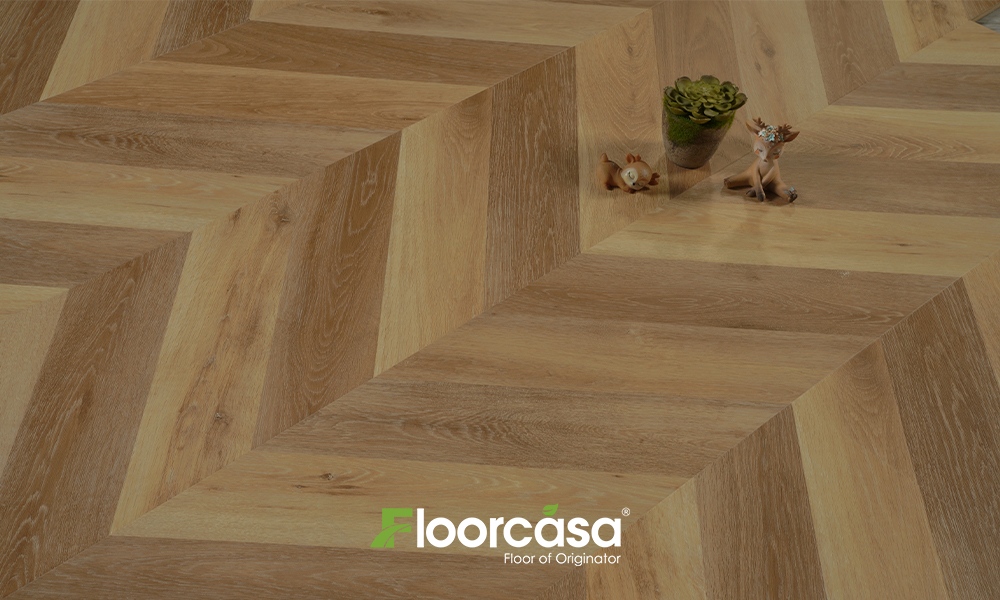
A glossy finish can highlight geometric parquet patterns such as herringbone.
Considerations:
Dust, footprints and smudges are more visible, so the floor needs more frequent dusting to keep the reflective surface clear.
The surface can feel slippery when wet; whether a specific product is suitable for a bathroom or a home with young children depends on its slip resistance test data and surface texture, not on the gloss level alone.
A reflective surface can show subfloor irregularities and uneven areas more clearly.
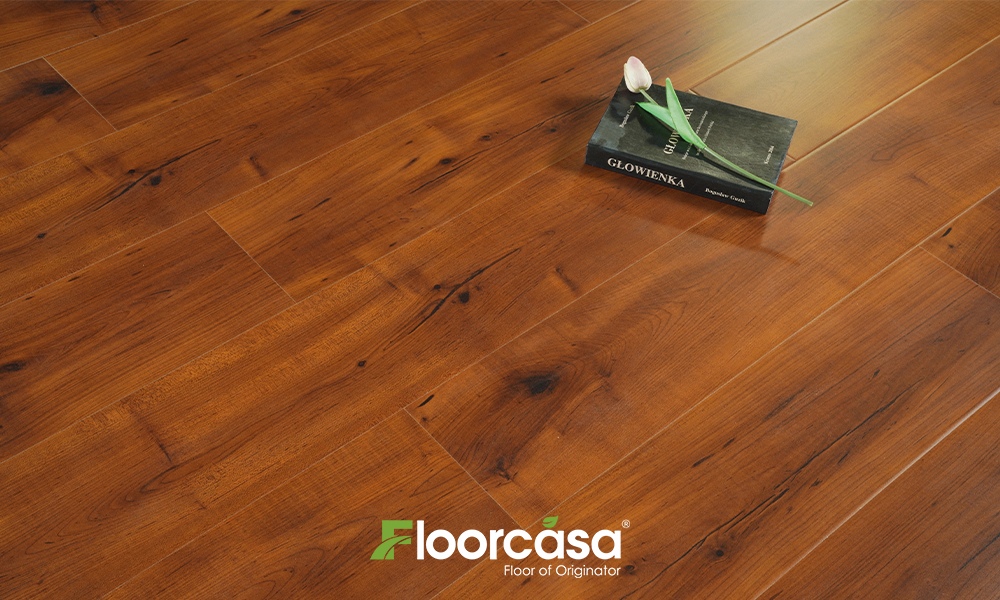
Glossy finishes suit formal and low-traffic spaces, and homes with abundant natural light, where the reflection is an advantage rather than a maintenance burden.
Pros and Cons of Matte Flooring
Advantages:
The lower reflection gives a natural, authentic look that suits wood and stone textures.
Under most lighting, dust and fine marks are less obvious than on a glossy surface; the actual visibility depends on the color, the texture and the depth of the mark.
The softer appearance suits relaxed, rustic and contemporary interiors.
Routine cleaning is less demanding than on a high-gloss surface, because smudges are less visible.
Considerations:
In dimly lit rooms, a matte surface can lack visual depth compared with a reflective finish.
On light colors, spills should be wiped up promptly; whether a stain can penetrate depends on the surface coating and the product's care instructions, so follow those instructions rather than assuming a matte surface absorbs stains.
The look is less formal than a glossy finish, which suits some rooms better than others.
Matte finishes suit high-traffic areas such as kitchens and hallways, rustic or industrial interiors, and homes with pets, where a lower-reflection surface is easier to live with.
What About Satin Flooring?
Satin sits between glossy and matte. It has a gentle sheen without the intense reflection of a glossy surface, and it adds more visual depth than a matte finish. Whether it is the right choice depends on the room, the lighting and the color, in the same way as the other two finishes. Satin is a common choice for homeowners who want some sheen without a highly reflective surface, but it should be selected on the same criteria as glossy and matte rather than treated as a default. As with the other finishes, the wear layer, slip resistance, water resistance and care requirements should be confirmed from the specification sheet for the product; the sheen level itself does not determine these.
Which Flooring Finish Is Best for Each Room?
Living Rooms
Living rooms usually have moderate traffic and good natural light. A satin or glossy finish can add brightness, while a matte finish suits a relaxed, natural look. The choice depends on how much dust and footprints the household is willing to manage and on the furniture and wall colors.
Bedrooms
Bedrooms are low-traffic and often have softer lighting. A matte or satin finish suits a calm, restful look; a glossy finish can work in a bright bedroom but shows dust more readily under direct light.
Kitchens
Kitchens combine traffic, moisture and spills. The finish affects how visible marks are, but suitability for a kitchen depends on the product's water resistance and slip resistance, confirmed from the specific product's test data and installation instructions. A matte or satin surface may show fewer marks, but the finish alone does not make a floor suitable for a kitchen.
Hallways and Other High-Traffic Areas
Hallways and entrances take more foot traffic and grit. A matte or satin finish is usually easier to live with because marks are less visible, but the wear performance depends on the product's wear layer and test data, not on the finish.
Commercial Spaces
In commercial spaces, the finish is a design decision, while the suitability of the floor depends on the product's wear resistance, slip resistance and maintenance requirements. Request the test reports and the maintenance requirements for the product before specifying it for a commercial project.
Glossy vs. Matte by Flooring Type
Laminate flooring is available in different surface finishes, and the finish options vary by product. Whether a specific laminate product is available in glossy, matte or satin should be confirmed from the product's specification sheet rather than assumed from the product category; the laminate flooring product series pages list the finishes offered for each product. The finish affects appearance and how visible dust and marks are; wear and moisture performance depend on the product's overlay, core and edge treatment.
SPC flooring is also available in different surface finishes, and the finish is separate from the core's water resistance. A matte or satin surface may show fewer marks, but whether an SPC product is suitable for a bathroom or kitchen depends on its slip resistance and the installation requirements for the specific product, not on the finish alone. The SPC flooring product series pages list the finishes offered for each product.
Parquet Flooring
Parquet patterns such as herringbone and chevron can be finished in glossy, matte or satin surfaces, depending on the product. A glossy finish can highlight the pattern, while a matte finish gives a more subdued look. The finish options and the performance data should be confirmed for the specific parquet product, and the parquet product series pages list the finishes offered for each pattern.
How to Choose the Right Flooring Finish
A checklist for the decision:
Natural light: note how much daylight the room receives and at what angle, because reflection and visible dust change with the light.
Artificial lighting: check how the floor looks under the room's evening lighting, not only in daylight.
Floor color: light colors show dirt differently from dark colors, and the finish changes how visible marks are on each.
Use and traffic: consider who uses the room and how often, and how much dust and footprints the household is willing to manage.
Cleaning routine: a glossy surface needs more frequent dusting to stay clear; a matte surface is more forgiving under most lighting.
Sample check: order samples in the intended color and finish and view them in the room's own lighting before deciding.
Product specifications: confirm the finish options, wear layer, slip resistance and water resistance for the specific product, rather than assuming them from the finish.
Style: match the finish to the interior style, but treat this as one factor among several rather than the deciding one.
Frequently Asked Questions
1. Is glossy flooring harder to keep clean?
A glossy surface shows dust, footprints and smudges more readily, so it usually needs more frequent dusting to keep the reflective surface clear. Cleaning itself is straightforward; the difference is how often it is needed.
2. Is matte flooring more scratch-resistant?
No. Scratch resistance depends on the wear layer, the surface coating and the product's test data. A matte surface can make fine marks less noticeable, which is a visual effect rather than a measure of scratch resistance; the comparison table above sets out the visibility difference.
3. Which finish is better for homes with pets?
A matte or satin finish usually shows fewer marks under most lighting, which many pet owners find easier to live with. Scratch and slip resistance still depend on the specific product, so check the product's test data rather than choosing on finish alone.
4. What is the difference between satin and matte?
Satin has a gentle sheen and a moderate reflection; matte has a lower-luster, non-reflective surface. Satin adds more visual depth, while matte gives a softer, more natural look.
5. Does the finish affect water resistance?
No. Water resistance depends on the flooring material, the core, the joints and the installation method, not on the finish. Confirm water resistance from the specific product's test data and installation instructions.
6. Can I see the finishes before ordering?
Yes. Samples in the intended color and finish can be requested and viewed in the room's own lighting before deciding. The finish options and the specifications for each product are listed on the product series pages.