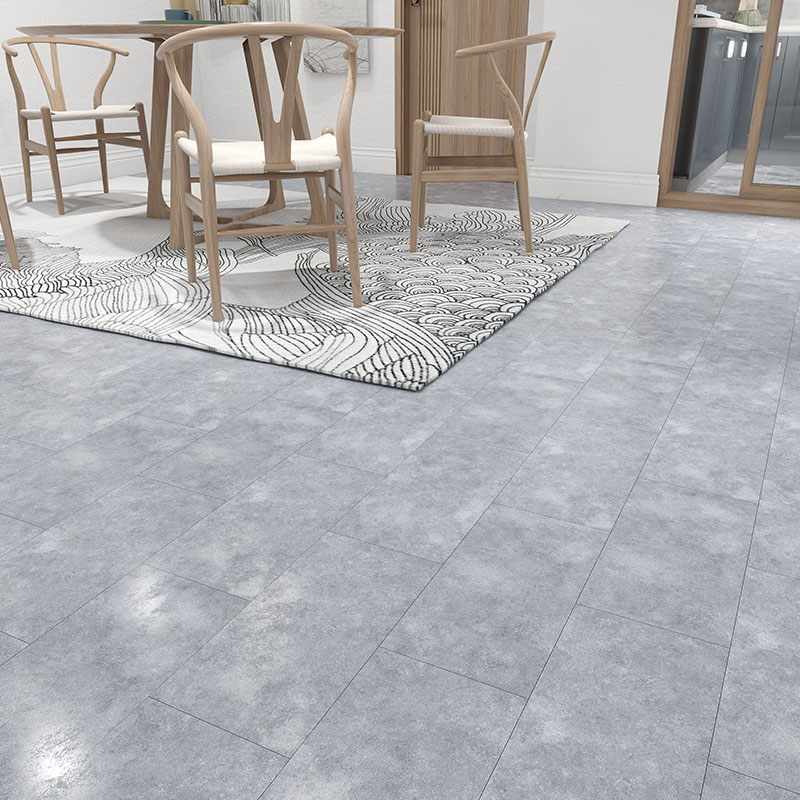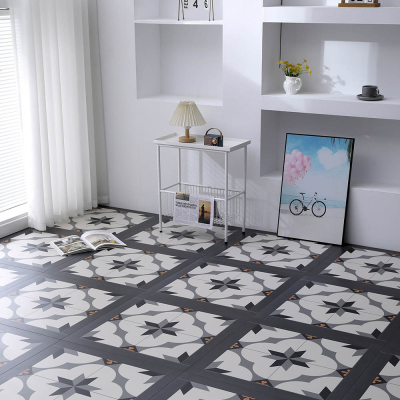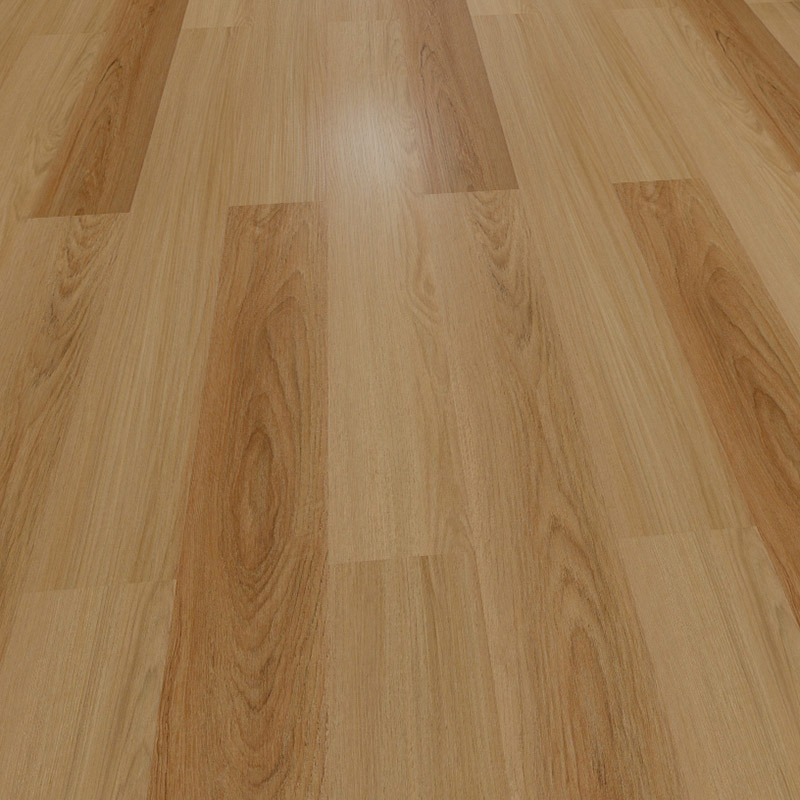
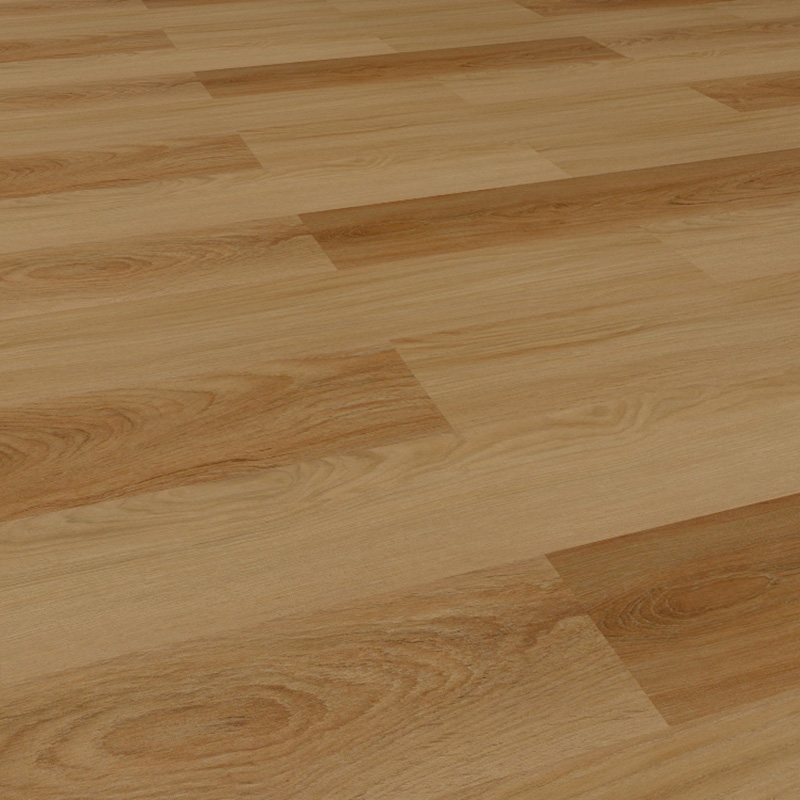
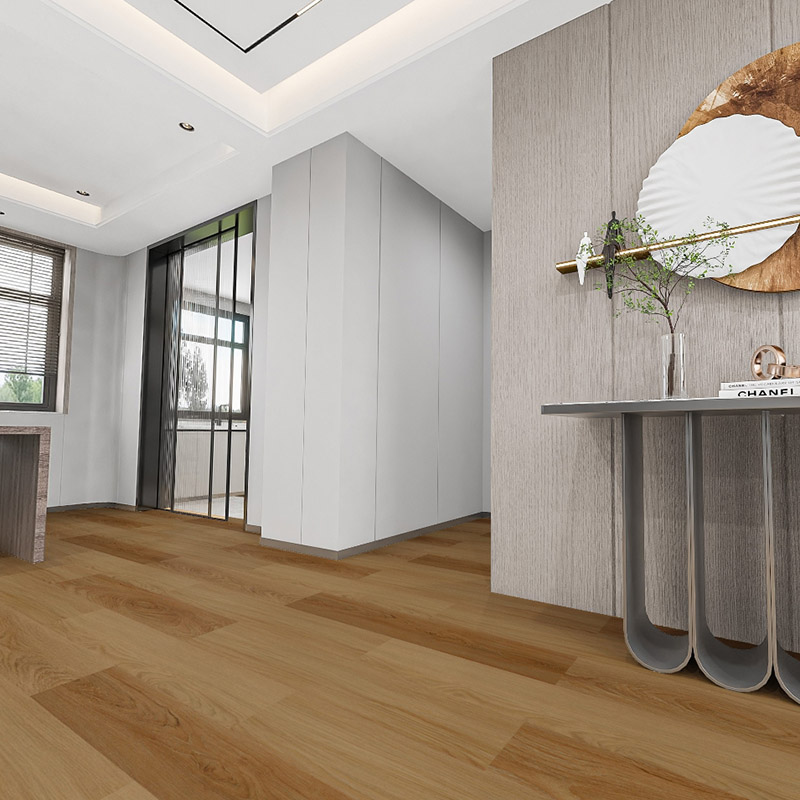
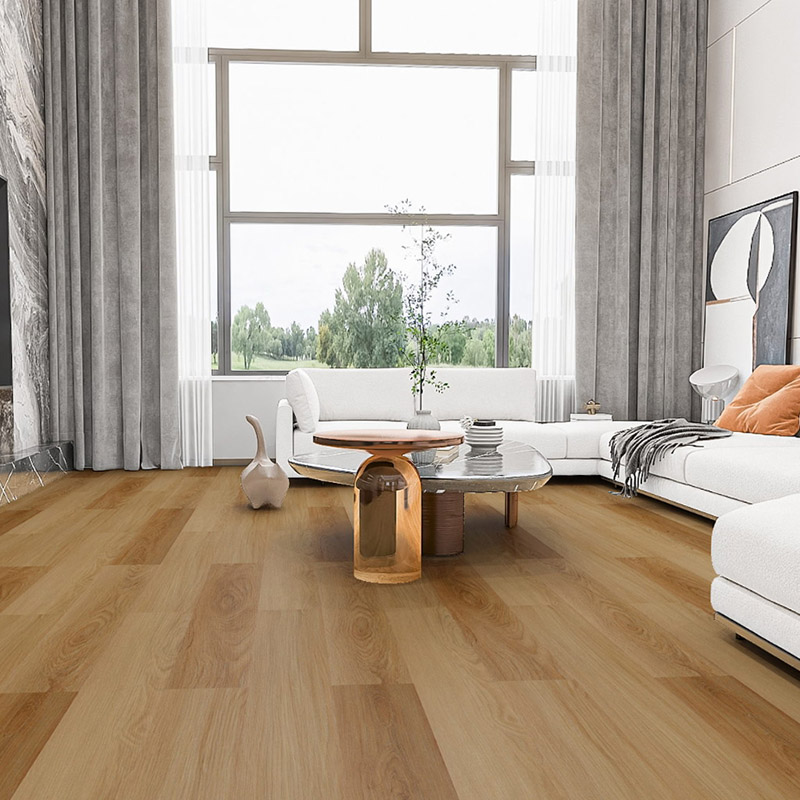
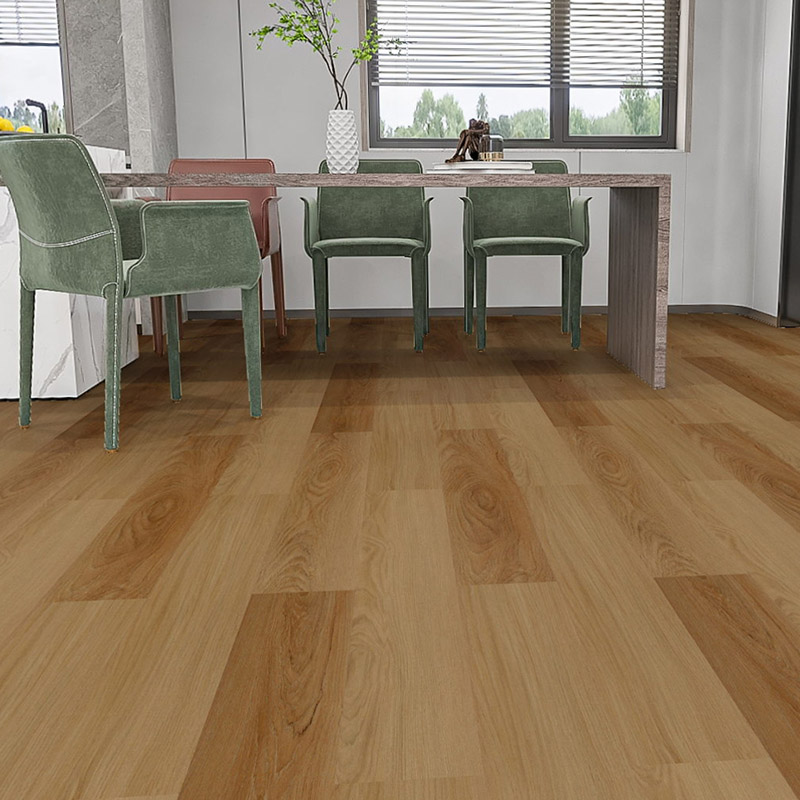
Domestic Wooden Grain SPC Vinyl Flooring
Manufacturing Process
Manufacturing of domestic wooden grain SPC vinyl flooring follows a continuous, highly controlled industrial process.
Raw Material Mixing: PVC resin, calcium carbonate, and stabilizers blended.
High-Temperature Extrusion: SPC core sheet formed using twin-screw extruders.
Calendering & Cooling: Thickness and flatness precisely controlled.
Film Lamination: Decorative and wear layers bonded under heat and pressure.
UV Coating: Multiple coats cured for surface durability.
Profiling: CNC milling of click-lock edges.
Inspection: Dimensional, visual, and mechanical testing.
Packaging: Moisture-resistant cartons for logistics safety.
Product Definition
Domestic wooden grain SPC vinyl flooring is a rigid core flooring system manufactured with a stone-plastic composite core and a decorative wood-grain layer, engineered for stable performance, moisture resistance, and consistent appearance in residential and light commercial construction projects.
What Is Wood Grain SPC Flooring?
Wood grain SPC vinyl flooring combines the appearance of natural wood with the rigid core and low-maintenance characteristics of SPC (Stone Plastic Composite). It is designed for residential rooms where homeowners want a wood-look floor that is easier to maintain and more resistant to everyday moisture than many traditional wood flooring products.
The product is suitable for living rooms, bedrooms, kitchens, and other residential interiors. It is water-resistant at the core—verify the specific product's test data for the intended application. For bathrooms and other wet areas, verify the specific product and installation system are approved for the intended wet-area exposure.
Wood grain SPC vs solid wood. Wood grain SPC reproduces the appearance of wood but is not solid wood. It has a printed decorative layer over an SPC core, rather than a solid wood surface. It is more dimensionally stable and easier to maintain than solid wood, but it cannot be sanded and refinished. For homeowners who want a real wood surface, solid or engineered wood may be preferred. For homeowners who want a wood-look floor with low maintenance, wood grain SPC is a practical choice.
For general SPC product information, see the What Is SPC Flooring page.
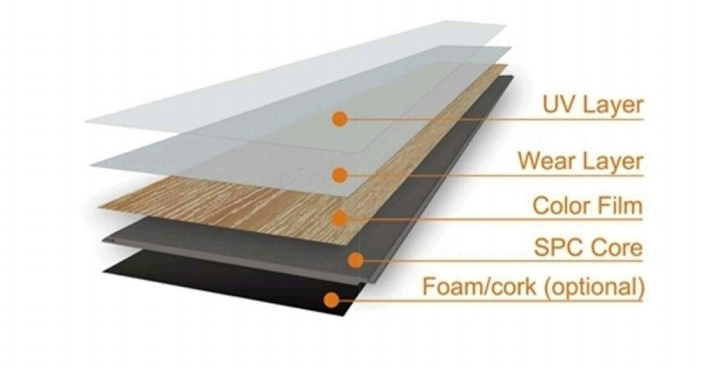
SPC Rigid Core
The SPC core is a composite of calcium carbonate and PVC. It provides structural stability, load-bearing strength, and the material into which the locking profile is machined. The rigid core is what gives SPC its dimensional stability and its resistance to indentation.
Wood Grain Decorative Layer
The decorative layer is a high-definition printed film that reproduces the appearance of natural wood. The printed grain includes the characteristic grain lines, knots, and colour variation of the wood species. High-resolution printing produces a more realistic wood appearance.
Wear Layer
The wear layer is a transparent PVC layer that protects the decorative layer from abrasion. The wear layer thickness determines the product's abrasion resistance. A thicker wear layer resists surface wear for longer.
Surface Texture and Embossing
The surface texture and embossing determine how the floor feels and how realistic the wood appearance is. Options include:
Standard embossed: A textured surface that provides a wood-like feel.
EIR (Embossed in Register): The embossing is synchronized with the printed grain, creating a surface where the texture follows the grain lines. EIR provides higher surface realism.
Matte finish: A low-glare surface that reduces artificial shine and enhances the realism of the wood appearance.
Why it looks like wood: The combination of high-resolution printing, embossing, and matte finish reproduces the appearance and texture of natural wood. The decorative layer is printed with the grain pattern, and the embossing follows the grain (where EIR is available) to create a realistic wood surface.
Why Choose Wood Grain SPC Flooring for Homes?
Wood grain SPC flooring is suitable for residential interiors for several reasons.
Wood-Look Appearance
Wood grain SPC reproduces the appearance of natural wood, including the grain pattern, colour variation, and surface texture. It provides a wood-look floor without the maintenance requirements of solid wood.
Easy Daily Cleaning
Wood grain SPC requires routine dry and damp cleaning. No sealing or waxing is required. Spills can be cleaned up with a damp cloth.
Moisture Resistance
The SPC core is water-resistant—it does not absorb water, swell, or degrade when exposed to moisture. This makes SPC suitable for kitchens and other areas where spills occur.
Scratch and Wear Resistance
The wear layer provides scratch and abrasion resistance. Higher wear layer thickness provides better resistance to surface wear.
Click Installation
SPC uses a click-lock system for adhesive-free floating installation. The click-lock system allows fast installation and individual plank replacement.
Compatibility with Underfloor Heating
SPC is compatible with underfloor heating within specified temperature limits (typically ≤27°C surface temperature). Verify the product's underfloor heating compatibility before installation.
Wood Grain SPC Flooring for Different Rooms
The following sections explain the considerations for each residential room.
Living Room
Key considerations: Appearance, wear, cleaning, furniture movement.
Why it works here: Wood grain SPC provides a warm, natural appearance for the living room. The wear layer resists abrasion from foot traffic and furniture movement, and the surface is easy to clean.
Design notes: Choose a wood grain that complements the furniture and colour palette. Use furniture pads under furniture legs to prevent scratches.
Bedroom
Key considerations: Comfort, acoustic underlay, appearance, barefoot use.
Why it works here: Wood grain SPC provides a calm, natural appearance for the bedroom. Acoustic underlayment can improve the acoustic performance of the floor.
Design notes: Choose a medium or light wood grain for a calm atmosphere. Use acoustic underlayment where acoustic performance is important.
Kitchen
Key considerations: Water, stains, cleaning, wear.
Why it works here: The SPC core is water-resistant, making it suitable for kitchens where spills occur. The surface is easy to clean, and the wear layer resists abrasion from kitchen traffic.
Design notes: Clean up spills promptly. Choose a wood grain that complements the kitchen cabinetry and countertops.
Bathroom
Important note: Bathroom installations require careful consideration. Wood grain SPC is suitable only where the specific product and installation system are approved for the intended wet-area exposure. Joint sealing, perimeter sealing, and subfloor moisture control may be required. Verify the product's suitability for the specific bathroom application before specification.
Recommended practice: For bathroom installations, verify that the specific product and installation system are approved for the intended wet-area exposure. Use gasket joints where required, seal the perimeter, and verify subfloor moisture before installation.
Design notes: Choose a wood grain that complements the bathroom fixtures. Clean up spills promptly.
For detailed waterproof SPC performance, see the Waterproof SPC Flooring guide.
Home Office
Key considerations: Chair movement, wear, appearance.
Why it works here: Wood grain SPC provides a professional, warm appearance for the home office. The wear layer resists abrasion from chair movement, and the surface is easy to clean.
Design notes: Use a chair mat under rolling chairs to protect the floor. Choose a wood grain that supports the office atmosphere.
Laundry / Utility Room
Key considerations: Moisture, cleaning, maintenance.
Why it works here: The SPC core is water-resistant, making it suitable for laundry and utility rooms. The surface is easy to clean and maintain.
Design notes: Clean up spills promptly. Verify the installation requirements for areas with moisture exposure.
Wood Grain SPC Flooring Design Options
Wood grain SPC flooring is available in a range of design options. Availability depends on the specific product range—contact us for current options.
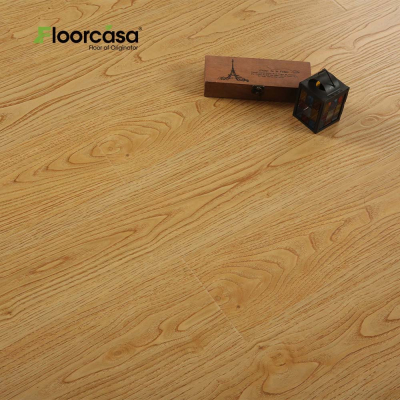
Oak wood grain. Oak is the most common wood grain for SPC flooring. It reproduces the characteristic grain lines and colour variation of oak wood. Suitable for most rooms, including living rooms, bedrooms, and kitchens.
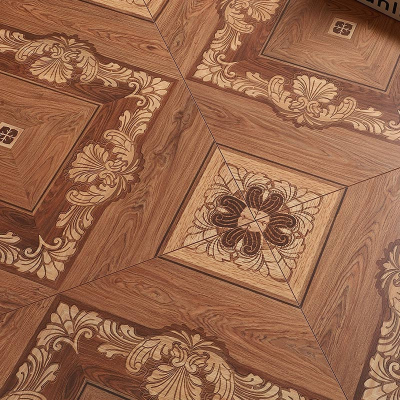
Walnut. Walnut provides a darker, richer appearance. It reproduces the characteristic colour and grain pattern of walnut. Suitable for living rooms and premium interiors.
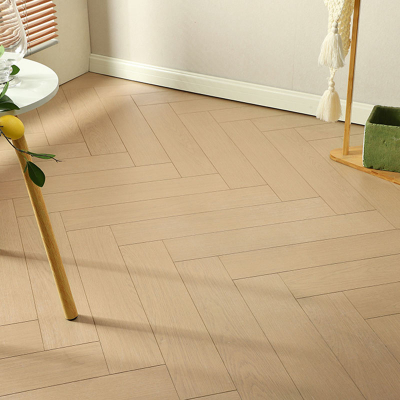
Light wood. Light wood grains reproduce the appearance of light-toned wood species. Suitable for small rooms and bright interiors.
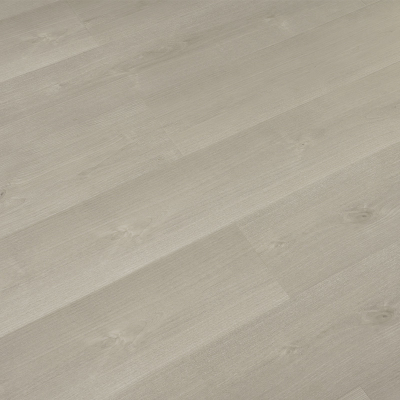
Grey wood. Grey wood grains provide a neutral, contemporary appearance. Suitable for modern and minimalist interiors.
Natural wood. Natural wood grains reproduce the natural appearance of wood, with moderate colour variation and grain detail. Suitable for most residential interiors.
Embossed-in-Register surfaces. EIR surfaces synchronize the embossing with the printed grain, creating a surface where the texture follows the grain lines. EIR provides higher surface realism. Suitable for rooms where surface realism is a priority.
Matte and textured finishes. Matte finishes reduce glare and enhance the realism of the wood appearance. Textured finishes provide additional tactile realism. Matte finishes are suitable for rooms with strong lighting or where glare reduction is important.
Important note: Colour appearance can vary under different lighting conditions. Request physical samples and review them under the actual lighting conditions of the space before making a final decision.
Choosing SPC Thickness and Wear Layer for Residential Use
The appropriate SPC thickness and wear layer depend on the room and the expected traffic level.
3.5–4 mm SPC. Thinner SPC products are suitable for standard residential rooms where floor height is limited or where cost is a priority. Verify the product's performance for the intended application.
5 mm SPC. 5 mm SPC provides a balance of thickness, stability, and cost. It is commonly specified for living rooms, bedrooms, and general residential areas.
6 mm SPC. 6 mm SPC provides a more substantial underfoot feel. It is suitable for areas where a more solid feel is preferred.
0.3 mm wear layer. 0.3 mm wear layer is suitable for residential applications with normal traffic, including bedrooms and living areas.
0.5 mm wear layer. 0.5 mm wear layer is suitable for residential applications with higher traffic, including hallways, kitchens, and home offices.
Important note: Thickness and wear layer are different specifications. Thickness affects the underfoot feel and floor height; wear layer affects abrasion resistance. A thicker product does not automatically have a better wear layer—verify both specifications separately.
SPC Click Installation for Residential Floors
SPC click installation for residential floors requires the following considerations.
Subfloor flatness. The subfloor must be flat within tolerance. Uneven subfloors can cause joint problems and hollow spots.
Expansion gap. Maintain expansion gaps at the perimeter, as required by the product and project conditions.
Click connection. Connect the planks using the click-lock system. Ensure full joint engagement during installation.
Underlay. Install underlayment where required for acoustic performance or moisture control. Verify the product's underlayment requirements.
Doors and cabinets. Cut the planks to fit around doors and cabinets, allowing for the expansion gap.
Transitions. Install transition profiles at doorways and at the junction between SPC and other flooring types.
DIY installation notes. SPC click flooring is suitable for DIY installation. However, for large areas, complex room shapes, or installations over concrete, professional installation is recommended. Before DIY installation, verify the subfloor condition, moisture content, and room conditions. Follow the manufacturer's installation instructions carefully.
For detailed installation instructions, contact us for the installation manual for your specific product. For general SPC installation instructions, see the SPC installation and maintenance guide.
Cleaning and Maintenance of Wood Grain SPC Flooring
Wood grain SPC flooring requires routine cleaning and maintenance.
Daily cleaning. Dry mop or vacuum to remove dirt and grit from the surface.
Removing stains. Remove spills promptly. For stubborn stains, use a pH-neutral cleaner and a soft cloth.
Furniture protection. Use furniture pads under furniture legs to prevent scratches. Avoid dragging heavy furniture across the floor.
Avoiding abrasive cleaners. Avoid abrasive cleaners, scouring pads, bleach, and acid-based cleaners. Use a pH-neutral cleaner.
Protecting the click joints. Avoid excessive water during cleaning. Clean up spills promptly to prevent moisture ingress at the joints. Use a well-wrung mop.
For detailed care instructions, contact us for the product care guide.
Wood Grain SPC Flooring vs Other Home Flooring
| Flooring | Wood Appearance | Moisture Resistance | Maintenance | Installation |
|---|---|---|---|---|
| Wood Grain SPC | High | Water-resistant SPC core | Easy | Click |
| Laminate | High | Product-dependent | Easy | Click |
| Engineered Wood | Very High | Product-dependent | Medium | Varies |
| LVT | High | Product-dependent | Easy | Click / Glue |
Moisture resistance note: Moisture resistance varies by product. Wood grain SPC has a water-resistant core—verify the specific product's test data. Laminate, engineered wood, and LVT moisture resistance depends on the specific product construction. Do not rely on general claims—request the test report.
Important note: The appropriate flooring choice depends on the room, the moisture exposure, the maintenance expectations, and the budget. Verify product test reports before specification.
Is Wood Grain SPC Flooring Suitable for Families?
Wood grain SPC flooring is suitable for many family situations. The following considerations apply.
Children. Prioritise easy cleaning and durability. Wood grain SPC is durable and easy to clean. Spills and accidents can be cleaned up easily. Use furniture pads under furniture legs to prevent scratches.
Pets. Prioritise scratch resistance—verify the wear layer against the expected use. Pet claws may scratch the surface over time. Clean up accidents promptly.
Heavy furniture. Prioritise indentation resistance and use furniture pads under heavy furniture to prevent indentation and scratches.
Daily foot traffic. Wood grain SPC with an appropriate wear layer handles daily foot traffic in residential areas.
Kitchens. The SPC core is water-resistant, making it suitable for kitchens where spills occur. Clean up spills promptly.
Home offices. Prioritise wear resistance and use a chair mat under rolling chairs to protect the floor. Wood grain SPC handles chair movement with an appropriate wear layer.
Important note: The appropriate specification depends on the specific household conditions. Verify the product's test data and the intended application before specification.
Product Quality Checklist for Home SPC Flooring
The following checklist helps verify the quality of wood grain SPC flooring for residential use.
Wear layer. Verify the wear layer thickness (0.3 mm or 0.5 mm) against the expected traffic level.
Core density. Verify the core density against the product specification. Higher density improves stability and indentation resistance.
Dimensional stability. Verify the product's dimensional stability test data.
Click quality. Verify the click system type and locking test reports.
Surface texture. Verify the surface texture (standard embossed or EIR) against the design intent.
Formaldehyde/VOC test. Verify the applicable emission class for the target market.
Fire classification. Verify the applicable fire classification for the project.
Batch colour consistency. For large projects, verify batch control procedures and request batch test reports.
How to verify. Request the product test report and datasheet. Check the product identification, test standard, test result, and report date. Verify that the report matches the product being specified.
Limitations of Wood Grain SPC Flooring
The following limitations should be considered during specification.
Not solid wood. Wood grain SPC reproduces the appearance of wood but is not solid wood. It cannot be sanded and refinished. Damaged planks must be replaced.
Surface scratches. The surface can be scratched by sharp objects or pet claws—verify the wear layer against the expected use.
Moisture in wet areas. For wet areas such as bathrooms, verify the specific product and installation system are approved for the intended wet-area exposure. Joint sealing, perimeter sealing, and subfloor moisture control may be required.
Colour variation. Colour and texture appearance can vary under different lighting conditions. Request physical samples and review them under the actual lighting conditions of the space.
Thickness vs performance. Thickness affects the underfoot feel and floor height; wear layer affects abrasion resistance. Verify both specifications separately—a thicker product does not automatically have better performance.
For projects where these limitations are a concern, consider alternative flooring types or additional system components.
Residential Wood Grain SPC Flooring Applications
Wood grain SPC flooring is suitable for the following residential applications:
Apartments. Wood grain SPC provides a durable, low-maintenance floor for apartment interiors.
Houses. Wood grain SPC provides a wood-look floor for houses, with easy maintenance.
Condos. Wood grain SPC provides a consistent appearance across condo units.
Rental properties. Wood grain SPC provides a durable, low-maintenance floor for rental properties.
Renovation. Wood grain SPC can be installed over suitable existing floors, reducing renovation time.
Home offices. Wood grain SPC provides a professional, warm appearance for home offices.
For product-specific recommendations, contact us with your project requirements.
FAQ: Wood Grain SPC Vinyl Flooring for Homes
1. What is wood grain SPC flooring?
Wood grain SPC flooring is a rigid-core flooring product with a stone-plastic composite core, a decorative wood-grain layer, and a wear layer. It reproduces the appearance of natural wood with the durability and low maintenance of SPC.
2. What should I check when buying SPC flooring for a home?
Check the wear layer (0.3 mm or 0.5 mm), core density, click system, surface texture (standard embossed or EIR), emission class, and fire classification. Request test reports and a physical sample before specification.
3. Is wood grain SPC waterproof?
The SPC core is water-resistant—it does not absorb water, swell, or degrade when exposed to moisture. However, the installation must also be waterproof for wet areas: joint sealing, perimeter sealing, and subfloor moisture control may be required. Verify the specific product's test data.
4. Can SPC flooring be used in kitchens?
Yes. The SPC core is water-resistant, making it suitable for kitchens where spills occur. Clean up spills promptly, and use appropriate joint sealing where required.
5. Can SPC flooring be used in bedrooms?
Yes. Wood grain SPC provides a calm, natural appearance for bedrooms. Use acoustic underlayment where acoustic performance is important.
6. Can SPC flooring be used in bathrooms?
Bathroom installations require careful consideration. Wood grain SPC is suitable only where the specific product and installation system are approved for the intended wet-area exposure. Joint sealing, perimeter sealing, and subfloor moisture control may be required. Verify the product's suitability for the specific bathroom application before specification.
7. What SPC thickness is best for a home?
3.5–4 mm for standard residential rooms where floor height is limited; 5 mm for living rooms, bedrooms, and general residential areas; 6 mm for areas where a more substantial underfoot feel is preferred.
8. Is 0.3 mm or 0.5 mm wear layer better?
0.3 mm is suitable for residential areas with normal traffic. 0.5 mm is suitable for residential areas with higher traffic, including hallways, kitchens, and home offices. The appropriate wear layer depends on the expected traffic level.
9. Can SPC flooring be installed over tile?
Yes, if the tile is flat, sound, and clean. Verify subfloor flatness and moisture content before installation.
10. Is underlayment required?
Underlayment is recommended for acoustic performance and can also provide minor subfloor tolerance. Some SPC products have integrated underlayment. Verify the product requirements.
11. Is SPC suitable for underfloor heating?
Yes, within specified temperature limits (typically ≤27°C surface temperature). Verify the product's underfloor heating compatibility and follow the underfloor heating manufacturer's instructions.
12. How do you clean wood grain SPC flooring?
Daily: dry mop or vacuum. Weekly: damp mop with a pH-neutral cleaner. Avoid abrasive cleaners, bleach, and acid-based cleaners. Use a well-wrung mop and clean up spills promptly.
13. Can SPC flooring be used with pets?
Yes, with an appropriate wear layer. Pet claws may scratch the surface over time—verify the wear layer against the expected use. Clean up accidents promptly.
14. How long does domestic SPC flooring last?
Service life varies by product, traffic level, cleaning regime, and installation quality. Verify product test data and project references for the specific application.
CTA
For technical datasheets, product samples, or project-based quotations for wood grain SPC vinyl flooring, procurement teams and homeowners may submit project requirements for professional evaluation and supply planning.
E-E-A-T Author Credentials
This content is prepared by flooring material engineers and international building material consultants with long-term experience in SPC vinyl flooring manufacturing, testing, and project-level procurement, ensuring accuracy, authority, and practical relevance.