Engineered Wood vs. Solid Hardwood: Which Should You Choose?
What Is the Difference Between Engineered and Solid Hardwood?
How Solid Hardwood Is Constructed
Solid hardwood planks are milled from a single piece of timber, such as oak or maple. The full thickness of the plank is the same wood species, and the surface can be sanded and refinished depending on the remaining thickness and the condition of the plank.
How Engineered Wood Flooring Is Constructed
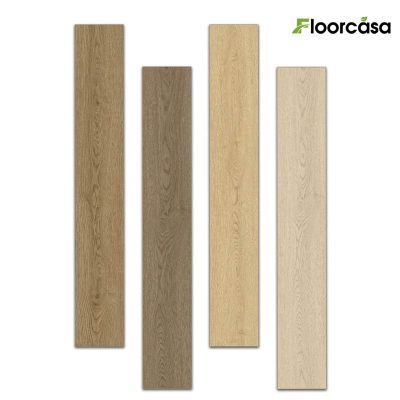
Engineered wood flooring has a real wood veneer on top of a plywood or multi-layer core. The veneer thickness, the core structure and the total thickness vary between products, and these differences affect refinishing ability, dimensional stability, installation method and cost. Engineered wood is not a single uniform product: a thin-veneer, multi-layer plank and a thick-veneer plank behave differently and should not be compared as one category. The construction, veneer thickness options and total thickness for each series are stated on the engineered wood product series page, together with the species and surface finishes currently offered.
Engineered Wood vs. Solid Hardwood: Key Differences
Appearance and Wood Species
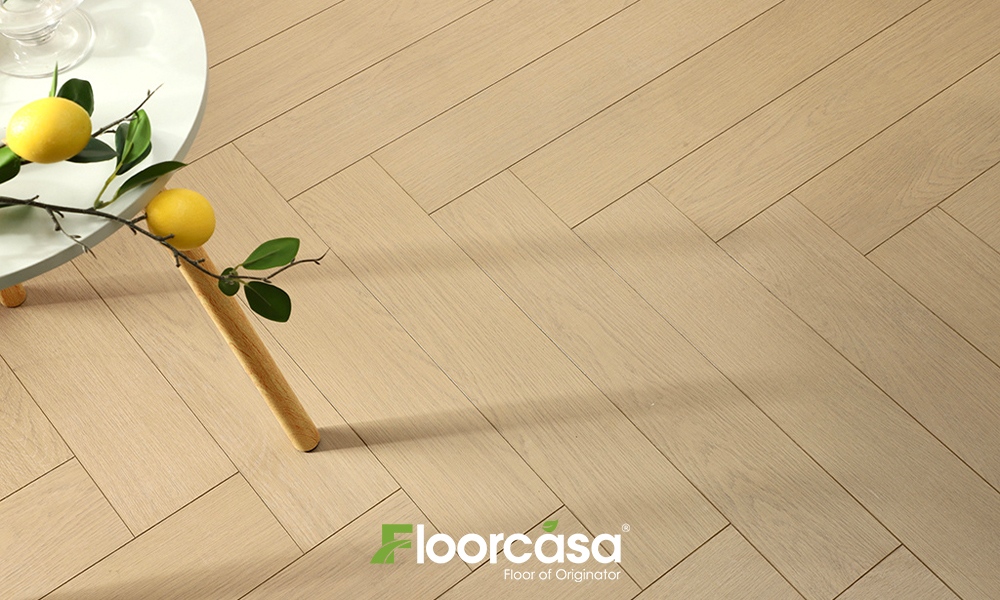
Both product types can use real wood species and show natural grain. Solid hardwood shows the grain through the full plank thickness. Engineered wood shows the grain of the veneer layer, and the species available, the veneer thickness and the surface treatment determine how the finished floor looks and how it can be maintained.
Durability and Surface Wear
Surface durability depends on the wood species, the surface treatment and, for engineered wood, the veneer thickness. A solid hardwood plank and a thick-veneer engineered plank can both be refinished when worn; a thin-veneer engineered plank has less material to work with. Durability should be assessed from the specification of the specific product rather than from the product category. Claims about a fixed service life should be checked against the warranty and product documents for the SKU.
Moisture and Dimensional Stability
Solid hardwood moves with changes in ambient humidity, and the extent depends on the species, the plank width, the finish and the indoor conditions. Engineered wood has a multi-layer core that generally improves dimensional stability, but engineered wood still contains wood and is not a waterproof product. Neither product type should be treated as suitable for basements, kitchens or other moisture-prone areas without checking the installation instructions and warranty terms for the specific product. For projects where water resistance is the priority, a rigid-core product should be considered instead, and the waterproof SPC comparison covers that alternative.
Refinishing and Expected Maintenance
Solid hardwood can usually be sanded and refinished more than once, subject to the remaining thickness and the condition of the planks. Engineered wood refinishing depends on the veneer thickness, the surface structure and the manufacturer's requirements; some products can be lightly sanded, others cannot. The refinishing limits for each series are stated in the technical guide for that series. Maintenance for both types follows the surface treatment and the manufacturer's care instructions, and the expected maintenance routine should be confirmed for the specific product rather than assumed from the category.
Installation Methods and Subfloor Compatibility
Installation method depends on the product structure, the manufacturer's requirements, the subfloor condition and the local environment. Solid hardwood is commonly nail-down over a suitable wood subfloor, and some products can be installed over other subfloors where the manufacturer permits it. Engineered wood can be floated, glued or stapled depending on the product, and some products are suitable over concrete where the manufacturer permits it and the subfloor moisture condition is within the stated limits. Subfloor preparation, moisture testing and flatness requirements are covered in the installation guide for each product. Neither product type should be described as universally suitable or unsuitable for a given subfloor; the installation instructions for the specific product determine this.
Material Cost and Long-Term Ownership Cost
Material cost depends on the wood species, grade, plank thickness, veneer thickness, surface treatment and installation method. Long-term ownership cost also includes refinishing, maintenance products and the expected service life of the specific product. A general percentage difference between the two categories is not reliable, because the range within each category is wide. Buyers should compare quotations for the specific products under consideration rather than relying on a category-level price difference.
Engineered Wood vs. Solid Hardwood Comparison Table
The table compares the same set of factors for both product types. Values that depend on the specific product are marked as such rather than filled with unsourced figures.
| Comparison item | Solid hardwood | Engineered wood |
|---|---|---|
| Construction | Milled from a single piece of timber | Real wood veneer over a plywood or multi-layer core |
| Veneer thickness | Not applicable; full thickness is the same species | Varies by product; stated on the product series page |
| Total thickness | Depends on the product | Depends on the product; stated on the product series page |
| Wood species and surface | Species and surface treatment vary by product | Species, veneer and surface treatment vary by product |
| Appearance | Natural grain through the full plank | Natural grain in the veneer layer |
| Dimensional stability | Moves with ambient humidity; extent depends on species, width, finish and indoor conditions | Multi-layer core generally improves stability; still affected by environment |
| Refinishing | Usually can be refinished more than once, subject to remaining thickness and condition | Depends on veneer thickness, surface structure and manufacturer requirements |
| Installation method | Depends on product and subfloor; commonly nail-down where the manufacturer permits | Depends on product and subfloor; float, glue or staple where the manufacturer permits |
| Moisture-prone areas | Not to be assumed suitable; check installation instructions and warranty | Not waterproof; check installation instructions and warranty |
| Cost | Depends on species, grade, thickness and installation | Depends on species, veneer thickness, structure and installation |
| Maintenance | Follow surface treatment and manufacturer care instructions | Follow surface treatment and manufacturer care instructions |
Which Flooring Is Better for Your Room?
Living Rooms and Bedrooms
Both product types can be used in living rooms and bedrooms where the indoor humidity is controlled and the subfloor meets the requirements. The choice usually turns on appearance preference, veneer thickness, refinishing plans and budget. Confirm the product's installation and maintenance requirements for the room before deciding.
Concrete Subfloors and Underfloor Heating
Some engineered wood products can be installed over concrete where the manufacturer permits it and the subfloor moisture condition is within the stated limits; solid hardwood over concrete depends on the product and the installation system. Underfloor heating compatibility and temperature limits differ between products and should be confirmed from the installation instructions for the specific product. Neither product type should be described as universally compatible with concrete or underfloor heating.
Kitchens and Other Areas with Moisture Exposure
Neither solid hardwood nor engineered wood should be treated as a waterproof floor. In kitchens and other areas with moisture exposure, the suitability of a wood floor depends on the product's installation instructions, the joint and edge protection, the subfloor and the expected exposure. Where water resistance is the main requirement, a rigid-core product should be considered instead. The detailed scenario comparison for specific rooms is covered on the cabin and project flooring guide.
Pros and Cons of Engineered Wood and Solid Hardwood
Engineered wood: advantages include a real wood surface with a multi-layer core that generally improves dimensional stability, installation options that may include float, glue or staple where the manufacturer permits, and the possibility of installation over concrete for some products. Limitations include refinishing limits set by veneer thickness, the fact that engineered wood is not waterproof, and variation in quality between products with different veneer and core structures.
Solid hardwood: advantages include a full-thickness wood plank that can usually be refinished more than once, a traditional appearance and a long-established installation method. Limitations include greater movement with ambient humidity, installation constraints that depend on the product and subfloor, and sensitivity to moisture in the indoor environment.
On environmental performance: neither product type is automatically more environmentally friendly than the other. Environmental performance depends on the material source, the adhesives used, the product's environmental declarations and the local sourcing arrangements. Buyers who need to compare on this dimension should ask for the environmental documentation held for each specific product rather than judging by product category.
Frequently Asked Questions
1. Is engineered wood better than solid hardwood?
Neither is better in general. Engineered wood offers a real wood surface with a multi-layer core that generally improves dimensional stability and may allow installation over concrete where the manufacturer permits. Solid hardwood offers a full-thickness plank that can usually be refinished more than once. The right choice depends on the room, the subfloor, the indoor humidity, the refinishing plan and the budget. The room-by-room section above sets out how those factors apply.
2. Is engineered wood waterproof?
No. Engineered wood contains wood and is not a waterproof product. It should not be installed in moisture-prone areas unless the manufacturer's installation instructions and warranty permit it. For water resistance as the main requirement, a rigid-core product should be considered.
3. Can engineered wood be refinished?
It depends on the veneer thickness, the surface structure and the manufacturer's requirements. Some engineered products can be lightly sanded, others cannot. Confirm this for the specific product before buying.
4. Can solid hardwood be installed over concrete?
It depends on the product and the installation system. Some products can be installed over concrete where the manufacturer permits it and the subfloor moisture condition is within the stated limits. The installation instructions for the specific product determine this.
5. Which is more expensive, engineered wood or solid hardwood?
Cost depends on the wood species, grade, plank thickness, veneer thickness, surface treatment and installation method. The range within each category is wide, so a general percentage difference is not reliable. Compare quotations for the specific products under consideration.
6. Which is better for underfloor heating?
Compatibility and temperature limits differ between products; see the concrete subfloors and underfloor heating section above for how to confirm this for a specific product.
7. How do I choose between engineered wood and solid hardwood?
Start with the room and the subfloor, then confirm the indoor humidity, the refinishing plan and the budget. Compare the specifications for the specific products under consideration rather than the category. The engineered wood product series page lists the constructions, veneer thicknesses, species and finishes currently offered, and the solid hardwood series is listed alongside it.