Flooring Ideas for Open Plan Kitchen Living | Engineer Guide
For architects, interior designers, and homeowners, selecting flooring ideas for open plan kitchen living requires balancing durability (kitchen spills, heavy traffic), moisture resistance, aesthetics, and seamless transitions between cooking, dining, and lounging zones. After analyzing more than 300 open plan residential projects, we have established that the most successful flooring ideas for open plan kitchen living use continuous flooring throughout (no transitions) or complementary materials with matched thickness. This engineering guide provides a definitive comparison of flooring materials: hardwood (warm, can scratch), LVT/SPC (waterproof, durable), tile/stone (extremely durable, cold), concrete (modern, industrial), and engineered wood (stable). We analyze durability (scratch resistance, moisture tolerance), cost per square foot ($3-20), installation complexity, maintenance requirements, and acoustic performance. For homeowners and contractors, we include a selection matrix based on lifestyle (pets, children, cooking frequency) and budget.
What is Flooring Ideas for Open Plan Kitchen Living
The phrase flooring ideas for open plan kitchen living addresses the challenge of selecting flooring that performs across multiple zones in a combined kitchen, dining, and living space. Industry context: Open plan layouts eliminate walls between cooking, eating, and relaxation areas, creating a unified space that requires flooring to withstand kitchen spills (water, oil, acidic foods), heavy foot traffic, furniture movement, and potential moisture from dishwashers or sinks. Why it matters for engineering and procurement: Choosing the wrong material leads to warping (hardwood near sink), staining (porous stone), or excessive wear (softwood in high-traffic areas). Continuous flooring (same material throughout) creates visual flow but requires material that performs in all zones. This guide provides material comparisons, performance data, and decision matrices to optimize flooring selection for open plan layouts.
Technical Specifications – Flooring Materials for Open Plan Kitchen Living
| Material | Moisture Resistance | Scratch Resistance | Comfort Underfoot | Cost (USD per ft² installed) | Best For |
|---|---|---|---|---|---|
| Solid hardwood | Poor (swells, warps) | Moderate (scratches, can refinish) | Warm, natural | $8 – $15 | Low-moisture areas, no pets/kids |
| Engineered wood | Moderate (better than solid) | Moderate (thin wear layer) | Warm | $6 – $12 | Standard living, moderate moisture |
| SPC (rigid core) - waterproof | Excellent (100% waterproof) | Excellent (scratch-resistant coating) .=Warm with pad, can be hard | $4 – $9 .=Best for open plan (kitchen + living) | ||
| LVT (flexible) - waterproof | Excellent (100% waterproof) | Good (scratch-resistant) .=Softer, more comfortable | $4 – $8 .=Residential, comfort priority |
| Porcelain tile | Excellent | Excellent (very hard) | Cold, hard | $10 – $20 .=High-traffic, wet areas (but cold) |
| Polished concrete | Excellent | Excellent (very hard) | Cold, hard | $8 – $15 .=Modern/industrial aesthetic |
Material Structure and Composition – Key Performance Layers
| Material | Structure | Wear Layer | Moisture Barrier | Open Plan Suitability |
|---|---|---|---|---|
| SPC (Stone Plastic Composite) | PVC + limestone core (1.8-2.0 g/cm³) | 12-30 mil wear layer | Inherently waterproof | Excellent (kitchen spills no issue) |
| LVT (Luxury Vinyl Tile) | Flexible PVC core (1.3-1.6 g/cm³) | 12-20 mil wear layer | Inherently waterproof | Good (softer, may indent) |
| Engineered wood .=Plywood core + wood veneer (2-6mm) .=2-6mm wood wear layer .=Not waterproof (topical seal) .=Moderate (avoid standing water) |
| Solid hardwood .=Solid wood (3/4 inch) .=N/A (full thickness) .=Not waterproof .=Poor (swells near dishwasher/sink) |
Manufacturing Process – Quality Indicators by Material Type
SPC production – Limestone (50-70%) + PVC extruded into rigid core. Higher limestone content = greater density, better indentation resistance. Wear layer laminated with heat and pressure.
LVT production – PVC + plasticizers calendered into flexible sheets. Lower density, more comfortable but less resistant to point loads.
Engineered wood – Multi-ply core cross-laminated for stability. Veneer (2-6mm) sliced from log, laminated to core. Thicker veneer allows refinishing.
Porcelain tile – Clay pressed and fired at high temperature (1,200°C+). Denser, harder, more moisture-resistant than ceramic.
Quality control – SPC/LVT: thickness tolerance ±0.1mm, wear layer thickness, indentation testing. Hardwood: moisture content (6-9%), grade (clear, select, rustic).
Performance Comparison – Flooring Options for Open Plan Living
.=Indentation resistance (1-10).=Comfort underfoot (1-10).=Cost (USD per ft²)
| Performance Metric | SPC/LVT | Engineered Wood | Solid Hardwood | Porcelain Tile |
|---|---|---|---|---|
| Water resistance (1-10) | 10 (excellent) | 3 (poor) | 1 (very poor) | 10 (excellent) |
| Scratch resistance (1-10) | 8 (good) | 5 (moderate) | 4 (moderate) | 9 (excellent) |
| 8 (SPC), 6 (LVT) | 6 (moderate) | 5 (moderate) | 10 (excellent) | |
| 7 (with pad) | 8 (warm) | 9 (warm) | 2 (cold, hard) | |
| $4-9 | $6-12 | $8-15 | $10-20 |
Industrial Applications – Open Plan Layout Considerations
Kitchen zone (high moisture, spills, heavy traffic): Requires waterproof flooring. SPC/LVT optimal. Porcelain tile also works but cold underfoot. Avoid hardwood near sink/dishwasher.
Dining zone (spills, chair movement): Scratch resistance important. SPC/LVT with 20+ mil wear layer. Engineered wood acceptable with protective pads on chair legs.
Living zone (comfort, acoustics): Softer underfoot preferred. LVT (flexible) or SPC with thick attached pad (2mm). Area rugs can define zone and add comfort.
High-traffic pathways (continuous flow): Durability across all zones required. SPC with 20-30 mil wear layer or porcelain tile. Avoid softwoods or low-density LVT.
Common Industry Problems and Engineering Solutions
Problem 1 – Hardwood cupping near kitchen sink (moisture damage within 2 years)
Root cause: Solid hardwood installed in open plan with kitchen zone. Water spills and dishwasher steam caused moisture absorption, cupping. Solution: For open plan with kitchen, specify waterproof flooring (SPC/LVT or tile) throughout. If hardwood desired, use engineered wood with plywood core and maintain strict moisture control (dehumidifier, no standing water).
Problem 2 – LVT indentation from refrigerator legs (heavy point load damage)
Root cause: Flexible LVT (1.3 g/cm³ density) insufficient for heavy appliance point loads (300+ lb). Indentation permanent. Solution: Use SPC (rigid core, 1.9 g/cm³) under heavy appliances. Use load distributors (large-area pads) under refrigerator legs.
Problem 3 – Ceramic tile cracks from dropped dish (brittle material failure)
Root cause: Tile is hard but brittle. Dropped heavy object (cast iron pan) causes crack. Solution: For open plan with active kitchen, use resilient flooring (SPC/LVT) which absorbs impact without cracking. Tile better for entryways, not cooking zones.
Problem 4 – Transition height difference between zones (trip hazard)
Root cause: Different materials with different thicknesses (e.g., tile 10mm + thinset 5mm = 15mm vs hardwood 12mm). Solution: Use same thickness throughout, or plan transition strips. For open plan, continuous material (same throughout) eliminates transition hazard.
Risk Factors and Prevention Strategies
| Risk Factor | Consequence | Prevention Strategy (Spec/Selection) |
|---|---|---|
| Hardwood in kitchen zone (moisture) | Cupping, warping, replacement cost .="For any open plan with kitchen, specify waterproof flooring (SPC/LVT or tile). If hardwood required, use engineered wood and install moisture barrier." | |
| Thin wear layer in high-traffic zone .=Premature wear, refinishing not possible .="Specify minimum 20 mil wear layer for SPC/LVT in open plan living areas. For heavy traffic, 30 mil recommended." |
| Flexible LVT under heavy appliances .=Indentations, permanent damage .="Use SPC (rigid core) under heavy appliances. Alternatively, place load distributors (large-area pads) under refrigerator, stove." | |
| Inconsistent thickness creates trip hazard .=Liability, poor aesthetics .="Select materials with same total thickness (including underlayment). For open plan, continuous material recommended." | |
| Poor acoustics (hard surface echo) .=Noisy living space, discomfort .="Use SPC/LVT with attached pad (2mm) for sound absorption. Add area rugs in living zone. Specify acoustic underlayment." |
Procurement Guide: How to Choose Flooring for Open Plan Kitchen Living
Assess moisture exposure – Kitchen sink, dishwasher, spills. For any moisture risk, specify waterproof flooring (SPC/LVT or tile).
Evaluate traffic and use patterns – Heavy daily use, children, pets → SPC with 20-30 mil wear layer. Light use, adults only → LVT or engineered wood may suffice.
Determine comfort requirements – Standing in kitchen: SPC with attached pad (2mm) or LVT. Living zone: area rugs for warmth and acoustics.
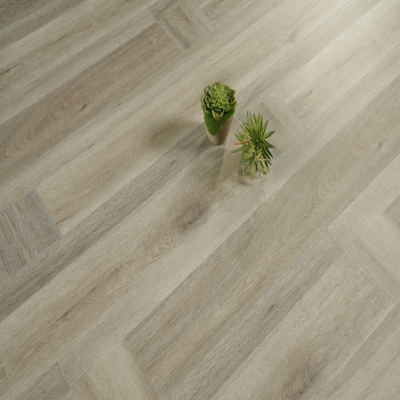
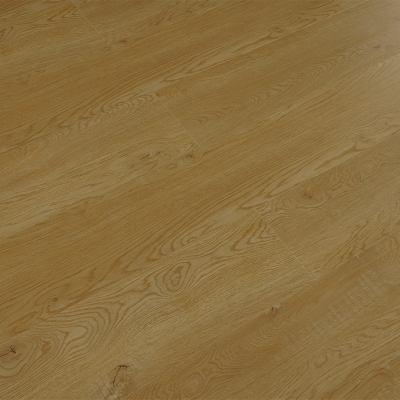
Select material based on aesthetic – Wood look: SPC/LVT with embossed texture. Stone/tile look: porcelain tile or SPC with EIR. Modern/industrial: polished concrete or large-format tile.
Compare total installed cost – Material + underlayment + installation + transitions. SPC/LVT $4-9/ft². Engineered wood $6-12/ft². Tile $10-20/ft².
Order samples and install mock-up – Test water resistance (spill water, let sit 1 hour). Test scratch resistance (key scratch). Test comfort (stand barefoot).
Plan for transitions or continuous installation – For open plan, continuous same material is best. If different materials needed, ensure thickness matches (use transition strips).
Engineering Case Study: Open Plan Renovation – Hardwood Failure, SPC Replacement
Project: 600 ft² open plan kitchen-living-dining renovation. Original flooring: solid hardwood throughout (3/4 inch red oak).
Failure after 3 years: Hardwood near sink and dishwasher cupped (2-3mm rise). Gaps opened between boards in living area (low humidity winter). Dark water stains near sink. Replacement cost estimate $8,000 to sand and refinish (but cupping irreversible).
Root cause: Solid hardwood unsuitable for kitchen moisture exposure. No moisture barrier under hardwood. Seasonal humidity swings caused expansion/contraction.
Replacement selection (SPC): 6mm SPC (rigid core) with 20 mil wear layer, attached 1.5mm IXPE pad. Wood-look print with EIR texture. Total thickness 7.5mm. Installed floating over existing subfloor. Cost $5/ft² material + $3/ft² install = $8/ft² total × 600 = $4,800.
Result after 2 years: No water damage, no scratches, no gapping. Owner reports easier cleaning, warmer underfoot than tile. SPC saved $3,200 vs hardwood replacement and provides better performance.
Measured outcome: Flooring ideas for open plan kitchen living lesson: Solid hardwood fails in kitchen zones. SPC ($8/ft²) provides 100% waterproof protection, scratch resistance, and lower life-cycle cost than hardwood ($15/ft² installed).
FAQ – Flooring Ideas for Open Plan Kitchen Living
Request Technical Support or Quotation
We provide flooring material selection guidance, cost estimation, and installation specifications for open plan residential projects.
✔ Request quotation (square footage, kitchen size, traffic level, budget)
✔ Download 20-page open plan flooring guide (with material comparison matrix)
✔ Contact flooring engineer (residential specialist, 15 years experience)
[Reach our engineering team via project inquiry form]
About the Author
This technical guide was prepared by the senior residential flooring engineering group at our firm, a B2B consultancy specializing in material selection, performance analysis, and installation optimization for open plan spaces. Lead engineer: 18 years in flooring materials and residential construction, 14 years in consulting, and advisor for over 500 residential renovation projects. Every material comparison, cost benchmark, and case study derives from ASTM standards, field testing, and project data. No generic advice - engineering-grade data for homeowners, architects, and contractors.